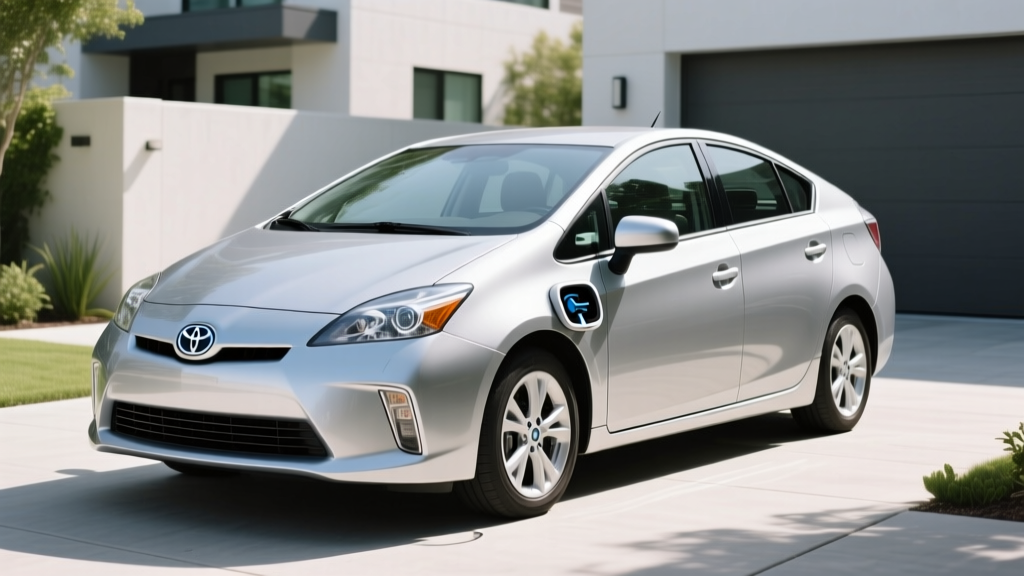
The 2014 Toyota Prius Plug-In Hybrid — officially badged as the Prius Plug-in before Toyota later rebranded the line as the Prius Prime — was one of the first mainstream plug-in hybrids to reach American driveways. For used-car shoppers in 2026 researching the 2014 Prius Plug In, it remains a compelling budget entry into electrified driving: real electric-only miles for short commutes, Prius-grade fuel economy when the gas engine kicks in, and Toyota's legendary hybrid reliability. But a decade-old PHEV comes with specific considerations around battery health, degraded electric range, and warranty expiration that every buyer needs to understand before signing paperwork.
This guide covers everything you need to evaluate a used 2014 Prius Plug-In: exact EPA fuel economy figures, real-world electric range, battery specifications and degradation expectations, powertrain details, ownership costs, and how it stacks up against modern PHEVs, conventional hybrids, and full EVs available today.
HEV vs PHEV: Where the 2014 Prius Plug-In Fits
Before diving into specs, it is essential to distinguish the 2014 Prius Plug-In from the standard 2014 Prius. Toyota sold two distinct models that year:
Standard 2014 Prius (HEV — Hybrid Electric Vehicle)
- No plug — the battery charges exclusively through regenerative braking and the gasoline engine
- 1.3 kWh nickel-metal hydride (NiMH) traction battery
- No meaningful electric-only driving capability (low-speed creep only)
- EPA: 51 city / 48 highway / 50 combined MPG
2014 Prius Plug-In (PHEV — Plug-In Hybrid Electric Vehicle)
- Plugs in via a standard J1772 connector for Level 1 (120V) or Level 2 (240V) AC charging
- 4.4 kWh lithium-ion (Li-ion) traction battery — significantly larger than the HEV's pack
- EPA-rated 11 miles of electric-only driving before the gasoline engine engages
- After battery depletion, operates as a conventional hybrid: EPA 50 MPG combined
The critical difference: the standard Prius HEV never plugs in and has no electric-only range worth mentioning. The Plug-In gives you a small but useful EV window for errands and short commutes, then seamlessly transitions to hybrid operation. If you see a listing for a "2014 Prius" without verifying the badge, check for the charge port door on the rear passenger-side quarter panel — that is the telltale PHEV identifier.
Fuel Economy: EPA MPG and Real-World Numbers
| Mode | City | Highway | Combined |
|---|---|---|---|
| Charge-Depleting (EV + Hybrid blended) | — | — | 95 MPGe |
| Charge-Sustaining (Hybrid-only after battery depleted) | 51 MPG | 49 MPG | 50 MPG |
Source: EPA Fuel Economy Guide — 2014 Toyota Prius Plug-in Hybrid
How Many MPG Does This Hybrid Get in the Real World?
The EPA's 50 MPG combined figure for charge-sustaining (hybrid-only) operation is remarkably achievable in practice. Toyota's Hybrid Synergy Drive system excels in stop-and-go city driving, where regenerative braking recaptures energy constantly. Many owners report 52–56 MPG in city-heavy commuting during warm weather, slightly exceeding the EPA city estimate of 51 MPG.
Highway driving is where real-world numbers dip below the sticker. At sustained 70–75 mph speeds, expect 44–47 MPG — the aerodynamic profile helps, but the 1.8L Atkinson-cycle engine is optimized for efficiency over high-speed power. In cold weather (below 35°F), the engine runs more frequently to provide cabin heat, dropping observed fuel economy to 40–44 MPG until the powertrain reaches operating temperature.
The 95 MPGe figure applies only when you start trips with a full battery charge and drive within the 11-mile EV window. Once the battery is depleted, you are burning gasoline at 50 MPG regardless of how you started the trip.
Electric-Only Range, Battery Specs, and Charging
How Far Can the 2014 Prius Plug-In Go on Electric Only?
The EPA rates the 2014 Prius Plug-In at 11 miles of EV-only range on a full charge. In real-world conditions when new, owners commonly saw 12–14 miles in warm weather at city speeds (25–40 mph), dropping to 8–10 miles on the highway or in cold temperatures.
For a 2026 used purchase, assume battery degradation of 15–25% over 10+ years of service. A well-maintained 2014 Prius Plug-In with the original battery pack may now deliver 8–10 miles of EV range in ideal conditions, or as little as 6–7 miles in winter. This still covers short neighborhood trips, school runs, and grocery errands entirely on electricity.
| Battery Chemistry | Lithium-ion (Li-ion) |
| Total Battery Capacity | 4.4 kWh |
| Usable Capacity (approx.) | ~3.2 kWh (Toyota buffers top and bottom to limit degradation) |
| EPA EV Range (new) | 11 miles |
| Charge Port | J1772 (AC only) |
| Level 1 Charging (120V / 12A) | ~1.4 kW — full charge in approximately 3 hours |
| Level 2 Charging (240V / 15A) | ~3.3 kW (onboard charger max) — full charge in approximately 1.5 hours |
| DC Fast Charging | Not supported — no CCS or CHAdeMO capability |
The 3.3 kW onboard charger is the maximum the car can accept, even on a 40-amp or 48-amp Level 2 home station. This is perfectly adequate for overnight charging — the small 4.4 kWh battery fills quickly. However, it also means there is no benefit to installing a high-amperage charger specifically for this vehicle.
A standard 120V household outlet delivers a full charge in roughly three hours. For daily use, plugging in when you get home means a full battery every morning without any dedicated electrical work.
Powertrain: Engine, Motors, and Combined Output
The 2014 Prius Plug-In uses Toyota's third-generation Hybrid Synergy Drive, shared with the standard Prius but paired with the larger lithium-ion battery pack:
- Gasoline Engine: 1.8L inline-4, Atkinson cycle — 98 hp / 105 lb-ft torque
- Electric Motor (MG2): 80 hp / 153 lb-ft torque
- Combined System Output: 134 hp (Toyota's net system rating, not a simple sum)
- Transmission: eCVT (planetary gearset, not a traditional belt-and-pulley CVT)
- 0–60 mph: Approximately 9.1 seconds (hybrid mode), slightly quicker from a full charge in EV-assisted acceleration
- Drivetrain: Front-wheel drive
The 134 hp figure is modest by 2026 standards, and the 9-second 0–60 time reflects the car's efficiency-first tuning. Highway merging requires planning, and passing at speed demands a firm foot. The eCVT keeps the engine in its most efficient RPM band, which means audible drone under hard acceleration — a characteristic shared with all Toyota hybrids of this era.
The driving experience prioritizes smoothness and efficiency over engagement. Electric-only mode is silent and smooth up to about 62 mph (the EV-mode speed ceiling), making it ideal for residential streets and parking lots.
Pricing, Tax Credits, and Used Market Value in 2026
The 2014 Prius Plug-In originally carried an MSRP starting around $32,000 (Base/Advanced trims), before a $2,500 federal tax credit that was available for new purchases at the time. That credit has long since expired for this model year.
Does the 2014 Prius Plug-In Qualify for Any Tax Credit Today?
Under current IRS §30D rules, the used clean vehicle credit (also called the previously-owned clean vehicle credit under IRC §25E) offers up to $4,000 or 30% of the sale price, whichever is less, for eligible used EVs and PHEVs purchased from a dealer. Key requirements for the used-vehicle credit include:
- Sale price must be $25,000 or less (the 2014 Prius Plug-In easily clears this bar at current used prices)
- Buyer income caps: $75,000 single / $112,500 head of household / $150,000 joint (modified adjusted gross income)
- Vehicle must be at least two model years old (2014 qualifies)
- Must purchase from a licensed dealer (private-party sales do not qualify)
- The vehicle's original MSRP when new must have been under $80,000 for SUVs/vans/pickups or under the applicable cap (the Prius Plug-In qualifies)
- Credit can be transferred to the dealer as a point-of-sale discount
Always verify current eligibility on IRS.gov's used clean vehicle credit page before purchasing, as rules and eligible vehicle lists are updated periodically. A tax professional can confirm your specific income eligibility.
2026 Used Market Pricing
As of early 2026, the 2014 Prius Plug-In trades in the used market at approximately:
- $7,500–$9,500 — examples with 100,000+ miles or visible wear
- $9,500–$12,500 — well-maintained examples with 60,000–100,000 miles
- $12,500–$15,000 — low-mileage, single-owner, dealer-certified examples under 60,000 miles
At these prices, even the maximum $4,000 used-EV credit represents a substantial 25–40% discount off the purchase price, making this one of the most affordable ways to get into a plug-in vehicle in 2026.
Reliability, Battery Lifespan, and Replacement Cost
Is the 2014 Prius Plug-In Reliable?
The third-generation Prius platform (2010–2015) is among the most reliable vehicles Toyota has ever built. The 1.8L 2ZR-FXE engine, eCVT transaxle, and hybrid electronics have proven capable of 200,000–300,000+ miles with basic maintenance. The Prius Plug-In shares this architecture and carries the same reliability reputation.
Known issues to inspect on a 10+ year-old example:
- Hybrid battery cooling fan: The cabin-air intake filter for the battery cooling system can clog if neglected, leading to elevated battery temperatures. Check that the previous owner cleaned or replaced this filter regularly.
- Brake actuator: Some third-gen Prius models experienced premature wear in the regenerative brake actuator assembly. Listen for unusual grinding or a firm, inconsistent brake pedal at low speeds.
- EGR (Exhaust Gas Recirculation) valve and cooler: Carbon buildup in the EGR system is a known issue on high-mileage 1.8L Prius engines. Symptoms include rough idle, check-engine light, and head-gasket stress if left unaddressed. A $200–$400 EGR cleaning at 100,000+ miles is preventive maintenance.
- 12V auxiliary battery: Like all hybrids, the Prius Plug-In has a conventional 12V battery (located in the rear cargo area) that powers electronics and boots the hybrid system. These typically last 4–6 years and cost $200–$300 to replace. A dead 12V battery will prevent the car from starting even if the main traction battery is full.
Battery Warranty and Replacement Cost
Original Hybrid Battery Warranty: 8 years / 100,000 miles (10 years / 150,000 miles in California Air Resources Board states: CA, CT, ME, MD, MA, NJ, NY, OR, RI, VT, WA, and others adopting CARB rules).
2026 Status: A 2014 model's factory battery warranty has expired in most states unless the vehicle has exceptionally low mileage and is in a CARB state. Any remaining coverage would require case-by-case dealer verification.
Battery Replacement Cost (2026 estimates):
- New OEM Toyota lithium-ion pack: $3,500–$5,000 (parts + labor at dealer)
- Refurbished/remanufactured pack from independent hybrid specialists: $1,800–$2,800
- Individual module replacement (if only 1–2 of the battery's modules have failed): $400–$900 at a hybrid-specialist shop
Toyota's lithium-ion pack in the Plug-In has demonstrated better longevity than the NiMH packs in some earlier standard Prius models. Many 2012–2015 Prius Plug-In vehicles have surpassed 150,000 miles on the original battery with 10–20% capacity loss. Before buying, request a hybrid battery health check — many Toyota dealers and independent hybrid shops can read the battery's State of Health (SoH) via the OBD-II port using Toyota's Techstream software or aftermarket tools like Dr. Prius.
Who Should Buy the 2014 Prius Plug-In (and Who Shouldn't)
Pros
- Extremely low operating cost: 50 MPG hybrid + 8–11 free electric miles daily
- Plugs into any standard 120V outlet — no expensive home charger installation required
- Toyota reliability with massive aftermarket support and affordable parts
- Used-EV tax credit (up to $4,000) can slash effective purchase price to under $6,000
- Proven powertrain with 200,000+ mile track record
- No range anxiety — gas engine provides 500+ total miles of range
Cons
- Only 11 miles EV range when new; expect 6–10 miles on a used example
- No DC fast charging — irrelevant for the small battery, but limits future-proofing
- Modest 134 hp and 9+ second 0–60 time — not a highway cruiser
- Dated infotainment (no Apple CarPlay/Android Auto without aftermarket head unit)
- Battery warranty has expired on most examples — replacement is an out-of-pocket risk
- Small 11.9 cu-ft cargo area (battery placement reduces trunk space vs standard Prius)
Hybrid vs PHEV vs EV — Which Fits the Reader?
Choose the 2014 Prius Plug-In (PHEV) if: You have access to a standard 120V outlet at home or work, your daily driving is under 20 miles round-trip, and you want electric commuting without giving up the flexibility of a gas engine for road trips. The low purchase price (especially after the used-EV credit) makes it an almost risk-free entry into plug-in driving.
Choose a conventional hybrid (HEV) like a standard Prius if: You have no access to any plug — no garage outlet, no workplace charging, no realistic way to charge daily. The standard Prius gives you 50 MPG without ever plugging in, eliminating the PHEV's core advantage.
Choose a full EV (BEV) if: You have reliable home Level 2 charging, your daily commute is under 200 miles, and you want zero tailpipe emissions with minimal maintenance (no oil changes, no spark plugs, no EGR cleaning). Modern used EVs like a 2019–2021 Chevrolet Bolt EV (259-mile range) or Nissan Leaf (149–226 miles) can be found in the $12,000–$18,000 range and also qualify for the used-EV credit.
What to Inspect Before Buying a Used 2014 Prius Plug-In
If you are seriously considering a 2014 Prius Plug-In, here is a pre-purchase checklist specific to this model:
- Hybrid battery health report: Have a Toyota dealer or hybrid specialist pull the battery SoH via OBD-II. Look for less than 20% degradation and no individual module voltage imbalances exceeding 0.2V.
- Charge port and cable: Test the J1772 charge port with a known-good EVSE. Inspect the port door seal for cracks or moisture intrusion. Verify the included charge cable is present and functional.
- EGR system condition: Ask for maintenance records showing EGR cleaning. If not documented, budget $200–$400 for a preventive cleaning.
- Brake actuator recall status: Check the VIN on NHTSA.gov for open recalls, particularly related to the brake system.
- Service history: Regular oil changes (every 5,000–10,000 miles using 0W-20 synthetic), inverter coolant changes (every 100,000 miles), and transaxle fluid checks are critical for longevity.
- Tire condition: The Prius Plug-In came with low-rolling-resistance tires. Verify replacements are similar LRR tires (e.g., Michelin Energy Saver, Bridgestone Ecopia) — standard all-season tires can drop fuel economy by 2–4 MPG.
Frequently Asked Questions
How many MPG does the 2014 Prius Plug-In get?
The EPA rates it at 50 MPG combined (51 city / 49 highway) in hybrid mode after the battery is depleted. Real-world city driving often yields 52–56 MPG; highway driving at 70+ mph typically returns 44–47 MPG.
How far can the 2014 Prius Plug-In go on electric only?
The EPA rated it at 11 miles EV-only when new. In 2026, expect 6–10 miles of electric range on a used example depending on battery health, temperature, and driving speed. Total combined range (EV + gasoline) exceeds 500 miles.
Does the 2014 Prius Plug-In qualify for a tax credit?
It no longer qualifies for the new-vehicle §30D credit. However, it may qualify for the used clean vehicle credit (§25E) of up to $4,000, subject to buyer income limits ($75K single / $150K joint), a $25,000 maximum sale price, and purchase from a licensed dealer. Verify on IRS.gov.
Is the 2014 Prius Plug-In reliable, and what does a battery replacement cost?
Yes — the third-generation Prius platform is among Toyota's most reliable. The lithium-ion traction battery typically lasts 150,000+ miles with 10–20% degradation. Replacement costs range from $1,800–$2,800 (refurbished) to $3,500–$5,000 (new OEM). The original 8-year/100,000-mile battery warranty has expired on most 2014 examples.
Can I charge the 2014 Prius Plug-In at a public fast charger?
No. The 2014 Prius Plug-In only supports AC charging via a J1772 connector at up to 3.3 kW. It cannot use DC fast chargers (CCS, CHAdeMO, or NACS). A standard 120V household outlet fully charges the battery in about 3 hours; a 240V Level 2 station takes approximately 1.5 hours.
How does the 2014 Prius Plug-In compare to a modern PHEV like the 2026 Prius Prime?
The current-generation Toyota Prius Prime offers 44 miles of EPA-rated EV range, a 13.6 kWh battery, 220 combined hp, and modern infotainment with wireless CarPlay. It starts around $33,000 new and qualifies for up to $3,750 in federal credits. The 2014 model offers roughly one-quarter the EV range and significantly less power — but at one-third the price on the used market, it remains an unbeatable value for budget-conscious plug-in commuters.
Does the standard Prius plug in?
No. The standard 2014 Toyota Prius (HEV) does not plug in and has no charge port. Only the Prius Plug-In variant has a J1772 charge port and electric-only capability. Verify the specific model before purchasing.