Quick Verdict: A Decade-Old PHEV Still Worth Considering?
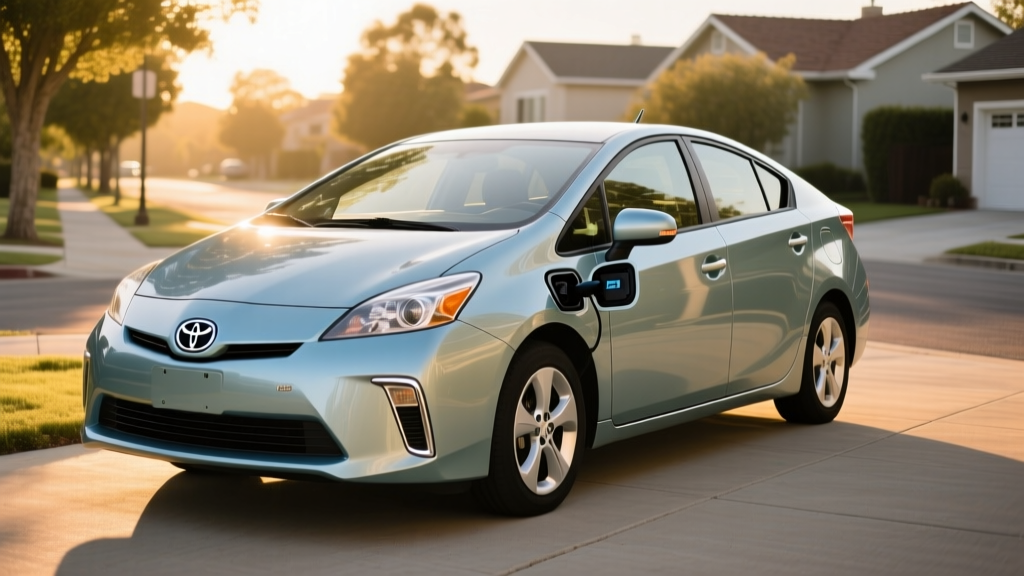
The 2014 Toyota Prius Plug-In Hybrid was one of the first mainstream plug-in hybrids to reach American driveways, offering a then-novel blend of short-range electric commuting and Toyota's proven hybrid efficiency. Now well into its second decade on the road, this PHEV shows up on the used market at bargain prices — typically between $8,000 and $13,000 depending on mileage and condition. But does a 10+ year-old plug-in hybrid still make financial sense in 2026? The answer depends heavily on battery health, your commute length, and whether you can charge at home. This guide breaks down every number that matters.
2014 Prius Plug-In Hybrid: Core Specifications
| Specification | Value |
|---|---|
| Powertrain | 1.8L 4-cyl Atkinson-cycle + electric motor (PHEV) |
| Combined Horsepower | 134 hp (net system output) |
| Battery Capacity | 4.4 kWh lithium-ion (usable ~3.4 kWh) |
| EPA Electric-Only Range | 11 miles |
| EPA Combined MPGe (EV mode) | 95 MPGe |
| EPA MPG (Hybrid/Charge-Sustaining) | 50 combined (51 city / 49 highway) |
| Total Combined Range | ~540 miles (EV + gas) |
| Level 1 Charging (120V) | ~3 hours (full charge) |
| Level 2 Charging (240V) | ~1.5 hours (full charge) |
| DC Fast Charging | Not supported |
| 0–60 mph | ~9.1 seconds |
| Original MSRP (Base) | $32,000 (before incentives) |
| Typical Used Price (2026) | $8,000 – $13,000 |
| Hybrid Battery Warranty (Original) | 8 years / 100,000 miles (10 yr / 150k in CARB states) |
HEV vs PHEV: What the 2014 Prius Plug-In Actually Is
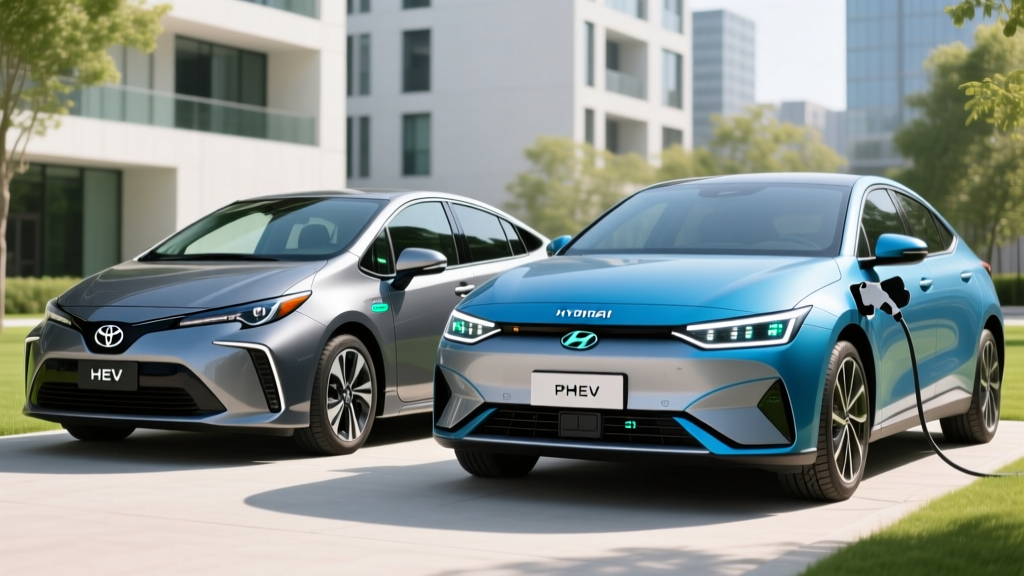
Before evaluating this car, it's essential to understand the distinction between a conventional hybrid (HEV) and a plug-in hybrid (PHEV), because Toyota sold both versions of the third-generation Prius simultaneously.
Conventional Prius (HEV)
- Cannot be plugged in — charges solely through regenerative braking and the gas engine
- Small battery (~1.3 kWh) provides electric assist but no meaningful EV-only driving
- EPA rating: 50 MPG combined at all times
- No electric-only range to manage
Prius Plug-In Hybrid (PHEV)
- Has a charging port (J1772 connector) — plug in to add electric range
- Larger battery (4.4 kWh) enables up to 11 miles of electric-only driving at speeds up to 62 mph
- Once the EV range depletes, operates as a standard hybrid at 50 MPG combined
- Can be driven without ever plugging in, but you lose the EV benefit
The 2014 Prius Plug-In is fundamentally a standard Prius with a bigger battery and a charge port. When the battery is depleted, it behaves identically to the conventional Prius Liftback. This is both its greatest strength (no range anxiety) and its limitation (only 11 miles of EV range compared to 25–45 miles on modern PHEVs like the 2026 Toyota RAV4 Prime or Prius Prime).
Fuel Economy and Electric Range: The Real Numbers
| Mode | City | Highway | Combined |
|---|---|---|---|
| Charge-Sustaining (Hybrid) | 51 MPG | 49 MPG | 50 MPG |
| Charge-Depleting (EV) | 95 MPGe combined / 11 miles EV range | ||
According to fueleconomy.gov, the 2014 Prius Plug-In Hybrid achieves 50 MPG combined in hybrid mode and 95 MPGe when operating on its battery charge. These numbers hold up remarkably well even by 2026 standards — most compact gas sedans still can't match 50 MPG.
Real-World MPG vs. EPA Sticker
Toyota's hybrid system tends to meet or slightly exceed its EPA estimates in city driving, where regenerative braking and low-speed electric assist do the most work. Owner-reported data on platforms like Fuelly consistently shows average real-world fuel economy between 47 and 52 MPG in mixed driving. Highway-only trips at 75+ mph may dip to 44–46 MPG due to the aerodynamic drag penalty that affects all hybrids at sustained high speeds.
As for the 11-mile electric range, expect variation based on conditions:
- Ideal (mild weather, flat terrain, 45 mph): 12–13 miles possible
- Typical mixed commute: 9–11 miles
- Cold weather (below 35°F) or highway speeds: 7–9 miles
- With battery degradation (10+ year-old pack): 6–10 miles depending on cell health
The battery degradation factor is the critical variable for any used PHEV. A 2014 model's original lithium-ion pack is now 12 years old, and capacity loss of 15–30% is common at this age. We'll address this in detail below.
Charging: What You Need to Know
The 2014 Prius Plug-In uses a standard J1772 connector for AC charging — the same connector used by virtually every non-Tesla EV and PHEV sold in North America through 2024. (Tesla's NACS connector has since been adopted industry-wide starting in 2025, but J1772 adapters remain widely available.)
| Level | Voltage | Power (kW) | Full Charge Time | Notes |
|---|---|---|---|---|
| Level 1 (included cord) | 120V | ~1.4 kW | ~3 hours | Standard household outlet |
| Level 2 (home/public) | 240V | ~3.3 kW (onboard charger limit) | ~1.5 hours | Requires J1772 station |
| DC Fast Charge | — | — | — | Not supported |
The onboard charger maxes out at 3.3 kW, meaning even a 48-amp Level 2 station will only deliver 3.3 kW to this vehicle. That's perfectly adequate for a 4.4 kWh battery — a full charge in 90 minutes on Level 2 is practical for topping up during the workday or overnight at home.
The included Level 1 charging cord works with any standard 120V outlet, which is how most original owners charged this car. If you're buying used, verify that the charging cord is included — replacements cost $300–$500 from Toyota or aftermarket suppliers.
Powertrain and Driving Experience
The 2014 Prius Plug-In pairs Toyota's 1.8-liter Atkinson-cycle four-cylinder engine (98 hp on its own) with a 60 kW (80 hp) electric motor integrated into the transaxle. Combined system output is 134 horsepower, routed through a planetary gearset eCVT to the front wheels.
In EV mode, the car can reach speeds up to 62 mph on electric power alone, though acceleration is gentle — this is a car optimized for efficiency, not performance. The 0–60 mph time of approximately 9.1 seconds is adequate for merging and passing but noticeably slower than modern PHEVs like the 2026 Prius Prime (which delivers 220 hp and a 6.6-second 0–60).
Driving modes include:
- EV Mode: Electric-only driving, up to 11 miles
- EV/HV Mode: Blends electric and gas for optimal efficiency
- HV Mode: Operates as a standard hybrid, preserving battery charge
Regenerative braking is moderate — Toyota's system is smoother than early Nissan Leaf or BMW i3 one-pedal implementations but doesn't offer the aggressive regen feel that EV enthusiasts prefer. There is no true one-pedal driving mode.
Battery Health, Warranty, and Replacement Cost
Original Hybrid Battery Warranty
Toyota warranted the 2014 Prius Plug-In's lithium-ion traction battery for 8 years / 100,000 miles in standard states, and 10 years / 150,000 miles in California Air Resources Board (CARB) states (CA, CT, ME, MA, NJ, NY, OR, RI, VT, WA, and others that adopted CARB standards).
As of 2026, all 2014 models have exceeded the standard 8-year warranty. Only low-mileage examples originally sold in CARB states might still have residual coverage under the 10-year provision — and even that window closed for most vehicles by mid-2024.
Real-World Battery Degradation at 12 Years
Toyota's lithium-ion packs in the Prius Plug-In have proven more durable than early critics feared, but 12 years of use inevitably brings capacity loss. Based on owner reports and independent testing:
- Average capacity retention at 10–12 years: 70–85% of original
- Effective EV range with degradation: 7–10 miles (down from 11)
- Hybrid-mode MPG impact: Minimal — the car still achieves 48–50 MPG as a hybrid regardless of battery capacity
This last point is critical: even with a significantly degraded battery, the 2014 Prius Plug-In still functions as an efficient 50-MPG hybrid. You lose some EV-only range, but the car doesn't become unreliable or undrivable. The hybrid system simply uses whatever capacity the battery still holds.
Battery Replacement Cost
If the traction battery fails completely (a relatively rare occurrence — most packs degrade gradually rather than failing outright), here's what to expect:
- New OEM battery from Toyota: $2,500–$3,500 (part) + $500–$1,000 (labor) = $3,000–$4,500 total
- Refurbished/remanufactured battery: $1,500–$2,500 installed
- Individual cell module replacement: $500–$1,200 if only specific modules are weak (requires a specialist shop)
Given that a clean 2014 Prius Plug-In sells for $8,000–$13,000 in 2026, a full OEM battery replacement represents 25–50% of the vehicle's value. This is the single biggest financial risk of buying this car used. Before purchasing, have the battery's state of health (SoH) checked using an OBD-II scanner with Toyota-specific software (such as Techstream or the Dr. Prius app) — this $30 tool can save you thousands.
Pricing, Tax Credits, and Used Market Value
The 2014 Prius Plug-In Hybrid originally started at approximately $32,000 MSRP before a $2,500 federal tax credit and various state incentives brought effective prices down to the mid-to-high $20,000s for many buyers.
Current Tax Credit Eligibility (2026)
Under current IRS §30D Clean Vehicle Credit rules, the federal EV tax credit of up to $7,500 applies only to new qualifying vehicles. The 2014 Prius Plug-In is not eligible for the new-vehicle credit.
However, the Used Clean Vehicle Credit (§25E) may apply if you purchase this car from a licensed dealer:
- Credit amount: 30% of the sale price, up to a maximum of $4,000
- Vehicle price cap: Must be sold for $25,000 or less (virtually all 2014 Prius Plug-Ins qualify)
- Buyer income cap: AGI must not exceed $75,000 (single), $112,500 (head of household), or $150,000 (married filing jointly)
- Dealer requirement: Must be purchased from a licensed dealer, not a private party
- Model year requirement: Vehicle must be at least two model years old (2014 qualifies)
- Battery requirement: Must have at least 4 kWh battery capacity (the 4.4 kWh pack qualifies)
At a typical used price of $10,000, the 30% credit would yield $3,000 — a meaningful discount. Consult a tax professional to confirm your eligibility, as IRS rules are subject to change and individual circumstances vary.
Pros
- 50 MPG combined still competitive in 2026
- No range anxiety — gas backup for any trip
- Low used price ($8k–$13k)
- Potential $4,000 used-EV tax credit
- Toyota reliability and parts availability
- Level 1 charging is sufficient (no expensive home install needed)
- Proven hybrid drivetrain with extensive service network
Cons
- Only 11 miles EV range (7–10 with degradation)
- No DC fast charging capability
- Original battery warranty expired on most examples
- Battery replacement cost ($3,000–$4,500) is high relative to car value
- Slow acceleration (9.1 sec 0–60)
- Dated infotainment and safety technology
- Modest cargo space vs. modern crossovers
Who Should Buy This Car (And Who Shouldn't)
Choose the 2014 Prius Plug-In If:
- Your daily commute is under 15 miles round-trip and you can charge at home or work
- You want maximum fuel efficiency on a tight budget (under $15,000 total cost)
- You regularly take longer road trips and don't want to plan around charging stations
- You live in a region with extreme cold where EV range loss is a concern
- You want a low-risk first step into electrified driving before committing to a full EV
Look Elsewhere If:
- Your commute exceeds 20 miles and you want meaningful electric-only driving (consider a 2021+ RAV4 Prime with 42 miles EV range, or a used Chevy Volt with 38–53 miles)
- You want modern ADAS features like automatic emergency braking, lane centering, or adaptive cruise (the 2014 Prius Plug-In has none of these)
- You're concerned about battery replacement costs and prefer a newer vehicle still under warranty
- You need cargo space for a family — this is a compact liftback
Hybrid vs PHEV vs Full EV — Which Fits You?
The 2014 Prius Plug-In occupies a specific niche. Here's how it compares to the alternatives:
- Conventional Hybrid (HEV): If you can't charge at home, a standard Prius gives you the same 50 MPG with no plug-in hassle and a lower purchase price. The PHEV premium only makes sense if you'll actually plug in regularly.
- Plug-In Hybrid (PHEV): This car is ideal if you want electric commuting for short trips but gas flexibility for road trips. Modern PHEVs offer 25–45 miles of EV range — a significant upgrade — but cost more on the used market.
- Full Battery EV (BEV): If you have home charging, drive under 200 miles daily, and want zero gas use, a used BEV like the Nissan Leaf, Chevy Bolt, or Tesla Model 3 offers lower operating costs and better performance. But you accept range limitations on long trips and cold-weather range loss of 20–40%.
Frequently Asked Questions
How many MPG does the 2014 Prius Plug-In Hybrid get?
The EPA rates it at 51 city / 49 highway / 50 combined MPG in hybrid mode, and 95 MPGe when using its electric charge. Real-world owners typically report 47–52 MPG in mixed driving, with city-heavy routes sometimes exceeding the EPA estimate thanks to Toyota's regenerative braking system.
How far can the 2014 Prius Plug-In go on electric only?
The EPA rated it at 11 miles of electric-only range when new. With 12 years of battery aging, expect 7–10 miles of usable EV range on most used examples. The car can reach up to 62 mph in EV mode, making it viable for low-speed commutes but not highway driving on electricity alone.
Is the 2014 Prius Plug-In Hybrid reliable?
Toyota's third-generation Prius platform is among the most reliable vehicles ever produced, with many examples exceeding 250,000 miles with basic maintenance. The primary risk on a 2014 model is traction battery degradation or failure, which can cost $3,000–$4,500 to replace. The gasoline engine, eCVT transaxle, and electronics have excellent longevity records. Check the battery state of health before purchasing.
What is the battery replacement cost for the 2014 Prius Plug-In?
A new OEM lithium-ion battery from Toyota costs $3,000–$4,500 installed. Refurbished or remanufactured batteries run $1,500–$2,500 installed. Individual cell module repairs can cost as little as $500–$1,200 if performed by a hybrid specialist. Given the car's $8,000–$13,000 used value, battery replacement is a significant expense — always check battery SoH before buying.
Does the 2014 Prius Plug-In qualify for any tax credit in 2026?
It does not qualify for the new-vehicle §30D credit. However, it may qualify for the Used Clean Vehicle Credit (§25E), which provides 30% of the sale price (up to $4,000 maximum) if purchased from a licensed dealer, the sale price is under $25,000, and your income falls below IRS thresholds ($75K single / $150K married). Verify current eligibility with a tax professional and the IRS used vehicle credit page.
Can the 2014 Prius Plug-In charge at Tesla Superchargers?
No. The 2014 Prius Plug-In uses a J1772 AC charging connector and cannot use DC fast chargers of any kind, including Tesla Superchargers. It can only charge on Level 1 (120V) or Level 2 (240V) AC stations. You can use any public J1772 Level 2 station — ChargePoint, EVgo, Blink, and similar networks.
How does the 2014 Prius Plug-In compare to the current Prius Prime?
The 2026 Toyota Prius Prime offers dramatically more in every metric: 44 miles of EV range, 220 hp, a 0–60 time of 6.6 seconds, modern safety tech (Toyota Safety Sense 3.0), and available DC fast charging. However, it starts at approximately $33,000 new. The 2014 model costs roughly one-third the price but delivers roughly one-quarter the electric range and significantly less power. It's a budget option, not a comparable alternative.
Should I buy the 2014 Prius Plug-In or a standard used Prius?
If you can charge at home or work and your daily driving is under 15 miles, the Plug-In's EV mode saves you the most fuel. If you can't charge regularly, the standard Prius delivers the same 50 MPG hybrid efficiency at a lower purchase price and with less complexity. The Plug-In only makes financial sense if you'll actually plug it in.
Final Ownership Assessment
The 2014 Toyota Prius Plug-In Hybrid occupies a clear position in the 2026 used-car market: it's the most affordable entry point into plug-in driving for budget-conscious commuters who need gas-engine flexibility. At $8,000–$13,000 with a potential $4,000 federal used-EV credit, the effective cost can drop to $4,000–$9,000 — making it one of the cheapest electrified vehicles available.
The critical due diligence item is battery health. A pre-purchase battery SoH scan is non-negotiable. If the battery retains 80%+ capacity, this car will deliver years of 50-MPG hybrid driving with 8–10 miles of bonus electric range. If the battery is below 65% capacity, factor a $2,000–$4,500 replacement into your budget or walk away.
For short-commute drivers who want electrified efficiency without EV range anxiety — and who are comfortable with older technology and minimal ADAS features — the 2014 Prius Plug-In remains a rational, data-backed choice.