The 2014 Lincoln MKZ Hybrid at a Glance
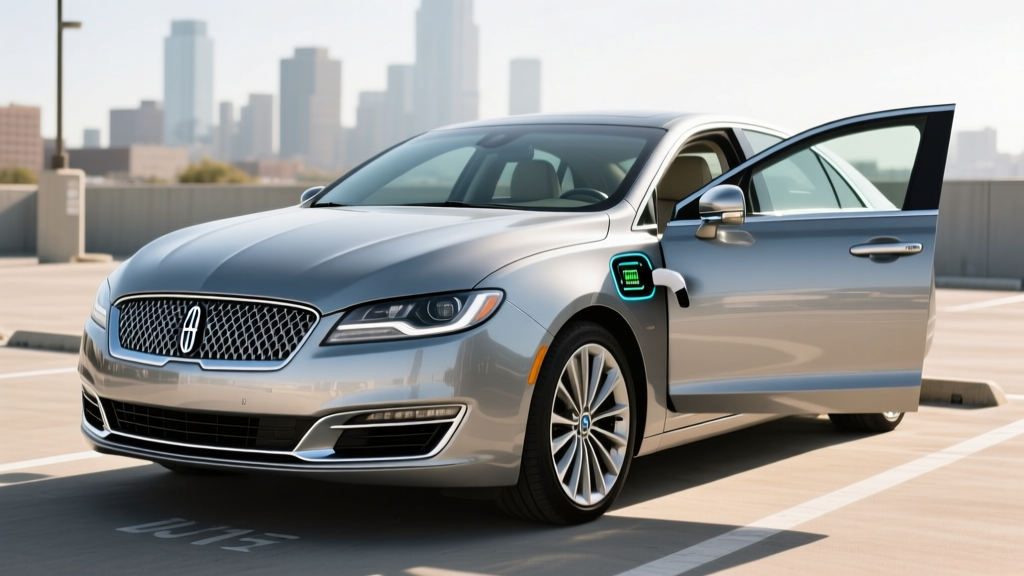
The 2014 Lincoln MKZ Hybrid occupies a specific niche in the used luxury-sedan market: it is a conventional hybrid electric vehicle (HEV) — not a plug-in — that pairs a 2.0-liter Atkinson-cycle four-cylinder engine with an electric motor to deliver premium comfort with mid-40s city fuel economy. Lincoln positioned it as a direct competitor to the Lexus ES 300h, offering a near-silent cabin, upscale materials, and the efficiency of Ford's second-generation hybrid powertrain.
If you are researching a 2014 Lincoln MKZ Hybrid as a used purchase in 2026, this guide covers every number that matters: EPA and real-world MPG, battery health expectations, replacement costs, warranty status, and whether this 12-year-old hybrid still makes financial sense versus a newer PHEV or full EV.
| Spec | Value |
|---|---|
| Powertrain | 2.0L Atkinson-cycle I4 + electric motor (HEV) |
| Combined Horsepower | 188 hp (net system) |
| Engine Output | 141 hp @ 6,000 rpm / 129 lb-ft torque |
| Electric Motor Output | 118 hp / 117 lb-ft (permanent-magnet AC synchronous) |
| Transmission | eCVT (planetary gearset, no fixed gears) |
| Hybrid Battery | 1.4 kWh usable, lithium-ion (air-cooled) |
| EPA MPG (City / Hwy / Combined) | 41 / 36 / 38 |
| Fuel Tank | 13.5 gallons |
| Total Driving Range | ~513 miles (EPA combined) |
| 0-60 mph | ~8.4 seconds |
| Drivetrain | Front-wheel drive |
| Original MSRP (Base) | $36,190 |
| Plug-in Required? | No — self-charging HEV |
Fuel Economy: EPA Sticker vs. Real-World MPG
The EPA rates the 2014 MKZ Hybrid at 41 MPG city, 36 MPG highway, and 38 MPG combined. These figures come from fueleconomy.gov, the official source for EPA fuel-economy data.
| Driving Condition | EPA MPG | Real-World Expectation |
|---|---|---|
| City | 41 MPG | 38–44 MPG (hybrids often beat EPA in stop-and-go) |
| Highway | 36 MPG | 33–37 MPG (aero drag and sustained speed reduce regen benefit) |
| Combined | 38 MPG | 35–40 MPG (depends on driving mix) |
| Cold Weather (below 32°F) | — | 30–34 MPG (engine runs more for cabin heat) |
Why city MPG is higher than highway: The MKZ Hybrid recovers kinetic energy through regenerative braking every time you slow down for a stoplight. In city driving, you brake frequently, which recharges the 1.4 kWh battery and allows the electric motor to handle low-speed propulsion. On the highway, the gasoline engine does most of the work, and aerodynamic drag at 70+ mph reduces efficiency. This inverted city/highway split is a hallmark of conventional hybrids — the opposite of what you see in gas-only cars.
Real-world owner data: Aggregated fuel logs from owners on Fuelly and similar platforms show the MKZ Hybrid averaging between 36 and 42 MPG in mixed driving, with some hypermilers reporting 45+ MPG in warm-weather city conditions. Cold weather is the primary MPG killer: below freezing, the engine must run continuously to provide cabin heat (this car lacks a heat pump), dropping combined economy into the low 30s.
HEV vs. PHEV vs. EV: Where Does the MKZ Hybrid Fit?
The 2014 MKZ Hybrid is a conventional hybrid (HEV). It has no plug, no electric-only driving range to speak of, and no external charging capability. The small 1.4 kWh lithium-ion battery charges exclusively through regenerative braking and engine-driven generation. This is fundamentally different from a plug-in hybrid (PHEV) or a battery-electric vehicle (BEV).
HEV vs. PHEV vs. BEV — Quick Comparison
| Feature | HEV (2014 MKZ Hybrid) | PHEV (e.g., Toyota RAV4 Prime) | BEV (e.g., Tesla Model 3) |
|---|---|---|---|
| Plug-in Charging | No | Yes (Level 1/2) | Yes (Level 1/2/DC) |
| Battery Capacity | 1.4 kWh | 18.1 kWh | 60–82 kWh |
| Electric-Only Range | ~1 mile at low speed | 42 miles (EPA) | 272–363 miles (EPA) |
| Total Range | ~513 miles | ~600 miles | 272–363 miles |
| Fuel/Energy Cost per Mile | ~$0.10 (gas) | ~$0.04 (electric) / ~$0.10 (gas) | ~$0.03–0.05 (electric) |
| Federal Tax Credit (2026) | None | Up to $7,500 (§30D, if eligible) | Up to $7,500 (§30D, if eligible) |
| Home Charging Needed | No | Recommended for EV-mode benefit | Essential |
Choose the MKZ Hybrid (HEV) if: You want lower fuel costs with zero lifestyle change. No plug, no charging app, no range planning. You drive a mix of city and highway and want a comfortable luxury sedan that sips fuel in traffic.
Choose a PHEV if: You have home charging access, a commute under 40 miles, and want to drive mostly on electricity while keeping a gas engine for road trips.
Choose a BEV if: You have reliable home or workplace charging, want the lowest per-mile energy cost, and are ready to plan around DC fast charging on long trips.
Powertrain Deep Dive: How the Hybrid System Works
The 2014 MKZ Hybrid uses Ford's second-generation hybrid architecture, shared with the Ford Fusion Hybrid. The system combines:
- 2.0L Atkinson-cycle I4 engine: Produces 141 hp and 129 lb-ft of torque. The Atkinson cycle delays intake-valve closing to improve thermal efficiency at the cost of peak power — a worthwhile trade-off when an electric motor fills in the torque gap.
- Permanent-magnet AC synchronous motor: Adds 118 hp and 117 lb-ft, powered by the lithium-ion battery pack. This motor handles launches, low-speed crawling, and assists during acceleration.
- eCVT (electronic continuously variable transmission): Not a belt-and-pulley CVT like those in some competitors. Ford uses a planetary gearset that blends engine and motor power seamlessly, with no rubber-band effect or fixed gear ratios. This is the same proven design Toyota uses in its hybrids.
Net system output is 188 horsepower. The car can operate in EV mode (electric only) at speeds up to about 25 mph for roughly one mile if the battery is fully charged — but this is a brief, low-speed capability, not a meaningful electric-only driving range. The engine starts and stops automatically and nearly imperceptibly, which is key to the high city MPG figure.
Battery Health, Warranty Status & Replacement Cost
For any used hybrid buyer, the traction battery is the single biggest financial risk. Here is what you need to know about the 2014 MKZ Hybrid's battery.
Battery Warranty Status in 2026
Original coverage: Lincoln warranted the hybrid battery for 8 years / 100,000 miles (10 years / 150,000 miles in California Air Resources Board states including CA, CT, ME, MA, NJ, NY, OR, RI, VT, WA).
Current status (2026): The 8-year/100,000-mile factory warranty has expired for all 2014 MKZ Hybrids based on age alone. Even in CARB states, the 10-year/150,000-mile coverage ended no later than the 2024 model year. Unless the previous owner purchased an extended warranty that specifically covers the hybrid battery, you are purchasing this vehicle with no battery warranty protection.
Battery chemistry and size: The pack uses lithium-ion cells with a usable capacity of approximately 1.4 kWh. This is a small pack by modern standards — for comparison, a 2026 PHEV typically carries 15–20 kWh, and a BEV carries 60–100 kWh. The small size means less stress per cycle, but the pack also has fewer cells and less thermal management sophistication than modern systems. The pack is air-cooled, not liquid-cooled, which can accelerate degradation in very hot climates.
Expected lifespan: Ford's second-generation hybrid batteries have a strong track record. Many Fusion Hybrid and MKZ Hybrid taxis have exceeded 200,000 miles on the original pack. Based on fleet and owner data, expect 150,000–200,000 miles before significant capacity loss (defined as below 70% of original capacity). A 2014 MKZ Hybrid with 100,000 miles likely has substantial battery life remaining, but one with 160,000+ miles is entering the risk zone.
Replacement cost in 2026:
| Option | Estimated Cost | Notes |
|---|---|---|
| New OEM pack (Lincoln/Ford dealer) | $3,500–$5,000 | Includes parts and labor; availability may be limited for 2014 models |
| Remanufactured pack (third-party) | $1,500–$2,800 | Companies like GreenBean and Dorman offer reconditioned packs with 1–3 year warranties |
| Used pack from salvage yard | $500–$1,200 | Highest risk — unknown remaining life; no warranty in most cases |
| Individual cell/module replacement | $300–$800 | Only viable if a single module has failed; requires a hybrid specialist |
Pre-purchase battery check: Before buying a used 2014 MKZ Hybrid, have a qualified technician perform a battery health scan using an OBD-II tool that can read hybrid battery state of health (SoH). Look for: voltage delta between modules (should be under 0.3V), overall capacity percentage, and any stored hybrid-system diagnostic trouble codes. A healthy pack should show SoH above 75%.
Pricing in 2026: Used Market Value & Tax Credit Reality
The 2014 Lincoln MKZ Hybrid originally started at $36,190 MSRP — notably, Lincoln priced the hybrid identically to the gasoline 2.0L EcoBoost model, a strategy that helped drive hybrid adoption. In the 2026 used market, expect the following pricing:
| Condition / Mileage | Estimated Price Range |
|---|---|
| Excellent (under 80,000 mi, clean title) | $11,000–$14,000 |
| Good (80,000–120,000 mi) | $8,000–$11,000 |
| Fair (120,000–160,000 mi) | $5,500–$8,000 |
| High mileage (160,000+ mi) | $3,500–$5,500 |
Federal tax credit: The 2014 MKZ Hybrid does not qualify for the IRS §30D New Clean Vehicle Credit — that credit applies only to new vehicles meeting specific battery-sourcing, critical-mineral, MSRP-cap, and buyer-income requirements. The IRS §30D rules are irrelevant for a 2014 model purchased used in 2026.
Used EV credit (§25E): The Previously-Owned Clean Vehicle Credit allows up to $4,000 (30% of sale price, capped at $4,000) for used EVs and PHEVs — but conventional hybrids like the MKZ Hybrid do not qualify. Only vehicles with at least 4 kWh of battery capacity and plug-in capability are eligible under §25E. The MKZ Hybrid's 1.4 kWh non-plug-in battery excludes it entirely.
State incentives: A handful of states offer rebates or HOV-lane access for used hybrids, but these programs are increasingly focused on PHEVs and BEVs. Check your state's energy or environmental agency website for current programs.
Reliability, Ownership Costs & Known Issues
The 2014 MKZ Hybrid benefits from the proven Ford hybrid system, which has been in continuous production since 2004. Key reliability notes:
- eCVT transmission: The planetary-gearset eCVT is one of the most reliable transmissions in any vehicle, gas or hybrid. There are no belts, clutches, or bands to wear out. Failures before 200,000 miles are rare.
- Brake life: Regenerative braking handles much of the deceleration, so the friction brake pads often last 80,000–100,000+ miles — significantly longer than in a gas-only car.
- Known issues: The 2013–2014 MKZ had some reported complaints about the MyLincoln Touch infotainment system being slow and buggy (software updates helped). Some owners noted premature wear on front suspension components. These are not hybrid-specific issues.
- Insurance: Expect insurance costs comparable to a gas-engine 2014 MKZ. Hybrid surcharges are uncommon for HEVs (they are more common for BEVs due to higher repair costs).
Pros
- 41 MPG city — excellent for a luxury sedan
- No plug required — zero lifestyle change from a gas car
- Proven, reliable Ford hybrid powertrain
- eCVT is virtually bulletproof
- Extended brake-pad life from regen braking
- Quiet, comfortable ride with premium interior
- Low used-market entry price ($8K–$14K)
Cons
- Original battery warranty has expired
- Battery replacement could cost $1,500–$5,000
- No electric-only driving capability
- No federal or state tax credit eligibility
- MyLincoln Touch infotainment is dated
- Highway MPG (36) is merely average
- Air-cooled battery less ideal in hot climates
- 188 hp feels modest for a luxury sedan
Should You Buy the 2014 MKZ Hybrid in 2026?
The 2014 Lincoln MKZ Hybrid makes sense as a used purchase if your priorities align with its strengths. Here is a decision framework:
Decision Framework
Buy the 2014 MKZ Hybrid if:
- You want a comfortable luxury sedan under $14,000 with low fuel costs
- You do a lot of city or suburban driving where the 41 MPG city rating pays off
- You have no access to home or workplace charging (ruling out PHEVs and BEVs)
- You want hybrid efficiency without learning new habits or installing a charger
- The specific vehicle you are considering has under 120,000 miles and a clean battery-health scan
Look elsewhere if:
- You want meaningful electric-only driving (consider a used PHEV like a Chevrolet Volt or Toyota Prius Prime)
- You want the lowest possible per-mile energy cost (a used BEV like a Nissan Leaf or Chevy Bolt EV will cost ~$0.04/mile vs. ~$0.10/mile for the MKZ Hybrid on gas)
- The car you are evaluating has 150,000+ miles — budget $2,000–$4,000 for a potential battery replacement
- You live in an extremely hot climate (Phoenix, Las Vegas) where the air-cooled battery has faced more thermal stress
Frequently Asked Questions
How many MPG does the 2014 Lincoln MKZ Hybrid get?
The EPA rates it at 41 MPG city, 36 MPG highway, and 38 MPG combined. Real-world owners report 35–44 MPG depending on driving conditions. City driving yields the best results thanks to regenerative braking; highway driving at 75+ mph will drop economy into the mid-30s. Cold weather (below freezing) can reduce combined MPG to the low 30s because the gasoline engine must run continuously for cabin heat.
Does the 2014 MKZ Hybrid need to be plugged in?
No. The 2014 MKZ Hybrid is a conventional hybrid (HEV), not a plug-in hybrid (PHEV). It has no charging port. The small 1.4 kWh battery recharges through regenerative braking and the gasoline engine. You fuel it like any other car — at a gas station.
How far can the 2014 MKZ Hybrid drive on electric only?
Effectively about one mile at speeds under 25 mph when the battery is fully charged. This is not a meaningful electric-only range — it is a brief low-speed assist capability for creeping through parking lots or stop-and-go traffic. The gasoline engine starts automatically when more power is needed or the battery depletes. If you want real electric-only range, you need a PHEV (typically 25–45 miles) or a BEV (200–400 miles).
Is the 2014 MKZ Hybrid reliable, and what does a battery replacement cost?
The Ford hybrid powertrain in the MKZ is well-proven and generally reliable. The eCVT transmission rarely fails. The main long-term risk is the hybrid battery, which is now out of warranty on all 2014 models. Replacement costs range from $500–$1,200 (used/salvage) to $3,500–$5,000 (new OEM), with remanufactured packs at $1,500–$2,800 being the most cost-effective option. Many packs last 150,000–200,000 miles. Always get a battery health scan before purchasing.
Does the 2014 Lincoln MKZ Hybrid qualify for any tax credit?
No. The federal §30D New Clean Vehicle Credit applies only to new vehicles, and the §25E Previously-Owned Clean Vehicle Credit requires a plug-in vehicle with at least 4 kWh of battery capacity. The MKZ Hybrid is a conventional HEV with a 1.4 kWh non-plug-in battery, so it qualifies for neither credit. Some local utilities or municipalities may offer minor incentives for fuel-efficient vehicles, but these are rare and vary by jurisdiction.
How does the MKZ Hybrid compare to the Lexus ES 300h?
The 2014 Lexus ES 300h is the MKZ Hybrid's closest competitor. The ES 300h is rated at 40 MPG combined (2 MPG higher), has a slightly larger 2.5L engine, and benefits from Lexus's reputation for long-term reliability and higher resale value. However, the ES 300h typically commands $3,000–$5,000 more on the used market. The MKZ Hybrid offers better value if you prioritize a lower purchase price and are comfortable with Ford's hybrid track record.
What should I check before buying a used 2014 MKZ Hybrid?
Prioritize these inspections: (1) Hybrid battery state-of-health scan via OBD-II — look for SoH above 75% and module voltage delta under 0.3V. (2) Full service history — regular oil changes matter for the Atkinson-cycle engine. (3) Brake pad thickness — if the original pads are still on, check for corrosion on the rotors from infrequent friction-brake use. (4) Suspension components — listen for clunks over bumps indicating worn strut mounts or control-arm bushings. (5) Title status — avoid salvage or rebuilt titles, as hybrid system diagnostics become unreliable after major collision repairs.