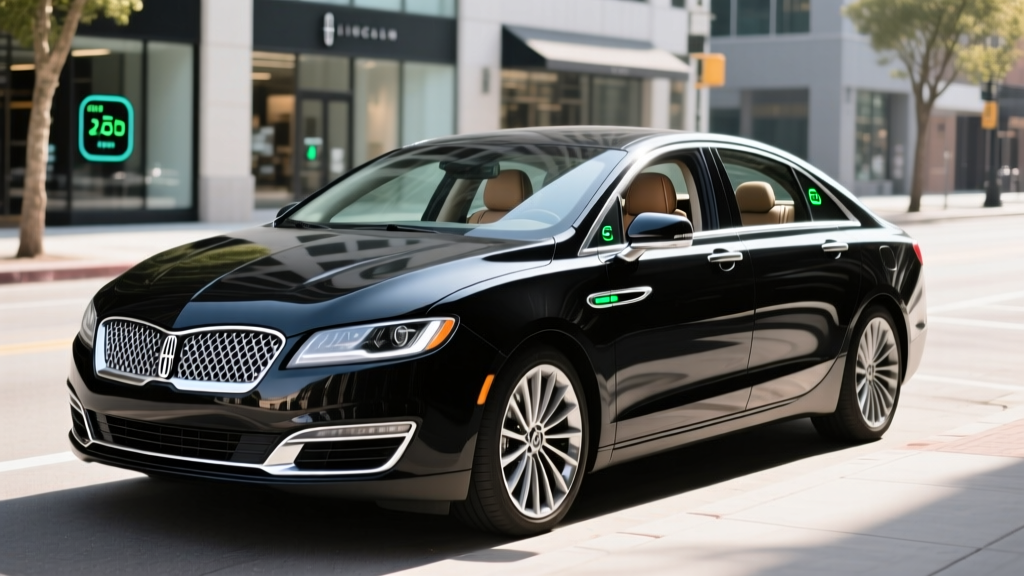
The 2014 Lincoln MKZ Hybrid in 2026: Still Worth Considering?
If you've been searching for a 2014 Lincoln hybrid, you're almost certainly looking at the used market — specifically the 2014 Lincoln MKZ Hybrid, the only electrified model Lincoln offered that year. More than a decade after its debut, this conventional hybrid (HEV) remains a compelling used luxury sedan for buyers who want fuel efficiency without ever plugging in. With an EPA-estimated 38 MPG combined, a proven Ford-derived hybrid powertrain, and Lincoln's signature quiet ride, the MKZ Hybrid holds up surprisingly well in 2026 — especially at the prices you'll find on the secondhand market.
But before you sign the paperwork, you need hard data on battery longevity, real-world fuel economy, maintenance costs, and how this car stacks up against modern hybrids and plug-in alternatives. This guide covers everything a 2026 buyer needs to know.
HEV vs. PHEV: What the 2014 MKZ Hybrid Actually Is
A common source of confusion among used-car shoppers is whether the 2014 Lincoln MKZ Hybrid needs to be plugged in. It does not. The MKZ Hybrid is a conventional hybrid electric vehicle (HEV), not a plug-in hybrid (PHEV). Understanding this distinction is essential before you buy.
HEV vs. PHEV — Key Differences
| Feature | HEV (e.g., 2014 MKZ Hybrid) | PHEV (e.g., modern Lincoln Aviator Grand Touring) |
|---|---|---|
| Plugs in? | No — charges via regenerative braking and the engine | Yes — has a larger battery you charge from a wall outlet or charger |
| Electric-only range | ~1 mile at very low speeds | Typically 18–40 miles on modern PHEVs |
| Battery size | 1.4 kWh (usable ~1.0 kWh) | 13–20+ kWh |
| Federal tax credit (new) | None | Up to $7,500 under IRS §30D (if eligible) |
| Charging infrastructure needed | None — just add gas | Level 2 home charger recommended |
The 2014 MKZ Hybrid recovers energy during braking and deceleration to recharge its small lithium-ion battery. You never need to find a charging station.
Fuel Economy: EPA Ratings and Real-World MPG
The headline number for any hybrid buyer is fuel economy. The 2014 Lincoln MKZ Hybrid carries an EPA rating that was competitive at launch and remains respectable in 2026.
| Metric | MPG |
|---|---|
| City | 38 MPG |
| Highway | 37 MPG |
| Combined | 38 MPG |
| Fuel tank capacity | 13.5 gallons |
| Total range (est.) | ~513 miles |
Source: fueleconomy.gov — 2014 Lincoln MKZ Hybrid
Real-World MPG: What to Actually Expect
Hybrids often exceed their EPA city rating in stop-and-go driving because regenerative braking recovers more energy in traffic. Many MKZ Hybrid owners report 39–42 MPG in urban commuting. However, highway driving at sustained speeds (70–80 mph) tends to yield 33–36 MPG, as the electric motor assists less at constant velocity. In cold weather (below 32°F), expect a 5–10% reduction due to the engine running more frequently to heat the cabin and maintain battery temperature.
Powertrain Specs: Engine, Motor, and Combined Output
The 2014 MKZ Hybrid shares its powertrain architecture with the Ford Fusion Hybrid (Ford's second-generation hybrid system), which is a significant advantage for parts availability and service familiarity.
| Component | Specification |
|---|---|
| Engine | 2.0L Atkinson-cycle inline-4 |
| Engine horsepower | 141 hp @ 6,000 rpm |
| Electric motor | Permanent-magnet AC synchronous |
| Motor output | 88 kW (118 hp) |
| Combined net horsepower | 188 hp |
| Transmission | eCVT (electronically controlled continuously variable) |
| Drivetrain | Front-wheel drive |
| 0–60 mph | ~8.5 seconds |
| Hybrid battery | 1.4 kWh lithium-ion (located in trunk) |
The 188 combined horsepower is adequate for merging and passing, though this is a car tuned for comfort rather than sportiness. The eCVT delivers seamless, shift-free acceleration — a hallmark of Toyota- and Ford-derived hybrid systems. There's no traditional stepped-gear automatic transmission to service or fail.
Hybrid Battery Longevity, Warranty, and Replacement Cost
This is the single biggest concern for any used hybrid buyer in 2026: the 2014 MKZ Hybrid's battery pack is now 12 years old. Here's what the data shows.
Battery Warranty (Original)
Original factory warranty: 8 years / 100,000 miles (whichever comes first) for hybrid battery components, per Ford/Lincoln's hybrid component warranty. In California and states that adopted CARB emissions standards (including NY, MA, NJ, CT, and others), the hybrid battery warranty extended to 10 years / 150,000 miles.
2026 status: For most 2014 models, the original hybrid battery warranty has expired based on age (8 years from the 2014 model year = expired by 2022). CARB-state vehicles had coverage through 2024. Any remaining coverage would depend on the specific in-service date and mileage.
Battery Degradation and Lifespan
Lincoln (via Ford) used a lithium-ion battery pack in the second-generation MKZ Hybrid, an upgrade from the nickel-metal hydride (NiMH) pack in the first-generation (2011–2012) model. Lithium-ion packs in Ford's hybrid system have demonstrated strong longevity:
- Typical lifespan: 150,000–200,000+ miles before significant capacity loss, based on fleet data from Ford Fusion Hybrids used as taxis.
- Capacity loss pattern: Most hybrid batteries lose 10–20% capacity over 10–12 years. Because the MKZ's battery is small (1.4 kWh) and the system never fully charges or discharges it (operating in a ~40–60% state-of-charge window), stress on the cells is minimized.
- Failure mode: Complete battery failure is rare. More commonly, individual modules degrade unevenly, which can trigger a check-engine light and reduced fuel economy.
Battery Replacement Cost in 2026
| Option | Estimated Cost | Notes |
|---|---|---|
| New OEM battery (Lincoln/Ford dealer) | $3,500–$5,000 | Full pack replacement with new cells; includes labor and programming |
| Refurbished/remanufactured battery | $1,500–$2,800 | Replaced degraded modules; typically comes with a 1–3 year warranty |
| Individual module replacement | $400–$900 | Only the weak modules replaced; requires a shop with hybrid module-balancing equipment |
| Used/salvage battery | $500–$1,200 | Pulled from a wrecked vehicle; unknown remaining life — highest risk |
For context, a 2014 MKZ Hybrid in good condition typically sells for $8,000–$13,000 on the used market in 2026 (depending on mileage and condition). A full OEM battery replacement at $4,000+ is a significant percentage of the car's value, making refurbished or module-level repair the more economically rational choice if the battery does need service.
Tax Credits, Incentives, and Total Cost of Ownership
Federal Tax Credit Eligibility
The 2014 Lincoln MKZ Hybrid does not qualify for the federal §30D Clean Vehicle Credit — and it never did, even when new. Under IRS rules, only plug-in electric vehicles (BEVs and PHEVs with at least 4 kWh of battery capacity and plug-in capability) are eligible. Conventional hybrids like the MKZ Hybrid are excluded regardless of purchase year.
For 2026 buyers considering a new plug-in alternative, the IRS §30D credit offers up to $7,500 for qualifying new PHEVs and BEVs, subject to MSRP caps ($55,000 for sedans, $80,000 for SUVs/trucks), buyer income limits ($150,000 single / $300,000 joint AGI), and battery critical-mineral sourcing requirements. Always verify current rules at IRS.gov or consult a tax professional before purchasing.
Used EV Credit (§25E)
Similarly, the federal used clean vehicle credit (§25E, up to $4,000 or 30% of sale price) applies only to used BEVs and PHEVs — not conventional hybrids. The 2014 MKZ Hybrid is ineligible.
5-Year Ownership Cost Estimate (Used Purchase in 2026)
| Cost Category | Estimated 5-Year Total |
|---|---|
| Purchase price (avg. used, 80K mi) | $10,500 |
| Fuel (38 MPG combined, $3.30/gal avg.) | $5,210 |
| Insurance (avg.) | $6,500 |
| Maintenance & repairs | $3,200 |
| Depreciation (est. resale after 5 yrs) | –$4,500 |
| Total estimated 5-year cost | ~$20,910 |
Fuel cost assumes 12,000 miles/year, 38 MPG combined, and a national average of $3.30/gallon for regular unleaded. Actual costs vary by region, driving habits, and fuel prices.
Compared to a non-hybrid 2014 luxury sedan averaging 22 MPG combined, the MKZ Hybrid saves roughly $3,500–$4,000 in fuel costs over five years — a meaningful offset against the purchase price.
Who Should Buy the 2014 Lincoln MKZ Hybrid — And Who Shouldn't
✓ Choose This Hybrid If…
- You want 38 MPG without changing your fueling habits (no plugs, no chargers)
- Your commute is city-heavy, where regenerative braking maximizes efficiency
- You want a quiet, comfortable luxury sedan on a sub-$15,000 budget
- You don't have access to home or workplace EV charging
- You drive 10,000–15,000 miles/year and want low running costs
✗ Look Elsewhere If…
- You want electric-only driving for short trips (consider a PHEV instead)
- You want the latest ADAS features — the 2014 MKZ lacks automatic emergency braking, lane-keeping, and adaptive cruise as standard
- You need all-wheel drive (the MKZ Hybrid is FWD only)
- You want to qualify for federal or state EV tax credits
- You plan to keep the car 8+ years and are concerned about battery replacement cost relative to vehicle value
Hybrid vs. PHEV vs. Full EV: Which Fits You?
| Your Situation | Best Fit |
|---|---|
| No home charging, apartment living, want simplicity | HEV (like the MKZ Hybrid) |
| Home charging available, short daily commute (<30 mi), occasional road trips | PHEV |
| Home charging, daily driving under 250 mi, want lowest running cost | BEV |
| Budget under $15K, want luxury + efficiency | Used HEV (MKZ Hybrid fits here) |
| Want tax credits, latest tech, and don't road-trip often | New BEV or PHEV |
Pre-Purchase Checklist: What to Inspect on a Used 2014 MKZ Hybrid
Before buying any 12-year-old hybrid, take these specific steps:
- Get the hybrid battery health checked. Ask a Ford/Lincoln dealer or a hybrid-specialist shop to run a battery diagnostic. This reports individual module voltages and identifies weak cells before they cause a failure.
- Check for outstanding recalls. Look up the VIN at NHTSA.gov/recalls. The 2014 MKZ had recalls related to the restraint control module and power steering — verify all recall work was completed.
- Review service records. The eCVT doesn't require traditional transmission fluid changes, but the engine still needs regular oil changes (every 7,500–10,000 miles with synthetic). Coolant service on the hybrid system's separate cooling circuit is also important.
- Test the regenerative braking feel. The brake pedal in the MKZ Hybrid blends regenerative and friction braking. It should feel progressive, not grabby or inconsistent. A spongy or erratic pedal may indicate a brake actuator issue — a costly repair.
- Verify trunk space. The hybrid battery sits behind the rear seats, reducing trunk capacity to approximately 11.1 cubic feet (vs. 15.4 cu ft in the gas-only MKZ). Make sure this meets your cargo needs.
Frequently Asked Questions
How many MPG does the 2014 Lincoln MKZ Hybrid get?
The EPA rates the 2014 MKZ Hybrid at 38 MPG city, 37 MPG highway, and 38 MPG combined. In real-world city driving, many owners see 39–42 MPG thanks to frequent regenerative braking. Highway cruising at 75+ mph typically yields 33–36 MPG. Cold weather reduces efficiency by roughly 5–10%.
Does the 2014 Lincoln MKZ Hybrid need to be plugged in?
No. The MKZ Hybrid is a conventional hybrid (HEV), not a plug-in. Its 1.4 kWh lithium-ion battery recharges automatically through regenerative braking and the gasoline engine. You fuel it exactly like a conventional car — at a gas station.
Is the 2014 Lincoln MKZ Hybrid reliable?
The Ford-derived hybrid powertrain in the MKZ is one of the most proven hybrid systems on the road, sharing architecture with the Fusion Hybrid that was widely used in taxi fleets. The eCVT has no traditional gears or clutch packs to wear out. The main reliability risk at this age is hybrid battery degradation, which is gradual rather than sudden. Overall, with proper maintenance, these vehicles routinely reach 200,000+ miles.
How much does it cost to replace the hybrid battery?
A new OEM replacement battery from a Lincoln dealer runs $3,500–$5,000 installed. Refurbished/remanufactured packs cost $1,500–$2,800, and individual module replacement (the most common repair) costs $400–$900. Given the car's used value of $8,000–$13,000, module-level repair is typically the most cost-effective approach.
Does the 2014 Lincoln MKZ Hybrid qualify for any tax credits?
No. Neither when new nor as a used purchase in 2026 does the MKZ Hybrid qualify for federal tax credits. The IRS §30D new clean vehicle credit and the §25E used clean vehicle credit both require plug-in capability (PHEV or BEV). Conventional hybrids are excluded. Some states may have offered hybrid incentives in 2014, but these have long since expired. Check your state's current incentive programs at AFDC.energy.gov.
Can the 2014 MKZ Hybrid run on electric power alone?
Only at very low speeds (under ~25 mph) for roughly one mile or less, such as creeping through a parking lot. The battery is too small (1.4 kWh) to sustain meaningful electric-only driving. This is normal for conventional hybrids — the electric motor's primary role is to assist the gasoline engine and improve efficiency, not to replace it.
Is the 2014 MKZ Hybrid the same as the Ford Fusion Hybrid?
Mechanically, yes — they share the same 2.0L Atkinson-cycle engine, electric motor, eCVT, and hybrid battery system. The MKZ Hybrid adds Lincoln-specific tuning for a quieter, softer ride, along with premium interior materials and features. Parts for the powertrain are widely available through Ford dealers and independent shops.
Data sourced from fueleconomy.gov, NHTSA, and Ford/Lincoln manufacturer specifications. Used-vehicle pricing reflects 2026 market averages and will vary by region, mileage, and condition. Tax credit information reflects current IRS rules — consult a tax professional for eligibility confirmation.