Quick Verdict: A Bargain Luxury Hybrid in the Used Market
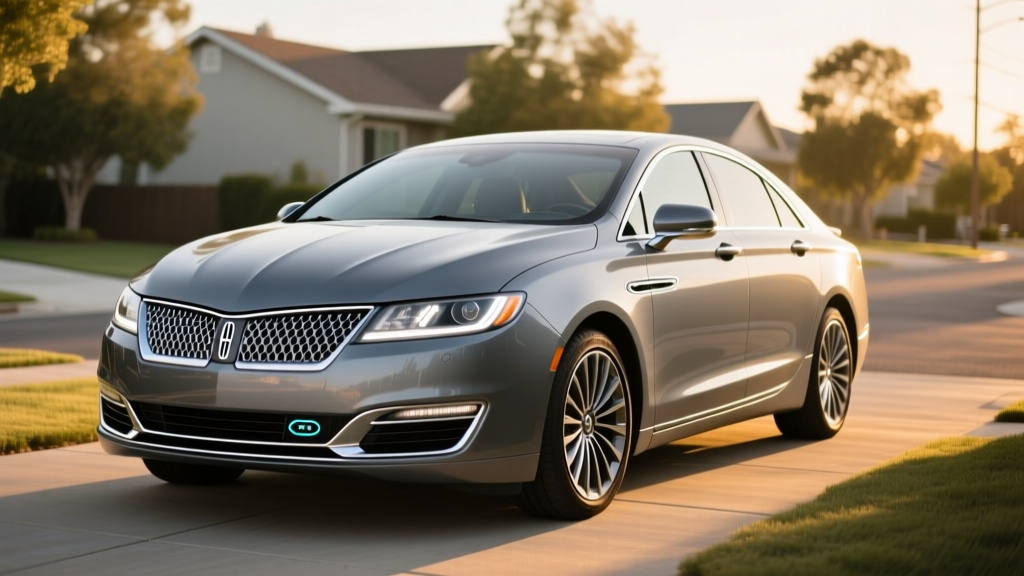
The 2014 Lincoln MKZ Hybrid FWD occupies a rare niche: a midsize luxury sedan with genuine hybrid efficiency, available on the used market for a fraction of its original $37,000+ MSRP. Built on Ford's CD4 platform and sharing its powertrain with the Ford Fusion Hybrid, the MKZ Hybrid delivers an EPA-rated 38 MPG combined — a figure that holds up well even a decade later against newer competitors.
As a conventional hybrid (HEV), the MKZ Hybrid requires no plug-in charging. It recovers energy through regenerative braking and its gasoline engine, making it ideal for drivers who want better fuel economy without changing their refueling habits. For buyers in 2026 weighing a used hybrid against a new EV or PHEV, the MKZ Hybrid presents a compelling value proposition — provided you understand what you're getting and what to watch for.
| Specification | 2014 Lincoln MKZ Hybrid FWD |
|---|---|
| Powertrain Type | Conventional Hybrid (HEV) — no plug |
| Engine | 2.0L Atkinson-cycle I4 + electric motor |
| Combined Horsepower | 188 hp (net system) |
| Transmission | eCVT (planetary gearset) |
| Drivetrain | Front-wheel drive (FWD) |
| EPA MPG (City / Hwy / Combined) | 38 / 37 / 38 |
| Fuel Tank | 13.5 gallons |
| Total Range | ~513 miles |
| Hybrid Battery | 1.4 kWh (usable ~1.0 kWh), Lithium-Ion |
| 0-60 mph | ~8.5 seconds |
| Original MSRP (Base) | ~$37,010 |
| Used Price Range (2026) | $7,000 – $13,000 |
HEV vs PHEV vs EV: Where the MKZ Hybrid Fits
Before evaluating the MKZ, it's essential to understand what it is — and what it isn't.
| Feature | HEV (MKZ Hybrid) | PHEV | Full EV (BEV) |
|---|---|---|---|
| Plug-in Charging? | No — self-charging via engine + regen | Yes — plug in for electric-only miles | Yes — plug in for all driving |
| Electric-Only Range | ~1 mile at low speed | 20–50 miles typical | 200–400+ miles |
| Gasoline Engine? | Yes — primary power source | Yes — backup after battery depletes | No |
| Fuel Needed? | Yes — regular unleaded | Yes — but less if you charge daily | No — electricity only |
| Home Charging Required? | No | Recommended for full benefit | Essential |
| Tax Credit Eligibility (New) | No federal credit | Up to $7,500 (§30D, if eligible) | Up to $7,500 (§30D, if eligible) |
The 2014 MKZ Hybrid is a conventional hybrid (HEV). It cannot be plugged in. Its small 1.4 kWh lithium-ion battery charges exclusively through regenerative braking and the 2.0L gasoline engine. This means zero behavior change from a standard gas car: you fill up at the pump and go. The electric motor assists the engine during acceleration and enables brief electric-only driving at very low speeds (typically under 25 mph for roughly a mile), but the gasoline engine does the vast majority of the work.
If you were hoping for meaningful electric-only commuting, you need a PHEV or BEV. But if your goal is simply better MPG with no charging infrastructure concerns, the HEV format is the right fit.
Fuel Economy: EPA Ratings vs Real-World MPG
| Driving Scenario | EPA Rating | Real-World Expectation |
|---|---|---|
| City | 38 MPG | 36–42 MPG (hybrids often exceed EPA in stop-and-go) |
| Highway | 37 MPG | 33–37 MPG (aerodynamic drag limits regen benefit) |
| Combined | 38 MPG | 35–40 MPG |
| Cold Weather (below 32°F) | — | 30–34 MPG (engine runs more for cabin heat) |
The MKZ Hybrid's 38/37/38 EPA city/highway/combined rating was competitive in 2014 and remains respectable today. According to fueleconomy.gov, real-world owner-reported averages cluster around 37–40 MPG combined, with many drivers seeing slightly better numbers in city driving thanks to frequent regenerative braking opportunities.
Hybrids inherently excel in city traffic, where the electric motor handles low-speed propulsion and regen recovers energy from constant stopping. Highway driving reduces this advantage — at 70+ mph, the gasoline engine carries the load almost entirely, and aerodynamic drag dominates. Expect highway trips to yield 33–37 MPG depending on speed and terrain.
Cold-weather caveat: Below freezing, the gasoline engine runs more frequently to provide cabin heat and maintain battery temperature. Owners in northern climates report winter fuel economy dropping to 30–34 MPG — a 10–15% reduction that's typical for all hybrids.
Powertrain Deep Dive: 188 HP of Smooth, Not Fast
The 2014 MKZ Hybrid pairs a 2.0-liter Atkinson-cycle four-cylinder engine (producing 141 hp on its own) with a 118-hp electric motor integrated into the transmission housing. The combined net system output is 188 horsepower, routed to the front wheels through an electronically controlled continuously variable transmission (eCVT).
This eCVT is not a belt-and-pulley CVT like those found in some competitors. It uses a planetary gearset (Ford's "power-split" architecture, co-developed with Aisin) that seamlessly blends engine and motor power. The result is smooth, linear acceleration with none of the rubber-band drone associated with traditional CVTs.
The 0-60 mph time of approximately 8.5 seconds is adequate for merging and passing but won't win any stoplight races. This is a car optimized for efficiency and comfort, not performance. The electric motor's instant torque does provide responsive low-speed acceleration, which makes the MKZ Hybrid feel quicker around town than its 0-60 number suggests.
Regenerative braking is progressive and reasonably natural — Lincoln tuned the brake pedal to avoid the abrupt transition from regen to friction braking that plagued some early hybrids. The center console includes an "EV" button that encourages electric-only mode at low speeds, and a dashboard coaching display (with "brake coach" and "accel coach" indicators) helps drivers maximize efficiency.
Hybrid Battery: Lifespan, Warranty, and Replacement Cost
Original Hybrid Battery Warranty: 8 years / 100,000 miles (whichever comes first), covering defects and capacity loss below a defined threshold. In California and states adopting CARB emissions standards, the warranty extends to 10 years / 150,000 miles.
Status in 2026: A 2014 model's original battery warranty has expired in most cases (the 8-year window closed in 2022; CARB-state 10-year coverage expired in 2024). Battery condition should be a priority inspection item for any used purchase.
The MKZ Hybrid's 1.4 kWh lithium-ion traction battery is located behind the rear seats, slightly reducing trunk space compared to the gasoline MKZ (11.1 cu ft vs 15.4 cu ft). This is a small battery by modern standards — it doesn't need to store much energy because the engine is always available as the primary power source.
How long do these batteries last? Ford/Lincoln hybrid battery packs from this generation have demonstrated strong longevity. Many Fusion Hybrid and MKZ Hybrid examples have surpassed 150,000–200,000 miles on the original battery with minimal capacity loss. The power-split hybrid architecture is gentle on the battery — it operates in a narrow state-of-charge window (roughly 40–60% SoC), which dramatically reduces degradation compared to full EVs that cycle through wider SoC ranges.
Battery replacement cost: If the hybrid battery does fail, expect to pay between $2,000 and $3,500 for a replacement, depending on whether you choose a new OEM pack, a refurbished unit, or an aftermarket option. Independent hybrid specialists often offer refurbished batteries at the lower end of this range. Given that a used 2014 MKZ Hybrid costs $7,000–$13,000, a battery replacement represents a significant percentage of the vehicle's value — factor this into your purchase decision.
Pre-purchase tip: Have a qualified technician scan the hybrid battery's state of health (SoH) using Ford's diagnostic tools or an aftermarket OBD-II scanner that reads hybrid-specific data. Look for individual cell voltage variance — large discrepancies between cells signal impending failure.
Ownership Costs and Tax Credit Eligibility
The 2014 Lincoln MKZ Hybrid does not qualify for any federal tax credit in 2026. Federal hybrid tax credits (which were available for some early hybrids) expired years ago, and the current IRS §30D Clean Vehicle Credit applies only to new EVs and PHEVs that meet battery-sourcing, MSRP, and buyer-income requirements. Used hybrids receive no federal incentive.
That said, the MKZ Hybrid's used-market pricing makes it an accessible entry point into hybrid ownership without needing any credit:
| Cost Factor | 2014 MKZ Hybrid FWD |
|---|---|
| Used Purchase Price (2026) | $7,000 – $13,000 |
| Annual Fuel Cost (15,000 mi/yr, $3.30/gal) | ~$1,300 |
| Comparable Gas-Only Sedan (annual fuel) | ~$1,800–$2,200 |
| Annual Fuel Savings vs Gas | $500–$900 |
| Insurance (avg annual) | $1,200–$1,800 |
| Estimated Annual Maintenance | $400–$700 |
Fuel savings are meaningful but not transformative at these price points. If you drive 15,000 miles per year at 38 MPG with gas at $3.30/gallon, you'll spend roughly $1,300 annually on fuel — compared to $1,800–$2,200 for a comparable non-hybrid luxury sedan getting 22–26 MPG combined. The hybrid premium pays for itself over time, but the bigger financial advantage of the MKZ Hybrid is its low acquisition cost on the used market.
Reliability, Common Issues, and What to Inspect
The 2014 MKZ Hybrid benefits from Ford's mature hybrid technology — the power-split system dates back to the 2005 Escape Hybrid and had been through multiple iterations by 2014. The hybrid powertrain itself is generally robust, with the eCVT proving far more durable than conventional automatic or belt-driven CVT transmissions.
Common issues reported by owners:
- 12V auxiliary battery drain: Like many hybrids, the MKZ can experience 12V battery issues if left sitting for extended periods. The 12V battery powers electronics and boots the hybrid system — if it dies, the car won't start even if the traction battery is full.
- Infotainment glitches: The MyLincoln Touch system (based on Microsoft SYNC) was widely criticized for lag, freezing, and unresponsive touch inputs. Ford issued software updates, but the system remains a weak point.
- Brake actuator recalls: Check NHTSA.gov for open recalls on any specific VIN. Some 2013–2014 MKZ Hybrids were included in brake-system-related recalls.
- Coolant leaks: The hybrid system has its own cooling circuit. Inspect for coolant seepage around the inverter and transaxle.
The MKZ Hybrid's reliability record is solid but not class-leading. Toyota's Camry Hybrid from the same era edges it out in long-term dependability surveys, but the Lincoln offers more luxury content and a quieter cabin at similar MPG.
Who Should Buy the 2014 MKZ Hybrid — and Who Shouldn't
Choose the 2014 MKZ Hybrid FWD if:
- You want luxury-car comfort with hybrid MPG on a tight budget ($10K or less)
- You lack access to home or workplace charging (ruling out PHEVs and EVs)
- Your commute is mostly city/suburban stop-and-go driving where hybrids shine
- You want low running costs without changing your gas-station refueling habits
- You value a quiet, well-insulated cabin with premium materials
Look elsewhere if:
- You want electric-only commuting range (consider a used Chevrolet Volt, Toyota Prius Prime, or Ford Fusion Energi PHEV)
- You prioritize sporty handling — the MKZ Hybrid's soft suspension and numb steering favor comfort over engagement
- You need a large trunk — the hybrid battery cuts cargo space to 11.1 cu ft
- You want the latest safety tech — the 2014 model lacks automatic emergency braking, lane-keeping, and modern ADAS features standard on newer vehicles
- You drive mostly highway miles — the hybrid advantage shrinks at sustained high speeds
Pros and Cons at a Glance
Pros
- 38 MPG combined EPA — competitive with newer hybrids
- Smooth, refined powertrain with no plug-in requirement
- Luxury interior with premium materials and quiet cabin
- Low used-market pricing ($7K–$13K in 2026)
- Proven hybrid system with strong long-term battery reliability
- Standard features include heated/cooled seats, push-button start
Cons
- Trunk space reduced to 11.1 cu ft by battery placement
- MyLincoln Touch infotainment is slow and dated
- Modest 188 hp — leisurely acceleration
- No modern ADAS (AEB, lane-centering) available
- Original hybrid battery warranty has expired on most examples
- Fuel savings vs a gas car are moderate (~$500–$900/year)
Frequently Asked Questions
How many MPG does the 2014 Lincoln MKZ Hybrid get?
The EPA rates the 2014 MKZ Hybrid FWD at 38 MPG city, 37 MPG highway, and 38 MPG combined. Real-world owners report 35–42 MPG depending on driving conditions, with city driving often exceeding the EPA estimate thanks to regenerative braking.
Can you plug in the 2014 MKZ Hybrid to charge it?
No. The 2014 MKZ Hybrid is a conventional hybrid (HEV), not a plug-in hybrid (PHEV). It has no charging port. The small hybrid battery charges exclusively through regenerative braking and the gasoline engine. You fuel it like any standard car.
How long does the hybrid battery last in the MKZ Hybrid?
Ford/Lincoln hybrid batteries from this generation commonly last 150,000–200,000+ miles with minimal degradation. The power-split system keeps the battery in a narrow state-of-charge window, which greatly extends its life. However, the original warranty (8 years/100,000 miles) has expired on all 2014 models by 2026.
How much does it cost to replace the MKZ Hybrid battery?
Replacement costs range from approximately $2,000 to $3,500, depending on whether you use a new OEM battery, a refurbished unit, or an aftermarket option. Given the vehicle's used value of $7,000–$13,000, a battery replacement is a significant expense relative to the car's worth.
Does the 2014 MKZ Hybrid qualify for any tax credit?
No. There is no federal tax credit available for the 2014 MKZ Hybrid. The IRS §30D Clean Vehicle Credit applies only to qualifying new EVs and PHEVs. Used conventional hybrids do not qualify for any federal purchase incentive. Some states may offer separate incentives — check your local DMV or energy office.
Is the 2014 MKZ Hybrid the same as the Ford Fusion Hybrid?
They share the same platform (Ford CD4), the same 2.0L hybrid powertrain, and the same 188 hp system output. The MKZ Hybrid adds Lincoln-specific luxury content (softer suspension tuning, premium interior materials, additional sound deadening) and unique exterior styling. Mechanically, they are nearly identical.
Should I buy a used MKZ Hybrid or a new EV?
It depends on your budget and charging access. A used MKZ Hybrid at $8,000–$12,000 is dramatically cheaper than any new EV ($30,000+). However, a new EV offers 250+ miles of electric range, modern safety tech, lower per-mile fuel costs (if you can charge at home), and potential §30D tax credit eligibility. If you can't charge at home or need to minimize upfront cost, the MKZ Hybrid is a practical choice.