Quick Verdict: The 2014 Lexus CT 200h in 2026
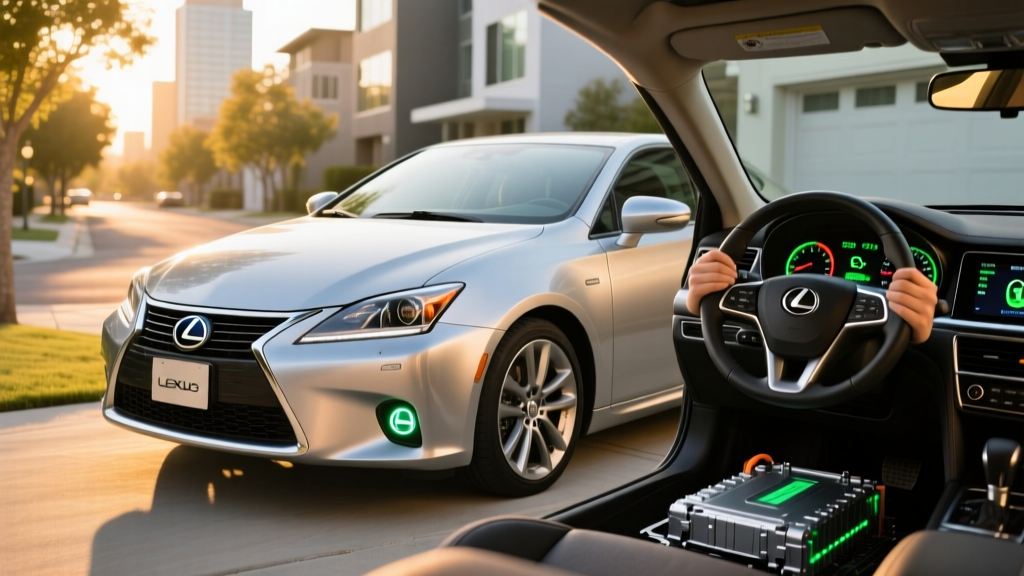
The 2014 Lexus CT 200h is a conventional hybrid electric vehicle (HEV) — not a plug-in — that pairs a 1.8-liter Atkinson-cycle four-cylinder with a small electric motor for an EPA-rated 42 MPG combined. Originally marketed as the luxury entry point into Toyota's hybrid ecosystem, the CT 200h (known in some markets as the CT 200h, occasionally searched as "CT 2014 hybrid") shares its powertrain DNA with the third-generation Toyota Prius. In 2026, it remains one of the most fuel-efficient used luxury compacts available, though buyers should weigh its aging tech and modest 134 combined horsepower against newer hybrid and full-EV alternatives.
| Spec | Value |
|---|---|
| Powertrain Type | Conventional Hybrid (HEV) — no plug |
| Engine | 1.8L 4-cyl Atkinson-cycle + electric motor |
| Combined Horsepower | 134 hp |
| 0–60 mph | ~9.8 seconds |
| EPA MPG (City / Hwy / Combined) | 43 / 40 / 42 |
| Fuel Tank | 11.9 gallons |
| Total Driving Range | ~499 miles |
| Hybrid Battery | 1.3 kWh nickel-metal hydride (NiMH) |
| Cargo Volume | 14.3 cu ft |
| Original MSRP (Base) | $32,050 |
| Typical 2026 Used Price | $9,000–$14,000 |
| Hybrid Battery Warranty (Original) | 8 years / 100,000 miles (10 yr/150k in CARB states) |
HEV vs. PHEV: Where the CT 200h Fits
Before diving into fuel economy, it is essential to clarify what the CT 200h is and is not. This is a conventional hybrid (HEV), meaning it generates all its electricity internally through regenerative braking and the gasoline engine. There is no plug, no charging cable, and no electric-only driving range to speak of beyond a brief low-speed creep.
| Feature | HEV (e.g., CT 200h) | PHEV (e.g., Prius Prime) | BEV (e.g., Tesla Model 3) |
|---|---|---|---|
| Plug-in Charging? | No | Yes | Yes |
| Electric-Only Range | N/A (motor assists only) | 25–44 miles typical | 250–400+ miles |
| Gasoline Engine? | Yes | Yes | No |
| Fuel Needed? | Yes | Yes (after EV range) | No |
| Home Charging Install? | Not required | Recommended (Level 2) | Essential |
| Federal Tax Credit (§30D)? | No | Up to $7,500 (if eligible) | Up to $7,500 (if eligible) |
| Best For | No plug access, city driving | Short commutes + road trips | Home charging + low operating cost |
The CT 200h's 1.3 kWh NiMH battery is far too small to provide meaningful electric-only propulsion. Its role is to smooth stop-start traffic, assist under acceleration, and capture energy during braking. If you want plug-in capability in a similar Toyota/Lexus package, you would need to look at a PHEV like the Toyota Prius Prime or the (discontinued) Lexus NX 450h+.
Fuel Economy: EPA Ratings and Real-World MPG
| Driving Condition | EPA MPG |
|---|---|
| City | 43 MPG |
| Highway | 40 MPG |
| Combined | 42 MPG |
The EPA's official figures show the CT 200h delivering 43 MPG city and 40 MPG highway — a pattern typical of Toyota's Hybrid Synergy Drive, where the electric motor handles low-speed loads that would otherwise waste fuel at idle or in stop-and-go traffic.
Real-World MPG: What Owners Actually See
According to aggregated user data on Fuelly and owner forums, the 2014 CT 200h typically achieves 40–46 MPG combined in real-world driving. City-heavy commutes with frequent stops often push the number above the EPA's 42 MPG combined estimate, because regenerative braking recaptures more energy and the engine shuts off more often. Highway-dominant driving at 75+ mph can drop observed economy to 37–39 MPG, as aerodynamic drag overwhelms the hybrid system's advantages and the small engine works harder.
Cold weather reduces MPG by roughly 5–10% due to longer engine warm-up cycles and increased cabin heating demand. In sub-freezing conditions, expect 36–40 MPG combined until the engine reaches operating temperature. This is far less severe than the 20–30% range loss a full EV experiences in winter, making the HEV a pragmatic choice in cold climates.
Powertrain Deep Dive: Engine, Motor, and Performance
The CT 200h uses Toyota's well-proven Hybrid Synergy Drive, shared with the 2010–2015 Prius. Here is how the system breaks down:
- Gasoline engine: 1.8-liter inline-4, Atkinson cycle, 98 hp and 105 lb-ft of torque
- Electric motor (MG2): 60 kW (80 hp), 153 lb-ft of torque
- Combined system output: 134 hp (net — the engine and motor don't peak simultaneously)
- Transmission: eCVT (planetary gearset, not a belt-driven CVT)
- Drive wheels: Front-wheel drive
The eCVT is a key differentiator from conventional automatics or belt-CVTs. It uses a planetary gearset to seamlessly blend engine and motor power with no fixed gear ratios and no shifting. This makes it extremely reliable — there are no clutch packs, torque converters, or belts to wear out — but it also produces the characteristic "drone" under hard acceleration as the engine holds at a fixed RPM while the car accelerates.
Performance is adequate but not quick. The 0–60 mph time of roughly 9.8 seconds puts the CT 200h behind most modern compact luxury cars. The Sport mode sharpens throttle response and steering weight slightly, but it cannot overcome the fundamental physics of 134 hp moving 3,130 pounds. Overtaking at highway speed requires planning.
Hybrid Battery: Reliability, Degradation, and Replacement Cost
Hybrid Battery Warranty & Lifespan
Original warranty: 8 years / 100,000 miles (federal). In CARB states (CA, NY, MA, and others), coverage extends to 10 years / 150,000 miles for the hybrid battery and related components.
Expected lifespan: Toyota/Lexus NiMH hybrid batteries routinely last 150,000–200,000+ miles with proper use. Many first-generation Prius packs exceeded 200,000 miles before significant degradation.
Replacement cost (2026): A new OEM NiMH pack from Lexus runs approximately $3,000–$4,000 installed. Refurbished/remanufactured packs are available for $1,500–$2,500 installed from independent hybrid specialists. Individual module replacement (replacing only the weak cells) can cost $500–$1,200.
The 1.3 kWh NiMH battery in the CT 200h is a mature, well-understood technology. Unlike the lithium-ion packs in modern EVs and PHEVs, NiMH chemistry degrades slowly and predictably. The battery management system keeps the pack in a narrow state-of-charge window (roughly 40–80%), which dramatically extends cycle life. You will not see the dramatic range-loss curve that an aging EV battery can exhibit.
When degradation does occur, it manifests as slightly reduced fuel economy (1–3 MPG) and more frequent engine starts — not a sudden failure. The CT 200h will continue to drive normally even with a moderately degraded pack; it simply becomes less efficient.
For a 2014 model in 2026, the original warranty has expired in most cases (unless the car was sold new in a CARB state and has under 150,000 miles). Budget $2,000–$3,500 as a contingency for a potential battery replacement if the vehicle has over 130,000 miles and no documented battery service history.
Other Reliability Considerations
Beyond the hybrid battery, the CT 200h is one of the most reliable vehicles in the Lexus lineup. The eCVT has no wearable friction components. The 1.8L engine is under-stressed and routinely exceeds 200,000 miles with basic maintenance. Common issues to watch for on a used example:
- 12V auxiliary battery: Like all hybrids, the CT 200h has a conventional 12V battery that powers electronics and boots the hybrid system. These typically last 4–6 years and cost $150–$250 to replace. A dead 12V battery will prevent the car from starting, even if the hybrid pack is full.
- Brake actuator assembly: The regenerative braking system uses an electronic brake actuator that can fail around 100,000–150,000 miles. Replacement runs $1,200–$1,800. Symptoms include a stiff brake pedal, warning lights, and reduced regenerative braking.
- Inverter coolant pump: An electric pump circulates coolant through the inverter. Failure can cause hybrid system warnings. Replacement is roughly $400–$700.
- EGR valve and intake carbon buildup: The Atkinson-cycle engine can accumulate carbon deposits over time, especially with short-trip driving. An induction service every 60,000–80,000 miles helps prevent rough idle and reduced efficiency.
Tax Credits and Incentives: What Applies in 2026?
Because the 2014 Lexus CT 200h is a conventional HEV — not a plug-in vehicle — it does not qualify for the federal §30D new clean vehicle credit or the §25E used clean vehicle credit. Both programs require the vehicle to have a plug and meet battery-capacity, sourcing, MSRP, and income thresholds as defined by the IRS clean vehicle credit rules.
For 2026, the relevant incentive landscape for a used CT 200h buyer:
- Federal §30D (new EVs/PHEVs): Not applicable — HEVs are excluded.
- Federal §25E (used EVs/PHEVs): Not applicable — requires a plug-in vehicle with at least 7 kWh of battery capacity.
- State incentives: A handful of states offer rebates or HOV lane access for hybrids, but most have shifted incentives exclusively to plug-in vehicles. Check your state's energy or DMV website for current programs.
- Insurance discounts: Some insurers offer small hybrid discounts (5–10%) due to the CT 200h's strong safety ratings and low claim frequency. Ask your provider.
Who Should Buy the 2014 CT 200h — and Who Shouldn't
Reasons to Choose the CT 200h
- 42+ MPG real-world with zero behavior change — no plugging in, no range planning
- Lexus build quality, ride comfort, and cabin quietness at a sub-$15K used price
- Proven Toyota hybrid reliability with low maintenance costs
- Strong city MPG (43 EPA) ideal for stop-and-go commuters
- Low total cost of ownership: cheap fuel, no charging infrastructure needed
Reasons to Look Elsewhere
- Slow acceleration (9.8s 0–60) — underpowered for highway merging
- Tight rear seat and modest 14.3 cu ft cargo area
- Dated infotainment with no Apple CarPlay or Android Auto (on 2014 models)
- No electric-only driving — if you have home charging, a PHEV or EV saves more
- Expiring hybrid battery warranty on a 12-year-old car adds financial risk
Decision Framework
Choose the 2014 CT 200h if: You cannot charge at home or work, you drive mostly in the city, you want luxury-badge comfort on a tight budget, and you value proven reliability over technology features.
Choose a used PHEV (e.g., 2019+ Prius Prime) if: You have access to a standard outlet or Level 2 charger, your commute is under 25 miles, and you want some electric-only driving without range anxiety on longer trips.
Choose a used BEV (e.g., 2020+ Chevy Bolt, Tesla Model 3) if: You have reliable home Level 2 charging, your daily driving is under 200 miles, and you want the lowest per-mile operating cost with zero tailpipe emissions.
Choose a newer gas car if: You regularly tow, drive very long distances in rural areas with sparse fuel stations, or prioritize acceleration and cargo space over fuel economy.
Ownership Costs: 5-Year Estimate
Buying a used 2014 CT 200h in 2026 at approximately $11,000 (mid-range example with ~95,000 miles) and driving 12,000 miles per year yields the following estimated 5-year ownership costs:
| Category | 5-Year Estimate |
|---|---|
| Purchase Price | $11,000 |
| Fuel (42 MPG avg, $3.40/gal) | $4,857 |
| Insurance (avg) | $5,500 |
| Maintenance & Repairs | $3,000–$5,000 |
| Hybrid Battery Contingency | $0–$3,500 |
| Depreciation (est. resale $6,000) | $5,000 |
| Total (without battery replacement) | ~$24,357–$26,357 |
| Total (with battery replacement) | ~$27,857–$29,857 |
For comparison, a similarly priced used gas-only compact (e.g., 2014 Audi A3 at 28 MPG combined) would cost roughly $3,000 more in fuel alone over the same period, partially offsetting the CT 200h's hybrid battery risk.
Frequently Asked Questions
How many MPG does the 2014 Lexus CT 200h hybrid get?
The EPA rates the 2014 CT 200h at 43 MPG city, 40 MPG highway, and 42 MPG combined. Real-world owners typically report 40–46 MPG combined depending on driving mix, with city-heavy routes yielding the best results.
Does the 2014 Lexus CT 200h need to be plugged in?
No. The CT 200h is a conventional hybrid (HEV), not a plug-in hybrid (PHEV). It charges its small 1.3 kWh battery entirely through regenerative braking and the gasoline engine. You simply fill it with gas and drive.
How far can the CT 200h go on electric power alone?
Effectively zero miles at meaningful speed. The electric motor can propel the car at very low speeds (under ~25 mph) for short distances on flat ground, but the engine engages almost immediately under any real load. This is by design — the motor's role is to assist the engine, not replace it.
Is the 2014 CT 200h reliable, and what does a hybrid battery replacement cost?
Yes, the CT 200h is among the most reliable vehicles Lexus has produced. The Toyota Hybrid Synergy Drive has been in production since 1997 and is extensively proven. Hybrid battery replacement costs $3,000–$4,000 for a new OEM pack or $1,500–$2,500 for a refurbished unit. Many original packs last 150,000–200,000+ miles.
Does the 2014 Lexus CT 200h qualify for any federal tax credit?
No. Federal clean vehicle tax credits (§30D for new, §25E for used) require plug-in vehicles with minimum battery capacity. As a conventional hybrid with no plug, the CT 200h is ineligible. Check your state's energy office for any local hybrid incentives, though most states have shifted incentives to plug-in vehicles.
Hybrid vs. PHEV vs. EV — which should I choose?
If you lack home or workplace charging access, a conventional hybrid like the CT 200h is the lowest-friction option — no infrastructure, no behavior change, strong MPG. If you can install a Level 2 charger at home and your commute is under 30 miles, a PHEV gives you electric-only daily driving with gas backup. If you charge at home and drive under 250 miles daily, a full EV delivers the lowest operating cost and strongest acceleration, at a higher upfront price.
What should I look for when buying a used 2014 CT 200h?
Prioritize a vehicle with documented hybrid battery health (a dealership can read the battery's state-of-health via OBD-II), a recent 12V battery replacement, no brake actuator warning codes, and regular oil change intervals. Mileage under 120,000 with a clean Carfax is the sweet spot for value and remaining life. Budget $500–$1,000 for a pre-purchase inspection at a Toyota/Lexus specialist.
Sources: EPA Fuel Economy — 2014 Lexus CT 200h, IRS Clean Vehicle Credits, IIHS 2014 Lexus CT 200h Safety Ratings