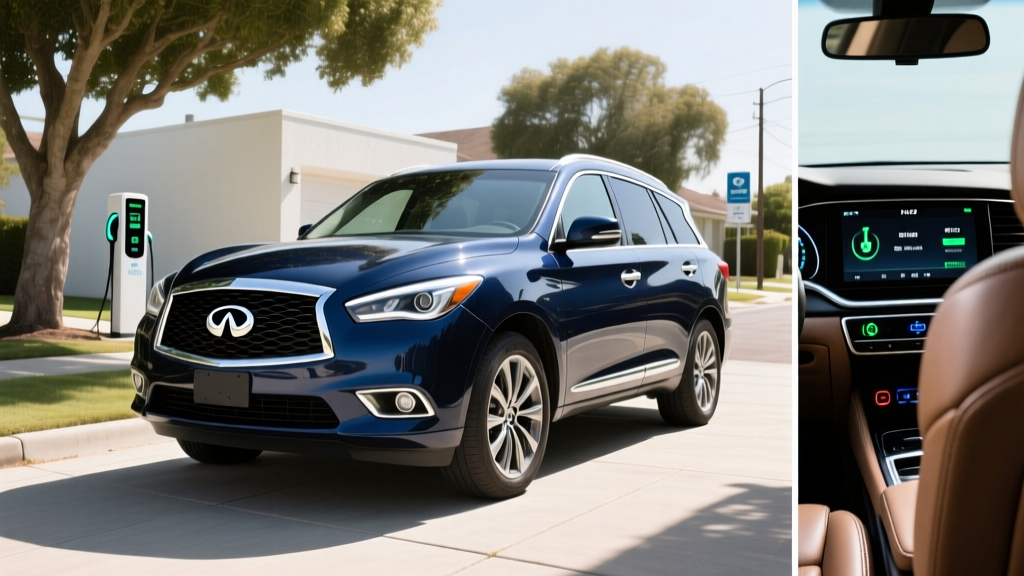
If you're researching the 2014 Infiniti QX60 Hybrid on the used market, you're looking at one of the more unusual luxury hybrid SUVs of its era. Infiniti paired a supercharged 2.5-liter four-cylinder engine with an electric motor in a conventional hybrid (HEV) system — no plug required — and slotted it into a three-row, seven-passenger crossover. More than a decade later, the QX60 Hybrid remains a niche find in the pre-owned market, and understanding its real-world fuel economy, powertrain reliability, and battery longevity is essential before you hand over any cash.
This guide breaks down exactly what the 2014 QX60 Hybrid delivers, how it compares to modern hybrid and plug-in hybrid alternatives, and whether it still makes sense as a used luxury family hauler in 2026.
HEV vs PHEV: What the 2014 QX60 Hybrid Actually Is
The 2014 Infiniti QX60 Hybrid is a conventional hybrid electric vehicle (HEV). It cannot be plugged in, has no electric-only driving range to speak of, and uses its small battery pack solely to assist the gasoline engine, enable regenerative braking, and allow brief low-speed electric-only creep. The battery recharges through regenerative braking and the engine — you fuel it like any other car at a gas station.
| Feature | HEV (2014 QX60 Hybrid) | PHEV (e.g., modern plug-in hybrid) | BEV (full electric) |
|---|---|---|---|
| Plug-in charging | No | Yes | Yes |
| Electric-only range | ~1 mile at low speed | 20–50 miles typical | 200–400+ miles |
| Battery size | ~0.6 kWh (Ni-MH) | 10–25 kWh (Li-ion) | 60–120 kWh (Li-ion) |
| Fueling | Gasoline only | Gasoline + electricity | Electricity only |
| Home charging install needed | No | Recommended (Level 2) | Required (Level 2) |
| Federal tax credit (§30D) | Not eligible | Up to $7,500 (varies) | Up to $7,500 (varies) |
This distinction matters because some used-car shoppers confuse "hybrid" with "plug-in hybrid." The QX60 Hybrid requires zero changes to your daily fueling routine. You simply drive it and let the hybrid system optimize fuel consumption automatically.
Powertrain Specs: Supercharged Four-Cylinder Meets Electric Motor
Infiniti's hybrid system in the 2014 QX60 was branded as the "Direct Response Hybrid" and was notable for using a supercharged engine rather than the more common naturally aspirated Atkinson-cycle setups found in Toyota and Ford hybrids of the same era.
| Specification | 2014 Infiniti QX60 Hybrid |
|---|---|
| Engine | 2.5L supercharged inline-4 |
| Engine output | 230 hp / 243 lb-ft torque |
| Electric motor output | 20 hp / 118 lb-ft torque |
| Combined system output | 250 hp |
| Transmission | Continuously Variable Transmission (CVT) |
| Drivetrain | FWD standard; AWD available |
| Battery type | Nickel-Metal Hydride (Ni-MH) |
| Battery capacity | ~0.6 kWh |
| 0–60 mph (est.) | ~7.8 seconds |
| Towing capacity | 3,500 lbs (AWD) |
The supercharger was Infiniti's solution to maintaining acceleration feel with a smaller four-cylinder engine replacing the standard QX60's 3.5L V6 (265 hp). The result is adequate but not exciting performance — the hybrid gives up about 15 horsepower to the V6 but gains fuel economy. The CVT, shared with Nissan's hybrid architecture of the period, is smooth but can produce a droning sensation under hard acceleration that some drivers find unpleasant.
One important note: the AWD hybrid variant uses a different rear-axle arrangement than the standard AWD V6. The hybrid AWD system is slightly more complex, which is worth keeping in mind for used-car inspections.
Fuel Economy: EPA Numbers and Real-World MPG
The 2014 QX60 Hybrid's headline advantage over the V6 model is fuel economy. Here are the official EPA estimates from fueleconomy.gov:
| Drivetrain | City MPG | Highway MPG | Combined MPG |
|---|---|---|---|
| 2014 QX60 Hybrid FWD | 26 | 28 | 26 |
| 2014 QX60 Hybrid AWD | 25 | 28 | 26 |
| 2014 QX60 V6 FWD (non-hybrid) | 20 | 26 | 22 |
| 2014 QX60 V6 AWD (non-hybrid) | 19 | 25 | 21 |
The hybrid gains approximately 4–5 MPG combined over the V6, which translates to roughly 50–70 fewer gallons of fuel per year at 15,000 miles of annual driving. At $3.50/gallon, that's approximately $175–$245 in annual fuel savings.
Real-World MPG Expectations
Conventional hybrids typically perform close to or slightly better than their EPA city estimates in stop-and-go driving, where regenerative braking is most effective. However, the QX60 Hybrid's relatively modest battery and supercharged engine mean highway gains are less dramatic than you'd see in a Toyota Hybrid Synergy Drive system.
Owner-reported data from fuel-tracking platforms suggests real-world combined MPG typically falls between 23 and 27 MPG, depending on driving style, climate, and terrain. Cold-weather driving and aggressive acceleration push figures toward the low end. Highway-only trips at 75+ mph may yield 26–28 MPG. Expect to average around 25 MPG in mixed suburban and highway driving — roughly matching the EPA combined figure.
For a 5,300-pound three-row luxury SUV, 25 MPG combined is respectable, though modern hybrids like the Toyota Grand Highlander Hybrid (35 MPG combined) have significantly raised the bar.
Reliability, Battery Lifespan, and Replacement Cost
Hybrid battery anxiety is the number-one concern for used hybrid buyers, and it deserves a direct, data-driven answer.
Original Hybrid Battery Warranty
When new, the 2014 QX60 Hybrid's battery was covered under Infiniti's hybrid system warranty: 8 years / 100,000 miles (extended to 10 years / 150,000 miles in California and states that follow CARB emissions standards). This warranty covered defects and capacity loss below a defined threshold.
As of 2026, all original factory battery warranties on 2014 models have expired. Any remaining coverage would come from an aftermarket extended warranty if one was purchased and transferred.
How Long Do QX60 Hybrid Batteries Last?
The QX60 Hybrid uses a nickel-metal hydride (Ni-MH) battery pack — a mature, well-understood chemistry that Toyota and Honda also used extensively in the same era. Ni-MH hybrid batteries have a strong track record of lasting 150,000–200,000+ miles before significant degradation, based on fleet data from Toyota Prius and Camry Hybrid vehicles using similar chemistry.
The QX60 Hybrid's small (~0.6 kWh) battery operates within a narrow state-of-charge window managed by the hybrid control system, which reduces stress on the cells. Most owner forums and repair databases show battery failures on this model are uncommon before 120,000 miles, though individual results vary with climate (extreme heat accelerates degradation) and driving patterns.
Battery Replacement Cost
If the hybrid battery does fail, replacement options include:
- OEM dealer replacement: $2,500–$4,000 (part + labor) — though OEM parts availability for a 2014 model may be limited by 2026
- Aftermarket / remanufactured battery: $1,500–$2,500 from hybrid-specialty suppliers
- Individual cell module replacement: $500–$1,200 if only specific modules have failed (a hybrid-specialist shop can diagnose this)
For context, the hybrid battery in the QX60 is far smaller and simpler than a full EV traction battery. The replacement cost is comparable to a major engine repair on a conventional vehicle, not the $10,000–$20,000 EV battery replacements that generate headlines.
General Reliability Notes
The 2014 QX60 (both hybrid and V6) carries an average to slightly below-average reliability reputation. The NHTSA recorded several recalls for the 2014 model year, including issues related to the Occupant Classification System (airbag-related) and fuel pump concerns. The CVT transmission in Nissan/Infiniti vehicles of this era has a documented history of premature failures, though the hybrid variant's CVT operates under somewhat different load profiles.
When inspecting a used 2014 QX60 Hybrid, prioritize:
- CVT fluid condition and service history (CVT fluid should have been changed every 60,000 miles)
- Hybrid system diagnostic scan (any battery cell imbalance codes)
- Complete recall completion verification via NHTSA VIN lookup
- AWD system operation (if equipped) — listen for unusual noises from the rear axle during tight turns
Does the 2014 QX60 Hybrid Qualify for Any Tax Credit?
No. The 2014 Infiniti QX60 Hybrid does not qualify for the federal §30D Clean Vehicle Credit or any current federal EV incentive. As a conventional hybrid (HEV), it has no plug-in capability and no battery capacity that meets the minimum thresholds for federal tax incentives.
The §30D credit applies only to plug-in electric vehicles — battery electric vehicles (BEVs) and plug-in hybrids (PHEVs) with at least 7 kWh of battery capacity that meet MSRP caps, buyer income limits, and battery sourcing requirements. A 0.6 kWh Ni-MH hybrid battery falls far short.
Some states and utilities offer modest rebates or HOV lane access for hybrids, but these programs are increasingly focused on PHEVs and BEVs. Check your specific state's energy office or utility for any remaining hybrid incentives — but do not count on meaningful financial incentives for a used conventional hybrid purchase in 2026.
Used Market Pricing in 2026
The 2014 QX60 Hybrid was originally priced at approximately $44,500–$49,000 MSRP depending on trim and options (FWD vs. AWD, Premium Plus package, etc.). Depreciation has been steep, as is typical for luxury SUVs of this age.
As of early 2026, used-market pricing for a 2014 QX60 Hybrid typically falls in the $9,000–$16,000 range, depending on mileage, condition, and drivetrain:
- 120,000+ miles, fair condition: $9,000–$11,000
- 80,000–120,000 miles, good condition: $11,000–$14,000
- Under 80,000 miles, excellent condition: $14,000–$16,000
The hybrid variant commands a small premium ($500–$1,500) over the V6 at comparable mileage, reflecting its fuel-economy advantage. However, the premium shrinks at higher mileages where hybrid battery replacement risk increases.
Who Should Buy the 2014 QX60 Hybrid — And Who Shouldn't
Pros
- 25 MPG combined is solid for a three-row luxury SUV of this era
- No plug-in charging required — zero lifestyle change from a gas car
- Adequate 250 hp with smooth low-speed electric assist
- Comfortable ride, quiet cabin, premium interior materials
- Seven-passenger seating with reasonable third-row space
- Low used-market entry price ($9K–$16K)
Cons
- CVT reliability concerns — a known Nissan/Infiniti weak point of this era
- Hybrid battery replacement ($1,500–$4,000) if it fails out of warranty
- Fuel economy gains over V6 are modest (~4–5 MPG)
- No federal or state tax credit eligibility
- Outdated infotainment and safety tech by 2026 standards
- Parts availability may become challenging as the model ages
Choose the 2014 QX60 Hybrid If:
- You need a three-row SUV on a tight budget and want better fuel economy than a V6 luxury crossover
- You don't have access to home charging and can't consider a PHEV or BEV
- You drive primarily in suburban and city conditions where hybrid efficiency shines
- You're comfortable budgeting $1,500–$3,000 for a potential hybrid battery replacement in the next few years
Look Elsewhere If:
- You want maximum fuel savings — a modern Toyota Highlander Hybrid or Grand Highlander Hybrid delivers 35+ MPG combined
- You have home charging access — a used PHEV like the Chrysler Pacifica Hybrid or Toyota RAV4 Prime offers 30–42 miles of electric-only driving plus hybrid operation
- You want the latest safety and driver-assistance technology — the 2014 QX60 predates modern automatic emergency braking, lane-keeping, and adaptive cruise standards
- Long-term reliability is paramount — consider a Toyota or Lexus hybrid with stronger reliability data
Hybrid vs PHEV vs EV: Which Powertrain Fits You?
If you're cross-shopping the 2014 QX60 Hybrid against other electrified options, here's a practical decision framework:
| Factor | HEV (QX60 Hybrid) | PHEV (e.g., RAV4 Prime) | BEV (e.g., Tesla Model Y) |
|---|---|---|---|
| Home charging needed | No | Recommended | Required |
| Daily commute (under 30 mi) | Gas + electric assist | Mostly electric-only | 100% electric |
| Road trip capability | Gas station anywhere | Gas + electric | DC fast charging network |
| Fuel cost per mile | ~$0.14 | ~$0.05 (electric) / $0.12 (gas) | ~$0.04–$0.08 |
| Maintenance complexity | Engine + hybrid system | Engine + larger battery + motor | Motor only (minimal) |
| Tax credit potential | None | Up to $7,500 (new) | Up to $7,500 (new/used) |
| Best for | No-charging-access buyers | Home chargers with short commutes | Home chargers wanting lowest operating cost |
For buyers specifically interested in a used Infiniti/Nissan product, the 2014 QX60 Hybrid is the only electrified option in this model line for that year. If you're open to newer models, the current-generation Infiniti QX60 (2022+) dropped the hybrid entirely, while the related Nissan Pathfinder Hybrid was discontinued after 2017.
Frequently Asked Questions
How many MPG does the 2014 Infiniti QX60 Hybrid get?
The EPA rates the 2014 QX60 Hybrid at 26 city / 28 highway / 26 combined (FWD) and 25 city / 28 highway / 26 combined (AWD). Real-world owner data suggests 23–27 MPG combined is typical, averaging around 25 MPG in mixed driving.
Can I plug in the 2014 QX60 Hybrid?
No. The 2014 QX60 Hybrid is a conventional hybrid (HEV), not a plug-in hybrid (PHEV). It has no charging port and no meaningful electric-only range. The battery recharges through regenerative braking and the gasoline engine.
How far can it drive on electric power alone?
Effectively zero useful electric-only range. The hybrid system can propel the vehicle at very low speeds (under 15 mph) for roughly one mile or less on a fully charged battery, but this is designed for parking-lot creep and stoplight starts, not sustained electric driving. Do not confuse this with a PHEV's 20–50 mile electric range.
Is the 2014 QX60 Hybrid reliable?
Reliability is mixed. The Ni-MH hybrid battery has a strong longevity track record (often 150,000+ miles), but the CVT transmission is a known concern in Nissan/Infiniti vehicles of this era. Overall, the QX60 rates average to slightly below average for reliability compared to Toyota/Lexus hybrids of the same period. A thorough pre-purchase inspection by a hybrid-experienced technician is strongly recommended.
What does it cost to replace the hybrid battery?
OEM dealer replacement runs $2,500–$4,000, while aftermarket or remanufactured batteries cost $1,500–$2,500. Individual cell module repair can cost $500–$1,200 if only partial failure has occurred. Given the vehicle's used-market value of $9,000–$16,000, a full battery replacement represents a significant percentage of the car's worth — budget accordingly.
Does the 2014 QX60 Hybrid qualify for any tax credits?
No. Federal §30D Clean Vehicle Credits apply only to plug-in vehicles (BEVs and PHEVs) meeting specific battery capacity, sourcing, MSRP, and buyer income requirements. The QX60 Hybrid's 0.6 kWh Ni-MH battery and conventional hybrid architecture make it ineligible for any current federal or typical state EV incentives.
Is the QX60 Hybrid better than the V6 version?
It depends on your priorities. The hybrid gains 4–5 MPG combined (saving ~$200/year in fuel) but sacrifices some power and adds hybrid-system complexity. If you drive 15,000+ miles per year in city-heavy conditions, the fuel savings justify the hybrid. For low-mileage or highway-dominant drivers, the V6's simplicity and slightly lower purchase price may be the better choice.
How does the 2014 QX60 Hybrid compare to a Toyota Highlander Hybrid of the same era?
The 2014 Toyota Highlander Hybrid achieves approximately 28 MPG combined (EPA) with a more proven hybrid system and stronger long-term reliability data. The QX60 Hybrid offers a more premium interior and Infiniti badge appeal, but the Toyota is generally the safer used hybrid purchase from a reliability and parts-availability standpoint.