Quick Verdict: A Performance Hybrid Ahead of Its Time
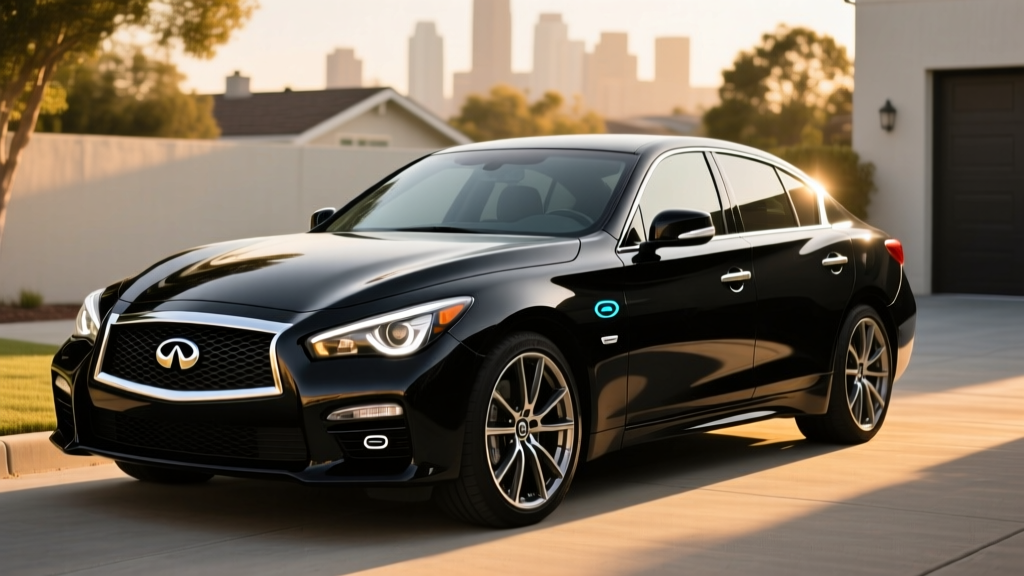
The 2014 Infiniti Q50S Hybrid was Infiniti's answer to the BMW ActiveHybrid 3 and Lexus GS 450h — a sport sedan that paired a supercharged V6 with an electric motor for 354 combined horsepower while returning up to 29 MPG on the EPA combined cycle. A decade later, it remains one of the more interesting used hybrid sedans on the market, offering genuine performance credentials alongside meaningful fuel savings over its non-hybrid sibling.
But buying a 10-plus-year-old hybrid in 2026 raises legitimate questions: How has the lithium-ion battery held up? What does replacement cost? And does a conventional hybrid (HEV) like this still make sense when plug-in hybrids and full EVs dominate the market? This guide breaks down everything a used buyer needs to know.
2014 Q50S Hybrid Fuel Economy: EPA Numbers vs Real World
The EPA rated the rear-wheel-drive 2014 Q50S Hybrid at 29 MPG city / 33 MPG highway / 30 MPG combined. The all-wheel-drive variant drops slightly to 27 city / 32 highway / 29 combined. These were strong numbers for a 354-hp sport sedan in 2014, and they remain respectable today.
| Configuration | City MPG | Highway MPG | Combined MPG |
|---|---|---|---|
| RWD (EPA) | 29 | 33 | 30 |
| AWD (EPA) | 27 | 32 | 29 |
| RWD (Real-World Est.) | 30–33 | 28–31 | 28–31 |
| AWD (Real-World Est.) | 28–30 | 26–29 | 27–29 |
Source: fueleconomy.gov
Real-World MPG: Why Hybrids Often Beat EPA in the City
Like most conventional hybrids, the Q50S Hybrid tends to exceed its EPA city estimate in stop-and-go driving. The electric motor handles low-speed acceleration, the engine shuts off at stops, and regenerative braking recaptures energy that a gas-only car wastes as heat. Owners on fuel-tracking platforms like Fuelly commonly report 30–33 MPG in mixed suburban driving with the RWD model.
Highway driving is where the hybrid advantage narrows. At sustained 70–80 mph speeds, the electric motor contributes less, and the supercharged 3.5L V6 does most of the work. Expect highway figures closer to 28–31 MPG in real-world conditions — slightly below the EPA sticker, as is common with most vehicles.
Compared to the gas-only 2014 Q50 (21 city / 30 highway / 24 combined with the 3.7L V6), the hybrid delivers roughly 25% better combined fuel economy while adding 24 horsepower. That's a meaningful trade.
Powertrain Specs: Supercharged V6 Meets Electric Motor
The 2014 Q50S Hybrid uses Infiniti's Direct Response Hybrid system, which is fundamentally different from the power-split (planetary gearset) systems found in Toyota and Lexus hybrids. Instead, it uses a single electric motor sandwiched between the engine and a 7-speed automatic transmission, with two clutches that can disconnect the engine entirely.
| Component | Specification |
|---|---|
| Engine | 3.5L supercharged V6 (VQ35HR derivative) |
| Engine Output | 302 hp @ 6,800 rpm / 258 lb-ft @ 3,500 rpm |
| Electric Motor | 50 kW (67 hp) / 214 lb-ft |
| Combined System Output | 354 hp / 428 lb-ft (net) |
| Transmission | 7-speed automatic with manual mode |
| Drivetrain | RWD standard; AWD optional |
| 0–60 mph | ~4.9 seconds (RWD, manufacturer est.) |
| Hybrid Battery | ~1.4 kWh lithium-ion (non-plug-in) |
| Curb Weight | ~3,979 lbs (RWD) |
The supercharged 3.5L V6 is the same engine found in the Q50's corporate cousin, the Nissan 370Z's larger sibling — but here it's detuned slightly and augmented by the electric motor for seamless torque fill. The result is strong low-end thrust (the electric motor's 214 lb-ft is available from zero RPM) and a 0–60 time that outpaces the standard Q50 by roughly a full second.
How the Hybrid System Works on the Road
In normal driving, the system operates in several modes:
- Pure electric launch: The motor can propel the car from a stop at low speeds for very short distances (a few hundred feet at most)
- Engine assist: Under acceleration, both engine and motor deliver combined torque through the transmission
- Engine-only cruise: At steady highway speeds, the gasoline engine handles propulsion alone
- Regenerative braking: Lift-off and braking recapture kinetic energy to recharge the battery
- Engine-off coasting: Both clutches disengage, allowing the car to coast with zero engine drag — a feature Infiniti emphasized for highway efficiency
The transitions are generally smooth, though the single-motor/clutch design can produce occasional hesitation when the system switches between electric and gas modes — something Toyota's power-split system handles more seamlessly.
Battery Health, Warranty, and Replacement Cost
How Has the Q50S Hybrid Battery Held Up?
The 1.4 kWh lithium-ion pack in the Q50S Hybrid is relatively small and operates in a narrow state-of-charge window — the hybrid control system never fully charges or fully depletes it. This shallow-cycling strategy is the same approach Toyota and Honda use, and it's proven effective for longevity.
Owner reports and hybrid specialist shops indicate that the Q50S Hybrid battery generally holds up well past 120,000 miles. Capacity loss is gradual and manifests as slightly reduced electric-assist frequency and marginally lower city MPG — not sudden failure. This is consistent with most conventional hybrid batteries, which tend to degrade slowly rather than fail catastrophically.
That said, the Q50S Hybrid battery is less common than a Toyota Camry Hybrid pack, which means:
- Fewer aftermarket/refurbished options are available
- Specialist knowledge is concentrated at Infiniti dealers and a smaller network of independent hybrid shops
- Parts sourcing may take longer
Battery Replacement Cost
If the hybrid battery does require replacement on a 2014 Q50S Hybrid:
| Option | Estimated Cost (Parts + Labor) | Notes |
|---|---|---|
| New OEM from Infiniti dealer | $3,500 – $5,500 | Full factory pack, best longevity; limited availability for older models |
| Refurbished / reconditioned pack | $1,800 – $3,000 | Replaced cells in original housing; quality varies by vendor |
| Individual cell/module replacement | $800 – $1,500 | Only viable if a single module has failed; requires specialist diagnostic |
Before committing to a full battery replacement, have a hybrid specialist perform a module-level balance check. Often, one or two degraded modules drag down the entire pack, and targeted replacement restores most of the original capacity at a fraction of the cost.
2014 Q50S Hybrid Used Pricing and Tax Credit Status
As of early 2026, used 2014 Infiniti Q50S Hybrid sedans typically trade between $10,000 and $16,000 depending on mileage, condition, drivetrain (RWD vs AWD), and regional demand. Low-mileage, well-maintained examples in premium colors can push toward $18,000 at specialty dealers.
Does the 2014 Q50S Hybrid Qualify for Any Tax Credit?
No. The federal §30D clean vehicle credit applies only to new plug-in electric vehicles (BEVs and PHEVs) meeting current battery-sourcing, MSRP, and buyer-income requirements. The Q50S Hybrid is a conventional HEV with no plug-in capability, so it has never qualified for the federal EV tax credit.
For used hybrid purchases, the IRS does offer a Used Clean Vehicle Credit of up to $4,000 (30% of sale price, capped at $4,000) — but this credit is restricted to used BEVs and PHEVs, not conventional hybrids. The Q50S Hybrid does not qualify.
Some states offer their own incentives for used hybrids or efficient vehicles, but these are increasingly rare and vary by jurisdiction. Check your state's energy or DMV website for current programs.
Reliability, Maintenance, and Common Issues
The 2014 Q50S Hybrid shares much of its mechanical DNA with the standard Q50, which means routine maintenance (brakes, suspension, cooling system) follows familiar Infiniti patterns. The hybrid system itself adds relatively few failure-prone components — there's no high-voltage plug, no onboard charger, no thermal management system for the battery comparable to what full EVs require.
Common Issues Reported by Owners
- Hybrid system warning light: Occasionally triggered by 12V auxiliary battery issues rather than the high-voltage pack. Always check the 12V battery first.
- Transmission hesitation: The 7-speed automatic can exhibit brief lag during mode transitions (electric to gas). Software updates from Infiniti addressed some of these in early production models.
- Supercharger whine: Normal for this engine family, but excessive noise may indicate belt or bearing wear — a maintenance item, not a defect.
- Brake feel: The regenerative-to-friction brake blending can feel non-linear, especially when the battery is fully charged and regen capacity is reduced. This is a characteristic of the system, not a malfunction.
Maintenance Considerations
Because the hybrid system handles low-speed acceleration and regenerative braking captures most deceleration energy, the Q50S Hybrid tends to experience less brake pad wear than its gas-only counterpart. Many owners report original brake pads lasting 60,000–80,000 miles. The engine also sees less idle time and fewer cold-start cycles, which can extend oil life — though following the factory 5,000–7,500 mile oil change interval is still recommended.
Who Should Buy the 2014 Q50S Hybrid in 2026?
Pros
- 354 hp with 29–30 MPG combined — rare performance/efficiency combo
- No plug-in needed; drives exactly like a gas car
- 0–60 in ~4.9 seconds; genuinely quick
- Strong low-end electric torque fill
- Premium interior with Infiniti's build quality
- Used pricing ($10K–$16K) is very accessible
- Hybrid battery shallow-cycling design favors longevity
Cons
- No electric-only range — this is not a PHEV or EV
- Hybrid battery replacement is costly ($3,500+ OEM) and parts are niche
- Original factory battery warranty has expired
- No federal or state tax credit eligibility
- Infotainment system is dated by 2026 standards
- Hybrid system mode transitions can feel less smooth than Toyota/Lexus
- Limited hybrid specialist support vs. mainstream brands
Decision Framework: Hybrid vs PHEV vs EV
Choose the 2014 Q50S Hybrid if:
- You want a sporty sedan with meaningful fuel savings but zero lifestyle change
- You lack access to home or workplace charging (no plug required)
- Your budget is under $18,000 and you want premium badges
- You drive a mix of city and highway and value the city MPG boost
Consider a used PHEV (e.g., Toyota Prius Prime, Honda Clarity PHEV) if:
- You can charge at home and want 25–50 miles of daily electric driving
- Your commute is under 40 miles round-trip (most PHEVs cover this on battery alone)
- You want lower fuel costs than a conventional hybrid but aren't ready for full EV range limitations
Consider a used BEV (e.g., Chevrolet Bolt, Tesla Model 3) if:
- You have reliable Level 2 home charging
- You want the lowest per-mile fuel cost (~$0.03–0.05/mi vs ~$0.12–0.15/mi for the Q50S Hybrid)
- You're willing to plan around DC fast charging on road trips
Frequently Asked Questions
How many MPG does the 2014 Q50S Hybrid get?
The EPA rates the RWD model at 29 city / 33 highway / 30 combined, and the AWD at 27 city / 32 highway / 29 combined. Real-world city driving often yields 30–33 MPG thanks to the hybrid system's regenerative braking and engine-off stops. Highway driving typically returns 28–31 MPG. See fueleconomy.gov for official figures.
Does the Q50S Hybrid have any electric-only range?
No. This is a conventional hybrid (HEV), not a plug-in hybrid. The small 1.4 kWh battery enables brief electric motor assist and very short low-speed electric movement (a few hundred feet), but there is no meaningful electric-only driving range. You never plug it in.
Is the 2014 Q50S Hybrid reliable?
The hybrid powertrain has proven durable in owner reports, with the lithium-ion battery typically lasting well past 120,000 miles with gradual degradation rather than sudden failure. The gasoline engine and 7-speed transmission share commonality with other Infiniti/Nissan products, and parts availability is generally good. The main risk is the hybrid battery replacement cost ($3,500–$5,500 OEM) if it does eventually need service — though module-level repair can reduce this significantly.
What is the hybrid battery replacement cost?
A new OEM battery from an Infiniti dealer runs approximately $3,500–$5,500 including labor. Refurbished packs are available for $1,800–$3,000, and individual module replacement (if only one or two cells have degraded) can cost $800–$1,500 at a hybrid specialist. Given the vehicle's current used value of $10,000–$16,000, a full OEM battery replacement represents a significant percentage of the car's worth.
Does the 2014 Q50S Hybrid qualify for any tax credit?
No. The federal §30D credit and the Used Clean Vehicle Credit (up to $4,000) apply only to plug-in vehicles (BEVs and PHEVs). As a conventional hybrid with no plug-in capability, the Q50S Hybrid has never qualified for federal EV incentives. State-level hybrid incentives are rare and vary by jurisdiction — consult your state's energy office for current programs. See IRS.gov for credit rules.
How does the Q50S Hybrid compare to a Lexus GS 450h or BMW ActiveHybrid 3?
The Q50S Hybrid sits between these rivals in character. The Lexus GS 450h offers more refinement and a proven hybrid system but costs significantly more on the used market ($18,000–$25,000 for similar-year models). The BMW ActiveHybrid 3 is closer in price and performance but uses a turbocharged inline-6 hybrid setup with a more complex maintenance profile. The Q50S Hybrid offers the best value proposition of the three if you can find a clean example.
Can I convert the Q50S Hybrid to a plug-in hybrid?
No. There is no factory or aftermarket plug-in conversion available for this platform. The hybrid system was designed as a self-contained HEV, and the battery pack, power electronics, and control software are not compatible with external charging. If you want plug-in capability, you'll need to look at a different vehicle.