Quick Verdict: Is the 2014 Hyundai Sonata Hybrid Sedan Still Worth It?
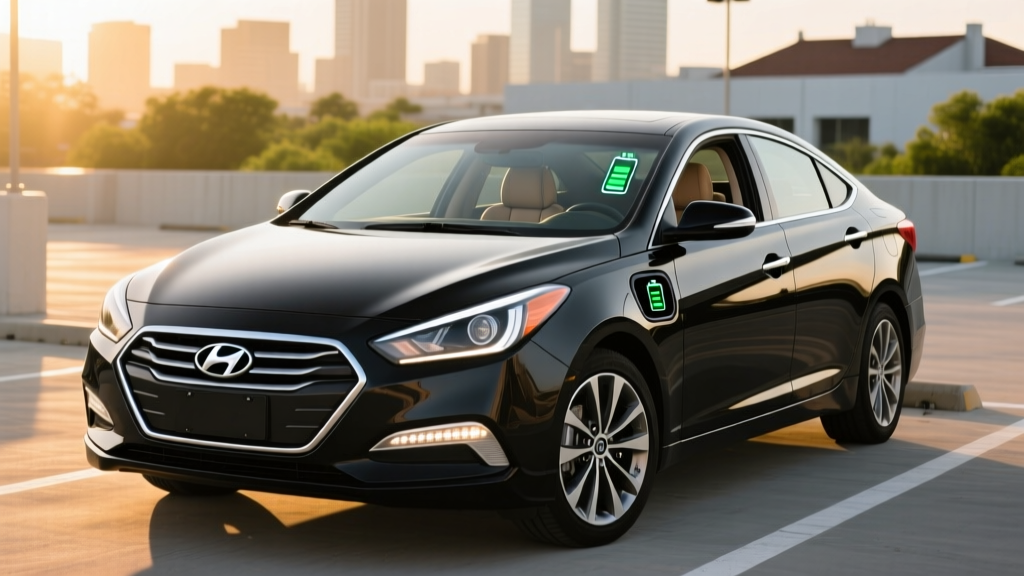
The 2014 Hyundai Sonata Hybrid sedan was one of the first mainstream midsize sedans to challenge the Toyota Camry Hybrid and Ford Fusion Hybrid with a conventional hybrid electric vehicle (HEV) powertrain — no plug required. A decade-plus later, it remains a compelling used-car option for drivers who want hybrid efficiency without the complexity of a plug-in hybrid (PHEV) or the upfront cost of a full battery electric vehicle (BEV).
With an EPA-estimated 36 MPG combined, a 47-kW electric motor paired with a 2.4-liter four-cylinder engine, and Hyundai's generous 10-year/100,000-mile hybrid battery warranty (transferable to second owners on models certified through Hyundai's CPO program), the 2014 Sonata Hybrid still holds up as a practical daily commuter. But prospective used buyers need to understand real-world fuel economy expectations, battery degradation realities, and where this car fits in a 2026 market now flooded with PHEVs and affordable EVs.
HEV vs PHEV: What the 2014 Sonata Hybrid Actually Is
The 2014 Hyundai Sonata Hybrid is a conventional hybrid electric vehicle (HEV). It cannot be plugged in. Its 1.4 kWh lithium-polymer battery pack charges exclusively through regenerative braking and the gasoline engine. This is fundamentally different from a plug-in hybrid (PHEV) like the later Sonata Plug-In Hybrid (introduced for the 2016 model year), which offered roughly 27 miles of electric-only range from a larger 9.8 kWh battery and could charge from a wall outlet.
HEV vs PHEV vs EV — Which Fits You?
| Feature | HEV (2014 Sonata Hybrid) | PHEV (e.g., 2016+ Sonata Plug-In) | BEV (e.g., Ioniq 6) |
|---|---|---|---|
| Plugs in? | No | Yes (Level 1/2) | Yes (Level 1/2/DC) |
| Electric-only range | ~0.5 mi (low-speed creep) | 20–35 mi typical | 250–360+ mi |
| Home charging needed? | No | Recommended for max benefit | Essential |
| Federal tax credit (new) | None | Up to $7,500 (varies) | Up to $7,500 (§30D) |
| Best for | No home charging access; simple ownership | Short commutes + road trips | Home charging + lowest running cost |
The 2014 Sonata Hybrid falls squarely in the HEV column — ideal if you lack home charging infrastructure or want zero behavior change from a gas car.
Fuel Economy: EPA Ratings and Real-World MPG
The EPA rates the 2014 Hyundai Sonata Hybrid at the following fuel economy figures:
| City | Highway | Combined |
|---|---|---|
| 36 MPG | 40 MPG | 36 MPG |
Real-World MPG: What Owners Actually Report
Hybrids frequently exceed their EPA city ratings in stop-and-go traffic because regenerative braking recovers energy that a gas car wastes as heat. The 2014 Sonata Hybrid is no exception. Owner-reported data on Fuelly and Hyundai forums clusters around 33–38 MPG combined in mixed driving, with city-heavy commuters occasionally touching 40 MPG in warm weather.
However, highway-dominant drivers should expect the lower end of that range. The Sonata Hybrid's six-speed automatic transmission (unlike the e-CVT found in Toyota hybrids) means the engine operates less efficiently at sustained highway speeds. At 75+ MPH on flat interstate, expect closer to 34–36 MPG. Cold weather (below 35°F) can drop combined figures by 3–5 MPG as the engine runs more frequently for cabin heat and the battery's chemical efficiency decreases.
Powertrain Specs: Engine, Motor, and Combined Output
| Specification | 2014 Sonata Hybrid |
|---|---|
| Gasoline engine | 2.4L 4-cylinder, 159 HP @ 5,500 RPM |
| Electric motor | 47 kW (63 HP), 151 lb-ft torque |
| Combined system output | 199 HP |
| Transmission | 6-speed automatic (not e-CVT) |
| Hybrid battery | 1.4 kWh lithium-polymer (behind rear seat) |
| 0–60 MPH | ~8.5 seconds |
| Drivetrain | Front-wheel drive |
| Curb weight | ~3,575 lbs |
The 2014 Sonata Hybrid uses Hyundai's proprietary parallel hybrid architecture. Unlike Toyota's power-split e-CVT system, Hyundai routes both the engine and motor through a conventional six-speed automatic, which gives the car a more familiar driving feel with distinct gear shifts — but sacrifices some low-speed efficiency. The electric motor can propel the car alone at low speeds (roughly up to 25 MPH under light throttle), though the 1.4 kWh battery limits pure-electric distance to well under a mile.
Hybrid Battery Longevity, Warranty, and Replacement Cost
Hybrid Battery Warranty
Original coverage: 10 years / 100,000 miles (whichever comes first) for the hybrid battery pack and hybrid-system components.
Second-owner transferability: Hyundai's hybrid battery warranty originally transferred to subsequent owners, but only at the reduced powertrain rate of 5 years/60,000 miles unless the vehicle was purchased through Hyundai's Certified Pre-Owned (CPO) program, which can restore portions of the original coverage.
2026 reality: A 2014 model is now 12 years old. The original 10-year battery warranty has expired for all examples regardless of mileage. Buyers are purchasing this car on the remaining health of the battery, not warranty protection.
Battery Degradation and Replacement Cost
The 1.4 kWh lithium-polymer pack in the 2014 Sonata Hybrid is small by modern standards, which works in its favor: shallow charge-discharge cycles and conservative state-of-charge management (the system never fully charges or fully depletes the pack) reduce degradation. Owner reports on Hyundai forums and Edmunds owner reviews suggest most 2014 Sonata Hybrids retain usable battery capacity well past 150,000 miles, though some high-mileage examples (200,000+) show reduced electric-assist function and a 2–4 MPG drop from original ratings.
If the hybrid battery fails outside warranty, replacement costs typically range from $2,200 to $3,800 for a refurbished or aftermarket pack, or $4,500 to $5,800 for a new OEM unit installed at a Hyundai dealer. Independent hybrid specialists in major metro areas often offer reconditioned packs at the lower end of that range. Given that a 2014 Sonata Hybrid now trades for $7,000–$12,000 on the used market, a full OEM battery replacement represents a significant percentage of the car's value — factor this into purchase negotiations.
Reliability Track Record
The 2014 Sonata Hybrid earned average to slightly above-average reliability ratings from major sources. J.D. Power gave it a 3/5 predicted reliability score, and Consumer Reports rated it average for the model year. The conventional six-speed automatic transmission has proven more durable than some competitors' early CVT designs, and the hybrid system itself has few failure points beyond the battery pack. Common non-hybrid complaints include brake actuator wear (the regenerative braking system uses an electric servo that can develop faults around 100,000–130,000 miles, with replacement running $800–$1,200) and occasional 12V auxiliary battery drain if the car sits unused for extended periods.
Pricing, Tax Credits, and Ownership Economics in 2026
Used Market Pricing
As of early 2026, the 2014 Hyundai Sonata Hybrid sedan trades in the used market at approximately:
- Private party (fair condition, 120K+ miles): $6,500–$8,500
- Private party (good condition, 80K–120K miles): $8,500–$11,000
- Dealer/CPO (lower mileage, certified): $10,500–$13,500
Tax Credit Eligibility
The 2014 Sonata Hybrid does not qualify for the federal §30D new clean vehicle tax credit — it was never eligible even when new, as conventional HEVs have never been included in the federal plug-in vehicle credit program. That credit applies only to plug-in hybrids (PHEVs) and battery electric vehicles (BEVs) meeting current battery-sourcing and MSRP requirements.
For used purchases, the IRS previously offered a used clean vehicle credit (IRC §25E) of up to $4,000 (30% of sale price, capped at $4,000) for qualifying used EVs and PHEVs. However, conventional hybrids like the 2014 Sonata Hybrid have never been eligible for this credit either. Budget the full purchase price with no federal incentive offset.
Five-Year Operating Cost Snapshot
At 35 MPG observed and $3.40/gallon national average (2026), the 2014 Sonata Hybrid costs approximately $1,460/year in fuel for 15,000 miles of driving. Compare that to the non-hybrid 2014 Sonata 2.4L (28 MPG combined), which costs roughly $1,820/year — a savings of about $360 annually, or $1,800 over five years. That savings narrows the price premium you might pay over a non-hybrid Sonata on the used market.
Who Should Buy the 2014 Sonata Hybrid vs a Modern EV or PHEV?
Pros
- No plug-in charging required — works for apartment dwellers
- Proven hybrid reliability with conservative battery management
- Low used-car entry price ($7K–$12K)
- 36 MPG combined still competitive in 2026
- Spacious midsize cabin with 16.4 cu ft trunk (battery does eat some cargo room vs non-hybrid)
- Conventional 6-speed auto feels natural to gas-car drivers
Cons
- Hybrid battery warranty has expired on all 2014 examples
- Highway MPG trails Toyota Camry Hybrid (41 MPG hwy)
- No electric-only driving capability beyond low-speed creep
- Dated infotainment (no Apple CarPlay/Android Auto without aftermarket head unit)
- No DC fast charging (not applicable to HEVs)
- Brake actuator replacement can be costly at high mileage
Decision Framework: Is This the Right Car for You?
Choose the 2014 Sonata Hybrid if:
- You cannot charge at home (apartment, street parking, no garage outlet)
- Your budget is under $12,000 and you want hybrid fuel savings
- You drive 12,000–18,000 miles/year and fuel cost matters
- You want a midsize sedan with proven reliability and no range anxiety
Choose a modern PHEV (e.g., 2024+ Toyota Prius Prime, Hyundai Tucson PHEV) if:
- You have home Level 2 charging and a commute under 35 miles
- You want electric-only daily driving with gas-engine road-trip range
- You can absorb a $28,000–$38,000 purchase price and want the §30D tax credit
Choose a full BEV (e.g., Chevy Equinox EV, Hyundai Ioniq 5) if:
- You have reliable home charging and want the lowest per-mile cost (~$0.04/mile vs $0.10/mile for this hybrid)
- Your daily driving is under 250 miles and you want zero tailpipe emissions
- You can budget $30,000+ and want modern ADAS, infotainment, and warranty coverage
Frequently Asked Questions
How many MPG does the 2014 Hyundai Sonata Hybrid get?
The EPA rates it at 36 MPG city, 40 MPG highway, and 36 MPG combined. Real-world owners typically see 33–38 MPG combined depending on driving mix and climate. City-heavy driving often yields results at or slightly above the EPA city figure thanks to regenerative braking.
Can the 2014 Sonata Hybrid drive on electric power only?
Only at very low speeds (under ~25 MPH) and for less than a mile. The 1.4 kWh battery is too small for meaningful electric-only driving. This is a conventional hybrid (HEV), not a plug-in hybrid — it has no electric-only range rating and cannot be plugged in.
Is the hybrid battery in a used 2014 Sonata Hybrid reliable?
Most 2014 Sonata Hybrid battery packs have proven durable past 150,000 miles due to conservative charge management. However, the original 10-year/100,000-mile warranty has expired on all examples. Have a pre-purchase inspection include a hybrid battery health check (measuring internal resistance and capacity). Budget $2,200–$5,800 as a contingency for eventual replacement.
What does it cost to replace the hybrid battery?
Refurbished or aftermarket packs run $2,200–$3,800 installed. A new OEM Hyundai pack costs $4,500–$5,800 installed at a dealership. Independent hybrid shops in major cities often offer the best value. Given the car's $7K–$12K used value, weigh whether a battery replacement makes economic sense or whether that money would be better applied toward a newer PHEV or EV.
Does the 2014 Sonata Hybrid qualify for any tax credits?
No. The federal §30D clean vehicle credit applies only to plug-in vehicles (PHEVs and BEVs). Conventional hybrids have never qualified. The used vehicle credit (§25E) also excludes non-plug-in hybrids. Some states may offer minor incentives, but do not count on them.
How does the 2014 Sonata Hybrid compare to the Toyota Camry Hybrid?
The 2014 Camry Hybrid rates at 41 MPG combined (vs 36 for the Sonata) and uses Toyota's proven e-CVT system. However, the Sonata Hybrid often trades for $1,000–$2,000 less on the used market, offers a more conventional driving feel with its six-speed automatic, and has a slightly larger trunk. If maximum MPG is the priority, the Camry wins. If value and driving dynamics matter more, the Sonata is competitive.
What should I check before buying a used 2014 Sonata Hybrid?
- Hybrid battery health: Ask for a State of Health (SoH) readout from a Hyundai dealer or hybrid specialist scan tool.
- Brake actuator: Test for smooth regenerative-to-friction braking transitions; grinding or pulsing near stops can signal actuator wear ($800–$1,200 repair).
- Transmission shifts: The 6-speed auto should shift cleanly; hesitation or shuddering between 1st and 2nd gear can indicate fluid neglect.
- Maintenance records: Verify regular oil changes (hybrids still need them) and cabin air filter replacements.
- Rust inspection: Check undercarriage and wheel wells, especially on examples from salt-belt states.
Sources: EPA Fuel Economy — 2014 Hyundai Sonata Hybrid | IRS Used Clean Vehicle Credit (§25E) | NHTSA Safety Ratings — 2014 Sonata Hybrid