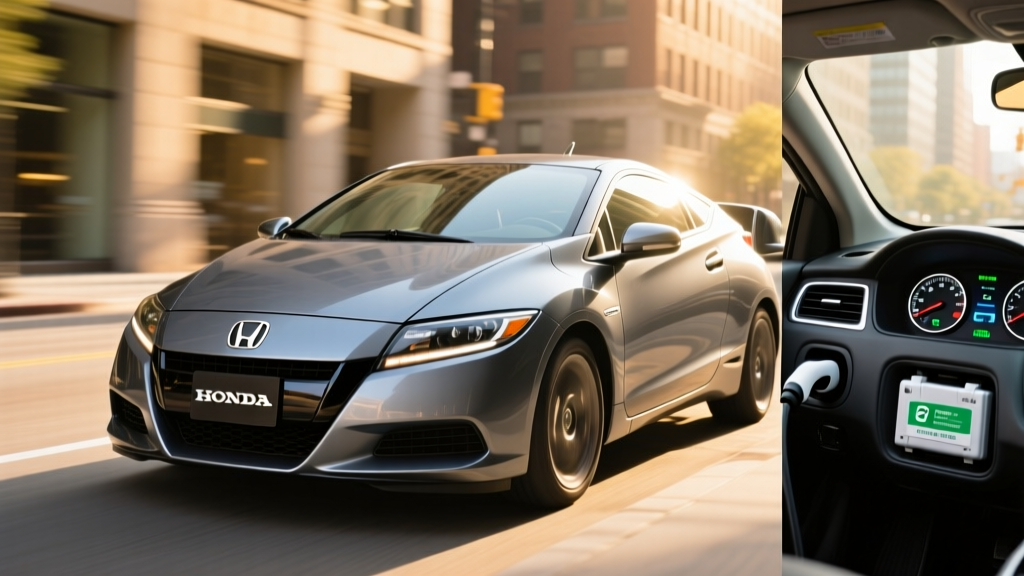
The 2014 Honda CR-Z occupies a strange corner of hybrid history. Marketed as a "sport hybrid," it paired a 1.5-liter four-cylinder with Honda's Integrated Motor Assist (IMA) system in a sleek two-door coupe body. Honda discontinued the CR-Z after the 2016 model year, so every example on the road today is a used purchase. But with rising fuel costs and growing interest in affordable, efficient daily drivers, the 2014 CR-Z remains a compelling option on the used market — if you understand exactly what you're getting.
This guide covers the 2014 Honda CR-Z hybrid's fuel economy, powertrain specs, real-world efficiency, battery longevity, and ownership costs. We'll also clarify how this conventional hybrid (HEV) compares to plug-in hybrids (PHEVs) and full electric vehicles (BEVs) so you can decide which electrified powertrain actually fits your driving life.
2014 Honda CR-Z: Powertrain and Performance Specs
The CR-Z uses Honda's Integrated Motor Assist (IMA) system — a mild hybrid setup where a small electric motor sits between the engine and transmission, providing torque assist during acceleration and enabling regenerative braking. Unlike Toyota's more robust Hybrid Synergy Drive, the IMA system cannot propel the car on electric power alone under normal conditions. The electric motor supplements the gasoline engine; it does not replace it.
| Specification | Value |
|---|---|
| Engine | 1.5L i-VTEC inline-4 |
| Electric Motor | IMA (15 kW / 20 hp) |
| Combined Horsepower | 130 hp @ 6,000 rpm |
| Combined Torque | 140 lb-ft (CVT) / 127 lb-ft (6MT) @ 1,000–3,000 rpm |
| Transmission | 6-speed manual or CVT |
| Hybrid System Type | Conventional hybrid (HEV) — no plug-in |
| Hybrid Battery | Nickel-Metal Hydride (NiMH), ~0.6 kWh gross |
| 0–60 mph | ~9.1 seconds (CVT) |
| Drivetrain | Front-wheel drive |
| Curb Weight | ~2,850 lbs |
The combined 130 hp sounds modest, but the electric motor's low-end torque fill gives the CR-Z respectable punch around town. The 6-speed manual — a rarity among hybrids — lets you hold gears and extract more from the powertrain. Most buyers opted for the CVT, which prioritizes efficiency over engagement.
Fuel Economy: EPA Ratings and Real-World MPG
The 2014 CR-Z's headline number is its EPA-rated fuel economy. According to fueleconomy.gov, the EPA ratings break down as follows:
| Transmission | City MPG | Highway MPG | Combined MPG |
|---|---|---|---|
| CVT | 36 | 39 | 37 |
| 6-Speed Manual | 31 | 39 | 34 |
Real-World MPG vs. EPA Sticker
The CR-Z's EPA numbers hold up well in practice, particularly for the CVT model. Owner-reported data on fuel-tracking platforms consistently shows combined averages in the 35–40 MPG range for CVT drivers who do a mix of city and highway driving. The manual transmission model typically lands closer to 32–36 MPG combined, depending on driving style — enthusiastic shifting will push you toward the lower end.
Hybrids often exceed their EPA city ratings in stop-and-go traffic because regenerative braking recovers energy that a conventional car wastes as heat. The CR-Z's IMA system captures some of this energy, though its relatively small battery and mild hybrid architecture limit the benefit compared to full hybrids like the Toyota Prius (which uses a larger battery and more aggressive regen). On the highway, the CR-Z's aerodynamic coupe body helps it hit or slightly exceed its 39 MPG rating at steady speeds under 70 mph. Above 75 mph, efficiency drops noticeably — expect 33–35 MPG at sustained interstate speeds.
Cold weather impact: In freezing temperatures (below 32°F), expect a 5–10% reduction in fuel economy. The NiMH battery is less efficient when cold, and the engine runs richer during warm-up. This is a modest penalty compared to the 20–30% range loss a full EV experiences in the same conditions, but it's worth noting for northern-climate buyers.
HEV vs. PHEV vs. EV: Where Does the CR-Z Fit?
The CR-Z is a conventional hybrid (HEV). It generates all its electricity internally — the gasoline engine and regenerative braking charge the small NiMH battery. You never plug it in. This is a fundamental distinction from plug-in hybrids (PHEVs) and battery electric vehicles (BEVs).
HEV vs. PHEV vs. BEV — Quick Comparison
| Feature | HEV (e.g., CR-Z) | PHEV (e.g., Prius Prime) | BEV (e.g., Model 3) |
|---|---|---|---|
| Plug-in Charging | No | Yes | Yes |
| Electric-Only Range | None (motor assist only) | 25–45 miles typical | 250–400+ miles |
| Gasoline Required | Yes, always | Yes, for longer trips | No |
| Federal Tax Credit (§30D) | Not eligible | Up to $7,500 (if eligible) | Up to $7,500 (if eligible) |
| Home Charging Needed | No | Recommended (Level 2) | Essential |
| Typical Combined MPG / MPGe | 34–57 MPG | 40–50 MPG + electric | 100–140 MPGe |
Who Should Choose the CR-Z (HEV)?
The CR-Z makes sense if you want better fuel economy without changing your refueling habits. You gas up and go — no charging infrastructure, no range planning, no plug-in logistics. It's ideal for apartment dwellers without home charging access, drivers in areas with sparse public charging, or anyone who simply wants a fun, efficient coupe without the complexity of a plug-in powertrain.
Who Should Look at a PHEV Instead?
If you can charge at home (even a standard 120V outlet) and your daily commute is under 40 miles round-trip, a modern PHEV like the 2026 Toyota Prius Prime (44 miles electric-only) or the Hyundai Tucson PHEV lets you do most daily driving on electricity while keeping a gas engine for road trips. The per-mile cost of home electricity is typically 3–5 cents per mile versus 12–18 cents per mile for gasoline at current prices.
Who Should Consider a Full EV?
If you have reliable home Level 2 charging, drive under 250 miles daily, and want the lowest operating costs and zero tailpipe emissions, a modern BEV delivers a fundamentally different ownership experience. The trade-off is a higher upfront purchase price (though narrowing) and dependence on charging infrastructure for road trips.
Battery Longevity, Warranty, and Replacement Cost
The 2014 CR-Z's IMA battery is a nickel-metal hydride (NiMH) pack with roughly 0.6 kWh of gross capacity. This is a small, relatively simple battery compared to the 50–100 kWh lithium-ion packs in modern EVs and PHEVs. That small size works in your favor: there are fewer cells to degrade, and the IMA system's conservative charge/discharge management (it never fully depletes or fully charges the pack) reduces stress on the chemistry.
Hybrid Battery Warranty and Expected Lifespan
Original warranty: Honda covered the IMA battery for 8 years / 100,000 miles (10 years / 150,000 miles in CARB states like California, New York, and Massachusetts). For a 2014 model, this factory warranty expired between 2022 and 2024 depending on your state and purchase date.
Expected lifespan: Honda IMA batteries in the CR-Z have demonstrated solid longevity. Many owners report 120,000–180,000+ miles on the original pack. However, NiMH batteries gradually lose capacity over time and with heat exposure. A 12-year-old CR-Z with 100,000+ miles may show reduced hybrid system performance — the car will still drive, but fuel economy may drop by 2–5 MPG and the electric assist will be weaker.
Replacement cost: A refurbished IMA battery for the CR-Z typically runs $1,500–$2,500 installed at an independent hybrid specialist. A new OEM battery from Honda, if available, can exceed $3,000. Third-party refurbished packs from vendors like BumbleBee Batteries or Green Bean Battery are common and often come with their own 3–5 year warranties.
Signs of IMA Battery Degradation
Watch for these indicators when evaluating a used CR-Z:
- IMA warning light: Illuminates when the system detects a battery fault or cell imbalance. A scan tool can pull specific diagnostic codes.
- Reduced assist: The electric motor provides noticeably less torque boost during acceleration.
- Lower MPG: A sustained drop of 3+ MPG below the EPA rating (controlling for driving style and weather) often signals battery wear.
- Recalibration cycling: The IMA system periodically runs a "recal" where it fully discharges and recharges the battery. Frequent recalibrations (more than once every few weeks) indicate weakening cells.
2014 CR-Z Trims, Pricing, and Tax Credit Status
Honda offered the 2014 CR-Z in two trims: the base CR-Z and the CR-Z EX. Both used the identical IMA hybrid powertrain.
| Trim | Original MSRP | 2026 Used Market Range |
|---|---|---|
| CR-Z (base, CVT or 6MT) | $20,145 | $8,000–$13,000 |
| CR-Z EX (CVT or 6MT) | $22,445 | $10,000–$16,000 |
The EX trim added a premium audio system, Bluetooth, leather-wrapped steering wheel, fog lights, and a rear spoiler. Navigation was available as a standalone option on the EX.
Federal Tax Credit Eligibility
The 2014 Honda CR-Z does not qualify for the federal §30D clean vehicle tax credit. Under current IRS rules, the §30D credit applies only to new plug-in electric vehicles (BEVs and PHEVs) that meet battery capacity, critical mineral sourcing, MSRP caps, and buyer income limits. Conventional hybrids (HEVs) like the CR-Z have never been eligible for this credit. Some states historically offered small rebates for hybrids, but most have shifted incentive programs toward plug-in vehicles.
If you're shopping for a used electrified vehicle and want a tax benefit, the used clean vehicle credit (up to $4,000 or 30% of the sale price, whichever is less) applies only to used BEVs and PHEVs purchased from a dealer for under $25,000 — not to conventional hybrids. The CR-Z does not qualify.
Reliability and Common Issues
The CR-Z benefits from Honda's strong reliability reputation and a powertrain derived from the well-proven Civic platform. The 1.5L i-VTEC engine is simple and durable, and the IMA system has been in production since the original 2000 Insight. Major mechanical failures are uncommon when the car has been maintained properly.
That said, a few known issues surface in owner communities:
- IMA battery degradation: As discussed above, this is the most significant age-related concern on a 12-year-old hybrid.
- 12V battery drain: The CR-Z uses a standard 12V auxiliary battery for electronics and starting. If the car sits for extended periods, the 12V can drain, which also disables the IMA system. A battery tender or regular driving prevents this.
- CVT behavior: The CVT is reliable but not sporty. Some owners report a "rubber band" sensation under hard acceleration. Honda's CVT fluid should be changed at recommended intervals (every 30,000–60,000 miles) to ensure longevity.
- Air conditioning compressor: The CR-Z uses an electric A/C compressor (common in hybrids). Replacement is more expensive than a belt-driven compressor — budget $800–$1,200 if it fails.
Overall, the CR-Z is a low-maintenance, reliable vehicle when properly cared for. The hybrid system adds complexity compared to a conventional Civic, but the IMA architecture is one of the simpler and more proven hybrid systems on the market.
Pros and Cons: The 2014 CR-Z as a Used Hybrid Buy
Pros
- 37 MPG combined (CVT) is genuinely efficient
- Available 6-speed manual — rare in any hybrid
- Sporty coupe styling that still looks fresh
- Low curb weight (~2,850 lbs) aids agility
- Honda reliability and parts availability
- Affordable used pricing ($8K–$16K)
- No plug-in charging required
Cons
- Only two seats — impractical for families
- 9.1-second 0–60 is slow by modern standards
- IMA system is mild hybrid — no electric-only driving
- Cargo space is limited (22.7 cu ft behind seats)
- No federal or state tax credit eligibility
- Discontinued model — long-term parts uncertainty
- Factory warranty expired — battery replacement is out-of-pocket
Who Should Buy the 2014 Honda CR-Z?
Decision Framework
Choose the CR-Z if: You want a fun, fuel-efficient coupe for commuting, you don't need back seats, you can't charge at home, and you want a proven hybrid under $16,000 with no plug-in logistics.
Look at a modern PHEV if: You have home charging access, want to drive on electricity for daily commutes, need four doors, and are willing to spend $28,000–$40,000+ for a new or certified pre-owned vehicle.
Look at a full EV if: You want the lowest per-mile operating cost, have Level 2 home charging, drive under 250 miles daily, and are ready to commit to electric-only driving.
The 2014 CR-Z won't win any efficiency contests against a 2026 Toyota Prius (57 MPG combined) or match the per-mile cost of a home-charged EV. But as an affordable, engaging, no-compromise-in-refueling hybrid coupe, it holds a unique position on the used market. If you find a well-maintained example with documented service history and a healthy IMA battery, the CR-Z delivers a rewarding ownership experience at a budget-friendly price point.
Frequently Asked Questions
How many MPG does the 2014 Honda CR-Z hybrid get?
The EPA rates the 2014 CR-Z at 36 city / 39 highway / 37 combined MPG with the CVT, and 31 city / 39 highway / 34 combined with the 6-speed manual. Real-world owner reports consistently show 35–40 MPG combined for the CVT in mixed driving.
Can the 2014 CR-Z drive on electric power alone?
No. The CR-Z uses Honda's IMA mild hybrid system, which provides electric motor assist to the gasoline engine during acceleration but cannot propel the car on electricity alone. There is no EV mode. The car always runs its gasoline engine when driving.
Does the 2014 Honda CR-Z qualify for any tax credit?
No. The CR-Z is a conventional hybrid (HEV), not a plug-in vehicle. The federal §30D clean vehicle tax credit applies only to new BEVs and PHEVs that meet battery sourcing, MSRP, and income requirements. The used clean vehicle credit (up to $4,000) also applies only to used plug-in vehicles. The CR-Z is ineligible for both.
How much does it cost to replace the hybrid battery in a CR-Z?
A refurbished IMA battery typically costs $1,500–$2,500 installed at an independent hybrid shop. A new OEM battery from Honda, if still available, can exceed $3,000. Many CR-Z owners report 120,000–180,000+ miles on the original battery before replacement is needed.
Is the 2014 CR-Z reliable?
Yes. The CR-Z uses proven Honda components — a 1.5L i-VTEC engine and the well-established IMA hybrid system. Major mechanical failures are uncommon with proper maintenance. The primary age-related concern is gradual IMA battery degradation, which reduces hybrid assist performance and fuel economy but does not strand the car.
How does the CR-Z compare to a Toyota Prius?
The Prius is more efficient (the 2014 Prius achieved 50 MPG combined vs. the CR-Z's 37 MPG), seats five, and uses a more robust full-hybrid system with electric-only low-speed capability. The CR-Z trades efficiency and practicality for sportier styling, a manual transmission option, and a more engaging driving experience. If maximum MPG is your priority, the Prius wins. If you want a hybrid that's actually fun to drive, the CR-Z has no direct rival.
Should I buy a 2014 CR-Z in 2026 or look at a newer hybrid?
If your budget is under $16,000 and you want a distinctive, efficient coupe, the CR-Z is a solid choice. If you can spend $25,000+, newer options like the Toyota Prius (57 MPG), Hyundai Ioniq Hybrid (58 MPG), or a PHEV offer significantly better efficiency, modern safety tech (automatic emergency braking, lane-keeping), and remaining factory warranty. The CR-Z's value proposition is its low entry price and unique character — not its technology.