Quick Verdict: A Pioneer PHEV Worth Considering on the Used Market
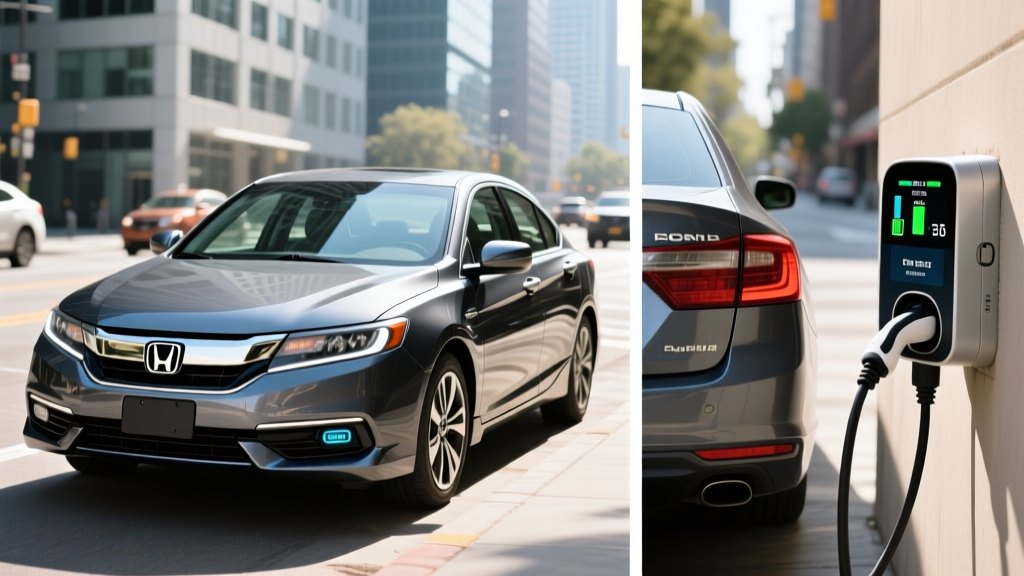
The 2014 Honda Accord Plug-In Hybrid was one of the first mainstream plug-in hybrids sold in the United States, offering a blend of electric commuting and gasoline flexibility that still holds relevance for budget-conscious used-car shoppers. With an EPA-rated 13 miles of electric-only range and a combined 46 MPG once the battery depletes, this midsize sedan delivers genuine fuel savings for drivers with short commutes and access to home charging.
More than a decade after its debut, the 2014 Accord PHEV remains a compelling used option — typically priced between $9,000 and $14,000 depending on mileage and condition. But prospective buyers need to understand the battery's state of health, what real-world range looks like in 2026, and whether this early-generation PHEV still makes sense compared to newer hybrids or full EVs.
| Specification | Value |
|---|---|
| EPA Electric-Only Range | 13 miles |
| EPA MPGe (Electric + Gas) | 115 MPGe combined |
| EPA MPG (Gas Only, Battery Depleted) | 46 MPG combined (47 city / 46 highway) |
| Total Combined Range | ~500 miles |
| Battery Capacity | 6.7 kWh gross (~5.0 kWh usable) |
| Battery Chemistry | Lithium-Ion (NMC) |
| Combined System Horsepower | 196 HP |
| Engine | 2.0L 4-cylinder Atkinson cycle + electric motor |
| Level 1 Charging (120V) | ~3 hours (0–100%) |
| Level 2 Charging (240V) | ~1 hour (0–100%) |
| DC Fast Charging | Not supported |
| Original MSRP | $39,780 |
| Used Price Range (2026) | $9,000 – $14,000 |
| Federal Tax Credit (Original) | $3,667 (no longer available for used purchases under §25E) |
HEV vs. PHEV: Understanding the Accord Plug-In Hybrid
Before evaluating this car, it's essential to distinguish between the two Accord hybrid variants Honda sold in the 2014 model year:
| Feature | 2014 Accord Hybrid (HEV) | 2014 Accord Plug-In Hybrid (PHEV) |
|---|---|---|
| Plug-In Charging | No — charges via regenerative braking and engine | Yes — plug into 120V or 240V outlet |
| Electric-Only Range | ~1 mile at low speeds | 13 miles (EPA) |
| Battery Size | 1.3 kWh | 6.7 kWh |
| EPA Combined MPG | 50 MPG | 46 MPG (gas mode) / 115 MPGe (with charge) |
| Trunk Space | 13.4 cu ft | ~8.5 cu ft (battery intrusion) |
| Original MSRP | ~$29,155 | $39,780 |
The conventional Accord Hybrid (HEV) does not plug in. It uses a small battery charged by the engine and regenerative braking to assist acceleration and enable brief low-speed electric driving. The Plug-In Hybrid (PHEV) variant adds a much larger battery, an onboard charger, and a charging port — allowing you to drive 13 miles on electricity alone before the gasoline engine takes over.
This distinction matters enormously for used buyers. If you see an Accord Hybrid listing, verify whether it's the HEV or the PHEV. The PHEV has a charge port on the front fender and a noticeably smaller trunk due to the larger battery pack positioned behind the rear seats.
How Many MPG Does the 2014 Accord Plug-In Hybrid Get?
| Driving Mode | City | Highway | Combined |
|---|---|---|---|
| Charge-Depleting (Electric + Gas) | 115 MPGe combined | ||
| Charge-Sustaining (Gas Only) | 47 MPG | 46 MPG | 46 MPG |
According to fueleconomy.gov, the 2014 Honda Accord Plug-In Hybrid achieves 115 MPGe when operating with a full battery charge, blending electric and gasoline driving. Once the battery depletes to its charge-sustaining threshold (after roughly 13 miles), the car operates as a conventional hybrid and delivers 46 MPG combined — 47 city and 46 highway.
Real-world MPG vs. EPA: Honda's two-motor hybrid system is particularly efficient in city driving, where regenerative braking and electric assist dominate. Many owners report exceeding the EPA city figure, seeing 48–52 MPG in stop-and-go traffic. Highway fuel economy tends to align closely with the EPA estimate or drop slightly at speeds above 70 mph, where aerodynamic drag reduces efficiency. Expect 43–46 MPG on sustained highway cruises at 75+ mph.
If you plug in nightly and your commute falls within the 13-mile electric window, your gasoline consumption drops dramatically. A driver covering 30 miles round-trip with daily charging might use only 1–2 gallons per week. Without plugging in, you're essentially driving a slightly less efficient Accord Hybrid HEV (46 vs. 50 MPG combined) while carrying the weight penalty of the larger battery.
Electric-Only Range: 13 Miles EPA, but What About Real-World?
The EPA rates the 2014 Accord PHEV at 13 miles of all-electric range. In practice, this figure varies significantly based on conditions:
- Mild weather, city driving (35–50 mph): 12–14 miles — the EPA estimate is achievable in moderate temperatures with gentle acceleration and frequent regenerative braking.
- Highway driving (65–75 mph): 8–10 miles — higher speeds drain the 5.0 kWh usable battery capacity faster, and the gasoline engine may engage sooner.
- Cold weather (below 40°F): 7–10 miles — lithium-ion battery efficiency drops in cold temperatures, and cabin heating draws additional energy. The engine may activate to provide heat even with battery charge remaining.
- Battery degradation (2026 reality): After 12 years, expect some capacity loss. A well-maintained pack may retain 80–90% of original capacity, yielding 10–12 miles of real-world electric range. A degraded pack could drop to 7–9 miles. Always request a battery state-of-health reading before purchasing.
The total combined range — electric plus gasoline — is approximately 500 miles, thanks to the 12.4-gallon fuel tank and the efficient hybrid powertrain. This eliminates range anxiety for road trips while still providing meaningful electric commuting for short-distance drivers.
Powertrain and Performance
The 2014 Accord PHEV uses Honda's two-motor hybrid system, pairing a 2.0-liter Atkinson-cycle four-cylinder engine with a 124-kW electric drive motor and a smaller generator motor. Combined system output is 196 horsepower — adequate for confident highway merging and passing, though not sporty.
The powertrain operates in three modes:
- EV Drive: Pure electric propulsion using battery energy, up to approximately 62 mph under gentle throttle.
- Hybrid Drive: The gasoline engine generates electricity to power the drive motor, with excess energy charging the battery. This is the primary mode during moderate acceleration and highway cruising.
- Engine Drive: At steady highway speeds, a lock-up clutch connects the engine directly to the wheels for maximum mechanical efficiency.
Acceleration from 0–60 mph takes approximately 7.5 seconds — competitive with the four-cylinder Accord of the era. The transition between electric and gasoline power is generally smooth, though the engine can become vocal under hard acceleration due to the Atkinson cycle's characteristics and the absence of a traditional stepped transmission.
Charging: Level 1, Level 2, and No DC Fast Charging
The 2014 Accord PHEV supports AC charging only — there is no DC fast charging capability, which is typical for PHEVs of this era with small battery packs.
| Charging Level | Power | Time (0–100%) | Practical Notes |
|---|---|---|---|
| Level 1 (120V household outlet) | ~1.4 kW | ~3 hours | Sufficient for overnight charging; included portable cord |
| Level 2 (240V home or public station) | ~6.6 kW | ~1 hour | Requires J1772 connector; ideal for daily home charging |
| DC Fast Charging | Not supported | N/A | No CCS or CHAdeMO port |
For most PHEV owners, Level 1 charging from a standard household outlet is perfectly adequate. Plugging in when you arrive home yields a full charge well before morning, even on a 120V circuit. Level 2 charging is faster but rarely necessary given the small 6.7 kWh battery — the cost of a dedicated Level 2 home station ($500–$1,200 for equipment, plus $500–$2,000 for electrical installation) may not justify the convenience gain for a battery this small.
The charge port uses the standard SAE J1772 connector, compatible with virtually all public Level 2 charging stations in the United States. However, paying for public Level 2 charging rarely makes economic sense for a PHEV — at typical public rates of $0.25–$0.49 per kWh, you'd spend $1.50–$3.00 for a full charge that yields only 13 miles of range, equivalent to 11–23 cents per mile. Home charging at $0.12–$0.18 per kWh costs roughly $0.60–$1.20 for the same charge, or 5–9 cents per mile.
Battery Health, Warranty, and Replacement Cost
Original Battery Warranty: Honda warranted the 2014 Accord PHEV's lithium-ion battery for 8 years/100,000 miles (10 years/150,000 miles in California Air Resources Board states) against defects and capacity loss below a specified threshold.
Warranty Status in 2026: For most 2014 models, the standard 8-year warranty has expired. Only California-registered vehicles with under 150,000 miles and the extended 10-year CARB warranty may still have coverage — and even that window is closing for 2014 models.
Battery degradation reality: Lithium-ion batteries lose capacity over time due to charge cycles, heat exposure, and calendar aging. For a 12-year-old PHEV battery, expect 10–25% capacity loss depending on climate (hot climates accelerate degradation) and charging habits. An owner in Arizona who frequently charged to 100% and left the car in the sun will see more degradation than a garage-kept vehicle in Oregon charged to 80%.
Replacement cost: A new OEM replacement battery pack for the 2014 Accord PHEV costs approximately $3,000–$5,000 including parts and labor at a Honda dealership. However, the used and refurbished battery market has developed, with options ranging from $1,500–$2,500 installed. Given that the car's used value sits at $9,000–$14,000, a full battery replacement represents a significant percentage of the vehicle's worth — making pre-purchase battery health assessment essential.
Pre-purchase checklist: Before buying any 2014 Accord PHEV, request that the seller or dealer perform a battery capacity test. Some Honda dealerships can pull a state-of-health (SoH) reading through the diagnostic system. Alternatively, fully charge the battery, reset the trip meter, and drive until the engine engages — if you see fewer than 8–9 miles of electric range in moderate weather, the pack has degraded significantly.
Reliability and Long-Term Ownership
Honda's hybrid powertrains have proven durable over the long term. The two-motor system used in the 2014 Accord PHEV eliminates the conventional transmission — there are no gears to shift, no torque converter, and fewer wear items than a traditional automatic. The electric motors have no brushes or consumable parts.
Common issues reported by owners and tracked by sources like the NHTSA include:
- 12V auxiliary battery: Like all hybrids and EVs, the 2014 Accord PHEV has a conventional 12V battery that powers electronics. This battery can fail every 3–5 years and is a common source of "dead car" complaints that are unrelated to the hybrid system.
- Brake actuator: Some Honda hybrids of this era have experienced premature wear in the regenerative brake actuator, a component that blends regenerative and friction braking. Replacement can cost $1,000–$1,800.
- Charge port latch: The motorized charge port door can malfunction, though this is relatively uncommon.
Overall, the 2014 Accord PHEV rates as above-average for reliability in its class, though the age of these vehicles means that wear items — suspension components, brakes, tires, and the 12V battery — will require attention regardless of hybrid system health.
Tax Credits and Incentives: What Applied Then vs. Now
When new, the 2014 Honda Accord Plug-In Hybrid qualified for a federal tax credit of $3,667 under the original IRC §30D program, based on its battery capacity. This credit was available to original purchasers who met income requirements and could be claimed on their federal tax return.
For used buyers in 2026: The current §25E Used Clean Vehicle Credit offers up to $4,000 (or 30% of the sale price, whichever is less) for qualifying used EVs and PHEVs. However, several requirements limit eligibility for the 2014 Accord PHEV:
- Sale price cap: The vehicle must be purchased for $25,000 or less — most 2014 Accord PHEVs qualify at their $9,000–$14,000 used prices.
- Buyer income limits: Modified adjusted gross income must not exceed $75,000 (single), $112,500 (head of household), or $150,000 (joint filing).
- Vehicle age requirement: The model year must be at least two years before the calendar year of purchase — a 2014 model easily qualifies in 2026.
- Battery capacity requirement: The vehicle must have a battery capacity of at least 7 kWh — the Accord PHEV's 6.7 kWh gross capacity may fall short of this threshold, potentially disqualifying it. Verify with a tax professional and the IRS's current qualified vehicle list.
- Dealer requirement: The purchase must be from a licensed dealer, not a private party, to claim the credit.
- One-time use: Each buyer can only claim the §25E credit once every three years.
Given the battery capacity threshold uncertainty, consult a tax professional before counting on the §25E credit for this specific vehicle. The IRS maintains a list of qualifying used vehicles, and the Accord PHEV's borderline battery size may exclude it.
Who Should Choose the 2014 Accord Plug-In Hybrid?
Pros
- Excellent city fuel economy (47+ MPG real-world in gas mode)
- 13-mile electric range covers many short commutes emission-free
- No range anxiety — 500-mile total range with gas engine
- Spacious, comfortable midsize sedan interior (minus trunk space)
- Reliable Honda two-motor hybrid powertrain
- Low used purchase price ($9,000–$14,000)
- Standard J1772 charging — compatible everywhere
Cons
- Significantly reduced trunk space (~8.5 cu ft vs. 15.6 cu ft in gas Accord)
- Only 13 miles of electric range — less than newer PHEVs (30–45 miles)
- No DC fast charging
- Battery degradation risk on a 12-year-old pack with potentially expired warranty
- Outdated infotainment and safety technology by 2026 standards
- Federal used-EV tax credit eligibility uncertain due to battery size
- Higher purchase price than the conventional Accord Hybrid HEV when new
Choose the 2014 Accord Plug-In Hybrid if:
- Your daily commute is under 15 miles round-trip and you can charge at home
- You want to experience plug-in driving without committing to a full EV
- You need a gasoline backup for frequent road trips or lack reliable public charging
- You find a well-maintained example with documented battery health at a fair price
- You value Honda reliability and low maintenance costs
Choose a full EV instead if:
- Your daily driving exceeds 20 miles and you want zero gasoline use
- You have reliable home charging and access to DC fast chargers for road trips
- You want modern safety features, infotainment, and a full federal tax credit (up to $7,500 for new EVs)
Choose the conventional Accord Hybrid (HEV) instead if:
- You cannot charge at home or at work — without plugging in, the PHEV's advantage disappears
- You need maximum trunk space (15.6 cu ft in the HEV vs. ~8.5 in the PHEV)
- You want a lower purchase price and simpler ownership with no plug-in battery concerns
Frequently Asked Questions
How many MPG does the 2014 Honda Accord Plug-In Hybrid get?
The EPA rates it at 46 MPG combined (47 city / 46 highway) when running on gasoline after the battery depletes. With a full charge, it achieves 115 MPGe combined. In real-world city driving, many owners report 48–52 MPG thanks to strong regenerative braking.
How far can the 2014 Accord PHEV go on electric only?
The EPA rates it at 13 miles of all-electric range. Real-world range varies from 8–14 miles depending on speed, temperature, and battery condition. A 12-year-old battery with degradation may deliver 7–12 miles in moderate weather.
Does the 2014 Accord Plug-In Hybrid qualify for a tax credit?
Not as a new vehicle — the original $3,667 federal credit is no longer available. For used purchases, the §25E credit offers up to $4,000, but the Accord PHEV's 6.7 kWh battery may fall below the 7 kWh minimum threshold. Verify with a tax professional and the current IRS qualified vehicle list before counting on this credit.
Is the 2014 Accord Plug-In Hybrid reliable?
The Honda two-motor hybrid powertrain is generally reliable, with fewer moving parts than a conventional automatic transmission. Key concerns for a 2026 purchase are the age of the high-voltage battery (10–25% degradation expected), the 12V auxiliary battery, and potential brake actuator wear. A pre-purchase inspection focusing on battery state of health is essential.
What does it cost to replace the hybrid battery?
A new OEM battery pack costs approximately $3,000–$5,000 installed at a Honda dealer. Refurbished or used replacement packs are available for $1,500–$2,500 installed. Given the vehicle's $9,000–$14,000 used value, battery replacement is a major economic consideration.
Can I charge the 2014 Accord PHEV at home?
Yes. It charges in about 3 hours from a standard 120V household outlet (Level 1) or about 1 hour from a 240V Level 2 station using the standard J1772 connector. For most PHEV owners, Level 1 overnight charging is sufficient given the small battery. DC fast charging is not supported.
How does the Accord PHEV compare to a full EV like the Chevrolet Bolt or Nissan Leaf?
A full EV offers 150–260 miles of electric range, zero tailpipe emissions, and lower per-mile fuel costs — but requires commitment to charging infrastructure and acceptance of range limitations on road trips. The Accord PHEV gives you 13 electric miles for commuting plus unlimited gasoline range, making it a bridge option for drivers who aren't ready for full electrification but want some electric driving experience.
Should I buy the PHEV or the regular Accord Hybrid?
If you can charge at home or work and your daily driving is under 15 miles, the PHEV saves more fuel and provides a taste of EV driving. If you cannot charge regularly, the conventional Accord Hybrid (HEV) is the better choice — it achieves 50 MPG combined without plugging in, costs less on the used market, and has a full-size trunk.