Quick Verdict: A Proven Hybrid Sedan That Still Delivers in 2026
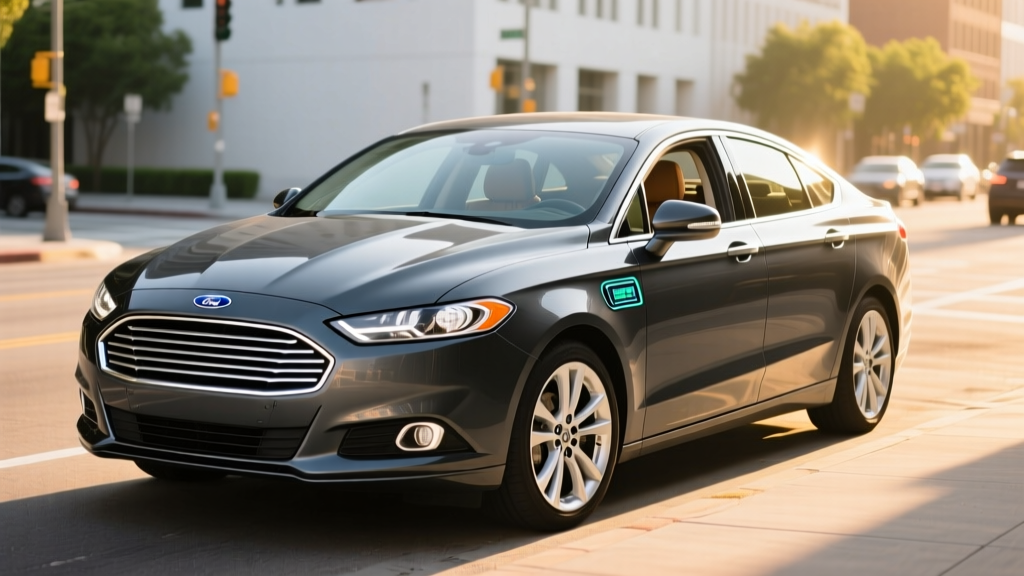
The 2014 Ford Fusion SE Hybrid sedan remains one of the most fuel-efficient midsize sedans on the used market. With an EPA-rated 44 city / 41 highway / 42 combined MPG, a comfortable interior, and a hybrid powertrain that has proven durable well past 150,000 miles, it's a compelling choice for buyers who want hybrid efficiency without the complexity of plug-in charging. Ford built this generation on the 2.0-liter Atkinson-cycle inline-four paired with an electric motor and a 1.4 kWh lithium-ion battery — a conservative, reliability-focused setup that prioritizes longevity over peak performance.
If you're shopping for a used 2014 Fusion SE Hybrid in 2026, this guide covers everything from real-world fuel economy and battery health expectations to ownership costs and how it stacks up against newer hybrids and full EVs.
HEV vs PHEV: What the 2014 Fusion Hybrid Actually Is
Before diving into specs, it's critical to understand the distinction between the two electrified Fusion variants Ford offered in 2014:
| Feature | Fusion Hybrid (HEV) | Fusion Energi (PHEV) |
|---|---|---|
| Powertrain type | Conventional hybrid — no plug | Plug-in hybrid — charges from wall outlet |
| Battery capacity | 1.4 kWh (Li-ion) | 7.6 kWh (Li-ion) |
| Electric-only driving | Brief low-speed EV mode (~0.5 mi) | Up to 19 miles EPA electric-only |
| Needs to plug in? | No — regenerative braking recharges | Yes — Level 1 or Level 2 charging |
| EPA combined MPG/MPGe | 42 MPG combined | 88 MPGe (electric) / 38 MPG (gas only) |
| Federal tax credit (original) | None (expired for Ford hybrids) | Up to $3,750 (expired) |
The 2014 Ford Fusion SE Hybrid sedan is a conventional HEV. It has no charging port, no electric-only range to speak of, and requires zero change in refueling habits. You fill it with gas, and the hybrid system handles the rest. If you're looking for plug-in capability, you need the Fusion Energi — a different vehicle entirely.
Fuel Economy: EPA Ratings and Real-World MPG
The headline number for the 2014 Fusion SE Hybrid is its EPA fuel economy rating, which remains competitive more than a decade after launch:
| Driving Cycle | EPA Rating | Real-World Expectation |
|---|---|---|
| City | 44 MPG | 42–48 MPG (hybrids often beat EPA in stop-and-go) |
| Highway | 41 MPG | 37–40 MPG (aerodynamic drag limits electric assist at speed) |
| Combined | 42 MPG | 39–44 MPG depending on driving mix |
Like most conventional hybrids, the Fusion Hybrid actually tends to exceed its EPA city rating in real-world stop-and-go traffic. The electric motor handles low-speed acceleration — where gas engines are least efficient — and regenerative braking recaptures energy that would otherwise be lost as heat. On the highway, where the gas engine runs continuously and aerodynamic drag dominates, expect numbers closer to 37–40 MPG.
According to fueleconomy.gov, the 2014 Fusion Hybrid's combined 42 MPG places it ahead of most 2014-era competitors including the Toyota Camry Hybrid (41 MPG combined for the LE) and the Hyundai Sonata Hybrid (36 MPG combined for the 2014 model year).
Powertrain and Performance Specs
The 2014 Fusion SE Hybrid uses Ford's second-generation hybrid system, which was a significant improvement over the first-generation (2010–2012) in both refinement and efficiency.
| Specification | 2014 Fusion SE Hybrid |
|---|---|
| Engine | 2.0L Atkinson-cycle inline-4 |
| Engine horsepower | 141 hp @ 6,000 rpm |
| Electric motor output | 118 hp (88 kW) |
| Combined system horsepower | 188 hp (net) |
| Transmission | eCVT (planetary gearset, not a belt CVT) |
| Battery type | Lithium-ion (Li-ion) |
| Battery capacity | 1.4 kWh |
| 0–60 mph | ~8.0 seconds |
| Drivetrain | Front-wheel drive |
| Curb weight | ~3,614 lbs |
| Cargo volume | 12.0 cu ft (reduced by battery placement) |
The eCVT in this car is not the rubber-band-style continuously variable transmission found in some competitors. Ford uses a planetary gearset (similar to Toyota's Hybrid Synergy Drive) that seamlessly blends engine and motor power without the droning sensation typical of belt-driven CVTs. Acceleration is linear and adequate for merging, though the 188 combined hp won't win any drag races.
Hybrid Battery: Lifespan, Warranty, and Replacement Cost
Battery longevity is the number-one concern for used hybrid buyers, and the 2014 Fusion Hybrid's track record is encouraging.
Real-world battery lifespan: The 1.4 kWh lithium-ion pack in the 2014 Fusion Hybrid is small and conservatively managed. Ford's battery management system keeps the state of charge within a narrow window (roughly 40–60% for most driving), which dramatically reduces degradation stress. Owner reports on forums and repair databases indicate these batteries routinely last 150,000–200,000+ miles before significant capacity loss. Some high-mileage examples have exceeded 250,000 miles on the original pack.
Battery replacement cost (2026): If the hybrid battery does fail, expect to pay:
- Refurbished/remanufactured battery: $1,500–$2,500 installed
- New OEM battery from Ford: $3,000–$4,500 installed (availability may be limited for 2014 models)
- Individual cell replacement (specialist shops): $800–$1,500 — a growing option as hybrid repair specialists have emerged
The small battery size is actually an advantage here: replacement costs are a fraction of what a full EV battery swap would cost. A degraded hybrid battery typically manifests as reduced fuel economy (dropping to 35–38 MPG) and more frequent engine cycling, not a sudden failure.
Reliability and Common Issues
The 2014 Fusion Hybrid is generally regarded as one of the more reliable vehicles in Ford's lineup from this era. The hybrid powertrain has fewer wear items than a conventional gas car — no traditional starter motor, no alternator, and regenerative braking extends brake pad life significantly (many owners report 80,000+ miles on original brake pads).
Known issues to watch for in a used 2014 Fusion SE Hybrid:
- 12V auxiliary battery drain: Like many hybrids, the 12V battery can drain if the car sits for extended periods. A dead 12V battery will prevent the car from starting even if the hybrid battery is fully charged. Replacement: ~$200–$300.
- Electric power steering (EPAS) faults: Some 2013–2014 Fusions experienced EPAS issues. Ford issued extended coverage for certain steering gear assemblies. Check for recall/TSB completion.
- Infotainment system (SYNC/MyFord Touch): The 2014 model year used MyFord Touch, which was widely criticized for lag and unresponsiveness. Ford released software updates, but the system remains dated by 2026 standards.
- Coolant leaks (engine/inverter): The hybrid system has a separate coolant loop for the inverter and electric motor. Check for pink crusty residue around the inverter coolant reservoir.
According to NHTSA records, the 2014 Fusion Hybrid has a relatively low complaint volume for its production numbers, with most complaints relating to steering and electrical systems rather than the hybrid powertrain itself.
Pricing and Tax Credit Eligibility in 2026
The 2014 Ford Fusion SE Hybrid originally carried an MSRP of approximately $26,990 (before destination). In the 2026 used market, expect to pay:
| Condition / Mileage | Typical Asking Price (2026) |
|---|---|
| Excellent, under 80k miles | $10,000–$13,000 |
| Good, 80k–130k miles | $7,500–$10,000 |
| Fair, 130k–180k miles | $5,500–$7,500 |
| High mileage, 180k+ | $4,000–$5,500 |
Federal tax credit status: The 2014 Fusion Hybrid did not qualify for the federal §30D new vehicle tax credit when it was sold (the credit for Ford hybrids had been exhausted). In 2026, the IRS used clean vehicle credit (§25E) offers up to $4,000 or 30% of the sale price (whichever is lower) for used EVs and PHEVs — but conventional hybrids like the Fusion HEV do not qualify. Only plug-in hybrids and full battery-electric vehicles are eligible under §25E. Consult a tax professional for your specific situation.
State incentives: Some states offer registration fee reductions or HOV lane access for hybrid vehicles, but these vary by jurisdiction and many have sunset for conventional HEVs. Check your state's DMV or energy office for current programs.
2014 Fusion SE Hybrid vs. Full EV vs. Gas Car: Which Fits You?
Choose the 2014 Fusion SE Hybrid if:
- You drive 12,000–20,000 miles/year and want low fuel costs without changing your refueling routine
- You lack access to home or workplace charging (apartment, street parking)
- You want a proven, low-risk used hybrid under $10,000
- Your commute involves significant stop-and-go city driving where hybrid efficiency shines
Choose a plug-in hybrid (e.g., 2017+ Toyota Prius Prime, 2016+ Chevy Volt) if:
- You can charge at home and want 20–40 miles of electric-only commuting
- You want to reduce gas consumption to near zero on short trips while keeping gas range for road trips
Choose a full EV (e.g., used Chevy Bolt, Nissan Leaf, Tesla Model 3) if:
- You have reliable Level 2 home charging
- Your daily driving is under 200 miles and you rarely take long road trips (or are comfortable with DC fast charging stops)
- You want to eliminate oil changes, spark plugs, and emissions testing entirely
Choose a conventional gas car if:
- You drive primarily highway miles (where hybrid advantage is smallest)
- You want the lowest possible upfront purchase price and don't mind higher fuel costs
Pros and Cons at a Glance
Pros
- 42 MPG combined — still competitive with 2026 hybrids
- No plug-in charging required; zero behavior change from a gas car
- Smooth, refined eCVT with no belt-CVT drone
- Strong real-world battery longevity (150k–200k+ miles typical)
- Low battery replacement cost ($1,500–$4,500) vs. EV batteries
- Comfortable, quiet midsize sedan with solid highway manners
- Regenerative braking extends brake pad life significantly
Cons
- Trunk space reduced to 12.0 cu ft (battery behind rear seats)
- MyFord Touch infotainment is slow and dated
- No federal or state tax credits available for used HEV purchase
- 0–60 in ~8 seconds — adequate but not quick
- Original hybrid battery warranty has expired on all 2014 examples
- Electric-only mode limited to very low speeds and short distances
Frequently Asked Questions
How many MPG does the 2014 Ford Fusion SE Hybrid actually get?
The EPA rates it at 44 city / 41 highway / 42 combined MPG. In real-world driving, most owners report 39–48 MPG depending on their city/highway mix. City-heavy commutes tend to yield higher numbers because the electric motor handles low-speed acceleration and regenerative braking recaptures energy frequently.
Does the 2014 Fusion Hybrid need to be plugged in?
No. The 2014 Fusion Hybrid is a conventional HEV. It charges its 1.4 kWh battery through regenerative braking and the gas engine. There is no charging port. If you want plug-in capability, look at the Fusion Energi (PHEV) variant instead.
How long does the hybrid battery last in a 2014 Fusion?
Real-world data suggests 150,000–200,000+ miles is typical for the original lithium-ion pack. The battery management system keeps the pack in a narrow state-of-charge window, which minimizes degradation. Failure is usually gradual (reduced MPG, more engine cycling) rather than sudden.
What does it cost to replace the hybrid battery?
As of 2026, expect $1,500–$2,500 for a refurbished/remanufactured battery installed, or $3,000–$4,500 for a new OEM unit. Some specialist shops offer individual cell replacement for $800–$1,500 if only a few cells have degraded.
Does the 2014 Ford Fusion Hybrid qualify for any tax credit in 2026?
No. The federal used clean vehicle credit (§25E) applies only to plug-in hybrids and battery-electric vehicles, not conventional hybrids. The original new-vehicle credit for Ford hybrids was also exhausted before 2014. Check your state's incentives, as a few jurisdictions offer minor registration discounts for HEVs.
Is the 2014 Fusion Hybrid reliable compared to a Toyota Camry Hybrid?
The 2014 Fusion Hybrid is generally reliable, with the hybrid powertrain itself being robust. However, the Toyota Camry Hybrid of the same era holds a slight edge in long-term reliability ratings from sources like Consumer Reports and J.D. Power, primarily due to fewer non-powertrain issues (electronics, interior trim). Both are strong choices in the used hybrid sedan segment.
How does the Fusion Hybrid compare to a full EV for daily commuting?
A full EV will cost less per mile to "fuel" (especially with home charging at residential electricity rates of $0.12–$0.18/kWh) and requires less maintenance. But the Fusion Hybrid has no range anxiety, no charging infrastructure requirement, and a lower upfront purchase price on the used market. For a 30-mile daily commute, the Fusion Hybrid will cost roughly $2.30/day in gas; a comparable EV charging at home would cost roughly $1.00–$1.50/day in electricity.
Sources: EPA fueleconomy.gov, NHTSA vehicle safety data, IRS clean vehicle credits.