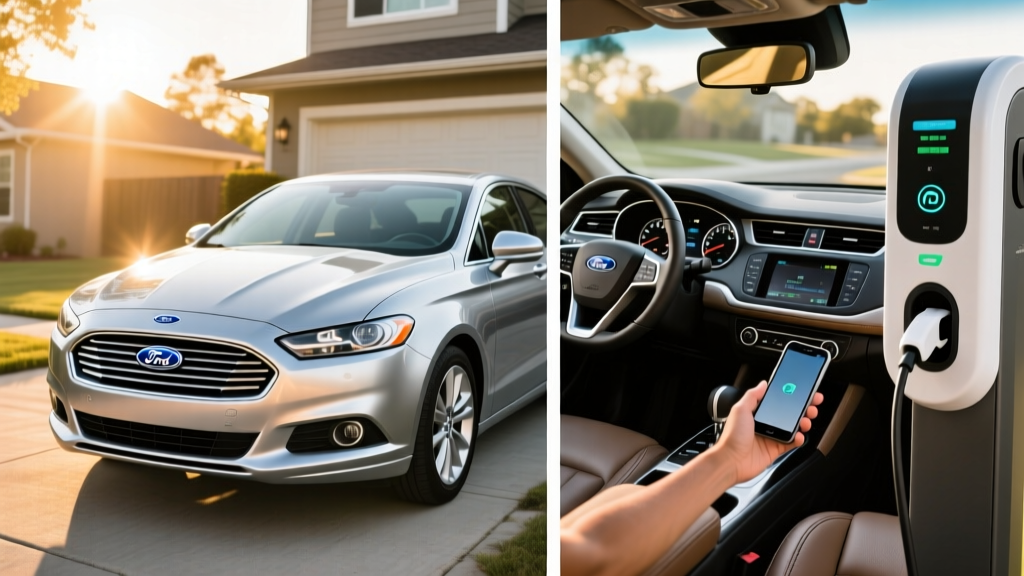
If you are researching the 2014 Ford Fusion Hybrid MPG on the used market, you are likely weighing a midsize sedan that bridges the gap between a conventional gas car and a full electric vehicle. A decade after its debut, the second-generation Fusion Hybrid remains one of the most fuel-efficient sedans Ford ever produced, and its real-world efficiency continues to impress even by 2026 standards.
This guide covers everything a used-car shopper needs to know: EPA and real-world fuel economy, the hybrid powertrain, battery reliability and replacement cost, and how the Fusion Hybrid stacks up against modern PHEVs and full EVs for your next purchase.
2014 Ford Fusion Hybrid MPG: EPA vs. Real World
The headline number for any hybrid buyer is fuel economy. The 2014 Fusion Hybrid carries an EPA rating that remains competitive more than a decade later. According to fueleconomy.gov, the official figures are:
| Metric | EPA Rating |
|---|---|
| City MPG | 44 MPG |
| Highway MPG | 41 MPG |
| Combined MPG | 42 MPG |
| Annual Fuel Cost (est.) | ~$1,150 (15,000 mi/yr) |
Real-World MPG Reality Check: Hybrids typically exceed their EPA city rating in stop-and-go traffic thanks to regenerative braking and frequent electric-only operation. Many Fusion Hybrid owners report 44–48 MPG in city driving. Highway MPG tends to run slightly below the sticker — expect 38–41 MPG at sustained 70+ mph speeds. In cold weather (below 30°F), anticipate a 5–10% drop as the engine runs more frequently for cabin heat and battery conditioning.
The Fusion Hybrid's city-biased EPA rating (44 city vs. 41 highway) is a hallmark of parallel hybrid design. The electric motor handles low-speed crawling where gas engines are least efficient, while the 2.0-liter Atkinson-cycle engine takes over at highway speeds.
Hybrid vs. Plug-In Hybrid: The 2014 Fusion Lineup
Ford offered two electrified Fusion variants for 2014, and confusing them is a common buyer mistake. Here is the critical distinction:
| Feature | Fusion Hybrid (HEV) | Fusion Energi (PHEV) |
|---|---|---|
| Plug-in Required? | No — self-charging | Yes — plug in for EV range |
| EPA Combined MPG | 42 MPG | 38 MPG (gas) / 88 MPGe (electric) |
| Electric-Only Range | ~1 mile at low speed | 19 miles (EPA) |
| Battery Size | 1.4 kWh (usable) | 7.6 kWh (usable) |
| Total Range | ~620 miles | ~550 miles (EV + gas) |
| DC Fast Charging | Not applicable | No — Level 2 AC only |
| Level 2 Charge Time | N/A | ~2.5 hours (240V) |
| Combined Horsepower | 188 HP | 188 HP |
The Fusion Hybrid is a conventional hybrid (HEV). It charges its own small battery through regenerative braking and the gasoline engine — you never plug it in. The Fusion Energi is the plug-in hybrid (PHEV) variant with a larger battery that delivers 19 miles of electric-only driving before the gas engine engages.
If your search brought you here looking for the 2014 Ford Fusion Hybrid MPG specifically, the HEV is the 42 MPG combined model. The Energi sacrifices a few MPG in gas mode to offer short electric-only commutes.
Powertrain and Performance Specs
| Specification | 2014 Fusion Hybrid |
|---|---|
| Engine | 2.0L Atkinson-cycle I-4 |
| Engine Output | 141 HP / 129 lb-ft torque |
| Electric Motor | Permanent-magnet AC synchronous |
| Combined System HP | 188 HP |
| Transmission | eCVT (planetary gearset) |
| 0–60 MPH | ~8.0 seconds |
| Drivetrain | Front-wheel drive |
| Curb Weight | ~3,615 lbs |
| Fuel Tank | 13.5 gallons |
The eCVT in the Fusion Hybrid is not a traditional belt-driven CVT. It uses a planetary gearset (Ford's version of Toyota's Hybrid Synergy Drive power-split device) that seamlessly blends engine and motor power. The result is smooth, linear acceleration with none of the "rubber band" effect associated with older CVTs.
At 188 combined horsepower, the Fusion Hybrid is adequate for daily commuting and highway merging but not quick by 2026 EV standards. If you want stronger acceleration in an electrified Ford, the Mustang Mach-E (0–60 in 3.5–6.1 seconds depending on trim) is the modern alternative.
Battery Reliability, Warranty, and Replacement Cost
Original Battery Warranty: Ford covered the 2014 Fusion Hybrid's lithium-ion battery for 8 years / 100,000 miles (10 years / 150,000 miles in California Air Resources Board states). As of 2026, the original factory battery warranty has expired for most vehicles unless the car was registered late in a CARB state and driven fewer than ~12,000 miles per year.
The 2014 Fusion Hybrid uses a 1.4 kWh lithium-ion battery pack (supplied by LG Chem), located behind the rear seats. This is a relatively small pack compared to modern PHEVs and EVs, which actually works in its favor for longevity — smaller packs in conventional hybrids experience shallower charge-discharge cycles, reducing stress on the cells.
Real-world battery lifespan data: Ford's hybrid system has proven durable. Many Fusion Hybrids have surpassed 150,000–200,000 miles on the original battery pack with minimal degradation. The hybrid control system maintains a state-of-charge window (roughly 40–80%) to protect the cells, which is the same strategy used in modern EVs to maximize longevity.
Battery replacement cost (2026 estimate): If the battery does eventually need replacement, expect to pay between $2,000 and $3,500 for a refurbished or aftermarket pack, or $3,500–$5,000 for a new OEM unit including labor. Independent hybrid specialists often offer more competitive pricing than dealerships. Given the Fusion Hybrid's low operating costs, a battery replacement at 180,000+ miles still represents strong total-cost-of-ownership value compared to a conventional gas sedan's accumulated fuel bills.
Used Pricing and Tax Credit Eligibility
As of early 2026, a well-maintained 2014 Ford Fusion Hybrid typically sells for $7,000–$12,000 depending on mileage, condition, and trim level (S, SE, or Titanium). The Titanium trim with its upgraded interior and tech package commands the premium end of that range.
Federal tax credit status: The 2014 Fusion Hybrid was never eligible for the federal EV tax credit when new, as it is a conventional hybrid — not a plug-in vehicle. Under current IRS §30D rules, only plug-in electric vehicles (BEVs and PHEVs with sufficient battery capacity) qualify. The used-EV credit (§25E, up to $4,000) also requires a plug-in powertrain, so the Fusion Hybrid does not qualify.
However, the Fusion Energi (PHEV variant) may qualify for the used clean vehicle credit of up to $4,000 under §25E if the sale price is $25,000 or less, the buyer meets income thresholds ($75,000 single / $150,000 joint), and the vehicle is purchased from a licensed dealer. Check the latest IRS guidance or consult a tax professional for your specific situation.
Fusion Hybrid vs. Modern EVs and PHEVs: Which Should You Choose?
Choose the 2014 Fusion Hybrid if:
- Your budget is under $12,000 and you want maximum MPG without plug-in infrastructure
- You live in an apartment or lack home charging access
- Your commute is mostly city driving where the 44 MPG city rating shines
- You want electrified efficiency with zero lifestyle change — just gas up and go
Choose a modern PHEV (e.g., Toyota Prius Prime, Hyundai Tucson PHEV) if:
- You can install a Level 2 charger at home and want 25–44 miles of electric-only commuting
- You want to qualify for the §30D federal tax credit (up to $7,500 for new PHEVs meeting sourcing rules)
- You want modern safety tech (automatic emergency braking, lane-keep assist) that the 2014 Fusion lacks
Choose a full EV (e.g., Chevy Equinox EV, Tesla Model 3) if:
- You have reliable home charging and a daily commute under 250 miles
- You want the lowest per-mile energy cost (~$0.04–0.06/mile on home electricity vs. ~$0.09–0.12/mile for the Fusion Hybrid on gas)
- You want minimal maintenance — no oil changes, no transmission fluid, no spark plugs
The Fusion Hybrid occupies a specific niche in 2026: it is one of the most affordable ways to access 40+ MPG fuel economy on the used market. It makes particular sense for buyers who cannot charge at home but still want to minimize fuel costs. For those with home charging access, a modern PHEV or EV delivers lower operating costs and access to federal incentives — but at a significantly higher purchase price.
Pros, Cons, and Common Issues
Pros
- 42 MPG combined still competitive in 2026
- Smooth, quiet hybrid powertrain with no plug-in hassle
- Comfortable midsize cabin with good trunk space (12.0 cu ft)
- Proven hybrid battery reliability (150K+ miles common)
- Affordable used pricing ($7K–$12K range)
- SYNC infotainment with available navigation
Cons
- No federal or state tax credit eligibility (HEV)
- Original battery warranty has expired on most examples
- Lacks modern ADAS (no automatic emergency braking standard)
- Trunk space reduced vs. gas Fusion due to battery placement
- eCVT drone under hard acceleration
- 2014 model year predates Apple CarPlay / Android Auto
Common issues to inspect: When evaluating a used 2014 Fusion Hybrid, check for coolant leaks from the hybrid battery cooling system, verify the regenerative braking feels smooth (not grabby), and scan for any stored hybrid system diagnostic codes. The 12V auxiliary battery should also be tested — a weak 12V battery can prevent the hybrid system from starting, a common point of confusion for new hybrid owners.
Frequently Asked Questions
How many MPG does the 2014 Ford Fusion Hybrid get?
The EPA rates the 2014 Fusion Hybrid at 44 city, 41 highway, and 42 combined MPG. In real-world city driving with frequent stops, many owners report 44–48 MPG. Highway driving at 70+ mph typically yields 38–41 MPG. Cold weather reduces these figures by roughly 5–10%.
Does the 2014 Ford Fusion Hybrid need to be plugged in?
No. The Fusion Hybrid is a conventional hybrid (HEV). It charges its battery entirely through regenerative braking and the gasoline engine. You never plug it in. If you want a plug-in Fusion, look for the Fusion Energi, which is the PHEV variant with 19 miles of electric-only range.
Is the 2014 Fusion Hybrid reliable, and what does a battery replacement cost?
The Fusion Hybrid's powertrain is generally reliable, with many examples exceeding 150,000–200,000 miles on the original hybrid battery. If replacement is needed, expect $2,000–$3,500 for a refurbished pack or $3,500–$5,000 for a new OEM battery. The original 8-year/100,000-mile battery warranty has expired on most 2014 models by 2026.
Does the 2014 Ford Fusion Hybrid qualify for any tax credit?
No. As a conventional hybrid (not a plug-in), the Fusion Hybrid does not qualify for the federal §30D clean vehicle credit or the §25E used clean vehicle credit. Only plug-in hybrids and full EVs are eligible. The Fusion Energi (PHEV) may qualify for the up-to-$4,000 used-EV credit if purchased from a dealer and income requirements are met.
Hybrid vs. PHEV vs. EV — which is right for me?
Choose a conventional hybrid (like this Fusion) if you lack home charging and want a low upfront cost with no lifestyle change. Choose a PHEV if you can charge at home and want 25–44 miles of electric-only commuting with a gas backup. Choose a full EV if you have reliable home charging, want the lowest per-mile cost, and your daily driving is within the vehicle's range.
What is the difference between the Fusion Hybrid and Fusion Energi?
The Fusion Hybrid (HEV) has a 1.4 kWh battery, gets 42 MPG combined, and never plugs in. The Fusion Energi (PHEV) has a 7.6 kWh battery, offers 19 miles of electric-only range, can plug into a Level 2 charger, and gets 38 MPG combined when running on gas after the battery is depleted.
For official fuel economy data, always verify specific vehicle listings on fueleconomy.gov. For current tax credit eligibility rules, consult the IRS clean vehicle credits page or a qualified tax professional, as rules and vehicle eligibility lists update frequently.