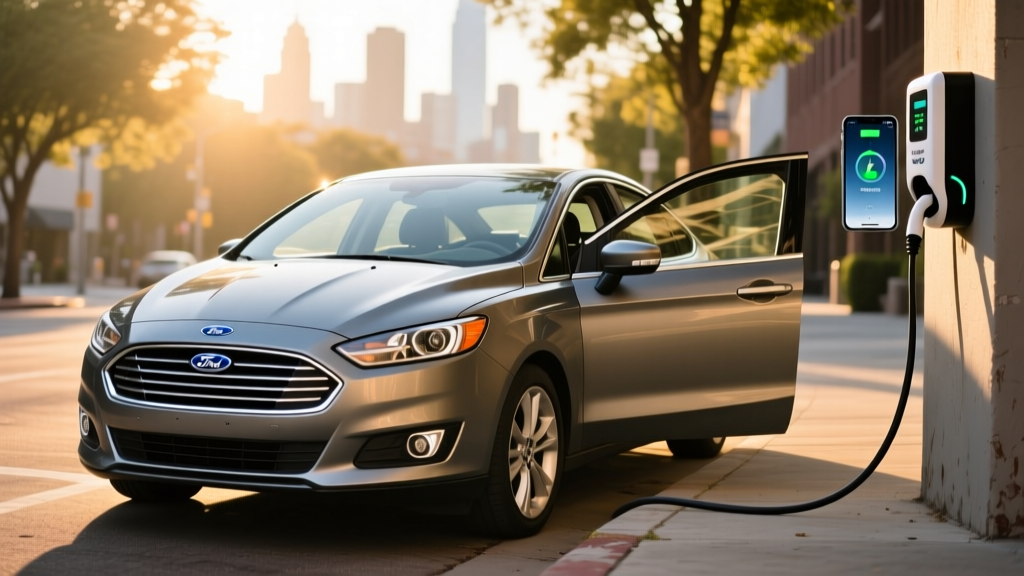
The 2014 Ford C-Max Hybrid occupies a specific niche in the used-car market: a compact hybrid hatchback that promised Prius-rivaling efficiency with more engaging driving dynamics. More than a decade after its debut, it remains a popular search among budget-minded hybrid shoppers. But with evolving battery technology, shifting fuel prices, and a flood of newer electrified options, does this first-generation C-Max Hybrid still hold up as a smart used purchase?
This guide covers everything a prospective buyer needs: exact EPA fuel economy versus real-world MPG, the hybrid powertrain specs, battery longevity and replacement cost, reliability data, and how the 2014 C-Max Hybrid stacks up against buying a newer hybrid, a plug-in hybrid (PHEV), or a full battery-electric vehicle (BEV) in 2026.
HEV vs. PHEV: Which C-Max Did Ford Actually Sell?
Ford sold two distinct electrified C-Max variants for the 2014 model year, and confusing them is the most common buyer mistake:
2014 C-Max Hybrid (HEV)
- Type: Conventional hybrid — no plug, no external charging
- Battery: 1.4 kWh lithium-ion (usable ~1.0 kWh)
- Electric-only driving: Brief low-speed EV mode only (~0.5–1 mile)
- Refueling: Gas station only, like any conventional car
- Federal tax credit: None (expired for this model year)
2014 C-Max Energi (PHEV)
- Type: Plug-in hybrid — requires external charging for EV range
- Battery: 7.6 kWh lithium-ion (usable ~5.6 kWh)
- Electric-only range: 21 miles (EPA)
- Refueling: Plug in for EV miles + gas station for longer trips
- Federal tax credit: Originally eligible for ~$3,750 (no longer available on new purchases; used-EV credit may apply)
This article focuses on the conventional C-Max Hybrid (HEV). If you're looking at a C-Max that plugs in, that's the Energi — a different vehicle with different economics. The HEV charges its small battery entirely through regenerative braking and the gasoline engine. You never plug it in.
Fuel Economy: EPA Ratings vs. Real-World MPG
The 2014 C-Max Hybrid's fuel economy story is complicated — and understanding the gap between sticker and reality is critical for used buyers.
| Metric | EPA Rating | Real-World Expectation |
|---|---|---|
| City | 42 MPG | 40–45 MPG (hybrids excel in stop-and-go) |
| Highway | 37 MPG | 34–39 MPG (aerodynamic drag limits hybrid advantage) |
| Combined | 40 MPG | 37–42 MPG depending on driving mix |
Important context: Ford originally advertised the 2013–2014 C-Max Hybrid at 47 MPG combined. After customer complaints and an EPA inquiry, Ford voluntarily corrected the label to 43 MPG for 2013 and subsequently revised the 2014 model to 40 MPG combined. Some early 2014 models may still carry the 43 MPG label; the corrected figure is 40 combined. Always verify the window sticker or check the EPA's fueleconomy.gov listing for the specific vehicle.
Real-World MPG Insight
In mixed suburban driving, many C-Max Hybrid owners report 39–42 MPG — close to or slightly above the EPA combined estimate. City-heavy commuters can push into the mid-40s thanks to frequent regenerative braking. Highway-only drivers at 75+ MPH should expect 34–37 MPG. Cold weather (below 30°F) typically drops fuel economy by 3–5 MPG due to reduced battery efficiency and increased engine warm-up time.
How Many MPG Does the 2014 C-Max Hybrid Actually Get?
Figure on 37–42 MPG combined in typical mixed driving. That translates to roughly 480–550 miles per 13.2-gallon tank. Compared to a non-hybrid compact hatchback of the same era (28–32 MPG combined), the C-Max Hybrid saves approximately 100–140 gallons of fuel per year at 15,000 miles — roughly $350–$500 annually at current fuel prices.
Powertrain and Performance Specs
| Specification | 2014 Ford C-Max Hybrid |
|---|---|
| Engine | 2.0L Atkinson-cycle inline-4 |
| Engine horsepower | 141 HP @ 6,000 RPM |
| Electric motor | Permanent-magnet AC synchronous |
| Combined system output | 188 HP (net) |
| Transmission | electronically controlled CVT (eCVT) |
| Drivetrain | Front-wheel drive |
| 0–60 MPH | ~8.1 seconds |
| Hybrid battery | 1.4 kWh lithium-ion (air-cooled) |
| Fuel tank | 13.2 gallons |
| Cargo volume (rear seats up) | 24.5 cu ft |
| Cargo volume (rear seats folded) | 52.6 cu ft |
The C-Max Hybrid uses Ford's second-generation hybrid powertrain, pairing a 2.0-liter Atkinson-cycle four-cylinder with an electric motor integrated into the eCVT transaxle. The 188 combined horsepower was notably more than the contemporary Toyota Prius (134 HP), giving the C-Max a more confident highway merging character. The eCVT is a power-split device — not a belt-driven CVT — so it avoids the rubber-band feel that plagues some continuously variable transmissions.
Battery Longevity, Reliability, and Replacement Cost
For any used hybrid, the traction battery is the single biggest financial risk. Here's what C-Max Hybrid buyers need to know:
Original Battery Warranty
Ford's original hybrid battery warranty: 8 years / 100,000 miles (10 years / 150,000 miles in California Air Resources Board states including CA, NY, MA, and others that follow CARB rules).
For a 2014 model, the federal 8-year warranty expired in 2022. In CARB states, the 10-year coverage expired in 2024. Any 2014 C-Max Hybrid you buy today is almost certainly out of its original battery warranty unless a previous owner purchased an extended warranty that transfers.
Is the 2014 C-Max Hybrid Reliable?
The C-Max Hybrid's powertrain has proven reasonably durable. The 2.0L Atkinson-cycle engine is under-stressed and generally trouble-free. The eCVT has no belts, clutches, or traditional friction components to wear out — it's one of the most reliable transmission types in existence. Common non-powertrain complaints include:
- 12V auxiliary battery drain — a known issue if the car sits for extended periods
- SYNC infotainment glitches — the MyFord Touch system in 2014 models is dated and prone to freezing
- Door latch recalls — check NHTSA.gov for open recalls on any specific VIN
- Brake actuator concerns — the regenerative braking system's hydraulic control unit can fail; replacement runs $1,200–$1,800
Hybrid Battery Replacement Cost
If the lithium-ion traction battery fails out of warranty:
- New OEM battery from Ford: $3,000–$4,500 (parts + labor at a dealer)
- Remanufactured/reconditioned battery: $1,500–$2,500 from independent hybrid specialists
- Individual cell/module replacement: $500–$1,200 if only specific modules have degraded — a hybrid specialist can test individual cells
The good news: complete hybrid battery failure on the C-Max Hybrid is relatively uncommon before 150,000+ miles. The 1.4 kWh pack is small, air-cooled, and conservatively managed. Most high-mileage examples show gradual capacity loss (reduced EV-mode time at low speeds) rather than sudden failure. A pre-purchase hybrid battery health check at a Ford dealer or hybrid specialist ($100–$150) is strongly recommended.
Used Pricing and Tax Credit Eligibility
The 2014 C-Max Hybrid originally started at approximately $26,810 MSRP (SE trim). In the 2026 used market:
- SE trim (80K–120K miles): $6,500–$9,500
- SEL trim (80K–120K miles): $7,500–$11,000
- Lower-mileage examples (<60K miles): $10,000–$13,000
Does the 2014 C-Max Hybrid Qualify for Any Tax Credit?
No federal tax credit applies to the 2014 C-Max Hybrid as a new purchase — Ford's hybrid credit pool was exhausted years ago, and the conventional HEV never qualified for the full §30D credit anyway (that's reserved for plug-in vehicles with ≥7 kWh batteries).
Used hybrid credit (§25E): Under current IRS rules, the used clean vehicle credit offers up to $4,000 (30% of sale price, capped) for qualifying used EVs and PHEVs purchased from a dealer. However, the conventional C-Max Hybrid (HEV) does not qualify — the §25E credit requires the vehicle to have a plug and meet battery-capacity thresholds. Only the C-Max Energi (PHEV) could potentially qualify, and only if all income, price, and sourcing requirements are met.
Bottom line: expect to pay the full used-car price with no federal tax offset for the HEV model.
C-Max Hybrid vs. PHEV vs. Full EV: Which Fits You?
Buying a 2014 C-Max Hybrid in 2026 means choosing it over newer hybrids, modern PHEVs, and increasingly affordable used EVs. Here's a practical decision framework:
Choose the 2014 C-Max Hybrid (HEV) if:
- Your budget is under $10,000 and you want hybrid efficiency
- You have no access to home or workplace charging (apartment, street parking)
- Your commute is mixed city/highway and under 40 miles daily
- You want a practical hatchback with 24.5 cu ft of cargo space
- You don't want to think about plugging in — ever
Choose a newer used PHEV (e.g., Prius Prime, RAV4 Prime) if:
- You can install a Level 2 home charger
- Your daily commute is under 30 miles (covers most trips on electricity alone)
- You want to reduce fuel consumption by 60–80% while keeping a gas tank for road trips
- You're willing to spend $18,000–$30,000 on a 2019–2023 model
Choose a used full EV (e.g., Chevy Bolt, Nissan Leaf, Model 3) if:
- You have reliable home Level 2 charging
- Your daily driving is under 200 miles and you rarely road-trip beyond charger-network range
- You want near-zero routine maintenance (no oil changes, no spark plugs, minimal brake wear)
- You can budget $12,000–$25,000 for a 2019–2023 BEV
| Factor | 2014 C-Max HEV | Used PHEV (e.g., 2020 Prius Prime) | Used BEV (e.g., 2020 Bolt EV) |
|---|---|---|---|
| Typical used price | $7,000–$11,000 | $18,000–$26,000 | $12,000–$18,000 |
| Annual fuel cost (15K mi) | ~$1,300 | ~$500–$800 (if mostly EV-mode) | ~$500–$700 (electricity) |
| Home charging needed? | No | Strongly recommended | Essential |
| Maintenance complexity | Low (engine + hybrid) | Moderate (engine + hybrid + plug) | Very low (no engine) |
| Best for | No-charging-access buyers | Charging-access commuters | Charging-access, mostly-local drivers |
Pros and Cons: The Honest Verdict
Pros
- 40 MPG combined with zero plug-in hassle
- 188 HP makes it notably quicker than contemporary Prius
- Hatchback practicality with 52.6 cu ft max cargo
- Proven, simple hybrid powertrain with no belt-driven CVT
- Low used-car entry price ($7K–$11K)
- Strong city MPG — regenerative braking shines in traffic
Cons
- Out of original battery warranty — replacement risk is on you
- MyFord Touch infotainment is slow and unreliable
- Highway MPG (37 EPA) trails some newer hybrids
- No DC fast charging capability (HEV — irrelevant, but no EV mode for emissions-free driving)
- Ford discontinued the C-Max in 2018 — parts availability may slowly narrow
- Brake actuator replacement is expensive if it fails
- No federal or state tax credit available for the HEV
Pre-Purchase Checklist for Used C-Max Hybrid Buyers
If you're seriously considering a 2014 C-Max Hybrid, follow this inspection protocol before handing over cash:
- Run the VIN on NHTSA.gov — confirm all recalls (especially door latches and brake system) were completed
- Request a hybrid battery health report — a Ford dealer can pull state-of-charge and cell-balance data via OBD-II; look for cells within 0.2V of each other
- Test-drive in EV mode — at low speeds, the car should be able to creep on electric-only for short distances; if the engine fires immediately every time, the battery may be degraded
- Check the brake feel — the transition between regenerative and friction braking should be smooth; grinding or pulsing may indicate actuator issues
- Verify the 12V battery age — the auxiliary battery should be less than 4 years old; a weak 12V can cause phantom hybrid-system errors
- Pull maintenance records — confirm regular oil changes (the Atkinson-cycle engine still needs them every 7,500–10,000 miles)
Frequently Asked Questions
How many MPG does the 2014 C-Max Hybrid get?
The EPA rates the 2014 C-Max Hybrid at 42 city / 37 highway / 40 combined MPG. Real-world results typically fall between 37–42 MPG combined, with city-heavy drivers occasionally seeing mid-40s and highway-heavy drivers seeing mid-30s.
Do I need to plug in the C-Max Hybrid?
No. The C-Max Hybrid (HEV) is a conventional hybrid like the Toyota Prius. It charges its battery through regenerative braking and the gasoline engine. You never plug it in. Only the C-Max Energi (PHEV) requires plugging in.
How long does the 2014 C-Max Hybrid battery last?
Most C-Max Hybrid batteries last 150,000–200,000 miles before significant degradation. Complete failure before 120,000 miles is uncommon. However, at 10+ years old, some capacity loss is expected, which reduces the car's ability to operate in electric-only mode at low speeds.
What does a replacement hybrid battery cost?
Expect $3,000–$4,500 for a new OEM battery at a Ford dealer, or $1,500–$2,500 for a remanufactured unit from a hybrid specialist. Individual module replacement can cost $500–$1,200 if only a few cells are weak.
Does the 2014 C-Max Hybrid qualify for any tax credit in 2026?
No. The conventional C-Max Hybrid (HEV) does not qualify for the federal §30D new-vehicle credit or the §25E used-vehicle credit. Those credits require plug-in capability and minimum battery capacity that the HEV does not meet.
Is the 2014 C-Max Hybrid better than a 2014 Prius?
The C-Max Hybrid offers more horsepower (188 vs. 134), a more engaging drive, and a roomier cargo area. The Prius, however, delivers higher EPA fuel economy (50 combined for the 2014 Prius) and has a longer track record of hybrid battery reliability. If maximum MPG is your priority, the Prius wins. If driving feel and cargo flexibility matter more, the C-Max is the better pick.
Can the C-Max Hybrid run on electric only?
Only in very limited circumstances — at low speeds (under ~25 MPH) for roughly half a mile on a fully charged hybrid battery. This is not a meaningful electric-only range; it's an efficiency assist, not an EV mode you can rely on for commuting. For substantial electric-only driving, you'd need the C-Max Energi PHEV (21 miles EV) or a full BEV.