Quick Verdict: Honda's First Plug-In Experiment
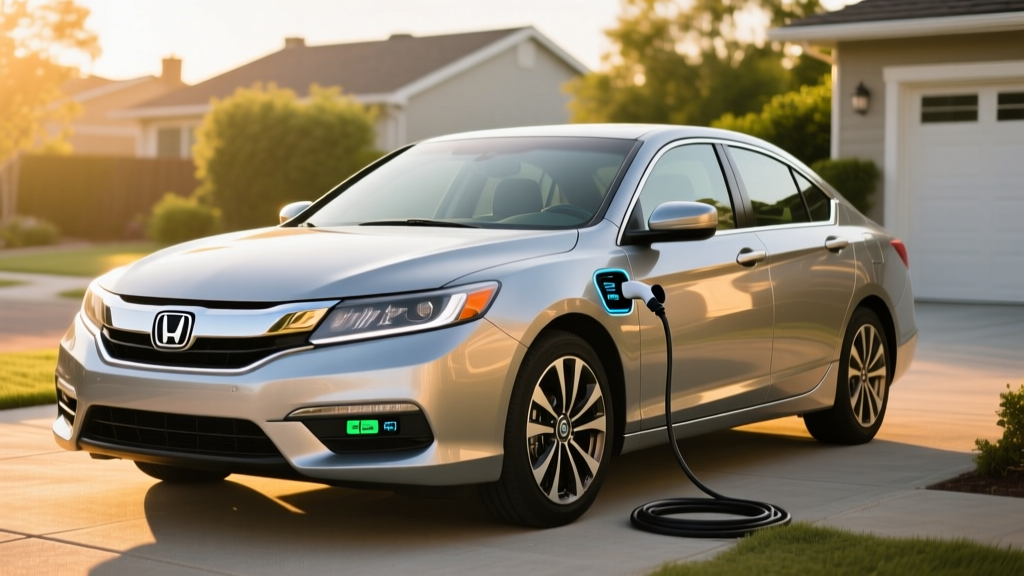
The 2014 Honda Accord Plug-In Hybrid was Honda's first entry into the PHEV market — a limited-production sedan sold only in California and Oregon. A decade later, it remains one of the more reliable early plug-in hybrids on the used market, though its 13-mile electric-only range and 6.7 kWh battery feel modest by today's standards. If you're considering a used 2014 Accord Plug-In Hybrid, this guide covers the real-world MPG, battery health expectations, charging logistics, and whether this car still earns a spot in your driveway in 2026.
Before diving into specifics, it's worth clarifying the distinction between Honda's two hybrid Accord offerings from this era, as buyers frequently confuse them.
HEV vs PHEV: Which 2014 Accord Hybrid Are You Looking At?
| Feature | 2014 Accord Hybrid (HEV) | 2014 Accord Plug-In Hybrid (PHEV) |
|---|---|---|
| Plugs in to charge? | No — regenerative braking only | Yes — J1772 Level 1/Level 2 |
| Electric-only range | None (motor assists engine) | 13 miles (EPA) |
| Battery capacity | 1.3 kWh (lithium-ion) | 6.7 kWh (lithium-ion) |
| EPA combined MPG (gas) | 47 MPG | 46 MPG (after EV range depleted) |
| MPGe (electric mode) | N/A | 115 MPGe |
| Availability | Nationwide | California & Oregon only |
| Base MSRP (2014) | ~$29,305 | ~$39,780 |
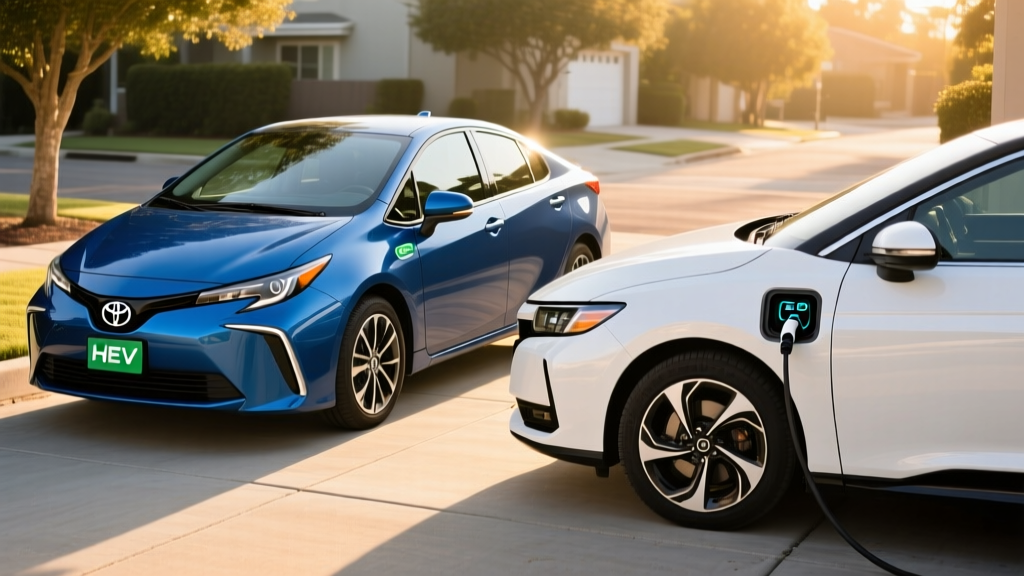
The conventional HEV does not plug in. If a listing says "Accord Hybrid" without "Plug-In," it cannot charge from an outlet and has no meaningful electric-only range.
Range, Efficiency, and Powertrain Specs
The 2014 Accord Plug-In Hybrid pairs a 2.0-liter Atkinson-cycle four-cylinder engine with a 124 kW (166 hp) electric motor integrated into Honda's two-motor hybrid system. Combined system output is 196 horsepower. The 6.7 kWh lithium-ion battery pack (approximately 5.0 kWh usable, given Honda's buffer to protect longevity) enables the EPA-rated 13 miles of electric-only driving.
| Spec | Value |
|---|---|
| EPA electric-only range | 13 miles |
| Total combined range (EV + gas) | ~500 miles |
| Battery capacity (gross / usable) | 6.7 kWh / ~5.0 kWh |
| Battery chemistry | Lithium-ion (NMC-type) |
| Combined system horsepower | 196 hp |
| Engine | 2.0L Atkinson-cycle I4 (141 hp) |
| Electric motor | 124 kW (166 hp) |
| Transmission | E-CVT (direct-drive) |
| EPA combined MPG (charge-sustaining) | 46 MPG |
| EPA city / highway MPG | 47 city / 46 highway |
| MPGe (electric mode) | 115 MPGe |
| Level 1 charge time (120V) | ~12 hours (full) |
| Level 2 charge time (240V, 6.6 kW) | ~1.5 hours (full) |
| DC fast charging | Not supported |
| Charge port | J1772 |
| 0–60 mph | ~7.7 seconds |
| Original MSRP | $39,780 |
Real-World Range vs. EPA Sticker
EPA electric range: 13 miles. In practice, expect 10–12 miles of electric-only driving in mild weather on flat terrain. In cold weather (below 40°F), cabin heating draws from the battery and electric range can drop to 8–9 miles. Highway speeds above 65 mph also reduce EV range because the system switches to hybrid mode more aggressively. Once the battery is depleted, the car operates as a conventional hybrid and achieves its 46 MPG rating.
Fuel Economy Breakdown: EPA vs. Real-World MPG
| Mode | City | Highway | Combined |
|---|---|---|---|
| Charge-sustaining (gas) | 47 MPG | 46 MPG | 46 MPG |
| Electric mode | 115 MPGe (29 kWh/100 mi) | ||
How many MPG does this hybrid get in the real world? According to fueleconomy.gov, owner-reported fuel economy for the 2014 Accord Plug-In averages around 44–48 MPG combined in hybrid mode, which aligns closely with the EPA estimate. Drivers who charge nightly and commute under 13 miles may use almost no gasoline for weeks. However, on long highway road trips where the battery depletes quickly and stays depleted, expect sustained MPG in the 40–44 range — slightly below the EPA figure due to the added weight of the larger battery pack versus the conventional Accord Hybrid.
Compared to the standard 2014 Accord Hybrid (HEV), which is rated at 47 MPG combined, the Plug-In sacrifices roughly 1 MPG in charge-sustaining mode due to the heavier 6.7 kWh battery. The tradeoff is worthwhile only if you can charge regularly and exploit the EV range for daily commuting.
Charging: What to Expect at Home and in Public
The 2014 Accord Plug-In Hybrid charges via a standard J1772 connector. It accepts up to 6.6 kW on Level 2 (240V), which fills the small battery in approximately 1.5 hours. On a standard 120V household outlet (Level 1), a full charge takes roughly 12 hours — workable for overnight charging but slow if you need a midday top-up.
DC fast charging is not supported. This is typical for PHEVs of this era; the battery is simply too small to justify the cost and weight of DC fast-charge hardware. All charging will happen at Level 1 or Level 2 speeds.
For used buyers in 2026, this means your charging strategy is straightforward: install a Level 2 home charger (a basic 32A unit runs $300–$500 for equipment, plus $400–$1,200 for electrician installation depending on panel proximity), or rely on Level 1 overnight. Public Level 2 chargers at workplaces or shopping centers can add meaningful range during a 1–2 hour stop, given the quick 1.5-hour full charge time.
Battery Health, Warranty, and Replacement Cost
Original Battery Warranty
Honda warranted the 2014 Accord Plug-In's high-voltage lithium-ion battery for 8 years / 100,000 miles in most states, extending to 10 years / 150,000 miles in CARB states (California and others adopting California emissions standards). The warranty covers capacity loss below approximately 70% of original capacity.
Is the 2014 Accord Plug-In Hybrid reliable, and what does battery replacement cost? The two-motor hybrid system in this generation has proven robust. Honda's IMA-era battery issues (from older nickel-metal hydride systems) do not apply here — the lithium-ion pack in the Plug-In is a more modern design with active thermal management. That said, a 2014 model is now over a decade old. Based on owner reports and industry data, expect 10–15% capacity degradation on the high-voltage battery at this age, which translates to roughly 11 miles of EV range instead of the original 13.
If the battery fails outside warranty, replacement cost from a Honda dealer typically runs $2,000–$4,000 for the pack itself, plus $500–$1,000 in labor. Independent hybrid battery specialists may offer refurbished packs for $1,500–$2,500. Given the car's current used-market value ($7,000–$12,000 depending on mileage and condition), a full dealer battery replacement represents a significant percentage of the vehicle's worth — factor this into your purchase decision.
The conventional hybrid powertrain components (engine, E-CVT, 12V system) carry Honda's typical reliability profile, which is strong. The NHTSA shows minimal powertrain-related complaints for this model year.
Pricing and Tax Credit Eligibility in 2026
The 2014 Accord Plug-In Hybrid originally retailed at $39,780, which was steep for a midsize sedan. In 2014, it qualified for a $7,500 federal tax credit under the pre-2023 rules, effectively bringing the net cost to roughly $32,000. That credit is long since claimed by the original buyer and does not transfer to subsequent owners.
For 2026 used buyers, the relevant incentive is the Used Clean Vehicle Credit (§25E), which provides up to $4,000 or 30% of the sale price (whichever is lower) for qualifying used EVs and PHEVs purchased from a dealer. However, several conditions apply:
- Sale price must be $25,000 or less — most 2014 Accord Plug-Ins qualify at current market prices
- Buyer income caps: AGI must not exceed $75,000 (single), $112,500 (head of household), or $150,000 (joint)
- Vehicle must be at least 2 model years old — a 2014 model qualifies
- Must purchase from a licensed dealer, not a private party
- Claimed once per vehicle: if a prior owner already claimed the used credit on this specific VIN after 2023, it cannot be claimed again
- Point-of-sale transfer is available — the credit can reduce the purchase price at the dealer rather than waiting for tax filing
Always verify current rules at IRS.gov and confirm eligibility with a tax professional before relying on this credit.
Who Should Choose This PHEV vs. a Full EV or Gas Car?
Decision Framework
Choose the 2014 Accord Plug-In Hybrid if:
- Your daily commute is under 15 miles round-trip and you can charge at home nightly
- You want to drive electric for errands but need gasoline flexibility for road trips
- You lack reliable public charging infrastructure for a full EV
- You value Honda reliability and a spacious midsize sedan interior
- Your budget is in the $7,000–$12,000 used-car range
Choose a full EV instead if:
- You have home Level 2 charging and want 200+ miles of range
- You want zero gasoline maintenance (no oil changes, no spark plugs)
- You can spend $18,000–$30,000 on a newer used EV (e.g., 2019+ Bolt, 2018+ Leaf Plus)
Choose the conventional 2014 Accord Hybrid (HEV) if:
- You cannot charge at home or work
- You want similar MPG (47 combined) without plug-in logistics
- You want a lower purchase price ($6,000–$10,000 used) and nationwide availability
Choose a gas-only Accord if:
- Your annual mileage is very low (under 6,000 miles) and fuel savings won't offset the hybrid premium
- You prioritize the lowest upfront cost
Pros
- Strong real-world MPG (44–48 combined in hybrid mode)
- Spacious midsize sedan with 12.4 cu-ft trunk (battery intrusion is moderate)
- Honda reliability and parts availability
- 115 MPGe in electric mode for short commutes
- Level 2 charges fully in just 1.5 hours
- Potential $4,000 used-EV tax credit for qualified buyers
Cons
- Only 13 miles of electric range — modest even by 2014 standards
- Original battery warranty has expired on most examples
- Sold only in CA/OR — limited used inventory nationwide
- No DC fast charging
- Higher original MSRP means higher insurance costs relative to a standard Accord
- Dated infotainment and no modern ADAS (no Honda Sensing suite on this generation)
Frequently Asked Questions
How many MPG does the 2014 Accord Plug-In Hybrid get?
The EPA rates it at 46 MPG combined (47 city / 46 highway) in charge-sustaining hybrid mode, and 115 MPGe when running on battery power. Real-world owners report 44–48 MPG combined, which is consistent with the EPA figure. City driving tends to yield slightly higher MPG due to regenerative braking.
How far can the 2014 Accord Plug-In go on electric only?
The EPA rates it at 13 miles of electric-only range. Real-world range is typically 10–12 miles in mild conditions, dropping to 8–9 miles in cold weather or at sustained highway speeds. The 6.7 kWh battery (roughly 5.0 kWh usable) is small by current PHEV standards — for comparison, the 2026 Honda Accord e:PHEV (sold in other markets) offers over 50 miles of EV range.
Is the 2014 Accord Plug-In Hybrid reliable?
Yes, with caveats. Honda's two-motor hybrid system has proven durable, and the conventional powertrain components are well-established. The main risk at this age is high-voltage battery degradation. Most examples will have 10–15% capacity loss, which is manageable given the small pack size. Complete battery failure is uncommon but would cost $2,000–$4,000 to replace.
Does the 2014 Accord Plug-In qualify for any tax credit in 2026?
It may qualify for the federal Used Clean Vehicle Credit (§25E) of up to $4,000, provided the buyer meets income limits, the sale price is $25,000 or less, and the purchase is from a licensed dealer. The original $7,500 new-vehicle credit was claimed by the first owner and does not transfer. Verify current eligibility on IRS.gov.
Hybrid vs PHEV vs EV — which should I choose?
If you can charge at home and your daily driving is under 15 miles, the PHEV gives you electric commuting with gas backup for longer trips. If you can't charge at home, the conventional Accord Hybrid (HEV) delivers nearly identical MPG without needing an outlet. If you have home charging, drive under 200 miles daily, and want to eliminate gas entirely, a used full EV (like a Chevy Bolt or Nissan Leaf) offers more range and lower running costs — but at a higher purchase price.
Can I DC fast charge the 2014 Accord Plug-In?
No. The 2014 Accord Plug-In Hybrid does not support DC fast charging. It charges at up to 6.6 kW on Level 2 (240V), reaching a full charge in about 1.5 hours, or roughly 12 hours on a standard 120V outlet. This is standard for PHEVs of this era — the small battery doesn't require or benefit from DC fast-charge infrastructure.
What is the battery replacement cost?
A new high-voltage battery from Honda typically costs $2,000–$4,000 for the pack plus $500–$1,000 in labor. Refurbished or reconditioned packs from independent hybrid specialists may be available for $1,500–$2,500. Given the vehicle's used-market value of roughly $7,000–$12,000, weigh replacement cost carefully against the car's remaining value.