Why the 2013 VW Jetta Hybrid Still Matters in 2026
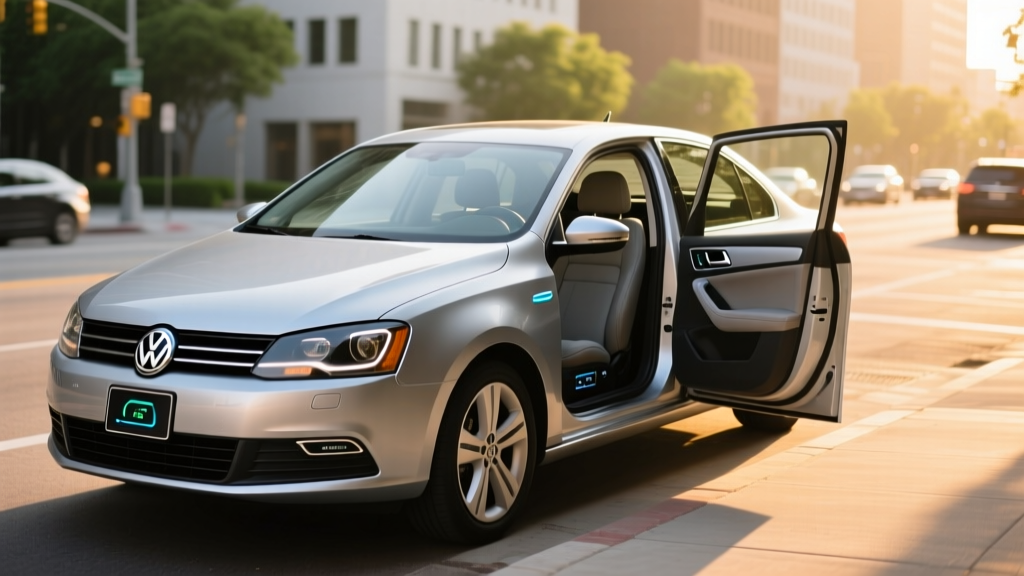
The 2013 Volkswagen Jetta Hybrid arrived as VW's first attempt at a mainstream gasoline-electric sedan in the U.S. market, slotting a turbocharged 1.4-liter engine and a compact electric motor between the front wheels. More than a decade later, it remains a fixture on the used-hybrid market — a practical commuter car that delivers genuine fuel savings without the complexity of plug-in charging. If you're researching the 2013 VW Jetta Hybrid as a budget-friendly used hybrid, this guide covers every number you need: EPA MPG, real-world efficiency, powertrain specs, battery longevity, and what to inspect before buying.
Before we get into the data, an important clarification: the 2013 Jetta Hybrid is a conventional hybrid (HEV), not a plug-in hybrid (PHEV). It charges its own small battery through regenerative braking and the gasoline engine. You never plug it in. This distinction matters because it shapes everything from daily driving habits to maintenance costs.
HEV vs PHEV vs EV: Where Does the Jetta Hybrid Fit?
| Attribute | HEV (e.g., 2013 Jetta Hybrid) | PHEV (e.g., Toyota Prius Prime) | BEV (e.g., Chevy Bolt EV) |
|---|---|---|---|
| Plug-in charging required? | No — self-charging | Yes — for electric range | Yes — sole energy source |
| Electric-only driving | Minimal (under 1 mi at low speed) | 25–45 mi typical | 200–350+ mi |
| Fuel source | Gasoline only | Gasoline + grid electricity | Grid electricity only |
| Tailpipe emissions | Reduced vs. gas car | Zero in EV mode | Zero |
| Federal tax credit (new) | None | Up to $7,500 (§30D) | Up to $7,500 (§30D) |
| Home charging install | Not needed | Level 2 recommended | Level 2 strongly recommended |
| Used market appeal | Low-risk, no charging dependency | Best with home charging access | Best with reliable charging |
The 2013 Jetta Hybrid is ideal for drivers who want better fuel economy but lack access to home or workplace charging. There's no plug, no cord, no app to manage — just fill up with gas and go. If you have a garage and can install a Level 2 charger, a modern PHEV or BEV will deliver far greater energy savings. But for apartment dwellers, street parkers, and high-mileage commuters in areas with sparse public charging infrastructure, a conventional HEV like the Jetta Hybrid remains a pragmatic choice.
Fuel Economy: EPA Ratings vs. Real-World MPG
| Metric | EPA Rating | Real-World Expectation |
|---|---|---|
| City | 42 MPG | 40–46 MPG (hybrids often exceed EPA city) |
| Highway | 48 MPG | 42–46 MPG (high-speed driving reduces hybrid advantage) |
| Combined | 45 MPG | 40–45 MPG depending on driving mix |
According to fueleconomy.gov, the 2013 VW Jetta Hybrid earns an EPA-estimated 45 MPG combined (42 city / 48 highway). These numbers were competitive at launch and remain respectable against modern hybrids. For context, the 2026 Toyota Prius achieves up to 57 MPG combined — but at a significantly higher used-market price.
Real-world note: Conventional hybrids like the Jetta tend to perform better in stop-and-go city driving, where regenerative braking recaptures energy frequently and the electric motor handles low-speed propulsion. On sustained highway runs above 70 mph, the turbocharged 1.4L engine does most of the work, and efficiency drops closer to 42 MPG. In cold weather (below 35°F), expect a 5–10% reduction in fuel economy due to increased engine warm-up time and cabin heating demands — the engine runs more often to generate heat, reducing electric-motor assist.
Owner-reported data on fuel-economy tracking sites consistently shows the Jetta Hybrid averaging 41–44 MPG in mixed driving, which tracks closely with the EPA combined figure. Drivers with mostly urban commutes regularly report hitting 46–48 MPG.
Powertrain Specs: 1.4L Turbo + Electric Motor
| Specification | Detail |
|---|---|
| Engine | 1.4L turbocharged inline-4 (EA211 family) |
| Engine output | 150 HP / 184 lb-ft torque |
| Electric motor | 27 HP (20 kW) integrated into transmission housing |
| Combined system output | 170 HP / 184 lb-ft torque |
| Transmission | 7-speed DSG dual-clutch automatic |
| Drivetrain | Front-wheel drive |
| 0–60 MPH | ~8.6 seconds |
| Hybrid battery | 1.1 kWh (nickel-metal hydride, NiMH), 60-cell pack |
| Fuel tank | 13.2 gallons |
| Total driving range | ~550–590 miles per tank |
| Curb weight | ~3,330 lbs |
The Jetta Hybrid's powertrain pairs VW's well-regarded EA211 1.4-liter TSI turbocharged engine with a 27 HP electric motor sandwiched between the engine and a 7-speed DSG dual-clutch transmission. The combined output of 170 horsepower gives it notably more punch than the Toyota Prius of the same era (134 HP combined), making highway merging and passing more confident.
The 7-speed DSG is a differentiator. Unlike the continuously variable transmissions (CVTs) found in most Toyota and Honda hybrids — which can produce a droning "rubber-band" feel under acceleration — the Jetta Hybrid shifts through discrete gears, delivering a more natural, engaging driving experience. The trade-off: DSG transmissions can feel slightly jerky at very low speeds and require specific maintenance (fluid and filter changes at ~40,000-mile intervals) to ensure longevity.
The 1.1 kWh NiMH battery pack is small by modern standards — it's there to assist acceleration, enable brief electric-only creeping at low speeds, and capture regenerative braking energy. It does not provide meaningful electric-only range. This is normal for a conventional HEV; the battery acts as a buffer, not a primary energy source.
Hybrid Battery Longevity, Warranty & Replacement Cost
Original Hybrid Battery Warranty: 8 years / 100,000 miles (10 years / 150,000 miles in CARB states including California, New York, Massachusetts, and others adopting California emissions standards).
Warranty coverage threshold: VW warranted the battery to retain sufficient capacity for normal hybrid operation. If the battery failed to charge/discharge properly within the warranty period, VW covered replacement.
Current status (2026): All 2013 models are now outside the original 8-year/100,000-mile federal warranty window, and even the 10-year CARB-state warranty has expired. Any battery failure is an out-of-pocket expense for the owner.
NiMH hybrid batteries from this era have proven surprisingly durable. Toyota's Prius NiMH packs regularly surpass 200,000 miles, and the Jetta Hybrid's pack — while smaller and from a different supplier — follows similar degradation patterns. Most reported failures occur between 120,000 and 180,000 miles, often triggered by prolonged storage at low state of charge or extreme heat exposure rather than normal use.
Battery replacement cost: A new OEM hybrid battery from VW for the 2013 Jetta Hybrid typically runs $2,500–$3,800 installed at a dealership. Independent hybrid specialists and refurbished/remanufactured packs are available for $1,500–$2,500 installed. Given that a clean 2013 Jetta Hybrid sells for roughly $6,000–$10,000 on the used market in 2026, a battery replacement represents a significant percentage of the car's value — a factor to weigh carefully in your purchase decision.
Pre-purchase inspection tip: Ask a qualified technician to pull the hybrid battery's state-of-health (SoH) data via OBD-II. Look for individual cell voltage variance; a spread greater than 0.2V between cells suggests aging and potential near-term failure. Also check for any stored hybrid system diagnostic trouble codes (DTCs).
Pricing, Tax Credits & Used Market Value
The 2013 VW Jetta Hybrid was originally sold in a single well-equipped trim level with an MSRP of approximately $25,790 (including destination). Standard equipment included leatherette upholstery, a touchscreen infotainment system, Bluetooth, cruise control, and alloy wheels — positioning it as a premium alternative to the base Prius.
| Cost Factor | Detail |
|---|---|
| Original MSRP (2013) | ~$25,790 |
| Used market price (2026) | $6,000–$10,000 depending on mileage and condition |
| Federal EV/PHEV tax credit | Not eligible — conventional HEVs do not qualify under IRS §30D |
| Used clean vehicle credit (§25E) | Not eligible — applies only to BEVs and PHEVs, not HEVs |
| State hybrid incentives | Most state incentives target PHEVs/BEVs; some states offered hybrid rebates in 2013 that are no longer active |
| Annual fuel cost (15,000 mi/yr, $3.40/gal) | ~$1,133 |
Tax credit reality check: The 2013 Jetta Hybrid does not qualify for any current federal tax credit. The IRS §30D New Clean Vehicle Credit applies exclusively to plug-in electric vehicles (BEVs and PHEVs) that meet battery-sourcing and critical-mineral requirements. The §25E Used Clean Vehicle Credit (up to $4,000) also applies only to used BEVs and PHEVs. Conventional hybrids, regardless of model year, are excluded from both programs. Always verify current incentive rules at irs.gov, as legislation can evolve.
At current used prices, the Jetta Hybrid represents solid value for commuters prioritizing fuel economy on a budget. Compared to a same-year conventional gas Jetta (which averaged ~29 MPG combined), the hybrid saves roughly $500–$700 per year in fuel costs at 15,000 miles driven annually — meaning the hybrid premium pays for itself within a few years of ownership.
Reliability, Maintenance & What to Watch For
The 2013 Jetta Hybrid carries a mixed reliability reputation. The hybrid system itself — the battery, electric motor, and power electronics — has proven robust, with fewer reported failures than early-model-year concerns suggested. The surrounding components tell a more nuanced story:
- DSG transmission: The 7-speed dry-clutch DSG (DQ200 variant) used in the Jetta Hybrid has been a known trouble spot across VW's lineup. Symptoms include shuddering at low-speed takeoff, delayed engagement, and mechatronic unit failures. Verify that the transmission shifts smoothly through all gears during a test drive, particularly from a stop. DSG fluid service history is important.
- Water pump and thermostat housing: The EA211 1.4T engine is prone to water pump and thermostat housing leaks, typically between 60,000 and 100,000 miles. Replacement costs $400–$700.
- Carbon buildup: Direct-injection engines like the 1.4T accumulate carbon on intake valves over time. An induction service (walnut blasting) every 80,000–100,000 miles helps maintain performance and fuel economy. Budget $300–$500 for this service.
- 12V auxiliary battery: Like all hybrids, the Jetta has a standard 12V battery that powers accessories and computers. If it dies, the car won't start — even if the hybrid battery is fully charged. Replace proactively every 4–5 years.
NHTSA safety ratings for the 2013 Jetta (including the Hybrid) were strong, earning a 5-star overall rating in government crash testing. The IIHS rated the 2013 Jetta sedan as a Top Safety Pick.
Who Should Buy the 2013 VW Jetta Hybrid?
Pros
- 45 MPG combined — strong fuel economy for a turbo-powered sedan
- 170 HP combined output — more engaging to drive than contemporary Prius
- DSG transmission feels more natural than a CVT
- No plug-in charging required — zero infrastructure dependency
- Well-equipped single trim with leatherette, touchscreen, and alloy wheels
- 5-star NHTSA safety rating
- Affordable used pricing ($6K–$10K in 2026)
Cons
- DSG transmission reliability concerns; expensive to repair
- Hybrid battery out of warranty; replacement costs $1,500–$3,800
- No electric-only driving range (conventional HEV)
- No federal or state tax credit eligibility
- Smaller rear trunk due to hybrid battery placement (~13.1 cu ft vs. 15.7 cu ft in gas Jetta)
- Infotainment system dated by 2026 standards (no Apple CarPlay/Android Auto)
- Parts availability may decline as the model ages
Choose the 2013 Jetta Hybrid if: You're a high-mileage commuter (15,000+ miles/year) seeking an affordable used car with strong fuel economy, you don't have access to plug-in charging, and you prefer a more engaging driving feel than a typical hybrid CVT delivers. Budget for a pre-purchase inspection and potential DSG or hybrid battery service.
Look elsewhere if: You have home charging access and could benefit from a PHEV's electric-only commuting range, you want the lowest possible maintenance risk (a same-year Toyota Prius has a stronger long-term reliability track record), or you need maximum trunk space.
Frequently Asked Questions
How many MPG does the 2013 VW Jetta Hybrid get?
The EPA rates the 2013 Jetta Hybrid at 45 MPG combined (42 city / 48 highway). Real-world owners typically report 40–45 MPG in mixed driving, with city-heavy commutes occasionally reaching 46–48 MPG. Highway driving at speeds above 70 MPH tends to yield 42–44 MPG.
Does the 2013 Jetta Hybrid need to be plugged in?
No. The 2013 Jetta Hybrid is a conventional hybrid (HEV), not a plug-in hybrid. Its 1.1 kWh NiMH battery charges entirely through regenerative braking and the gasoline engine. You fuel it exclusively with gasoline — there is no charging port.
How far can the 2013 Jetta Hybrid drive on electric power alone?
Virtually zero meaningful distance. The electric motor can propel the car at very low speeds (under 20 MPH) for brief distances — typically a few hundred feet in stop-and-go traffic or while coasting. This is normal for conventional hybrids; the electric motor's role is to assist the gasoline engine and improve efficiency, not to provide standalone electric range.
Is the 2013 VW Jetta Hybrid reliable?
The hybrid powertrain (battery, motor, electronics) has proven durable, with many examples surpassing 150,000 miles without hybrid-system issues. The main reliability concerns are the DSG transmission (potential mechatronic and clutch wear issues) and common EA211 engine maintenance items (water pump, carbon buildup). A thorough pre-purchase inspection by a VW-qualified technician is strongly recommended.
What does it cost to replace the hybrid battery?
An OEM replacement hybrid battery costs approximately $2,500–$3,800 installed at a dealership. Refurbished or aftermarket packs are available for $1,500–$2,500 installed. Given the car's 2026 used-market value of $6,000–$10,000, this is a significant expense — check battery state-of-health before purchasing.
Does the 2013 Jetta Hybrid qualify for any tax credit?
No. The 2013 Jetta Hybrid is a conventional hybrid (HEV) and does not qualify for the federal §30D New Clean Vehicle Credit or the §25E Used Clean Vehicle Credit. Both programs are limited to plug-in vehicles (BEVs and PHEVs). Some states offered hybrid purchase incentives in 2013, but most of those programs have ended. Check your state's current energy office website for any remaining programs.
How does the 2013 Jetta Hybrid compare to a Prius of the same year?
The 2013 Toyota Prius achieves higher fuel economy (50 MPG combined EPA) and has a stronger long-term reliability record, particularly regarding its eCVT transmission. The Jetta Hybrid counters with more power (170 HP vs. 134 HP), a more engaging DSG transmission, and a quieter, more refined highway ride. If fuel economy is the top priority, the Prius wins. If driving dynamics matter more, the Jetta Hybrid is the better choice.
What is the total driving range per tank?
With a 13.2-gallon fuel tank and 45 MPG combined, the 2013 Jetta Hybrid delivers approximately 550–590 miles of total range per fill-up — competitive with many modern hybrids and sufficient for most road-trip legs without range anxiety.