Quick Verdict: The 2013 VW Jetta Hybrid in 2026
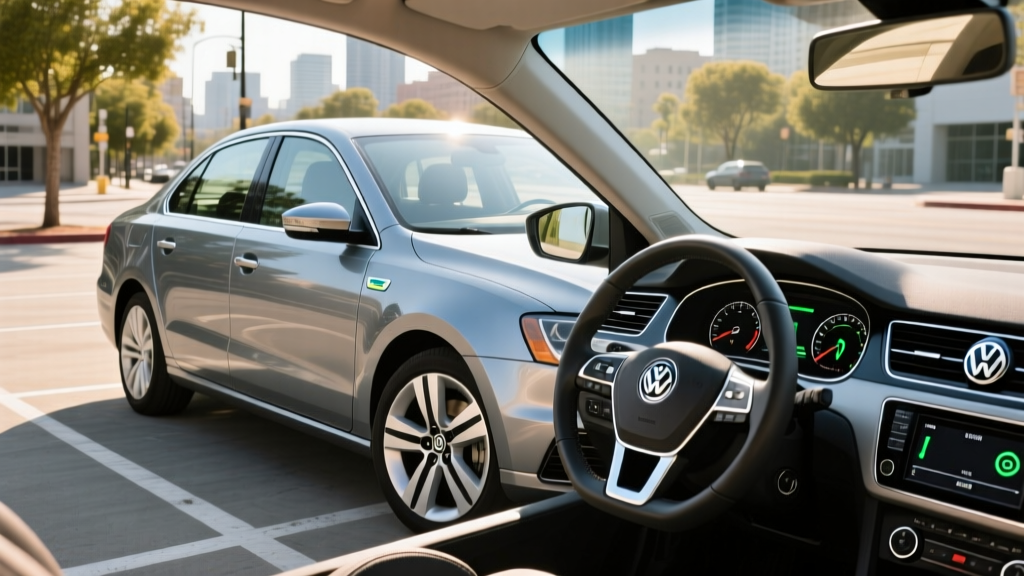
The 2013 Volkswagen Jetta Hybrid is a conventional hybrid electric vehicle (HEV) — not a plug-in. It pairs a 1.4-liter turbocharged four-cylinder engine with a compact electric motor and a small lithium-ion battery pack to deliver an EPA-rated 45 MPG combined. Thirteen years on, it remains one of the more fuel-efficient used sedans you can buy, though its age means battery health, maintenance history, and parts availability should drive any purchase decision.
This guide covers everything a used-car buyer in 2026 needs to know: real-world MPG, powertrain specs, battery warranty and replacement cost, reliability data, and whether this aging hybrid still makes financial sense versus a newer HEV, PHEV, or full EV.
2013 Jetta Hybrid Fuel Economy: EPA vs. Real World
| Metric | Value |
|---|---|
| City MPG | 42 |
| Highway MPG | 48 |
| Combined MPG | 45 |
| Fuel Tank Capacity | 13.2 gallons |
| EPA Estimated Total Range | ~594 miles |
Source: EPA fueleconomy.gov
Powertrain Specs: Engine, Motor, and Combined Output
| Component | Specification |
|---|---|
| Gasoline Engine | 1.4L TSI turbocharged inline-4 |
| Engine Power | 150 hp @ 5,000 rpm / 184 lb-ft torque @ 1,600 rpm |
| Electric Motor | 27 hp (20 kW) integrated into transmission housing |
| Combined System Output | 170 hp / 184 lb-ft torque |
| Transmission | 7-speed DSG dual-clutch automatic |
| Drivetrain | Front-wheel drive |
| Hybrid Battery | 1.1 kWh (gross), ~0.8 kWh usable, lithium-ion |
| 0–60 mph | ~8.7 seconds |
| Curb Weight | ~3,310 lbs |
The 2013 Jetta Hybrid uses a parallel hybrid architecture. The electric motor sits between the engine and the DSG transmission, enabling pure-electric driving at very low speeds (up to ~44 mph for brief distances under light throttle), engine-off coasting, and torque-fill during acceleration. The 1.1 kWh battery is small by modern standards — this is a mild-to-moderate hybrid system, not a full hybrid like a Toyota Prius, and it absolutely does not plug in.
HEV (Hybrid Electric Vehicle): The 2013 Jetta Hybrid is an HEV. It charges its small battery entirely through regenerative braking and the gasoline engine. You never plug it in. The electric motor assists the engine and enables brief electric-only creep, but the car cannot drive meaningful distances on electricity alone.
PHEV (Plug-in Hybrid Electric Vehicle): A PHEV has a much larger battery (typically 8–25 kWh), a charge port, and 20–50 miles of electric-only range before the gas engine engages. Examples include the Toyota Prius Prime or Chrysler Pacifica Hybrid. The 2013 Jetta Hybrid is not a PHEV.
Battery Health, Warranty, and Replacement Cost
Battery degradation reality: The 1.1 kWh pack is small and relatively lightly cycled compared to a full EV or PHEV battery. VW's hybrid system keeps the battery in a narrow state-of-charge window (roughly 30–70%), which reduces stress and slows degradation. That said, at 13+ years old, some capacity loss is expected. Most surviving examples still function, but reduced hybrid assist and slightly lower MPG are common as the pack ages.
Replacement cost: A new OEM hybrid battery from Volkswagen for the 2013 Jetta Hybrid typically runs $2,500–$4,000 including parts and labor at a dealership. Independent hybrid specialists may offer refurbished or reconditioned packs for $1,500–$2,500. Given that a clean 2013 Jetta Hybrid trades for roughly $5,000–$8,500 in 2026 (depending on mileage and condition), a battery replacement can represent 25–50% of the vehicle's value — a critical factor in any purchase decision.
Pre-purchase tip: Have a qualified technician perform a hybrid battery health check using VCDS (VW's diagnostic software) or an equivalent OBD-II scanner that reads individual cell voltages and hybrid system state-of-health. Look for cell imbalance exceeding 0.2V between modules, which signals impending failure.
Reliability and Common Issues
The 2013 Jetta Hybrid's 1.4L TSI engine (EA111 family) is generally robust, but a few known issues affect long-term ownership costs:
- DSG transmission mechatronic unit: The 7-speed dry-clutch DSG (DQ200) in the Jetta Hybrid has a history of mechatronic failures, particularly in stop-and-go driving. Symptoms include rough shifts, hesitation, or "flashing wrench" warning lights. Replacement runs $1,500–$3,000.
- Timing chain tensioner: Early 1.4 TSI engines had timing chain tensioner issues that could lead to chain stretch or failure. VW issued updates, but verify whether the tensioner has been replaced on any used example.
- Water pump / thermostat housing: A common failure point on VW's EA111 engines, typically around 80,000–120,000 miles. Budget $400–$700 for replacement.
- 12V battery drain: Like many hybrids, the Jetta Hybrid can experience 12V accessory battery drain if left sitting for extended periods, since the DC-DC converter only charges the 12V when the car is "on." A dead 12V battery will prevent the car from starting even if the hybrid pack is full.
Check NHTSA recall and complaint data for specific VINs before purchasing. The IIHS did not separately crash-test the Hybrid trim, but the 2013 Jetta sedan earned a Top Safety Pick rating — see IIHS ratings for details.
2013 Jetta Hybrid Pricing and Tax Credit Status in 2026
| Condition / Mileage | Approximate Price |
|---|---|
| Excellent, under 80k miles | $7,500–$8,500 |
| Good, 80k–120k miles | $5,500–$7,500 |
| Fair, 120k+ miles | $4,000–$5,500 |
Who Should Buy This Hybrid — and Who Shouldn't
- 45 MPG combined EPA — still competitive in 2026
- Peppy 170 hp combined output for a compact hybrid
- No plug-in required — ideal for apartment dwellers without charging access
- Spacious trunk (11.3 cu ft) — battery doesn't eat cargo room
- Low purchase price on the used market
- Proven VW build quality in interior and chassis
- Original battery warranty has expired — replacement is a $2,500+ risk
- DSG transmission reliability concerns add ownership cost uncertainty
- No electric-only driving range to speak of
- No federal or state tax credits available
- Parts availability may decline as the model ages
- Outdated infotainment and driver-assist tech by 2026 standards
Choose the 2013 Jetta Hybrid If:
- You need a cheap, fuel-efficient commuter and cannot charge at home (ruling out EVs and PHEVs).
- Your commute is highway-heavy, where this hybrid's EPA 48 MPG highway shines.
- You're comfortable budgeting $2,000–$4,000 for a potential hybrid battery or DSG repair.
- You want a conventional hybrid with zero plug-in hassle.
Look Elsewhere If:
- You want electric-only driving — consider a used PHEV like the 2017+ Toyota Prius Prime (25 mi EV range) or a used BEV like the Chevrolet Bolt EV.
- You want warranty coverage — a newer used hybrid (2020+ Toyota Corolla Hybrid, for instance) may still have remaining powertrain warranty.
- You prioritize modern safety tech (automatic emergency braking, lane-keeping) — the 2013 Jetta Hybrid predates these features.
Hybrid vs. PHEV vs. EV: Which Fits Your Situation?
| Factor | HEV (e.g., Jetta Hybrid) | PHEV (e.g., Prius Prime) | BEV (e.g., Bolt EV) |
|---|---|---|---|
| Plug-in Required? | No | Yes (optional but recommended) | Yes (mandatory) |
| Electric-Only Range | ~0.5 mi at low speed | 25–45 mi typical | 200–350+ mi typical |
| Home Charging Needed? | No | Recommended (120V OK) | Yes (240V ideal) |
| Federal Tax Credit (New) | No | Up to $7,500 (§30D) | Up to $7,500 (§30D) |
| Fuel Cost per Mile | ~$0.08–0.10 | ~$0.04–0.08 (mix) | ~$0.03–0.05 |
| Maintenance Cost | Moderate | Moderate | Low |
| Best For | No charging access, budget buyers | Short commute + home charging | Home charging + daily driving |
Frequently Asked Questions
How many MPG does the 2013 Volkswagen Jetta Hybrid get?
The EPA rates the 2013 Jetta Hybrid at 42 city / 48 highway / 45 combined MPG. Real-world owners typically see 38–44 MPG combined depending on driving style, terrain, and climate. Highway-heavy driving can push toward 48 MPG; cold-weather city driving may drop to 36–38 MPG.
Is the 2013 Jetta Hybrid a plug-in?
No. The 2013 Jetta Hybrid is a conventional hybrid (HEV). It has no charge port and cannot be plugged in. The small 1.1 kWh battery charges exclusively through regenerative braking and the gasoline engine.
How far can the 2013 Jetta Hybrid drive on electric power alone?
Effectively zero meaningful distance. Under very light throttle at low speeds (under ~44 mph), the car can creep short distances on electric power — perhaps a quarter mile on a flat surface. This is not a usable electric-only range. The gasoline engine does the vast majority of the work.
What does a replacement hybrid battery cost?
A new OEM hybrid battery from a VW dealer typically costs $2,500–$4,000 installed. Refurbished or reconditioned packs from independent hybrid shops run $1,500–$2,500. Given the vehicle's 2026 used-market value of roughly $4,000–$8,500, battery replacement is a significant percentage of the car's worth — factor this into your purchase budget.
Is the 2013 Jetta Hybrid reliable?
The powertrain is generally sound, but two risk areas stand out: the DSG transmission's mechatronic unit (a $1,500–$3,000 repair) and the aging hybrid battery (now past its warranty). Routine maintenance — timing chain inspection, water pump replacement, DSG fluid service — is essential. Check NHTSA complaint records for any specific VIN before buying.
Does the 2013 Jetta Hybrid qualify for any tax credits?
No. As a conventional HEV, the Jetta Hybrid does not qualify for the federal §30D new clean vehicle credit or the §25E used clean vehicle credit — both require plug-in capability. No state-level hybrid-specific credits currently apply to this model either. The purchase is entirely out-of-pocket.
Should I buy a 2013 Jetta Hybrid or a used Prius?
The Toyota Prius (third generation, 2010–2015) offers similar MPG (50 combined EPA), a larger and more proven hybrid battery system, widely available aftermarket parts, and a strong reliability reputation. The Jetta Hybrid counters with more power (170 hp vs. 134 hp), a more engaging DSG-driven feel, and a roomier trunk. If reliability and low repair risk are your top priorities, the Prius is the safer bet. If you want more driving enjoyment and can accept higher repair risk, the Jetta Hybrid is a reasonable choice at the right price.