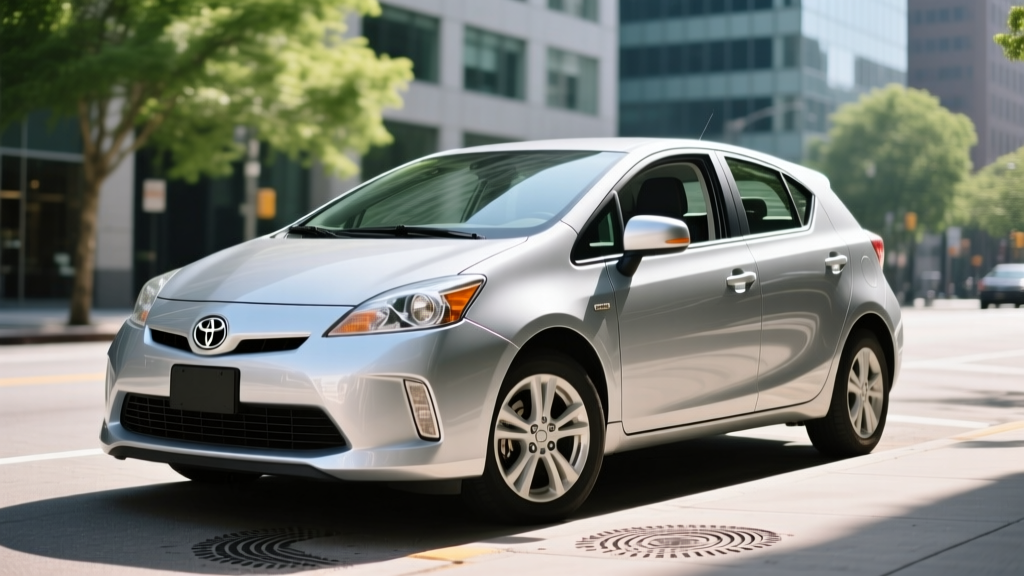
The 2013 Prius C: Toyota's Smallest, Most Affordable Hybrid
If you're researching the 2013 Toyota Prius C hybrid in 2026, you're likely shopping the used market for a fuel-sipping commuter that won't break the bank. The Prius C (known as the Aqua in Japan) was Toyota's subcompact hybrid entry — smaller, lighter, and cheaper than the standard Prius liftback. It was produced from 2012 through 2019 in the U.S., and over a decade later, it remains one of the most fuel-efficient non-plug-in vehicles ever sold stateside.
But buying a 13-year-old hybrid raises specific concerns: How does the battery hold up? What does replacement cost? And does this aging HEV still make financial sense versus a newer hybrid or a modern EV? This guide covers every number you need.
HEV vs PHEV vs EV: Where the Prius C Fits
Before we dig into specs, let's establish what the Prius C is — and what it isn't.
| Feature | HEV (Prius C) | PHEV (e.g., Prius Prime) | BEV (e.g., Chevy Bolt EV) |
|---|---|---|---|
| Plug-in charging? | No — self-charging via regen + engine | Yes — Level 1/2 | Yes — Level 1/2/DC |
| Electric-only range | ~1 mile at low speed | 25–44 miles (model dependent) | 200–350+ miles |
| Total range | ~500+ miles | ~600+ miles (combined) | 200–350 miles |
| Fuel required | Gasoline | Gasoline + electricity | Electricity only |
| Federal tax credit (new) | None | Up to $7,500 (§30D) | Up to $7,500 (§30D) |
| Home charging needed | No | Recommended | Essential |
The 2013 Prius C is a conventional hybrid electric vehicle (HEV). It has no plug, no electric-only driving mode of any meaningful distance, and no external charging capability. The gasoline engine and regenerative braking keep a small traction battery charged. If you need electric-only commuting, you'll want a PHEV like the Prius Prime or a full BEV.
Fuel Economy: EPA Ratings and Real-World MPG
This is the Prius C's headline act. According to fueleconomy.gov, the 2013 Toyota Prius C delivers:
| Driving Condition | EPA Rating | Real-World Expectation |
|---|---|---|
| City | 53 MPG | 48–55 MPG (hybrids excel in stop-and-go) |
| Highway | 46 MPG | 40–44 MPG (less regen benefit at steady speed) |
| Combined | 50 MPG | 45–52 MPG depending on driving mix |
Why city MPG beats highway: The Prius C's hybrid system recovers kinetic energy during braking and low-speed driving, where the electric motor does most of the work. At sustained highway speeds above 65 mph, the 1.5L gasoline engine carries more of the load, and the small, lightweight body faces aerodynamic drag like any other car.
Real-world factors that reduce MPG:
- Cold weather: Expect a 5–10% drop in winter. The engine runs more frequently to maintain cabin heat and battery temperature.
- Hilly terrain: Regenerative braking recovers energy on descents, but sustained climbs will drop instantaneous economy to the low 30s.
- Aged battery: A degraded hybrid battery forces the engine to run more often. A 2013 model with its original battery may deliver 2–5 MPG less than the EPA sticker if the battery's state of health has declined significantly.
- Tire condition: Underinflated or non-LRR (low rolling resistance) tires can cost 2–4 MPG.
With a 11.9-gallon fuel tank, the Prius C offers roughly 500–600 miles of total range — enough for most commuters to visit a gas station once every two to three weeks.
Powertrain Specs: Engine, Motor, and Combined Output
| Specification | 2013 Toyota Prius C |
|---|---|
| Engine | 1.5L 4-cylinder Atkinson-cycle (73 hp / 82 lb-ft) |
| Electric motor | 60 hp (45 kW) |
| Net combined horsepower | 99 hp |
| Transmission | eCVT (planetary gearset, not a belt CVT) |
| Hybrid battery | 0.93 kWh NiMH (nickel-metal hydride), 144V nominal |
| 0–60 mph | ~9.8 seconds |
| Drivetrain | Front-wheel drive |
| Curb weight | ~2,500 lbs |
| EPA emissions rating | SULEV (Super Ultra-Low Emission Vehicle) |
The Prius C uses Toyota's Hybrid Synergy Drive, pairing a small Atkinson-cycle gasoline engine with an electric motor-generator through a planetary gearset. This is the same architecture as the larger Prius, but downsized for a lighter, shorter car. The result is adequate city acceleration (electric torque fills in at low RPM) but leisurely highway merging. The 99 combined horsepower is modest — this car prioritizes efficiency over performance.
The 0.93 kWh NiMH battery is tiny by modern standards (a PHEV like the 2024 Prius Prime uses a 13.6 kWh lithium-ion pack). It's designed for frequent shallow cycling — absorbing regen energy and assisting acceleration — not for extended electric-only driving. Toyota limits the usable window to roughly 40–80% state of charge to maximize longevity.
Hybrid Battery Lifespan, Warranty, and Replacement Cost
Original Battery Warranty
When new, Toyota covered the Prius C hybrid battery for 8 years / 100,000 miles (10 years / 150,000 miles in California and states adopting CARB emissions standards). For a 2013 model, that factory warranty has expired in all jurisdictions as of 2023 at the latest.
How long do Prius C batteries actually last? Nickel-metal hydride batteries in Toyota hybrids have a strong track record. Data from fleet operators and owner surveys suggest most original Prius C batteries last 150,000–200,000 miles before significant degradation. Some units exceed 250,000 miles, while a small percentage fail earlier due to cell imbalance or thermal stress.
Battery replacement cost (2026 estimates):
- New OEM Toyota battery: $2,000–$2,800 installed at a dealership
- Remanufactured aftermarket battery: $1,000–$1,600 installed at an independent hybrid specialist
- Individual cell/module replacement: $500–$900 if only 1–2 of the battery's modules have failed (requires a shop with module-level diagnostics)
- Used/salvage battery: $400–$800 — cheapest but carries unknown remaining life
Signs the battery is degrading:
- Noticeable MPG decline (5+ MPG below historical average)
- Engine running more frequently at stops or low speeds
- Rapid state-of-charge gauge swings
- Check engine light with hybrid system codes (P0A80, P0AFA)
If you're buying a used 2013 Prius C, request a hybrid battery health report. Many Toyota dealerships can run a "Health Check" that shows battery block voltage variance — a key indicator of cell balance. Independent hybrid shops can also perform this test. Budget $1,500–$2,500 as a contingency for battery replacement if the vehicle has over 150,000 miles and the original battery.
Pricing in 2026: Used Market Value
The 2013 Prius C was originally priced from $19,080 MSRP (One trim) to approximately $23,230 (Four trim with navigation). In the 2026 used market:
- 120,000–160,000 miles, fair condition: $5,500–$7,500
- 80,000–120,000 miles, good condition: $7,500–$10,000
- Under 80,000 miles, excellent condition: $10,000–$13,000
Prices vary significantly by region, battery health, and maintenance history. A Prius C with a recently replaced battery commands a $1,000–$1,500 premium.
Tax Credit Eligibility
The 2013 Prius C is a conventional HEV. It does not qualify for the federal §30D new clean vehicle credit (which applies only to PHEVs and BEVs meeting battery sourcing and MSRP caps per IRS guidelines). There is no federal used-EV credit for HEVs either — the up-to-$4,000 used clean vehicle credit applies only to qualifying used BEVs and PHEVs.
Some states historically offered hybrid rebates (e.g., California's now-expired CVRP), but most state-level hybrid incentives have ended or shifted to BEV/PHEV focus. Check your state's current energy office for any remaining programs.
Reliability, Safety, and Ownership Costs
The 2013 Prius C benefits from Toyota's hybrid reliability reputation. The Hybrid Synergy Drive system has fewer wear components than a conventional powertrain — no traditional transmission, no starter motor, no alternator, and regenerative braking extends brake pad life to 80,000–100,000+ miles in typical driving.
Safety ratings: The NHTSA gave the 2013 Prius C an overall 4-star rating (out of 5). The IIHS rated it "Good" in moderate overlap front and side crash tests, though it was not tested in the more stringent small overlap front test introduced later. By 2026 standards, it lacks modern ADAS features — no automatic emergency braking, no lane-keeping assist, no blind-spot monitoring.
Annual ownership costs (estimates):
- Fuel: ~$850–$1,000/year at 12,000 miles and $3.50/gallon regular unleaded
- Insurance: $900–$1,300/year (varies by driver profile and state)
- Maintenance: $300–$500/year (oil changes, filters, tires — hybrid-specific maintenance is minimal)
- Depreciation: Minimal at this age — $300–$600/year
Total annual running cost: approximately $2,050–$2,900, making it one of the cheapest vehicles to own in the U.S. market.
Pros and Cons: The Honest Assessment
Pros
- 50 MPG combined EPA — among the best of any car ever sold
- Low purchase price on the used market ($5,500–$13,000)
- Proven Toyota hybrid reliability with widely available parts
- Extremely low running costs (fuel + maintenance)
- Compact size ideal for urban parking
- No plug-in required — no home charging infrastructure needed
- Regenerative braking extends brake pad life significantly
Cons
- Slow acceleration (9.8s 0–60) — highway merging requires planning
- No modern ADAS features (no AEB, no lane assist)
- Firm, noisy ride on rough pavement
- Cheap interior materials even when new
- Small cargo area (17.1 cu ft) and tight rear seats
- Hybrid battery replacement is a $1,000–$2,800 liability
- No tax credit eligibility of any kind
Who Should Buy the 2013 Prius C vs. Alternatives
Choose the 2013 Prius C if:
- You need maximum MPG on a tight budget (under $12,000)
- You drive primarily in city/stop-and-go traffic where hybrid efficiency peaks
- You cannot install a home charger (apartment, no garage) and want zero plug-in hassle
- You want a low-risk commuter car with cheap insurance and maintenance
Choose a newer PHEV (e.g., 2024+ Prius Prime) if:
- You have home charging access and want 35–44 miles of electric-only commuting
- You want modern safety tech (AEB, lane-keeping, adaptive cruise)
- You qualify for the §30D federal tax credit (income and sourcing requirements apply)
Choose a used BEV (e.g., 2020+ Chevy Bolt EV) if:
- You want zero gasoline costs and have reliable home or workplace charging
- You want to qualify for the up-to-$4,000 used clean vehicle credit (§25E)
- Your daily driving is under 100 miles round-trip
Frequently Asked Questions
How many MPG does the 2013 Toyota Prius C get?
The EPA rates it at 53 city / 46 highway / 50 combined MPG. Real-world owners typically report 45–52 MPG combined, with city-heavy driving often exceeding the EPA combined figure and highway-heavy driving falling short.
Does the 2013 Prius C need to be plugged in?
No. The Prius C is a conventional hybrid (HEV). Its small battery charges through regenerative braking and the gasoline engine. There is no plug and no electric-only driving mode of any practical distance.
Is the 2013 Prius C reliable, and what does battery replacement cost?
Yes — Toyota's Hybrid Synergy Drive is among the most reliable powertrains ever built. The NiMH hybrid battery typically lasts 150,000–200,000 miles. Replacement costs $1,000–$1,600 for a remanufactured unit or $2,000–$2,800 for a new OEM battery, installed.
Does the 2013 Prius C qualify for any tax credit?
No. Federal tax credits under §30D (new vehicles) and §25E (used vehicles) apply only to plug-in vehicles — BEVs and PHEVs. Conventional hybrids like the Prius C are not eligible for any federal purchase credit. Most state hybrid incentives have also expired.
How does the Prius C compare to the standard 2013 Prius?
The standard 2013 Prius offers slightly more power (134 hp combined), more cargo room (21.6 cu ft vs 17.1), and 50 MPG combined (same as the C). The Prius C is smaller, lighter, less expensive, and slightly better in city MPG (53 vs 51), but slower and less refined on the highway.
What should I check before buying a used 2013 Prius C?
Prioritize a hybrid battery health check (block voltage variance test), verify maintenance records (especially transaxle fluid and inverter coolant service), check for rust in snow-belt states, and confirm the vehicle has no outstanding recalls via NHTSA's recall lookup. Budget $1,500–$2,500 as a battery replacement contingency if mileage exceeds 150,000.