Quick Verdict: A Proven Hybrid SUV With Staying Power
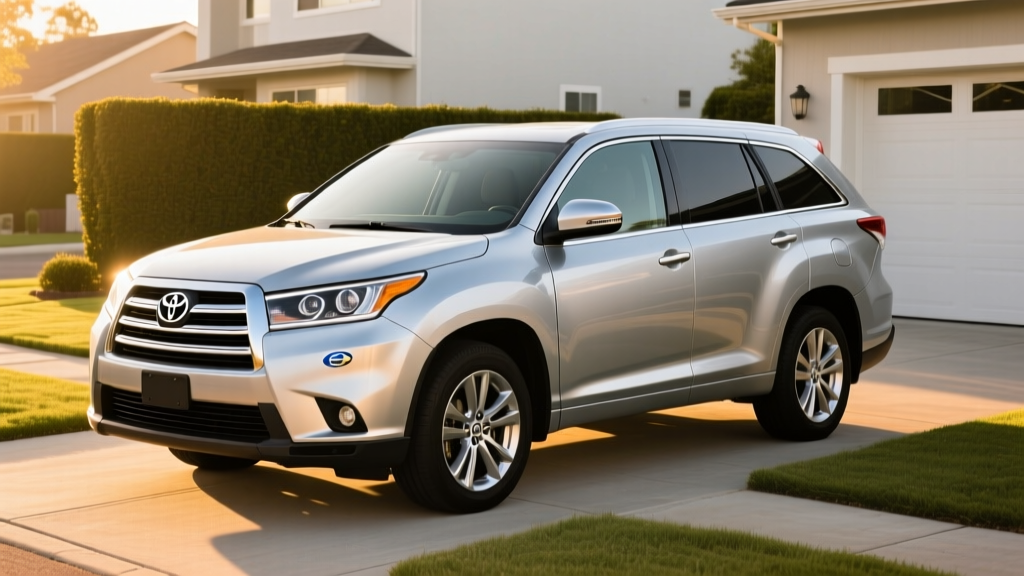
The 2013 Toyota Highlander Hybrid is a conventional hybrid electric vehicle (HEV) — meaning it never plugs in and generates all its electricity internally through regenerative braking and its gasoline engine. More than a decade after it rolled off the assembly line, this three-row SUV remains one of the most searched used hybrids on the market, and for good reason: it pairs a 3.5-liter V6 with Toyota's Hybrid Synergy Drive to deliver 28 MPG combined in a package that seats seven. For buyers in 2026 looking at the used hybrid market, the 2013 Highlander Hybrid represents a known quantity with extensive long-term reliability data, though its age demands careful battery health evaluation before purchase.
| Specification | Value |
|---|---|
| Powertrain Type | Conventional Hybrid (HEV) — no plug |
| Engine | 3.5L V6 Atkinson-cycle + 2 electric motor-generators |
| Combined Horsepower | 280 hp (net system output) |
| Drivetrain | AWD (e-AWD with rear electric motor) |
| Transmission | eCVT (electronically controlled continuously variable) |
| Nickel-Metal Hydride (NiMH) Battery | ~1.9 kWh (nominal) |
| EPA MPG (City / Highway / Combined) | 28 / 28 / 28 |
| Fuel Tank | 17.2 gallons |
| Total Range | ~481 miles |
| 0-60 mph | ~7.8 seconds |
| Towing Capacity | 3,500 lbs |
| Cargo Volume (behind 3rd / 2nd / 1st row) | 10.3 / 46.7 / 95.4 cu ft |
| Original MSRP (Base / Limited) | $38,940 / $44,990 |
| Typical 2026 Used Price | $10,000–$16,000 depending on mileage & condition |
HEV vs PHEV vs EV: Where the 2013 Highlander Hybrid Fits
Before diving deeper, it's essential to understand what you're buying. The 2013 Highlander Hybrid is a conventional hybrid (HEV). It has no plug, no electric-only driving range, and no external charging capability. If you're looking for a plug-in hybrid (PHEV) with electric-only miles or a full battery electric vehicle (BEV), this isn't it. Toyota never offered a plug-in version of this generation Highlander.
| Feature | HEV (this vehicle) | PHEV (e.g., RAV4 Prime) | BEV (e.g., Tesla Model Y) |
|---|---|---|---|
| Plugs in? | No | Yes | Yes |
| Electric-only range | 0 miles (brief EV mode at low speed) | 25–42 miles typical | 250–330+ miles |
| Gas engine | Yes — primary power source | Yes — backup + highway | None |
| Home charging needed? | No | Recommended (Level 2) | Required |
| Federal tax credit (new) | None | Up to $7,500 (§30D, if eligible) | Up to $7,500 (§30D, if eligible) |
| Used EV credit (§25E) | Not eligible | Up to $4,000 (if eligible) | Up to $4,000 (if eligible) |
The 2013 Highlander Hybrid is best understood as a more efficient version of a gas SUV. The hybrid system assists the V6 during acceleration, recovers energy during braking, and allows the engine to shut off at stops — but the gas engine is always doing the heavy lifting. This makes it ideal for buyers who want better fuel economy without any change to their refueling habits.
Fuel Economy: EPA Ratings vs Real-World MPG
The EPA rates the 2013 Toyota Highlander Hybrid at 28 MPG city, 28 MPG highway, and 28 MPG combined, according to fueleconomy.gov. The identical city and highway figures are unusual and reflect how the hybrid system optimizes low-speed efficiency (where conventional SUVs are least efficient) while the aerodynamic drag and weight of a three-row SUV limit highway gains.
| Driving Scenario | Expected MPG | Notes |
|---|---|---|
| EPA City | 28 MPG | Hybrid system excels in stop-and-go |
| EPA Highway | 28 MPG | Less hybrid advantage at sustained speed |
| EPA Combined | 28 MPG | Official rating |
| Real-world city (owner-reported) | 26–30 MPG | Many owners match or slightly exceed EPA in city |
| Real-world highway (70-80 mph) | 24–27 MPG | Highway driving reduces hybrid advantage |
| Cold weather (below 30°F) | 22–25 MPG | Engine runs more for cabin heat; battery less efficient |
| Heavy cargo / towing | 18–22 MPG | Expect significant drop under load |
Owner forums and Fuelly data consistently show real-world averages between 25 and 28 MPG combined, with city-heavy commuters occasionally touching 30 MPG. This is a vehicle where the EPA sticker is reasonably honest — unlike some hybrids that inflate city figures, the Highlander Hybrid's 28/28/28 rating reflects a balanced, if unremarkable, efficiency profile for a 4,500-pound AWD SUV.
Powertrain Deep Dive: V6 Hybrid Synergy Drive
The 2013 Highlander Hybrid uses Toyota's second-generation Hybrid Synergy Drive adapted for a larger vehicle. The system pairs a 3.5-liter V6 (2GR-FXE variant running the Atkinson cycle for efficiency) with two motor-generators (MG1 and MG2) in the front transaxle, plus a third electric motor driving the rear axle for electronic all-wheel drive (e-AWD).
How the system works:
- MG1 (front): Primarily acts as a generator, converting engine power to electricity and controlling the eCVT gear ratio. It also starts the gas engine.
- MG2 (front): The primary drive motor, providing electric torque assist during acceleration and enabling brief EV-mode driving at very low speeds (under ~25 mph, light throttle, for less than a mile).
- Rear motor: Engages automatically when front-wheel slip is detected or during hard acceleration, providing AWD without a mechanical driveshaft — saving weight and reducing drivetrain losses.
Combined net system output is 280 horsepower. The eCVT transmission uses a planetary gearset rather than belts or clutches, which is a major reason for this powertrain's legendary durability — there are no friction bands or torque converters to wear out.
The nickel-metal hydride (NiMH) traction battery stores approximately 1.9 kWh of energy. This is tiny by modern standards (a 2026 RAV4 Prime PHEV has 18.1 kWh), but it's sufficient for the hybrid assist role. The battery is never fully charged or fully discharged — Toyota's battery management system keeps the state of charge between roughly 40% and 80% to maximize longevity.
Battery Reliability, Lifespan, and Replacement Cost
Original Warranty: Toyota covered the hybrid battery for 8 years / 100,000 miles (10 years / 150,000 miles in California Air Resources Board states: CA, CT, ME, MA, NJ, NY, OR, RI, VT, WA). For a 2013 model, original factory warranty has expired in all cases as of 2023 at the latest.
Expected Battery Lifespan: Based on extensive owner data, the NiMH battery in the 2013 Highlander Hybrid typically lasts 150,000 to 200,000 miles before significant degradation triggers a check-engine light or noticeable efficiency loss. Many units exceed 200,000 miles with proper care.
What happens when the hybrid battery degrades?
The most common failure mode isn't sudden death — it's gradual cell imbalance. The NiMH pack contains 240 individual 1.2V cells in series. Over time, some cells weaken faster than others. When the voltage spread between the strongest and weakest cell exceeds Toyota's threshold, the ECU throws a P0A80 code ("Replace Hybrid Battery Pack").
Battery replacement options and costs in 2026:
| Option | Estimated Cost | Warranty | Notes |
|---|---|---|---|
| New OEM Toyota battery | $3,000–$4,000 (part) + $500–$800 labor | 3 yr / unlimited miles from Toyota | Best longevity; dealer-installed |
| Refurbished / reconditioned pack | $1,500–$2,500 installed | 1–3 years (varies by vendor) | Replaced weak modules; cost-effective but variable quality |
| Individual module replacement | $300–$800 (DIY-friendly shops) | Minimal | Only weak modules replaced; temporary fix if pack is broadly aging |
| Used salvage pack | $500–$1,200 + labor | 30–90 days typical | Risky — unknown remaining life |
For a vehicle worth $10,000–$16,000, a new OEM battery represents a significant percentage of the car's value. Many owners opt for refurbished packs or individual module replacement as a cost-effective middle ground. The key question when buying a used 2013 Highlander Hybrid is whether the battery has already been replaced — and if so, what kind of replacement was used.
Pre-purchase battery health check: Ask a Toyota dealer or hybrid specialist to run a "Health Check" using Toyota's Techstream diagnostic software. This reads individual module voltages, internal resistance, and the battery's state-of-health percentage. A pack showing more than 0.3V spread between modules is approaching failure.
Reliability Beyond the Battery: What Else Goes Wrong
The 2013 Highlander Hybrid benefits from one of Toyota's most proven powertrains. The 2GR-FXE V6 is shared with the Camry Hybrid and Sienna (in different configurations) and has a strong track record for mechanical longevity. The eCVT planetary gearset is essentially bulletproof — there are no clutches, bands, or belts to fail.
Common issues to inspect on a used 2013 Highlander Hybrid:
- Inverter coolant pump: Toyota issued a recall for the hybrid inverter coolant pump on some 2006–2010 Highlanders; the 2013 is largely unaffected but verify recall status via NHTSA's VIN lookup.
- Brake actuator assembly: The regenerative braking system uses an electro-hydraulic brake actuator that can develop leaks or fail around 120,000–150,000 miles. Replacement runs $1,200–$1,800. Listen for unusual brake pedal feel or a buzzing pump at startup.
- 12V auxiliary battery: Located in the rear cargo area, this standard lead-acid battery powers electronics and must be in good condition for the hybrid system to boot. Replace every 4–5 years.
- Air conditioning compressor: The electric A/C compressor is unique to the hybrid and more expensive to replace than a conventional belt-driven unit (~$800–$1,200).
- Rust: Check the rear subframe and undercarriage, especially in salt-belt states. This is a body-on-frame-adjacent unibody, and structural rust is a dealbreaker.
Overall, the 2013 Highlander Hybrid earns strong reliability marks. Toyota's hybrid components are designed for the life of the vehicle, and the mechanical simplicity of the eCVT eliminates the single most expensive failure point in conventional automatic transmissions.
Tax Credits and Incentives for Used Hybrid Buyers in 2026
Here's where the news is straightforward: the 2013 Toyota Highlander Hybrid does not qualify for any federal tax credit as a used purchase in 2026.
- §30D New Clean Vehicle Credit: Only applies to new vehicle purchases. Not applicable.
- §25E Previously-Owned Clean Vehicle Credit: This credit (up to $4,000 or 30% of sale price, whichever is lower) applies only to used plug-in electric vehicles (PHEVs with ≥4 kWh battery) and full BEVs. Conventional hybrids like the 2013 Highlander Hybrid are not eligible under §25E, per IRS guidelines.
- State incentives: A small number of states offer used hybrid incentives or HOV lane access, but these are increasingly rare and typically favor PHEVs and BEVs. Check your state's DMV or energy office for current programs.
The financial case for the 2013 Highlander Hybrid rests entirely on fuel savings and lower total cost of ownership versus a comparable non-hybrid SUV — not on tax incentives.
Fuel Savings: 2013 Hybrid vs Gas Highlander
To put the hybrid's efficiency advantage in dollar terms, compare it against the conventional 2013 Highlander with the 3.5L V6 and AWD:
| Metric | 2013 Highlander Hybrid AWD | 2013 Highlander V6 AWD (gas) |
|---|---|---|
| EPA Combined MPG | 28 MPG | 19 MPG |
| Gallons per year | 536 gallons | 789 gallons |
| Annual fuel cost | $1,822 | $2,683 |
| Annual savings (Hybrid) | $861/year | |
| 5-year savings | ~$4,305 | |
At typical used-market pricing, the hybrid variant commands a $1,000–$3,000 premium over a comparable gas-only 2013 Highlander. The fuel payback period is roughly 1.5 to 3.5 years — after which the hybrid is simply cheaper to operate every mile you drive. Over a 5-year ownership period, fuel savings alone can offset the entire purchase premium.
Who Should Buy the 2013 Highlander Hybrid — And Who Shouldn't
Choose the 2013 Highlander Hybrid if:
- You need three rows and AWD but want to minimize fuel costs without plugging in
- You drive 12,000+ miles per year (higher mileage = faster fuel payback)
- You lack access to home charging (apartment, street parking) and a PHEV or BEV isn't practical
- You value proven reliability and low maintenance costs over the latest technology
- You tow occasionally (3,500 lbs) and need a capable family hauler
Look elsewhere if:
- You want electric-only commuting — consider a used RAV4 Prime (PHEV, 42 mi electric) or a used BEV like the Chevy Bolt EUV
- You want the latest safety tech — the 2013 lacks automatic emergency braking, lane-keeping assist, and adaptive cruise control
- You prioritize a quiet, refined ride — the CVT drone under acceleration and road noise are noticeable by modern standards
- You want tax credit eligibility — only PHEVs and BEVs qualify for §25E used credits
Pros
- 28 MPG combined in a 7-passenger AWD SUV
- Extremely durable eCVT and hybrid powertrain
- No plug-in required — zero lifestyle change vs gas car
- 3,500-lb towing capacity
- Strong parts availability and independent shop familiarity
- Good cargo space (95.4 cu ft with seats folded)
Cons
- Dated interior with basic infotainment (no Apple CarPlay / Android Auto)
- No modern ADAS features (AEB, lane-keep, blind-spot on base trims)
- CVT engine drone under hard acceleration
- NiMH battery nearing end-of-life on most examples
- Fuel economy advantage narrows on the highway
- No federal tax credit eligibility as a used purchase
Frequently Asked Questions
How many MPG does the 2013 Toyota Highlander Hybrid actually get?
The EPA rates it at 28 MPG city, 28 MPG highway, and 28 MPG combined. Real-world owner averages cluster between 25–28 MPG combined, with city-heavy drivers occasionally reaching 30 MPG. Highway-only driving at 75+ mph drops to 24–27 MPG, and cold weather can reduce efficiency to 22–25 MPG.
Does the 2013 Highlander Hybrid need to be plugged in?
No. It is a conventional hybrid (HEV), not a plug-in hybrid (PHEV). The battery recharges through regenerative braking and the gasoline engine. You simply fill it with regular unleaded gasoline like any other car.
How far can it drive on electric power alone?
Effectively zero miles in practical terms. The hybrid system has an "EV mode" button that allows very low-speed, light-throttle electric-only driving for roughly half a mile at speeds under 25 mph — useful for creeping through a parking garage, but not for commuting. This is fundamentally different from a PHEV, which can drive 25–42 miles on electricity alone.
Is the hybrid battery reliable, and what does replacement cost?
Toyota's NiMH hybrid batteries in this generation typically last 150,000–200,000+ miles. Replacement options range from ~$500 for a used salvage pack to ~$4,000+ for a new OEM battery from Toyota. Refurbished packs ($1,500–$2,500 installed) are the most popular cost-effective option. Always get a pre-purchase hybrid health check before buying.
Does the 2013 Highlander Hybrid qualify for any tax credit?
No. The federal §25E used clean vehicle credit applies only to plug-in vehicles (PHEVs and BEVs). Conventional hybrids like this one are not eligible for any federal tax credit. Some states may offer minor incentives — check your state's energy office.
How does it compare to a modern hybrid SUV?
A 2026 Toyota Grand Highlander Hybrid achieves 36 MPG combined — a 29% improvement — and includes standard Toyota Safety Sense 3.0 with automatic emergency braking, lane-keeping, and adaptive cruise. However, a used 2013 at $12,000 versus $45,000+ for a new Grand Highlander means the older model still makes financial sense for budget-conscious buyers willing to accept older technology and no warranty.
What should I check before buying a used 2013 Highlander Hybrid?
Prioritize: (1) a hybrid battery health check via Toyota Techstream diagnostics, (2) brake actuator inspection (listen for buzzing or unusual pedal feel), (3) undercarriage rust inspection, (4) confirmation that all recall campaigns were completed via NHTSA VIN lookup, and (5) a full service history showing regular oil changes and inverter coolant maintenance.