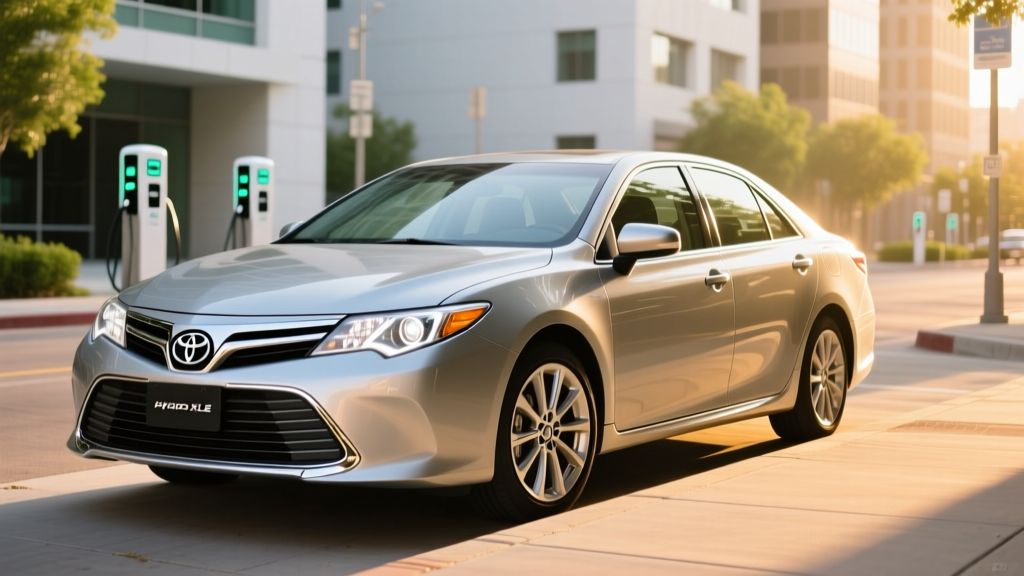
The 2013 Toyota Camry Hybrid XLE sedan occupies a specific niche in 2026's used-car market: a proven, no-plug-required hybrid midsize sedan that delivers real-world fuel savings without the charging logistics of a plug-in hybrid (PHEV) or battery-electric vehicle (BEV). With an EPA-rated 40 MPG combined, a reputation for long-term reliability, and used prices typically between $8,000 and $13,000 depending on mileage and condition, it remains a compelling choice for budget-conscious commuters who want electrified efficiency without range anxiety or home-charger installation.
This guide breaks down everything a 2026 buyer needs to know about the 2013 Camry Hybrid XLE — from its hybrid powertrain specs and real-world MPG to hybrid battery health, replacement costs, and how it stacks up against modern PHEVs and EVs.
HEV vs. PHEV: What the 2013 Camry Hybrid Actually Is
Before diving into specs, it's essential to clarify the distinction between conventional hybrids and plug-in hybrids, because confusion here leads to buyer disappointment.
Conventional Hybrid (HEV) — 2013 Camry Hybrid
- No plug required. The battery recharges through regenerative braking and the gasoline engine.
- No electric-only driving range beyond brief low-speed assist (under ~1 mile at very low speeds).
- Refuels at any gas station — no charging infrastructure needed.
- Smaller battery (~1.6 kWh usable) — lower cost, less degradation risk.
Plug-In Hybrid (PHEV) — e.g., Toyota Prius Prime
- Must be plugged in to access electric-only range (typically 25–44 miles in current models).
- Larger battery (13–18 kWh) — requires Level 1 or Level 2 charging.
- Qualifies for federal tax credits (up to $7,500 under current §30D rules, subject to income, MSRP caps, and battery-sourcing requirements).
- Operates as EV first, then switches to hybrid mode when battery depletes.
The 2013 Camry Hybrid XLE is a conventional hybrid (HEV). You never plug it in. You drive it exactly like a gas car — fill up at the pump — and the hybrid system handles the rest, seamlessly blending electric motor assist with the 2.5-liter gasoline engine to maximize fuel economy.
2013 Camry Hybrid XLE Powertrain and Performance Specs
| Specification | 2013 Toyota Camry Hybrid XLE |
|---|---|
| Powertrain Type | Conventional Hybrid (HEV) — no plug |
| Gasoline Engine | 2.5L 4-cylinder Atkinson cycle, 156 hp / 156 lb-ft |
| Electric Motor | Permanent-magnet synchronous, 105 kW (141 hp) |
| Combined System Output | 200 hp (net) |
| Transmission | eCVT (electronically controlled continuously variable) |
| Hybrid Battery | Nickel-Metal Hydride (NiMH), ~1.6 kWh |
| Drivetrain | Front-wheel drive |
| 0–60 mph | ~7.6 seconds |
| Curb Weight | ~3,435 lbs |
| Fuel Tank | 17.2 gallons |
| Total Driving Range | ~688 miles (EPA combined) |
The combined 200 hp output gives the 2013 Camry Hybrid XLE adequate passing power for highway merging and confident acceleration from stops. The eCVT is smooth and gearless — there are no shift shocks — though it can produce the characteristic "drone" under hard acceleration that Toyota's hybrid system is known for. For daily commuting and moderate driving, the powertrain feels refined and unobtrusive.
Fuel Economy: EPA Ratings and Real-World MPG
| Driving Condition | EPA Rating | Real-World Expectation |
|---|---|---|
| City | 40 MPG | 41–44 MPG |
| Highway | 38 MPG | 35–38 MPG |
| Combined | 40 MPG | 38–42 MPG |
Source: EPA Fuel Economy — 2013 Toyota Camry Hybrid
Real-World MPG Insight: Toyota's Hybrid Synergy Drive system excels in stop-and-go city driving, where regenerative braking frequently recharges the small NiMH battery and the electric motor handles low-speed propulsion. Many owners report exceeding the EPA city rating in urban traffic. Highway fuel economy tends to dip slightly below the EPA estimate at sustained speeds above 70 mph, where aerodynamic drag dominates and the gasoline engine carries the full load. In cold weather (below 30°F), expect a 5–10% reduction as the engine runs more often to maintain cabin heat and battery temperature.
With a 17.2-gallon fuel tank and 40 MPG combined, the 2013 Camry Hybrid XLE delivers approximately 688 miles of total range per fill-up — a number that eliminates range anxiety entirely. For comparison, a 2026 BEV like the Tesla Model 3 Long Range offers ~340 miles of EPA range, making the Camry Hybrid's total range nearly double when factoring in the 5-minute refueling time at any gas station.
Hybrid Battery Longevity, Warranty, and Replacement Cost
Original Hybrid Battery Warranty
Toyota's original coverage: 8 years / 100,000 miles (10 years / 150,000 miles in CARB states including California, New York, Massachusetts, and others that follow California emissions standards).
For a 2013 model in 2026: The factory warranty has expired for all examples unless the vehicle had under ~11,000 miles per year and is in a CARB state. Budget for potential battery replacement as part of ownership.
How Long Do Camry Hybrid Batteries Last?
The 2013 Camry Hybrid uses a Nickel-Metal Hydride (NiMH) battery pack — a mature, well-understood chemistry that Toyota has refined over decades of Prius and Camry Hybrid production. Real-world data shows these packs typically last 150,000 to 200,000 miles before significant degradation, with many examples exceeding 200,000 miles on the original pack. Unlike the lithium-ion packs in modern BEVs and PHEVs, NiMH batteries degrade gradually rather than experiencing sudden capacity cliff-offs.
The key factor for a 2026 used buyer is current battery state of health (SoH). A 13-year-old NiMH pack with 120,000 miles may still have 80–85% of its original capacity, which translates to normal hybrid operation — the system doesn't rely on full battery capacity the way a BEV does. The hybrid system only uses a narrow state-of-charge window (roughly 40–80%), which inherently protects the battery from deep-cycle degradation.
Battery Replacement Cost
If the hybrid battery does fail, replacement options in 2026 include:
- New OEM Toyota pack: $2,500–$3,500 (parts) + $500–$800 labor = $3,000–$4,300 total at a dealership
- Refurbished/remanufactured pack: $1,200–$2,000 installed from independent hybrid specialists (e.g., GreenBean, Dorman aftermarket)
- Individual cell replacement: $500–$1,000 at specialist shops that test and replace only degraded modules within the pack
For context, this is significantly less expensive than BEV battery replacement (typically $8,000–$20,000+ for a full pack) because the Camry Hybrid's NiMH pack is small (~1.6 kWh) and mechanically straightforward.
How to Check Battery Health Before Buying
Before purchasing a used 2013 Camry Hybrid XLE, request a hybrid battery health check using Toyota's Techstream diagnostic tool (available at dealerships and some independent shops). This reads the battery's internal resistance, voltage variance across modules, and state-of-charge behavior. Red flags include:
- Large voltage deltas between battery modules (indicates cell imbalance)
- Frequent engine cycling at idle (suggests the battery can't hold charge)
- Hybrid system warning lights or "Check Hybrid System" messages on the dash
- Noticeably reduced fuel economy vs. EPA ratings (below 32–34 MPG combined in normal driving)
XLE Trim Features: What You Get at the Top Tier
The XLE was the premium trim for the 2013 Camry Hybrid, sitting above the base LE Hybrid. Key XLE-specific features include:
- 17-inch alloy wheels (vs. 16-inch on LE)
- Leather-trimmed seats with heated front seats
- Dual-zone automatic climate control
- Smart Key system with push-button start
- Auto-dimming rearview mirror with compass and HomeLink
- Power tilt/slide moonroof
- Upgraded audio with touchscreen display and Bluetooth
- Blind Spot Monitor with Rear Cross-Traffic Alert (optional on XLE)
The XLE's interior materials and comfort features hold up well in 2026, though the infotainment system is dated by modern standards — no Apple CarPlay, Android Auto, or native navigation (unless equipped with the optional JBL/Navigation package). Most buyers will rely on a phone mount and Bluetooth audio streaming, which works reliably.
Tax Credits and Incentives: What Applies in 2026
No federal tax credit available. The 2013 Toyota Camry Hybrid is a conventional hybrid (HEV), not a plug-in hybrid or battery-electric vehicle. Under current IRS §30D rules, only plug-in vehicles with batteries of at least 7 kWh qualify for the federal clean vehicle credit. The Camry Hybrid's ~1.6 kWh NiMH pack does not meet this threshold.
For used buyers, the §25E Used Clean Vehicle Credit (up to $4,000 or 30% of sale price, whichever is less) also does not apply — it requires the vehicle to be a qualified plug-in EV or fuel-cell vehicle. Conventional hybrids have never qualified for federal purchase incentives.
Some states and localities offer minimal incentives for hybrids — such as HOV lane access stickers (expired in most states for non-plug-in hybrids) or reduced registration fees — but these vary widely by jurisdiction. Check your state's DMV and energy office for current programs. The primary financial advantage of the 2013 Camry Hybrid XLE is its low used purchase price and strong fuel economy, not government incentives.
Camry Hybrid vs. PHEV vs. Full EV: Which Fits You?
| Factor | 2013 Camry Hybrid (HEV) | Modern PHEV (e.g., Prius Prime) | Full EV (e.g., Model 3, Ioniq 6) |
|---|---|---|---|
| Used Price (2026) | $8,000–$13,000 | $28,000–$38,000 | $22,000–$45,000 |
| Plug Required? | No | Yes (for EV range) | Yes |
| Electric-Only Range | ~0 miles | 25–44 miles | 250–360 miles |
| Total Range | ~688 miles | ~600+ miles | 250–360 miles |
| Fuel/Energy Cost per Mile | ~$0.08–$0.10 | ~$0.04–$0.09 | ~$0.03–$0.06 |
| Federal Tax Credit | None | Up to $7,500 (§30D) | Up to $7,500 (§30D) |
| Home Charging Needed? | No | Recommended | Essential |
Choose the 2013 Camry Hybrid XLE if:
- You cannot install a home charger (apartment, street parking, landlord restrictions)
- Your budget is under $15,000 and you want maximum reliability per dollar
- You drive 15,000+ miles per year and want low fuel costs without charging logistics
- You take frequent long road trips and don't want to plan around charging stations
- You want a proven powertrain with widely available, affordable maintenance
Consider a PHEV or EV instead if:
- You have home charging access and a short commute (under 30 miles round-trip)
- You want to minimize or eliminate gasoline purchases entirely
- You qualify for the full $7,500 federal tax credit (income and sourcing requirements met)
- You want modern safety tech (automatic emergency braking, lane-keeping) as standard
- You prioritize the lowest per-mile energy cost and don't mind a higher purchase price
Ownership Costs and Reliability in 2026
The 2013 Camry Hybrid XLE benefits from Toyota's hybrid reliability track record, which is among the strongest in the industry. Key ownership considerations for a 13-year-old example:
Maintenance Advantages
- No timing belt: The 2AR-FXE engine uses a timing chain, eliminating a $600–$900 service interval
- Reduced brake wear: Regenerative braking handles most deceleration, extending brake pad life to 80,000–100,000+ miles
- No alternator or starter motor: The hybrid system's motor-generator units replace both, removing two common failure points
- Standard oil changes: 5,000–10,000 mile intervals with 0W-20 synthetic, same as any modern Toyota
Potential Costs to Budget For
- Hybrid battery: $500–$4,300 depending on repair approach (see Battery section above)
- Hybrid inverter coolant pump: $200–$400 — a known wear item on this generation
- 12V auxiliary battery: $150–$250 replacement every 4–6 years (standard AGM group 35)
- Suspension components: Struts and bushings at 100,000+ miles, typical for any midsize sedan
According to NHTSA records, the 2013 Camry Hybrid has relatively few recalls and technical service bulletins compared to its generation's gasoline siblings. The hybrid-specific components have proven robust over time.
Pros and Cons at a Glance
✓ Pros
- 40 MPG combined — real-world often exceeds in city driving
- No plug required — zero charging infrastructure dependency
- ~688-mile total range per tank
- Proven Toyota hybrid reliability with affordable maintenance
- XLE trim offers leather, heated seats, moonroof at a budget price
- Strong resale value retention for a 13-year-old vehicle
- Smooth, quiet hybrid powertrain operation
✗ Cons
- No federal or state tax credits available
- Dated infotainment — no CarPlay, Android Auto, or modern nav
- Advanced safety features (AEB, lane-keeping) not available on this model year
- NiMH battery replacement is a potential $1,200–$4,300 expense
- eCVT drone under hard acceleration
- Highway MPG falls below EPA at sustained 75+ mph speeds
- Trunk space slightly reduced vs. gas Camry (battery placement)
Frequently Asked Questions
How many MPG does the 2013 Toyota Camry Hybrid XLE get?
The EPA rates the 2013 Camry Hybrid at 40 MPG city / 38 MPG highway / 40 MPG combined. In real-world driving, city MPG often exceeds the EPA estimate (41–44 MPG) thanks to frequent regenerative braking, while highway MPG may dip to 35–38 MPG at speeds above 70 mph. Cold weather reduces efficiency by roughly 5–10%.
Does the 2013 Camry Hybrid need to be plugged in?
No. The 2013 Camry Hybrid is a conventional hybrid (HEV). Its small NiMH battery recharges exclusively through regenerative braking and the gasoline engine. You never plug it in — you simply refuel at any gas station.
How far can the 2013 Camry Hybrid drive on electric power alone?
Effectively zero miles in practical terms. The hybrid system can propel the car at very low speeds (under ~25 mph) for short distances (a few hundred yards) in EV mode, but the gasoline engine starts automatically under any meaningful acceleration or load. This is fundamentally different from a PHEV, which offers 25–44 miles of true electric-only driving.
Is the 2013 Camry Hybrid reliable, and what does battery replacement cost?
Yes — the 2013 Camry Hybrid is among the most reliable vehicles in its class. The NiMH hybrid battery typically lasts 150,000–200,000+ miles. If replacement is needed, costs range from $500–$1,000 (individual cell repair) to $1,200–$2,000 (refurbished pack) to $3,000–$4,300 (new OEM pack installed at a dealer). The hybrid powertrain's reduced mechanical complexity (no alternator, no starter, regenerative braking extending pad life) actually lowers routine maintenance costs vs. the gasoline Camry.
Does the 2013 Camry Hybrid qualify for any tax credit?
No. Under current IRS §30D Clean Vehicle Credit rules, only plug-in electric vehicles (PHEVs and BEVs) with battery capacities of at least 7 kWh qualify. The Camry Hybrid's ~1.6 kWh NiMH pack does not meet this threshold, and conventional hybrids have never been eligible for federal purchase incentives.
What should I check before buying a used 2013 Camry Hybrid?
Prioritize a hybrid battery health check (via Techstream diagnostics), verify there are no hybrid system warning lights, confirm the hybrid inverter coolant has been serviced, and check for consistent MPG readings near the EPA estimate. A pre-purchase inspection at a Toyota dealership or hybrid specialist is strongly recommended for any example over 100,000 miles.
How does the 2013 Camry Hybrid compare to a modern hybrid like the 2026 Camry Hybrid?
The 2026 Camry Hybrid (5th generation) uses a lithium-ion battery, delivers 44–52 MPG combined depending on trim, and includes Toyota Safety Sense 3.0 with standard automatic emergency braking and lane-keeping assist. However, a 2026 model starts at ~$30,000 MSRP. The 2013 model delivers 80–85% of the fuel savings at roughly one-third the cost — a strong value proposition for budget-focused buyers who can accept the older safety tech and infotainment.