Quick Verdict: The 2013 Camry Hybrid in 2026
Thirteen years after it rolled off the assembly line, the 2013 Toyota Camry Hybrid sedan remains one of the most dependable and fuel-efficient used midsize sedans on the market. With an EPA-rated 41 MPG city and 38 MPG highway, a proven 2.5-liter Atkinson-cycle powertrain, and a hybrid battery that routinely lasts well past 150,000 miles, this car is a pragmatic choice for budget-conscious drivers who want hybrid efficiency without plug-in complexity.
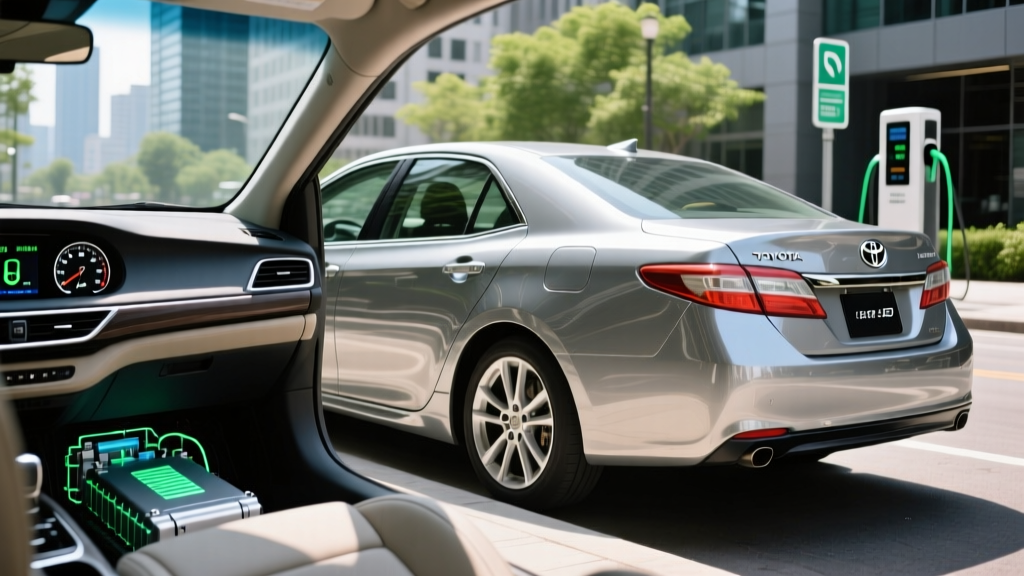
As a conventional hybrid (HEV), the 2013 Camry Hybrid never needs to be plugged in. It recovers energy through regenerative braking and the gasoline engine to recharge its compact nickel-metal hydride (NiMH) battery pack. If you're cross-shopping this against a newer PHEV or a full EV, this guide will help you decide whether this decade-old hybrid still makes financial sense in 2026.
2013 Toyota Camry Hybrid: Core Specifications
| Specification | Value |
|---|---|
| Powertrain | 2.5L 4-cyl Atkinson-cycle + electric motor (HEV) |
| Combined Horsepower | 200 hp (net system output) |
| Gas Engine Output | 156 hp @ 5,700 rpm / 156 lb-ft torque |
| Electric Motor Output | 105 kW (141 hp) |
| Transmission | eCVT (electronically controlled continuously variable) |
| Hybrid Battery Type | Nickel-Metal Hydride (NiMH) |
| Hybrid Battery Capacity | ~1.6 kWh (nominal, non-plug-in) |
| EPA Fuel Economy | 41 city / 38 highway / 40 combined MPG |
| Fuel Tank Capacity | 17.2 gallons |
| Total Driving Range | ~688 miles (EPA combined) |
| 0-60 mph | ~7.6 seconds |
| Drivetrain | Front-wheel drive |
| Cargo Volume | 14.0 cu ft (trunk) |
| Original MSRP (LE trim) | $26,660 (2013) |
| Typical Used Price (2026) | $7,500 – $12,000 depending on mileage and condition |
Fuel Economy: EPA Ratings vs. Real-World MPG
The EPA rates the 2013 Toyota Camry Hybrid at 41 MPG city, 38 MPG highway, and 40 MPG combined. These figures come from the U.S. Department of Energy's fueleconomy.gov database, the authoritative source for standardized fuel-economy testing.
| Driving Condition | EPA Rating | Real-World Expectation |
|---|---|---|
| City | 41 MPG | 42–46 MPG (hybrids excel in stop-and-go) |
| Highway | 38 MPG | 35–39 MPG (less regen benefit at steady speed) |
| Combined | 40 MPG | 38–43 MPG depending on driving mix |
| Cold Weather (below 32°F) | N/A | 33–37 MPG (engine runs more for cabin heat) |
One of the defining traits of Toyota's Hybrid Synergy Drive system is that it actually tends to beat its EPA city estimate in real-world urban driving. The electric motor handles low-speed acceleration where gasoline engines are least efficient, and regenerative braking recaptures energy at every stop. Owners who do predominantly city and suburban driving frequently report 43–46 MPG in warmer months.
Highway driving tells a different story. At sustained 70–80 mph speeds, the gasoline engine does most of the work, and aerodynamic drag dominates. Expect highway MPG to hover around 36–39 in mixed conditions. In cold weather, fuel economy drops noticeably because the engine must run more frequently to generate cabin heat — the 2013 Camry Hybrid does not have an electric heat pump like some newer electrified vehicles.
HEV vs. PHEV vs. EV: Where Does the 2013 Camry Hybrid Fit?
Understanding the distinction between hybrid types is essential before buying. The 2013 Camry Hybrid is a conventional hybrid electric vehicle (HEV). It has no plug, no electric-only driving range to speak of (the battery can propel the car at very low speeds for roughly 1 mile at most), and no eligibility for federal EV tax credits.
| Feature | HEV (2013 Camry Hybrid) | PHEV (e.g., Toyota Prius Prime) | BEV (e.g., Tesla Model 3) |
|---|---|---|---|
| Plug-in Required? | No | Yes (Level 1 or Level 2) | Yes (Level 2 or DC fast) |
| Electric-Only Range | ~1 mile at low speed | 25–44 miles typical | 250–360+ miles |
| Total Range | ~688 miles | ~550–620 miles (electric + gas) | 250–360+ miles |
| Federal Tax Credit (§30D) | Not eligible | Up to $7,500 (new, if eligible) | Up to $7,500 (new, if eligible) |
| Home Charging Needed? | No | Recommended for EV-mode use | Essential |
| Typical Used Price (2026) | $7,500–$12,000 | $18,000–$28,000 | $18,000–$35,000 |
| Best For | No plug access, budget buyers | Short commutes + road trips | Home charging access, max savings |
Choose the 2013 Camry Hybrid (HEV) if: You lack access to home or workplace charging, want the lowest possible purchase price, and value simplicity. There is no plug to manage, no charging app to deal with, and no range planning needed for road trips.
Choose a PHEV if: You can charge at home and want 25–44 miles of electric-only commuting but still need gasoline flexibility for longer trips without charging-infrastructure dependence.
Choose a full EV (BEV) if: You have reliable home Level 2 charging, want the lowest per-mile fuel cost (electricity at $0.13/kWh is roughly equivalent to $1.15/gallon gasoline), and are ready to plan longer road trips around DC fast-charging stops.
Hybrid Battery Lifespan, Warranty, and Replacement Cost
The most common concern among used hybrid buyers is battery longevity. The 2013 Camry Hybrid uses a nickel-metal hydride (NiMH) battery pack — a mature, well-understood chemistry that Toyota has deployed across millions of hybrids since the original 1997 Prius.
Original Hybrid Battery Warranty
- Standard coverage: 8 years / 100,000 miles (whichever comes first)
- CARB-state coverage: 10 years / 150,000 miles in California and states that follow California emissions standards
- Capacity threshold: Toyota warrants the battery against failure or significant capacity loss that triggers a hybrid-system warning
- 2026 status: Original factory warranty has expired for virtually all 2013 models unless the vehicle had extremely low mileage and was registered in a CARB state
Real-world battery lifespan: Data from owner communities, repair shops, and fleet operators consistently shows that the Camry Hybrid's NiMH battery lasts 150,000 to 200,000+ miles before significant degradation or failure. Many examples exceed 250,000 miles on the original pack. NiMH chemistry degrades more gradually than early lithium-ion packs, typically losing capacity slowly rather than failing catastrophically.
Battery replacement cost (2026):
- New OEM Toyota battery: $2,500 – $3,500 (parts) + $500 – $800 (labor) = approximately $3,000 – $4,300 total at a dealership
- Refurbished/remanufactured battery: $1,200 – $2,000 installed at an independent hybrid specialist
- Individual module replacement: Some specialists can replace only the failed modules within the pack for $600 – $1,200, extending the pack's life at lower cost
Given that a used 2013 Camry Hybrid sells for $7,500–$12,000 in 2026, a $3,000+ battery replacement is a meaningful percentage of the vehicle's value. Before purchasing, request a hybrid battery health check — many Toyota dealerships and independent shops can read the battery's internal resistance and state-of-health data through the OBD-II port.
Powertrain Deep Dive: How the Hybrid Synergy Drive Works
The 2013 Camry Hybrid pairs a 2.5-liter four-cylinder Atkinson-cycle gasoline engine with a 105 kW (141 hp) electric motor through Toyota's Hybrid Synergy Drive system. The combined net system output is 200 horsepower, delivered through an eCVT — a planetary gearset that seamlessly blends power from both sources without the fixed gear ratios or rubber-band feel of a traditional belt-driven CVT.
The Atkinson-cycle engine sacrifices some low-RPM torque in exchange for higher thermal efficiency. The electric motor fills in that torque gap instantly from a standstill, which is why the Camry Hybrid feels surprisingly responsive in city driving despite its efficiency focus. The 0-60 mph time of approximately 7.6 seconds was competitive for the midsize sedan segment in 2013 and remains adequate for highway merging in 2026.
The ~1.6 kWh NiMH battery pack is small by modern standards — a 2026 Toyota Prius PHEV carries an 13.6 kWh lithium-ion pack — but it's appropriately sized for an HEV. Its job is to buffer regenerative-braking energy and provide brief electric assist, not to drive the car for meaningful distances on electricity alone. The pack sits behind the rear seat, which slightly reduces trunk pass-through space compared to the gas-only Camry.
Reliability, Safety, and Ownership Costs
Toyota's reputation for reliability is well-earned with this generation. The XV50 Camry platform (2012–2017) is one of the most thoroughly proven vehicles Toyota has produced, and the hybrid variant shares the vast majority of its mechanical components with the gas model. The eCVT has no clutch packs, torque converter, or traditional friction bands to wear out — it's essentially a set of gears and two motor-generators, making it one of the most durable transmissions in the industry.
Safety ratings: The 2013 Camry earned a 5-star overall rating from NHTSA and was an IIHS Top Safety Pick with Good ratings in all crashworthiness categories tested that year. Standard safety equipment includes stability control, antilock brakes, and 10 airbags. It does not have modern ADAS features like automatic emergency braking or lane-keeping assist — those were not yet mainstream in 2013.
Estimated annual ownership costs (2026):
- Insurance: $900 – $1,400/year (varies by state, driver profile; generally lower than EVs due to low vehicle value)
- Maintenance: $400 – $700/year (standard Toyota maintenance; no hybrid-specific routine service required beyond battery cooling fan filter cleaning)
- Fuel at 15,000 miles/year and 40 MPG combined: ~1,375 gallons. At $3.20/gallon = approximately $4,400/year
- Registration: $50 – $200/year depending on state (no EV surcharge applies to HEVs in most states)
For comparison, a similarly aged gas-only 2013 Camry (2.5L, EPA 28 MPG combined) would consume approximately 536 gallons per year at 15,000 miles — roughly 1,340 more gallons than the hybrid, saving the hybrid owner about $4,288 over five years at $3.20/gallon.
Tax Credit Eligibility: Does the 2013 Camry Hybrid Qualify?
No. The 2013 Toyota Camry Hybrid does not qualify for the federal §30D Clean Vehicle Credit or any current federal EV incentive. Under current IRS rules, the §30D credit applies only to plug-in electric vehicles (BEVs and PHEVs) that meet battery-capacity, critical-mineral sourcing, MSRP cap, and buyer income requirements. Conventional hybrids like the Camry HEV have never been eligible for this credit.
Some states offer modest incentives for hybrid vehicles, but most state-level programs have shifted focus exclusively to plug-in vehicles. Check your state's energy or environmental agency website for current programs, but do not expect a meaningful incentive for a used HEV purchase in 2026.
Pros
- Proven, durable powertrain with 200k+ mile battery lifespan
- 41/38 MPG EPA — often exceeds city rating in real driving
- No plug required; zero charging-infrastructure dependence
- Low used-car pricing ($7,500–$12,000)
- Strong safety ratings (5-star NHTSA, IIHS Top Safety Pick)
- Comfortable ride quality and quiet cabin for its class
- Inexpensive maintenance with widely available parts
Cons
- No electric-only driving capability
- No federal or state tax credit eligibility
- Lacks modern ADAS features (no AEB, no lane-keeping)
- Outdated infotainment (no Apple CarPlay/Android Auto)
- NiMH battery replacement cost is significant relative to car value
- Trunk space reduced slightly by battery pack placement
- eCVT drone under hard acceleration
Who Should Buy the 2013 Camry Hybrid in 2026?
This car is ideal for a specific buyer profile: someone who wants maximum fuel efficiency on a tight budget, has no access to plug-in charging (apartment dwellers, street parkers), and values reliability over technology features. It works exceptionally well as a commuter car, a rideshare vehicle, or a first car for a new driver where low running costs matter more than infotainment features.
It is not the right choice if you want electric-only commuting (look at a used PHEV like the Prius Prime or Clarity), if you need modern driver-assistance technology (consider a 2019+ vehicle with Toyota Safety Sense), or if you want to eliminate gasoline entirely (a used BEV like a Nissan Leaf or Chevy Bolt may suit you better, provided you have home charging).
Frequently Asked Questions
How many MPG does the 2013 Toyota Camry Hybrid get?
The EPA rates it at 41 MPG city, 38 MPG highway, and 40 MPG combined. In real-world driving, owners frequently report 42–46 MPG in city conditions and 35–39 MPG on the highway. Cold weather reduces these figures by roughly 10–15%.
Does the 2013 Camry Hybrid need to be plugged in?
No. It is a conventional hybrid (HEV), not a plug-in hybrid (PHEV). The battery recharges through regenerative braking and the gasoline engine. You simply fuel it like any other car.
How long does the hybrid battery last?
Toyota's NiMH hybrid batteries in the Camry typically last 150,000 to 200,000+ miles. Many owners report exceeding 250,000 miles on the original pack. Degradation is gradual, and complete failure is uncommon before high mileage.
How much does it cost to replace the hybrid battery?
A new OEM battery from Toyota costs approximately $3,000–$4,300 installed at a dealership. Refurbished or remanufactured batteries from independent hybrid specialists typically cost $1,200–$2,000 installed. Module-level repairs can cost $600–$1,200.
Does the 2013 Camry Hybrid qualify for any tax credit?
No. Federal §30D tax credits apply only to plug-in vehicles (BEVs and PHEVs). Conventional hybrids have never been eligible. Most state incentive programs have similarly shifted to plug-in vehicles only.
Is the 2013 Camry Hybrid reliable?
Yes. The XV50 Camry platform and Toyota's Hybrid Synergy Drive are among the most reliable powertrains ever produced. The eCVT has fewer wear components than a conventional automatic transmission, and the hybrid system adds minimal maintenance complexity. Major mechanical issues are rare based on NHTSA complaint data and long-term ownership surveys.
How does it compare to a newer hybrid or EV?
A 2026 Toyota Camry Hybrid (LE) is EPA-rated at 52 MPG combined — a meaningful improvement — but costs $30,000+ new. A used BEV like a 2019 Chevrolet Bolt offers ~259 miles of range and lower per-mile fuel cost, but requires home charging access and costs $12,000–$16,000 used. The 2013 Camry Hybrid wins on absolute lowest purchase price and zero charging requirements, but loses on technology, efficiency, and ADAS features.