Quick Verdict: The 2013 Camry Hybrid LE in 2026
The 2013 Toyota Camry Hybrid LE remains one of the most practical used hybrids on the market more than a decade after its debut. With an EPA-rated 41 MPG combined and Toyota's proven Hybrid Synergy Drive system, it delivers fuel savings that still rival newer hybrids — at a fraction of the purchase price. For buyers who want proven reliability without plugging in, this sedan holds up remarkably well, provided the hybrid battery is in good health.
| Specification | Value |
|---|---|
| Powertrain | 2.5L 4-cyl Atkinson-cycle + electric motor (HEV) |
| Combined Horsepower | 200 hp (net) |
| EPA City / Highway / Combined | 43 / 39 / 41 MPG |
| Hybrid Battery | 1.6 kWh NiMH (not plug-in) |
| Transmission | eCVT (planetary gearset) |
| 0–60 mph | ~7.6 seconds |
| Cargo Volume | 14.0 cu ft |
| Original MSRP (2013) | ~$26,190 |
| Typical Used Price (2026) | $8,000–$13,000 |
| Federal Tax Credit (New, 2013) | Expired — no current credit for used purchase |
HEV vs PHEV: What the 2013 Camry Hybrid Actually Is
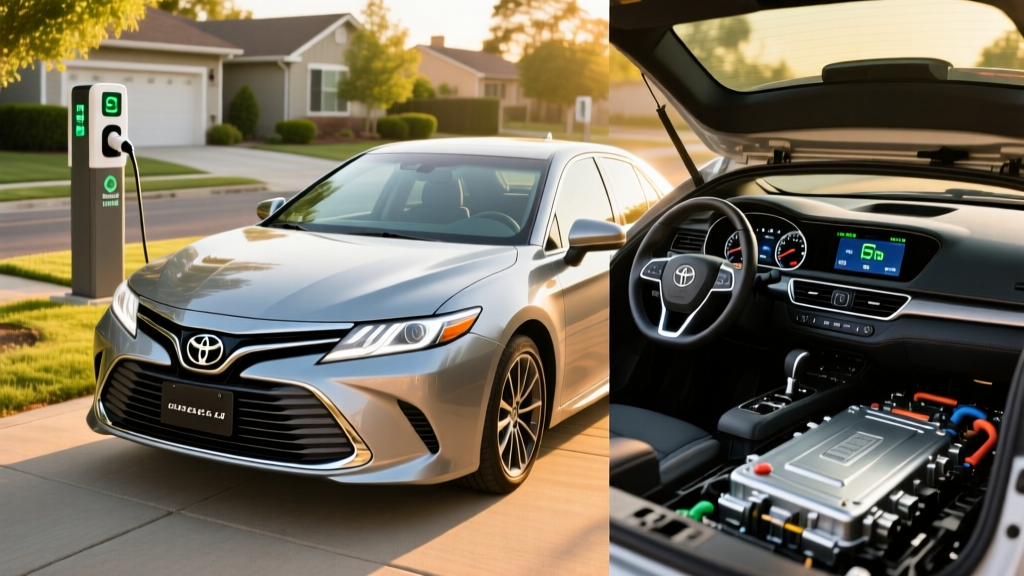
The 2013 Camry Hybrid LE is a conventional hybrid electric vehicle (HEV), not a plug-in hybrid (PHEV). This distinction matters for buyers comparing it to newer electrified options:
- HEV (this car): The gasoline engine and regenerative braking charge a small battery (~1.6 kWh). You never plug it in. The electric motor assists during acceleration and enables low-speed electric-only driving for short distances (typically under 1 mile at low speeds). Energy comes entirely from gasoline.
- PHEV: A larger battery (typically 8–20 kWh) charges via a plug and delivers 20–45 miles of electric-only range before the gas engine takes over. Examples include the Toyota Prius Prime and RAV4 Prime.
- BEV (full EV): No gasoline engine at all. Runs entirely on a large battery (60–100+ kWh) charged from the grid. Examples: Tesla Model 3, Hyundai Ioniq 5.
Key takeaway: You cannot plug in the 2013 Camry Hybrid. It refuels exclusively at the gas pump. The hybrid system works automatically to optimize fuel economy without any driver behavior change.
Fuel Economy: EPA Ratings vs Real-World MPG
According to fueleconomy.gov, the 2013 Toyota Camry Hybrid LE carries these official EPA ratings:
| Driving Cycle | EPA Rating |
|---|---|
| City | 43 MPG |
| Highway | 39 MPG |
| Combined | 41 MPG |
Real-World MPG: What Owners Actually Report
Hybrids typically exceed their EPA city rating in stop-and-go traffic because regenerative braking recaptures energy that gas cars waste as heat. The 2013 Camry Hybrid follows this pattern:
- City driving: Many owners report 42–47 MPG in mixed urban conditions with frequent stops. The electric motor handles low-speed propulsion, reducing engine load.
- Highway driving: Expect 36–40 MPG at sustained 70+ mph speeds. Aerodynamic drag dominates at highway speeds, and the hybrid system provides less benefit than in city traffic.
- Mixed real-world average: Owner-reported data on Fuelly and similar platforms clusters around 38–43 MPG combined, closely tracking the EPA estimate.
- Cold weather penalty: In sub-40°F temperatures, expect a 5–15% drop in fuel economy (roughly 35–39 MPG combined). The engine runs more frequently to provide cabin heat and maintain battery temperature.
At 41 MPG combined and $3.25/gallon gas (a reasonable 2026 national average), the annual fuel cost for 15,000 miles is approximately $1,189. A comparable gas-only 2013 Camry (28 MPG combined) would cost roughly $1,741 — a savings of about $550 per year with the hybrid.
Powertrain and Driving Impressions
The 2013 Camry Hybrid LE pairs a 2.5-liter Atkinson-cycle 4-cylinder engine (156 hp, 156 lb-ft) with a permanent-magnet electric motor. Combined net output is 200 horsepower, routed through Toyota's eCVT — a planetary gearset that seamlessly blends power from both sources without the rubber-band feel of a traditional belt-driven CVT.
The result is smooth, linear acceleration. The 0–60 mph time of approximately 7.6 seconds is adequate for merging and passing. The transition between electric-only and engine-assisted driving is nearly imperceptible from the driver's seat — a hallmark of Toyota's Hybrid Synergy Drive system refined over multiple generations.
One-pedal driving is not available (this is an HEV, not an EV), but regenerative braking provides noticeable deceleration when lifting off the accelerator, particularly with the B-mode shifter position that increases regen intensity for downhill or stop-and-go driving.
Battery Health, Warranty, and Replacement Cost
Hybrid Battery Warranty
When new, Toyota covered the 2013 Camry Hybrid's battery with a 10-year/150,000-mile warranty in states following California emissions standards (CARB states), and 8 years/100,000 miles in other states. By 2026, most original battery warranties have expired unless the vehicle has exceptionally low mileage and was purchased late in the model year in a CARB state.
Battery Longevity: What the Data Shows
The 1.6 kWh nickel-metal hydride (NiMH) battery in the 2013 Camry Hybrid is far less stressed than a full EV battery. It operates within a narrow state-of-charge window (roughly 40–80%) managed by the vehicle's computer, which significantly extends cycle life. Real-world data suggests:
- Typical lifespan: 150,000–200,000+ miles before significant degradation or failure. Many original batteries are still functioning in 2013 Camrys with well over 200,000 miles.
- Failure mode: NiMH batteries gradually lose capacity rather than failing suddenly. You may notice reduced electric-only assist and slightly lower MPG before complete failure.
- Individual cell replacement: Some specialists can replace failed individual cells within the battery pack for $500–$1,200, extending pack life at lower cost.
Battery Replacement Cost in 2026
If the hybrid battery fails completely, replacement options include:
| Option | Estimated Cost (Installed) | Notes |
|---|---|---|
| New OEM Toyota battery | $3,000–$4,000 | Full warranty, longest expected life |
| Remanufactured battery | $1,500–$2,500 | Rebuilt with tested cells; 1–3 year warranty typical |
| Used/salvage battery | $800–$1,500 | Lowest cost but uncertain remaining life |
| Individual cell repair | $500–$1,200 | Only viable if most cells are healthy |
Before purchasing a used 2013 Camry Hybrid, have a qualified technician perform a hybrid battery health check. Many dealerships and hybrid specialists can read the battery's state-of-health (SoH) data through the OBD-II port.
Tax Credits and Purchase Economics
When the 2013 Camry Hybrid was new, it qualified for a $0 federal tax credit. Toyota's hybrid credit allocation under the original Energy Policy Act was exhausted years before 2013, and the current IRS §30D clean vehicle credit applies only to new vehicles meeting battery sourcing and MSRP requirements.
For used purchases in 2026: The IRS §25E used clean vehicle credit provides up to $4,000 (30% of sale price, capped) for qualifying used EVs and PHEVs — but conventional hybrids (HEVs) like the 2013 Camry Hybrid do not qualify. This credit is limited to plug-in vehicles.
The purchase case rests entirely on fuel savings and low ownership cost rather than incentives:
| Cost Factor | 2013 Camry Hybrid LE | 2013 Camry LE (Gas) |
|---|---|---|
| Typical Used Price (2026) | $8,000–$13,000 | $7,000–$11,000 |
| Annual Fuel (15k mi) | ~$1,189 | ~$1,741 |
| Annual Insurance (est.) | ~$1,200–$1,500 | ~$1,100–$1,400 |
| 5-Year Fuel Cost | ~$5,945 | ~$8,705 |
| 5-Year Fuel Savings | ~$2,760 (hybrid advantage) | |
The hybrid's fuel savings typically offset its modest price premium within 2–3 years of average driving, making it the economically rational choice even without tax incentives.
Hybrid vs PHEV vs EV: Which Should You Choose?
Choose the 2013 Camry Hybrid LE If:
- You lack access to home or workplace charging (apartment, street parking)
- Your budget is under $15,000
- You want zero behavior change — just drive and refuel normally
- You prioritize proven long-term reliability over cutting-edge tech
- Your commute is mixed city/highway
Look at a PHEV or BEV Instead If:
- You have Level 2 home charging and a short commute (a PHEV could eliminate gas use entirely on daily drives)
- You want electric-only driving and zero tailpipe emissions on short trips
- You qualify for federal or state EV/PHEV tax credits on a newer vehicle
- You want the latest safety tech (AEB, lane-keeping, adaptive cruise) unavailable on the 2013 model
- You drive primarily in city traffic where a full EV's efficiency and zero-emissions operation shine
Reliability and Safety
Toyota's hybrid system has accumulated decades of real-world validation. The 2013 Camry Hybrid shares its core architecture with the Prius family and benefits from Toyota's conservative engineering approach. Common trouble spots on this generation are largely non-hybrid-specific:
- Brake actuator assembly: Some owners report premature wear on the regenerative brake actuator ($1,000–$1,800 replacement). Listen for unusual brake pedal feel or grinding noises.
- Water pump: The electric water pump on the hybrid system can fail around 100,000–130,000 miles ($400–$700 replacement).
- 12V auxiliary battery: Like any car, the standard 12V battery needs replacement every 4–6 years. A dead 12V battery can prevent the hybrid system from starting even if the traction battery is fully charged.
The NHTSA gave the 2013 Camry Hybrid a 5-star overall safety rating. The IIHS rated it Good in most crash tests, though it predates modern small-overlap testing protocols. Notably absent compared to 2026 vehicles: automatic emergency braking, blind-spot monitoring, and lane-departure warning were not available on this model year.
Frequently Asked Questions
How many MPG does the 2013 Toyota Camry Hybrid LE get?
The EPA rates it at 43 city / 39 highway / 41 combined MPG. Real-world driving typically yields 38–43 MPG combined, with city-heavy driving often exceeding the EPA city estimate and sustained highway driving falling slightly below the highway rating.
Can I plug in the 2013 Camry Hybrid to charge?
No. The 2013 Camry Hybrid LE is a conventional hybrid (HEV), not a plug-in hybrid (PHEV). The battery charges exclusively through regenerative braking and the gasoline engine. There is no charging port.
How far can it drive on electric power alone?
Very short distances — typically under 1 mile at speeds below 25 mph, such as in a parking lot or during slow traffic creep. The 1.6 kWh NiMH battery is too small for meaningful electric-only range. This is by design: the system uses electric assist to improve overall efficiency, not to replace the gasoline engine.
Is the hybrid battery reliable, and what does replacement cost?
Toyota's NiMH hybrid batteries routinely last 150,000–200,000+ miles. If replacement is needed, expect $1,500–$4,000 depending on whether you choose a remanufactured or new OEM unit. Individual cell repair is possible for $500–$1,200 at hybrid specialists.
Does the 2013 Camry Hybrid qualify for any tax credit in 2026?
No. The IRS §30D new clean vehicle credit and §25E used clean vehicle credit both require a plug-in vehicle (PHEV or BEV). Conventional hybrids like the Camry Hybrid LE are not eligible for federal tax credits. Some states previously offered hybrid rebates, but most have transitioned to EV/PHEV-only incentive programs.
Is it worth buying a 2013 Camry Hybrid with high mileage?
It depends on hybrid battery health. A 2013 Camry Hybrid with 180,000 miles and a verified healthy battery can be a sound purchase. One with 120,000 miles and a degraded battery may require a $2,000+ investment shortly after purchase. Always request a hybrid battery diagnostic before buying.