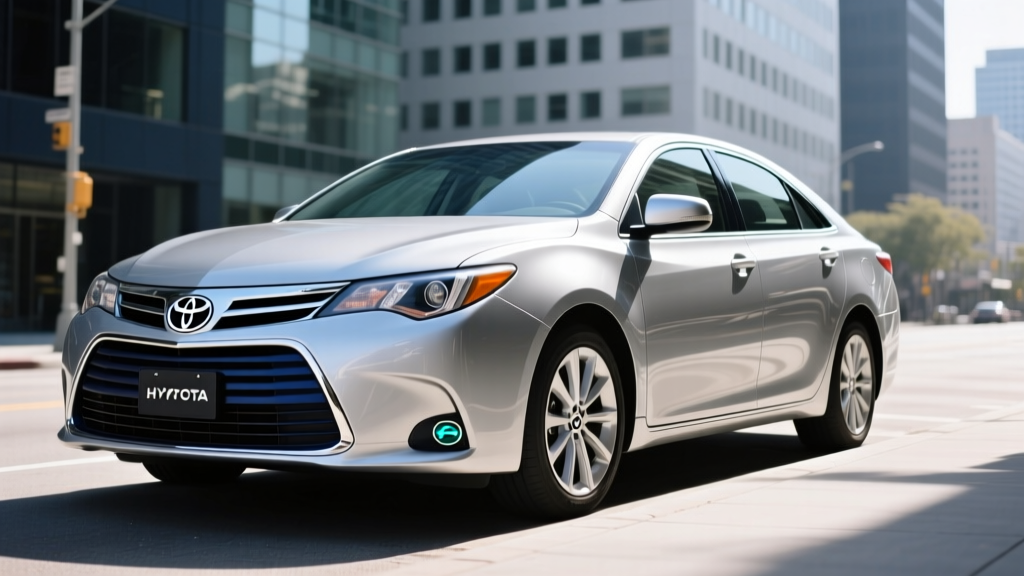
The 2013 Toyota Avalon Hybrid sedan occupies a specific niche in the used-car market: a full-size, five-passenger sedan that delivers midsize-economy fuel consumption without requiring a plug, a charging routine, or any change in driving habits. More than a decade after its debut, this third-generation Avalon Hybrid remains one of the most efficient large sedans ever sold in the United States, and its reputation for powertrain durability has only strengthened with age.
If you're cross-shopping this car against newer hybrids, plug-in hybrids, or battery-electric vehicles in 2026, the Avalon Hybrid's value proposition is straightforward: proven reliability, low operating costs, and zero charging infrastructure dependency — at a used price that undercuts virtually every new electrified vehicle on the market.
HEV vs. PHEV vs. EV: Where the 2013 Avalon Hybrid Fits
Before examining the specifics, it's essential to clarify what the 2013 Avalon Hybrid is — and what it is not. This car is a conventional hybrid electric vehicle (HEV). It has no plug, no electric-only driving mode of meaningful distance, and no external charging capability. The hybrid system recovers energy during braking and deceleration, stores it in a small nickel-metal hydride (NiMH) battery, and uses that energy to assist the gasoline engine and enable brief low-speed electric-only movement.
Quick Reference: Hybrid Types
| Feature | HEV (e.g., 2013 Avalon Hybrid) | PHEV (e.g., Prius Prime) | BEV (e.g., Tesla Model 3) |
|---|---|---|---|
| Plug-in charging | No | Yes (Level 1/2) | Yes (Level 1/2/DC) |
| Electric-only range | ~1 mi at low speed | 25–45 mi typical | 250–400+ mi |
| Gasoline engine | Yes (primary) | Yes (backup) | No |
| Battery size | ~1.6 kWh (NiMH) | 8–20 kWh (Li-ion) | 50–100+ kWh (Li-ion) |
| Fuel/energy source | Gasoline only | Gasoline + grid electricity | Grid electricity only |
| Tax credit (new) | None | Up to $7,500 (§30D) | Up to $7,500 (§30D) |
The Avalon Hybrid was never offered as a plug-in hybrid. Toyota reserved PHEV technology for the Prius Prime and, later, the RAV4 Prime. If you need electric-only commuting range, the 2013 Avalon Hybrid will not provide it — but if your goal is simply to reduce fuel consumption without altering your refueling routine, this HEV delivers.
Fuel Economy: EPA Ratings and Real-World MPG
The EPA rated the 2013 Toyota Avalon Hybrid at 40 MPG city / 39 MPG highway / 40 MPG combined. For a 166.5-inch-long, 3,595-pound full-size sedan, those figures were exceptional in 2013 and remain competitive today.
| Driving Condition | EPA Rating | Real-World Expectation |
|---|---|---|
| City | 40 MPG | 38–43 MPG (hybrids often exceed EPA in stop-and-go) |
| Highway | 39 MPG | 35–39 MPG (sustained 70+ mph reduces hybrid advantage) |
| Combined | 40 MPG | 37–41 MPG depending on driving mix |
| Cold weather (below 30°F) | N/A | 33–37 MPG (engine runs more for cabin heat) |
How many MPG does this hybrid get in practice? Owner-reported data on fueleconomy.gov shows a wide spread, with many drivers averaging 37–42 MPG in mixed driving. Toyota's Hybrid Synergy Drive system excels in city and suburban conditions, where frequent braking events recharge the battery and the engine shuts off at stops. On long highway cruises at 75–80 mph, the advantage narrows because the electric motor contributes less and aerodynamic drag dominates.
Compared to the gas-only 2013 Avalon (rated at 21/31/25 MPG with the V6), the Hybrid saves roughly 200–250 gallons of fuel per year at 12,000 miles annually — worth approximately $700–$900 in fuel savings at 2026 gasoline prices.
Powertrain: Engine, Motor, and Combined Output
The 2013 Avalon Hybrid pairs a 2.5-liter Atkinson-cycle four-cylinder engine (154 hp, 153 lb-ft torque) with an electric motor integrated into the transaxle. Combined system output is 200 horsepower. Power is routed to the front wheels through an electronically controlled continuously variable transmission (eCVT).
| Specification | 2013 Toyota Avalon Hybrid |
|---|---|
| Engine | 2.5L Atkinson-cycle I4 |
| Engine horsepower | 154 hp @ 5,700 rpm |
| Combined system horsepower | 200 hp |
| Transmission | eCVT (planetary gearset) |
| Drivetrain | Front-wheel drive |
| 0–60 mph | ~8.0 seconds |
| Hybrid battery | NiMH, ~1.6 kWh (gross) |
| Curb weight | ~3,595 lbs |
| Fuel tank | 17.2 gallons |
| Total range (est.) | ~688 miles at 40 MPG combined |
The eCVT is not a belt-driven CVT like those in some competitors. Toyota's system uses a planetary gearset that seamlessly blends engine and motor power with no belts, pulleys, or fixed gear ratios. This design has proven extraordinarily durable — it's the same fundamental architecture Toyota has used since the original Prius in 1997, refined across millions of vehicles.
Acceleration is adequate rather than quick. The 0–60 mph time of roughly 8.0 seconds is on par with a four-cylinder Camry of the same era. The Avalon Hybrid prioritizes smoothness and efficiency over performance; the electric motor fills in low-rpm torque, making around-town driving feel responsive despite the modest power figures.
Hybrid Battery: Lifespan, Warranty, and Replacement Cost
For any used hybrid buyer, battery longevity is the primary concern. The 2013 Avalon Hybrid uses a nickel-metal hydride (NiMH) battery pack — a chemistry that Toyota has deployed across tens of millions of hybrids with a well-documented track record.
Battery Warranty & Expected Lifespan
- Original warranty: 8 years / 100,000 miles (10 years / 150,000 miles in CARB states including California, New York, Massachusetts, and others)
- Real-world lifespan: Most Avalon Hybrid batteries last 150,000–200,000+ miles before significant degradation; many original batteries are still in service at 12+ years old
- Replacement cost (2026): $2,000–$3,500 for a new OEM battery; $1,000–$1,800 for a refurbished/reconditioned pack
- Individual module replacement: Some specialist shops replace only failed modules for $300–$600, extending pack life at lower cost
Is this hybrid reliable and what is battery replacement cost? The 2013 Avalon Hybrid is among the most reliable vehicles in Toyota's lineup. The NiMH battery chemistry is less energy-dense than modern lithium-ion but is notably tolerant of heat and deep cycling — two factors that accelerate degradation in other chemistries. Failures before 120,000 miles are uncommon. When failures do occur, they typically manifest as reduced fuel economy and a "Check Hybrid System" warning rather than a sudden loss of drivability.
The eCVT transaxle itself is essentially maintenance-free. There is no transmission fluid to change on a scheduled basis under normal driving conditions, and the planetary gearset has no wear-prone components like clutch packs or bands.
If you're buying a 2013 Avalon Hybrid in 2026, the vehicle is 13 years old. Ask for maintenance records and consider having a hybrid-certified technician perform a battery health check, which measures internal resistance and voltage variance across modules. A healthy pack will show tight voltage matching between modules (within 0.2V under load).
Pricing, Tax Credits, and Ownership Costs
The 2013 Avalon Hybrid was originally sold in two trims: XLE ($36,355 MSRP) and Limited ($41,405 MSRP). In the 2026 used-car market, well-maintained examples typically sell for $9,000–$15,000 depending on mileage, condition, and region.
Tax Credit Eligibility
Does the 2013 Avalon Hybrid qualify for any tax credit? No. Under current IRS §30D Clean Vehicle Credit rules, only new plug-in electric vehicles (PHEVs and BEVs) with qualifying battery sourcing and MSRP caps are eligible for the federal credit of up to $7,500. Conventional hybrids like the Avalon Hybrid have never qualified for §30D.
Additionally, the Used Clean Vehicle Credit (up to $4,000 or 30% of sale price) applies only to used PHEVs and BEVs — not conventional hybrids. The Avalon Hybrid is ineligible for any federal purchase incentive.
Some states and local utilities offer rebates for any vehicle achieving 40+ MPG combined, but these programs are rare and vary by jurisdiction. Check your state energy office or utility provider for current programs.
| Cost Category | 2013 Avalon Hybrid (Used) | 2026 Camry Hybrid (New) | 2026 Tesla Model 3 RWD (New) |
|---|---|---|---|
| Purchase price | $12,000 (avg used) | $31,495 MSRP | $38,990 MSRP |
| Federal tax credit | $0 | $0 (HEV) | Up to $7,500 (if eligible) |
| Annual fuel/energy | ~$1,350 (gas, 12k mi/yr) | ~$1,150 (gas) | ~$540 (electricity) |
| 5-year fuel cost | $6,750 | $5,750 | $2,700 |
| Estimated maintenance (5 yr) | $2,500 | $1,800 | $1,200 |
| 5-year total (purchase + fuel + maint.) | ~$21,250 | ~$39,045 | ~$35,390 (after credit) |
The Avalon Hybrid's five-year cost of ownership is dramatically lower than a new vehicle simply because the purchase price is so much lower. Even though a new BEV has lower per-mile energy costs, the used Avalon Hybrid's total outlay wins on pure economics for budget-conscious buyers.
Who Should Choose the 2013 Avalon Hybrid vs. a PHEV or EV?
Pros
- 40 MPG combined in a spacious full-size sedan
- No plug, no charging infrastructure needed
- Proven Toyota Hybrid Synergy Drive reliability
- Low used purchase price ($9k–$15k)
- Comfortable ride, quiet cabin, large trunk (14.0 cu ft)
- Low annual fuel cost (~$1,350/yr at 12,000 miles)
- NiMH battery tolerant of heat and age
Cons
- No electric-only commuting range
- No federal or state tax credit eligibility
- eCVT drone under hard acceleration
- Dated infotainment (no Apple CarPlay/Android Auto from factory)
- Higher mileage examples may need suspension or hybrid battery service
- Not eligible for HOV lane access in most states
Choose the 2013 Avalon Hybrid If:
- You want maximum fuel savings with zero change to your refueling routine
- You drive 10,000–15,000 miles/year in mixed city/highway conditions
- You need a spacious rear seat and large trunk for family use
- Your budget is under $15,000 and you want low ongoing costs
- You lack access to home or workplace charging (apartment, street parking)
Consider a PHEV or EV Instead If:
- You have a short commute (under 30 miles) and home Level 2 charging — a PHEV can cover most trips on electricity alone
- You want HOV lane access (available for PHEVs/BEVs in CA, CO, FL, and other states)
- You want the lowest possible per-mile energy cost (BEVs average $0.04–$0.06/mile vs. $0.11/mile for the Avalon Hybrid)
- You qualify for the full $7,500 federal tax credit on a new EV, narrowing the price gap
- You want modern infotainment, ADAS features, and current safety technology
Common Issues and Pre-Purchase Inspection Tips
The 2013 Avalon Hybrid has few widespread mechanical problems, but used buyers should check for:
- Brake actuator assembly: Some 2013–2015 Toyota hybrids experienced premature wear in the regenerative braking actuator. Listen for unusual buzzing from the brake pedal area and check for any stored ABS/VSC codes. Replacement costs $1,200–$1,800.
- 12V auxiliary battery: Like all hybrids, the Avalon has a conventional 12V battery (located in the trunk) that powers electronics. If the car fails to start or displays multiple warning lights, the 12V battery may be weak — a $150–$200 fix.
- Inverter coolant pump: Toyota issued service campaigns for the hybrid inverter coolant pump on some model years. Verify the pump is circulating coolant (visible movement in the reservoir when the car is on).
- Suspension components: At 100,000+ miles, front struts and rear shock absorbers may need replacement. Budget $600–$1,000 if not recently serviced.
A pre-purchase inspection by a Toyota dealer or hybrid-specialist shop should include a hybrid battery health report, which can be pulled from the vehicle's ECU in about 15 minutes. This report shows individual module voltages and internal resistance — the most reliable predictor of remaining battery life.
Frequently Asked Questions
How many MPG does the 2013 Toyota Avalon Hybrid get?
The EPA rates it at 40 MPG city, 39 MPG highway, and 40 MPG combined. In real-world mixed driving, most owners report 37–42 MPG. City-heavy driving often yields higher numbers because the hybrid system recaptures more braking energy; sustained highway driving at 75+ mph may drop to 35–38 MPG.
Does the 2013 Avalon Hybrid need to be plugged in?
No. This is a conventional hybrid (HEV), not a plug-in hybrid. It charges its battery entirely through regenerative braking and the gasoline engine. You refuel it exactly like a normal gas car — at any gas station.
How long will the hybrid battery last?
Toyota's NiMH hybrid batteries routinely last 150,000–200,000+ miles. Many 2013 Avalon Hybrids are still running on their original battery at 12+ years old. When replacement is needed, expect to pay $2,000–$3,500 for a new OEM pack or $1,000–$1,800 for a refurbished unit.
Does it qualify for any federal tax credit?
No. The IRS §30D Clean Vehicle Credit applies only to plug-in electric vehicles (PHEVs and BEVs). Conventional hybrids like the Avalon Hybrid are not eligible for federal purchase incentives, whether bought new or used.
How does the Avalon Hybrid compare to the Camry Hybrid?
The 2013 Avalon Hybrid shares its powertrain with the contemporary Camry Hybrid but is larger, heavier, and more refined. The Avalon gets slightly lower MPG (40 vs. 41 combined for the Camry Hybrid of the same year) but offers more rear legroom, a quieter cabin, and a smoother ride. On the used market, the Avalon Hybrid often costs less than a comparable Camry Hybrid because of lower demand for the full-size sedan segment.
Is the 2013 Avalon Hybrid good for highway driving?
Yes, with a caveat. The ride is comfortable and the cabin is quiet at highway speeds, making it an excellent cruiser. However, the hybrid system's efficiency advantage is smaller on the highway than in the city — expect 35–39 MPG at 70–75 mph rather than the 40+ MPG you'd see in suburban driving. The 17.2-gallon fuel tank provides roughly 600–680 miles of total range.
Can I add Apple CarPlay or Android Auto?
Not from the factory — the 2013 Avalon predates smartphone integration. However, several aftermarket head units (Pioneer, Sony, Kenwood) support CarPlay and Android Auto and can be installed in the Avalon's dash for $400–$800 including installation.