Quick Verdict: A Luxury Hybrid Bargain on the Used Market
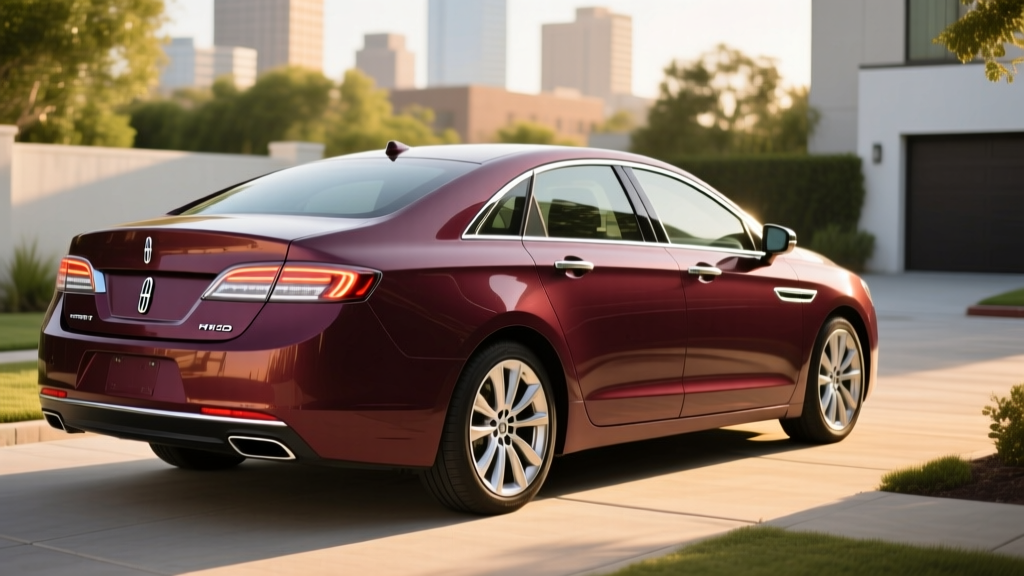
The 2013 Lincoln MKZ Hybrid sedan occupies a specific niche in today's used-car landscape: a midsize luxury hybrid that delivers genuine fuel savings without the complexity of a plug-in system. Built on Ford's third-generation Fusion Hybrid platform, the MKZ Hybrid pairs a 2.0-liter Atkinson-cycle four-cylinder with an electric motor for a combined 188 horsepower and an EPA-estimated 45 MPG combined. Thirteen years after its debut, it remains a compelling option for buyers seeking a comfortable, efficient daily driver at a fraction of its original MSRP.
This guide breaks down everything a prospective used buyer needs to know — from real-world fuel economy and hybrid battery longevity to maintenance costs and how the MKZ Hybrid stacks up against modern electrified alternatives in 2026.
HEV vs PHEV: Understanding What the MKZ Hybrid Is (and Isn't)
Before evaluating the MKZ, it's critical to understand the distinction between the two main hybrid architectures on the road.
| Feature | Conventional Hybrid (HEV) | Plug-In Hybrid (PHEV) |
|---|---|---|
| Plug-in charging required? | No — regenerates via braking and engine | Yes — plugs into Level 1 or Level 2 |
| Electric-only driving | Very limited (brief low-speed EV mode) | 20–50+ miles on battery alone |
| Battery size | Small (1–2 kWh) | Larger (10–30+ kWh) |
| Federal tax credit (new) | Not eligible under §30D | Up to $7,500 (subject to rules) |
| Example | 2013 Lincoln MKZ Hybrid | Lincoln Corsair Grand Touring PHEV |
The 2013 Lincoln MKZ Hybrid sedan is a conventional hybrid (HEV). It does not plug in. You never need to search for a charging station or install home charging equipment. The 1.4 kWh lithium-ion battery charges itself through regenerative braking and the gasoline engine. This simplicity is a feature, not a limitation — it makes the MKZ Hybrid ideal for drivers who want better fuel economy without changing their refueling habits.
Fuel Economy: EPA Ratings and Real-World MPG
Fuel efficiency is the MKZ Hybrid's strongest selling point. Here are the official EPA figures as listed on fueleconomy.gov:
| Metric | EPA Estimate | Real-World Expectation |
|---|---|---|
| City MPG | 45 MPG | 40–47 MPG (hybrids often beat EPA in city) |
| Highway MPG | 45 MPG | 38–43 MPG (less regen benefit at sustained speed) |
| Combined MPG | 45 MPG | 39–45 MPG depending on driving mix |
| Fuel tank capacity | 16.5 gallons | — |
| Total range | ~742 miles | ~640–740 miles |
How many MPG does this hybrid get? The EPA rates the 2013 MKZ Hybrid at 45 MPG across the board — city, highway, and combined. In real-world driving, conventional hybrids tend to slightly exceed their EPA city rating because stop-and-go traffic maximizes regenerative braking. Highway driving, where the gasoline engine runs more continuously, typically yields a few MPG less than the sticker. Expect roughly 39–45 MPG combined depending on your commute profile, tire condition, and climate.
Real-world note: Cold weather reduces hybrid efficiency by 5–15% due to increased engine idling for cabin heat and reduced battery efficiency. In sub-freezing conditions, expect combined MPG in the 36–40 range. This is normal for all hybrids and is not indicative of a problem.
Powertrain and Performance Specifications
The MKZ Hybrid uses Ford's proven hybrid synergy drive system, shared with the Fusion Hybrid of the same era.
| Specification | 2013 Lincoln MKZ Hybrid |
|---|---|
| Engine | 2.0L Atkinson-cycle inline-4 |
| Engine horsepower | 141 hp @ 6,000 rpm |
| Electric motor output | ~118 hp (88 kW) |
| Combined system horsepower | 188 hp |
| Transmission | eCVT (electronic continuously variable) |
| Drivetrain | Front-wheel drive |
| 0–60 mph | ~8.5 seconds |
| Hybrid battery | 1.4 kWh lithium-ion (air-cooled) |
| Curb weight | ~3,810 lbs |
The eCVT is not a traditional belt-and-pulley CVT — it uses a planetary gearset to blend engine and motor power seamlessly. There are no fixed gears, no shift shock, and no rubber-band feeling. Acceleration is adequate for merging and passing, though the MKZ Hybrid prioritizes smoothness and efficiency over performance. The 188 combined horsepower is sufficient for daily driving but won't satisfy enthusiasts.
Hybrid Battery Longevity, Warranty, and Replacement Cost
Battery lifespan is the number-one concern for used hybrid buyers. Here's what the data shows:
Original warranty: The 2013 MKZ Hybrid battery was covered for 8 years / 100,000 miles (10 years / 150,000 miles in CARB states including California, New York, Massachusetts, and others that follow California emissions standards).
Current status (2026): The original factory battery warranty has expired for all 2013 models based on age. However, hybrid battery failure at this age is not inevitable — many units continue functioning well beyond the warranty period.
Is this hybrid reliable and what is battery replacement cost? The 2013 MKZ Hybrid's powertrain is generally reliable. The 2.0L Atkinson-cycle engine is under-stressed and long-lived, and the eCVT has no friction clutches or bands to wear out. The hybrid battery is the primary long-term cost risk.
Based on fleet data and owner reports for Ford/Lincoln hybrids of this era:
- Typical hybrid battery lifespan: 150,000–200,000+ miles before significant degradation or failure
- Degradation pattern: Gradual capacity loss (reduced EV-mode time, slightly lower MPG) rather than sudden failure
- Replacement cost (OEM dealer): $2,500–$4,000 including labor
- Replacement cost (refurbished/aftermarket): $1,200–$2,200 including labor from independent hybrid specialists
- Individual cell/module repair: Some shops can replace failed modules for $500–$1,000
When shopping for a used 2013 MKZ Hybrid, request a hybrid battery health check. Many Ford/Lincoln dealers can pull the battery's State of Health (SoH) via OBD-II diagnostics. A pack showing less than 70% capacity will result in noticeably reduced fuel economy and more frequent engine engagement.
Used Pricing and Tax Credit Eligibility
The 2013 Lincoln MKZ Hybrid carried an original MSRP starting around $38,730, with fully loaded models reaching the mid-$40,000s. As a 13-year-old vehicle in 2026, used pricing reflects typical luxury-car depreciation:
- Fair market range (private party): $6,500–$11,000 depending on mileage, condition, and region
- Dealer retail range: $8,000–$13,000
- High-mileage examples (150k+): $4,500–$7,000
Does it qualify for any tax credit? No. The federal §30D clean vehicle credit applies only to new plug-in electric vehicles (BEVs and PHEVs) meeting current battery sourcing, MSRP, and buyer income requirements as outlined by the IRS. Conventional hybrids like the MKZ Hybrid have never qualified for §30D. The federal used-EV credit (up to $4,000 under §25E) also requires a plug-in vehicle — HEVs are excluded.
Some states and municipalities offer registration discounts, HOV lane access, or emissions-test exemptions for hybrids, but these vary by jurisdiction. Check your state's DMV or energy office for current programs.
Who Should Choose the MKZ Hybrid vs a Modern EV or PHEV?
The 2013 MKZ Hybrid makes sense for a specific buyer profile. Here's a decision framework:
Choose the 2013 MKZ Hybrid if:
- Your budget is under $12,000 and you want luxury features with low fuel costs
- You lack access to home or workplace charging (apartment, street parking)
- You want zero behavior change — just fill up at any gas station
- Your commute is city-heavy, where hybrid efficiency peaks
- You want a proven, simple powertrain with wide service availability
Consider a modern PHEV or BEV instead if:
- You have Level 2 home charging access and want electric-only daily driving
- You want current-year safety tech (automatic emergency braking, lane-keeping were not standard in 2013)
- You're eligible for the federal §30D credit on a new PHEV/BEV ($3,750–$7,500)
- You want a vehicle still under factory warranty
- You drive 200+ miles daily and want the lowest per-mile energy cost
Pros
- 45 MPG combined — excellent for a luxury sedan of this era
- No plug-in charging required; zero infrastructure dependency
- Quiet, refined ride quality with Lincoln's signature comfort tuning
- Proven powertrain shared with high-volume Ford Fusion Hybrid
- Generous standard features: leather, heated seats, Sync, MyLincoln Touch
- Strong real-world city MPG that can exceed EPA estimates
Cons
- Original battery warranty expired — replacement cost is buyer's risk
- Outdated infotainment (MyLincoln Touch is slow by modern standards)
- No advanced driver-assistance features (no AEB, no adaptive cruise on most trims)
- eCVT drone under hard acceleration
- Rear-seat space tighter than some midsize competitors
- Not eligible for any federal EV or hybrid tax credits
Maintenance and Ownership Costs
Beyond the hybrid battery, the MKZ Hybrid is straightforward to maintain. The Atkinson-cycle engine uses conventional components: standard oil changes (5W-20 synthetic, every 7,500–10,000 miles), spark plugs at 100,000 miles, and a standard 12V auxiliary battery (replace every 4–6 years, ~$180–$250).
Brake wear is significantly reduced compared to non-hybrid vehicles because regenerative braking handles most deceleration. It's common for hybrid owners to see 80,000–100,000+ miles on original brake pads.
Insurance costs are generally in line with non-hybrid luxury sedans of the same vintage. According to NHTSA records, the 2013 MKZ has no major safety recalls specific to the hybrid system, though buyers should verify recall status by VIN on the NHTSA website.
Frequently Asked Questions
How many MPG does the 2013 Lincoln MKZ Hybrid get in real driving?
The EPA rates it at 45 MPG city, 45 highway, and 45 combined. Real-world results typically range from 39–47 MPG depending on driving conditions. City-heavy routes with frequent stops maximize regenerative braking and often yield results at or above the EPA estimate. Sustained highway driving and cold weather reduce efficiency to the mid-to-upper 30s.
Does the 2013 MKZ Hybrid need to be plugged in?
No. This is a conventional hybrid (HEV), not a plug-in hybrid (PHEV). The 1.4 kWh battery charges entirely through regenerative braking and the gasoline engine. You refuel only at gas stations, exactly like a conventional car.
How long does the hybrid battery last?
Based on fleet data for Ford/Lincoln hybrids of this generation, the lithium-ion pack typically lasts 150,000–200,000+ miles. Degradation is gradual — you'll notice reduced EV-mode engagement and slightly lower MPG before complete failure. Some original batteries in well-maintained examples are still functional at 200,000+ miles.
How much does it cost to replace the hybrid battery?
An OEM replacement at a Lincoln dealer runs $2,500–$4,000. Refurbished or aftermarket packs from independent hybrid specialists cost $1,200–$2,200 installed. Individual module replacement (repairing the existing pack) can cost $500–$1,000 if only specific cells have failed.
Hybrid vs PHEV vs EV — which should I choose?
A conventional hybrid (HEV) like the MKZ is best for buyers without charging access who want better MPG with zero lifestyle change. A plug-in hybrid (PHEV) suits buyers with home charging who want 20–50 miles of electric-only commuting plus gas-engine flexibility for road trips. A full EV (BEV) is ideal for buyers with reliable home charging who want the lowest per-mile cost, zero tailpipe emissions, and minimal maintenance. Your charging access and daily mileage should drive the decision.
Does the 2013 MKZ Hybrid qualify for any tax credits?
No. Federal §30D and §25E clean vehicle credits require plug-in vehicles (PHEVs or BEVs). Conventional hybrids have never been eligible. Some states offer minor perks like emissions-test exemptions or HOV stickers for hybrids, but these vary by location and may have expired for 2013 model-year vehicles.
Is the 2013 MKZ Hybrid reliable overall?
The powertrain is considered reliable. The 2.0L Atkinson-cycle engine and eCVT are well-proven across the Ford/Lincoln lineup. The main reliability risk is the hybrid battery, which is now outside its warranty window. Beyond the battery, typical concerns are standard used-car items: suspension components, HVAC, and the MyLincoln Touch infotainment system (known for occasional screen freezes). A pre-purchase inspection by a hybrid-qualified technician is strongly recommended.