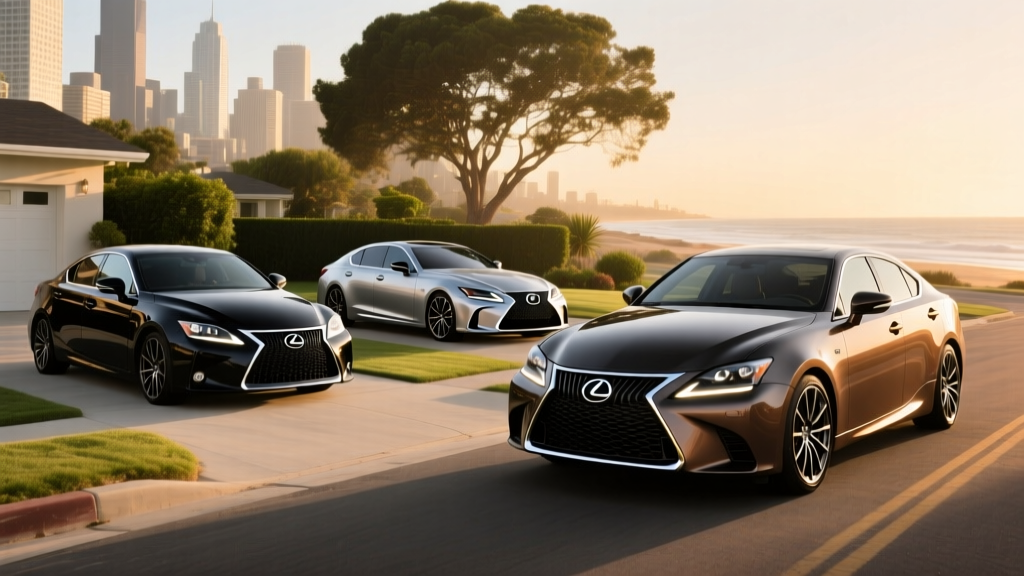
If you're searching for a 2013 Lexus hybrid on the used market in 2026, you're looking at vehicles that are now 13 years old — but thanks to Lexus's proven hybrid synergy drive system, many of these are still running strong with original batteries. The 2013 model year offered three distinct hybrid options: the compact CT 200h, the midsize luxury sedan ES 300h, and the performance-oriented GS 450h. All three are conventional hybrids (HEVs) — meaning no plug, no charging cable, and no range anxiety. They generate electricity through regenerative braking and the gasoline engine.
This guide breaks down the exact EPA fuel economy, real-world MPG data, battery longevity, replacement costs, and whether any of these models still qualify for tax incentives in 2026. We'll also compare them head-to-head so you can pick the right one for your commute.
Understanding the 2013 Lexus Hybrid Lineup: All HEV, No Plug Required
Every 2013 Lexus hybrid is a conventional hybrid electric vehicle (HEV), not a plug-in hybrid (PHEV). This is a critical distinction that trips up many used-car shoppers.
A conventional hybrid (HEV) like the 2013 CT 200h, ES 300h, and GS 450h has a small battery (1–3 kWh) that is charged exclusively by the gas engine and regenerative braking. You never plug it in. A plug-in hybrid (PHEV) has a larger battery (typically 8–20+ kWh) that can be charged from a wall outlet or public charger, offering 20–50 miles of electric-only driving before the gas engine kicks in. Lexus did not offer any PHEV models in 2013; the brand's first PHEV (the NX 450h+) didn't arrive until the 2022 model year.
Because these are HEVs, there is no electric-only range to consider in the PHEV sense. The electric motor assists the gasoline engine at low speeds and during acceleration, and the car can creep short distances (typically under 1 mile at very low speeds) on electric power alone — but the primary propulsion is always the combined gas-electric system.
Fuel Economy Breakdown: EPA Ratings and Real-World MPG
Fuel economy is the primary reason most buyers choose a 2013 Lexus hybrid. Here are the official EPA ratings for all three models, alongside real-world observations from long-term owners and testing.
| Model | City | Highway | Combined | Real-World Avg |
|---|---|---|---|---|
| CT 200h | 51 | 48 | 50 | 44–48 |
| ES 300h | 40 | 39 | 40 | 36–42 |
| GS 450h | 29 | 34 | 31 | 27–32 |
Real-World MPG vs EPA: What Owners Actually See
The CT 200h shares its powertrain with the Toyota Prius, and like the Prius, it tends to deliver slightly below its EPA city rating in real-world driving. Owners on fueleconomy.gov's My MPG tracker report averages between 44 and 48 MPG combined. Heavy highway driving at 75+ MPH can drop this to the low 40s, while city-heavy commutes with frequent stops (where regenerative braking shines) can push it to 50 or above.
The ES 300h is one of the more impressive real-world performers. Many owners report matching or even exceeding the 40 MPG combined rating in mixed suburban driving. The 2.5-liter four-cylinder engine is understressed, and the hybrid system seamlessly handles low-speed propulsion. Expect 36–42 MPG depending on driving style and climate.
The GS 450h prioritizes performance over efficiency. Its 3.5-liter V6 and electric motor combine for 338 horsepower, and the trade-off is fuel economy in the high 20s to low 30s. It's still significantly better than the non-hybrid GS 350 (which averages around 23 MPG combined), but this is a performance hybrid, not an efficiency champion.
Powertrain Specifications: Engine, Motor, and Combined Output
| Spec | CT 200h | ES 300h | GS 450h |
|---|---|---|---|
| Engine | 1.8L I4 | 2.5L I4 | 3.5L V6 |
| Engine HP | 98 hp | 156 hp | 292 hp |
| Electric Motor HP | 80 hp | 105 kW (~141 hp) | 147 kW (~197 hp) |
| Net Combined HP | 134 hp | 200 hp | 338 hp |
| Hybrid Battery (NiMH) | ~1.3 kWh | ~1.6 kWh | ~1.9 kWh |
| Transmission | eCVT | eCVT | eCVT |
| 0–60 MPH | ~9.8 sec | ~7.4 sec | ~5.6 sec |
| Drivetrain | FWD | FWD | RWD |
All three models use Toyota/Lexus's Hybrid Synergy Drive with a planetary-gear eCVT — not a traditional belt-driven CVT. This is significant because eCVTs have no belts or pulleys to wear out, contributing to the legendary reliability of these powertrains. The nickel-metal hydride (NiMH) battery packs are small by modern standards, but they're proven technology with excellent longevity.
Hybrid Battery Lifespan, Warranty, and Replacement Cost
Battery longevity is the single biggest concern for anyone buying a 13-year-old hybrid. Here's what the data shows for 2013 Lexus hybrids.
When new, all 2013 Lexus hybrids came with a hybrid battery warranty of 8 years / 100,000 miles (extended to 10 years / 150,000 miles in California and states that adopted CARB emissions standards: CT, ME, MD, MA, NJ, NY, OR, VT, WA, RI, CO, and others). As of 2026, the original factory warranty has expired for all 2013 models regardless of mileage.
How Long Do 2013 Lexus Hybrid Batteries Actually Last?
The NiMH batteries in these vehicles have proven remarkably durable. Based on owner reports and repair-shop data:
- CT 200h: Many original batteries are still functioning at 150,000–200,000+ miles. Failure before 120,000 miles is uncommon.
- ES 300h: Similar longevity. The larger battery and less aggressive cycling contribute to extended life. Failures typically appear between 140,000–180,000 miles when they do occur.
- GS 450h: The higher-performance system generates more heat, and some owners report battery degradation starting around 120,000–150,000 miles, though many still run on original cells.
Battery Replacement Cost in 2026
If the hybrid battery does fail, here's what you're looking at:
| Model | OEM New (Dealer) | Refurbished/Reman | Individual Cell Repair |
|---|---|---|---|
| CT 200h | $3,000–$4,000 | $1,500–$2,200 | $500–$900 |
| ES 300h | $3,500–$4,500 | $1,800–$2,500 | $600–$1,000 |
| GS 450h | $4,000–$5,500 | $2,000–$3,000 | $700–$1,200 |
Refurbished batteries from reputable suppliers like Green Bean Battery or Dorman come with their own warranties (typically 3–5 years). Individual cell replacement is the cheapest option but requires a skilled hybrid technician to diagnose which cells are weak and balance the pack. Before purchasing any 2013 Lexus hybrid, request a hybrid battery health check — many independent hybrid specialists can perform a load test and read the battery's state-of-health (SoH) via OBD-II scanner for $50–$100.
2013 Lexus Hybrid Pricing and Tax Credit Eligibility
Used Market Prices (2026)
As of early 2026, here's what you can expect to pay for a 2013 Lexus hybrid in good condition with average mileage (100,000–140,000 miles):
- CT 200h: $8,000–$13,000 depending on mileage, condition, and trim (Base, Premium, or F Sport)
- ES 300h: $11,000–$17,000 depending on mileage and condition
- GS 450h: $12,000–$18,000 (lower production volume keeps prices slightly higher)
Tax Credit Reality Check
Here's where used hybrid buyers need clear expectations: none of these 2013 models qualify for the federal §30D new clean vehicle tax credit — that credit applies only to new vehicles meeting current battery-sourcing, MSRP, and buyer-income requirements as outlined on IRS.gov.
The Used Clean Vehicle Credit (IRC §25E) offers up to $4,000 (30% of sale price, capped at $4,000) for eligible used EVs and PHEVs — but conventional hybrids (HEVs) do not qualify. The §25E credit is limited to used battery electric vehicles and plug-in hybrids with a minimum battery capacity of 7 kWh. Since the 2013 CT 200h, ES 300h, and GS 450h are all HEVs with NiMH batteries under 2 kWh, they are ineligible for any federal tax credit.
Some states offer their own incentives for used hybrids, but these vary widely and change frequently. Check your state's energy office or department of revenue for current programs.
2013 Lexus Hybrid Reliability and Ownership Costs
Lexus consistently ranks at or near the top of IIHS reliability surveys and J.D. Power dependability studies, and the hybrid variants are no exception. Here's what to expect from each model at 13 years old:
CT 200h — The Efficiency Pick
The CT 200h is mechanically a Prius in Lexus clothing. That's both its greatest strength and its limitation. The 1.8L hybrid powertrain is one of the most thoroughly proven systems on the road — shared with millions of Prius vehicles worldwide. Common issues are minor: occasional water pump failures (~$400–$600 repair), brake actuator replacements at high mileage ($800–$1,200), and the standard hybrid battery aging discussed above. The interior materials and infotainment system feel dated by 2026 standards, and rear-seat space is tight.
ES 300h — The Comfort Pick
The ES 300h is widely regarded as one of the best luxury hybrids Lexus has ever built. The 2.5L four-cylinder is bulletproof, the cabin is quiet and spacious, and the hybrid system is nearly invisible in daily driving. Long-term reliability is excellent. The main complaints involve the Lexus Remote Touch infotainment controller (frustrating to use) and occasional power-seat motor issues. Maintenance costs are moderate — expect $500–$800/year for routine service at this age.
GS 450h — The Performance Pick
The GS 450h is the enthusiast's hybrid: rear-wheel drive, 338 combined horsepower, and a 0–60 time of 5.6 seconds. The trade-off is higher maintenance costs. The V6 hybrid system is more complex, air suspension (if equipped) can fail ($1,500–$2,500 per corner), and the GS line was discontinued after 2020, meaning some body and trim parts are getting harder to source. Still, the powertrain itself is robust.
- Proven, ultra-reliable hybrid system with 200K+ mile potential
- No plug required — fuel and go
- CT 200h achieves 44–50 MPG real-world
- ES 300h offers luxury-sedan comfort at 40 MPG
- Low annual maintenance costs (especially CT/ES)
- eCVT transmission has no belts to fail
- Strong resale value retention for age
- Hybrid battery replacement risk at this age ($1,500–$5,500)
- No federal tax credits for used HEVs
- CT 200h is slow (9.8 sec 0–60) and cramped
- Dated infotainment across all three models
- No Apple CarPlay / Android Auto (2013 tech)
- GS 450h maintenance costs climb with age
- Original factory warranty fully expired
Who Should Buy a 2013 Lexus Hybrid vs a Full EV or Gas Car?
Choosing between a 13-year-old hybrid, a newer gas car, or a modern EV depends on your driving pattern, budget, and charging access.
Choose the 2013 Lexus hybrid if: You want maximum fuel economy without changing your fueling habits, you drive 10,000–15,000 miles/year in mixed city/highway conditions, your budget is under $18,000, and you don't have reliable home charging access for an EV.
Choose a modern EV (new or used) if: You have home Level 2 charging, you drive under 250 miles/day, you want the lowest per-mile fuel cost ($0.03–$0.05/mile vs $0.08–$0.12/mile for a hybrid), and you can spend $20,000+ (used) or $35,000+ (new, before credits).
Choose a newer gas car if: You regularly drive 300+ miles in remote areas with limited charging infrastructure, you want modern safety tech and infotainment, and fuel cost savings aren't your primary concern.
For urban and suburban commuters who can't install a home charger, the 2013 Lexus hybrid — particularly the ES 300h — remains one of the smartest used-car purchases available. You get 40 MPG, Lexus reliability, and zero lifestyle changes. The ES 300h's fuel cost at 12,000 miles/year and $3.50/gallon gas works out to roughly $1,050/year, compared to about $1,840/year for a comparable gas-only luxury sedan averaging 23 MPG.
Frequently Asked Questions
How many MPG does a 2013 Lexus hybrid get?
It depends on the model. The CT 200h is rated at 51 city / 48 highway / 50 combined (real-world: 44–48 MPG). The ES 300h is rated at 40/39/40 (real-world: 36–42 MPG). The GS 450h is rated at 29/34/31 (real-world: 27–32 MPG).
Do 2013 Lexus hybrids need to be plugged in?
No. All 2013 Lexus hybrids are conventional HEVs. The battery charges through regenerative braking and the gasoline engine. You never plug them in. Lexus did not offer a plug-in hybrid until 2022.
Is the 2013 Lexus hybrid reliable, and what does battery replacement cost?
Yes — the Hybrid Synergy Drive system is among the most reliable powertrains ever produced. Original NiMH batteries commonly last 150,000–200,000+ miles. If replacement is needed, expect $1,500–$2,500 for a refurbished unit or $3,000–$5,500 for a new OEM battery depending on the model. Individual cell repair is possible for $500–$1,200.
Does a 2013 Lexus hybrid qualify for any tax credit?
No. The federal §30D new vehicle credit does not apply to used cars. The §25E used clean vehicle credit (up to $4,000) applies only to used BEVs and PHEVs with batteries of 7 kWh or more — conventional hybrids with sub-2 kWh NiMH packs are ineligible. Check your state for any local hybrid incentives.
How far can a 2013 Lexus hybrid drive on electric power alone?
These are not plug-in hybrids, so they have no meaningful electric-only range. The electric motor assists the gas engine and can propel the car at very low speeds (under 25 MPH) for less than a mile in ideal conditions. The primary benefit of the hybrid system is fuel economy improvement, not electric-only driving.
What should I check before buying a used 2013 Lexus hybrid?
Prioritize a hybrid battery health check via OBD-II scan (look for state-of-health above 70%), verify maintenance records (especially transaxle fluid and inverter coolant changes), check for any outstanding recalls via NHTSA.gov, and inspect brake actuator function (a common high-mileage wear item on Toyota/Lexus hybrids). A pre-purchase inspection by a hybrid-certified technician is strongly recommended.