Quick Verdict: A Refined Luxury Hybrid That Still Holds Up
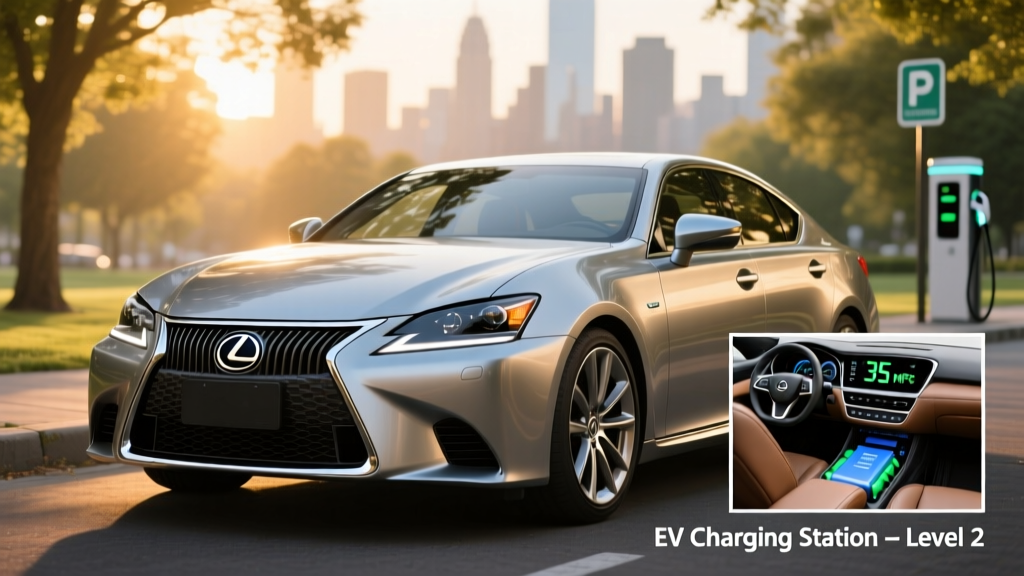
The 2013 Lexus GS 450h paired a 3.5-liter V6 with an electric motor to deliver 338 combined horsepower and an EPA-rated 31 MPG combined. As a conventional hybrid (HEV), it never needs plugging in — the battery recharges through regenerative braking and the gasoline engine. More than a decade later, this rear-wheel-drive luxury sedan remains a compelling used-car option for buyers who want premium comfort, strong acceleration, and hybrid efficiency without range anxiety or charging infrastructure concerns.
But buying a 13-year-old hybrid in 2026 raises legitimate questions: How has the nickel-metal hydride (NiMH) battery held up? What does replacement cost? And does the GS 450h still deliver meaningful fuel savings over its gas-only sibling? This guide answers each of those questions with data.
2013 Lexus GS 450h: Powertrain and Performance Specs
| Specification | Value |
|---|---|
| Powertrain | 3.5L V6 + electric motor (HEV) |
| Combined Horsepower | 338 hp |
| Gasoline Engine Output | 286 hp @ 6,000 rpm |
| Electric Motor Output | ~197 hp (200 kW peak) |
| Transmission | CVT (electronically controlled) |
| Drivetrain | Rear-wheel drive |
| 0–60 mph | 5.6 seconds |
| Hybrid Battery Type | NiMH (nickel-metal hydride) |
| Hybrid Battery Capacity | ~1.9 kWh (nominal) |
| EPA MPG (City / Hwy / Combined) | 29 / 34 / 31 |
| Fuel Tank | 17.4 gallons |
| Total Driving Range | ~539 miles (EPA est.) |
| Original MSRP (2013) | $59,450 (base) |
The GS 450h uses Lexus's full hybrid system, which allows pure electric driving at low speeds (typically under 25 mph for short distances), seamless engine-motor blending during acceleration, and aggressive regenerative braking during deceleration. The CVT keeps the engine in its most efficient RPM range, which is why the highway MPG figure actually exceeds the city number — unusual for hybrids, which typically favor stop-and-go driving.
Fuel Economy: EPA Ratings vs. Real-World MPG
| Driving Condition | EPA Rating | Real-World Expectation |
|---|---|---|
| City | 29 MPG | 28–32 MPG |
| Highway | 34 MPG | 30–34 MPG |
| Combined | 31 MPG | 29–33 MPG |
Source: EPA Fuel Economy Guide
Hybrid fuel economy is highly sensitive to driving style. Owners who use smooth acceleration, anticipate stops to maximize regen, and keep speeds moderate on the highway consistently report 32–33 MPG combined. Aggressive driving, frequent short trips in cold weather, or sustained 80+ mph highway cruising can drop real-world numbers to 26–28 MPG.
For comparison, the gas-only 2013 GS 350 (3.5L V6, RWD) is EPA-rated at 21 city / 30 highway / 24 combined. The hybrid's 31 MPG combined represents a roughly 29% improvement in fuel economy — translating to approximately 130 fewer gallons per year at 15,000 miles driven, or about $450–$550 in annual fuel savings at 2026 gas prices (~$3.50/gallon).
HEV vs. PHEV vs. EV: Where Does the GS 450h Fit?
Conventional Hybrid (HEV) — This Car
The 2013 GS 450h is a conventional hybrid. It has a small battery (~1.9 kWh) that charges itself through regenerative braking and the gasoline engine. You never plug it in. It cannot drive meaningful distances on electric power alone (less than 1 mile at low speeds). Its efficiency comes from optimizing when the gas engine runs and recapturing braking energy.
Plug-In Hybrid (PHEV)
A PHEV has a larger battery (typically 10–25 kWh), can be plugged in, and offers 20–50 miles of electric-only driving before the gas engine engages. Examples include the Toyota RAV4 Prime or Jeep Wrangler 4xe. PHEVs qualify for federal tax credits under IRS §30D if they meet battery-sourcing and MSRP requirements. The 2013 GS 450h does not offer a plug-in variant.
Battery Electric Vehicle (BEV)
A full EV like the Tesla Model S or Lucid Air runs entirely on electricity with 250–400+ miles of EPA range. BEVs require home or public charging access and qualify for up to $7,500 in federal tax credits (subject to income, MSRP, and battery-sourcing caps per IRS §30D rules).
| Factor | HEV (GS 450h) | PHEV | BEV |
|---|---|---|---|
| Plug in required? | No | Yes (optional) | Yes (mandatory) |
| Electric-only range | <1 mi | 20–50 mi | 250–400+ mi |
| Home charging needed? | No | Recommended | Essential |
| Federal tax credit | None | Up to $7,500* | Up to $7,500* |
| Maintenance complexity | Low (proven) | Moderate (two systems) | Lowest (no engine) |
| Fuel cost (per mile) | ~$0.11 | ~$0.05–$0.11 | ~$0.04–$0.06 |
*Federal tax credits subject to income caps, MSRP limits, battery sourcing requirements, and point-of-sale transfer rules. See IRS.gov for current eligibility.
Hybrid Battery Health: Lifespan, Warranty, and Replacement Cost
How Long Does the GS 450h NiMH Battery Last?
NiMH hybrid batteries in Lexus vehicles have a strong longevity track record. Real-world data from owner forums and repair databases indicates that most GS 450h batteries last 150,000–200,000 miles before significant capacity loss triggers a check-engine light or noticeable efficiency decline. Some units exceed 250,000 miles with minimal degradation.
The NiMH chemistry in the GS 450h is notably robust compared to early lithium-ion packs. NiMH cells degrade more gradually and predictably, and the battery management system (BMS) in Lexus hybrids is conservative — it never allows the pack to fully charge or fully discharge, keeping the cells in a longevity-friendly 40–80% state-of-charge window.
Hybrid Battery Replacement Cost (2026 Estimates)
| Option | Estimated Cost | Notes |
|---|---|---|
| New OEM battery (Lexus dealer) | $4,500–$6,000 | Full new pack, installed; includes labor |
| Remanufactured battery | $2,500–$3,800 | Rebuilt with tested cells; 1–3 year warranty typical |
| Used/salvage battery | $1,200–$2,200 | From wrecked/low-mileage GS 450h; condition varies |
| Individual cell/module replacement | $800–$1,500 | Only viable if 1–2 modules failed; requires specialist |
Before committing to a full battery replacement, have a hybrid-specialist shop perform a hybrid battery health scan using Toyota/Lexus diagnostic software. This reads individual module voltages and internal resistance — often only one or two modules have degraded, and replacing those specific modules can restore the pack for under $1,500.
Buying a Used 2013 GS 450h in 2026: Pricing and Value
The 2013 GS 450h originally started at $59,450. In the 2026 used market, expect to find examples in the following ranges:
| Condition / Mileage | Approximate Price |
|---|---|
| Excellent, under 80k miles | $16,000–$20,000 |
| Good, 80k–130k miles | $11,000–$16,000 |
| Fair, 130k–180k miles | $8,000–$12,000 |
| High mileage / needs battery | $5,500–$8,500 |
Tax credit eligibility: The 2013 GS 450h does not qualify for the federal §30D new clean vehicle credit (it is a conventional HEV, not a PHEV or BEV, and is purchased used). However, if buying from a dealer as a qualifying used vehicle under $25,000, the §25E used clean vehicle credit could theoretically apply — but only to PHEVs and BEVs, not conventional hybrids. The GS 450h is ineligible for any current federal EV/hybrid tax incentive.
Pros and Cons of the 2013 GS 450h Today
Pros
- 31 MPG combined in a 4,000-lb luxury sedan
- 338 hp with smooth, linear CVT acceleration
- No plug-in charging required — zero infrastructure dependency
- Proven NiMH battery longevity (150k–200k+ miles)
- Lexus reliability reputation and parts availability
- Quiet, well-insulated cabin with premium materials
- Strong safety ratings (IIHS Top Safety Pick)
Cons
- Original battery warranty expired; replacement is $2,500–$6,000
- Trunk space reduced by hybrid battery (14.4 cu ft vs. 18.3 in GS 350)
- No all-wheel-drive option (RWD only)
- CVT drone under hard acceleration
- Dated infotainment (no Apple CarPlay / Android Auto)
- Higher insurance premiums than GS 350 (hybrid-specific parts)
- No federal tax credit eligibility
Who Should Buy the 2013 GS 450h (and Who Shouldn't)
Choose the GS 450h if:
- You want a luxury sedan with sub-$12k pricing and 31 MPG without ever plugging in
- You drive 12,000–18,000 miles/year and want to save $450–$550 annually on fuel vs. the GS 350
- You lack access to home or workplace charging (apartment, street parking)
- You value Lexus build quality and are comfortable budgeting $3,000–$5,000 for a potential battery replacement
- You want strong passing power (338 hp, 5.6s 0–60) without a V8's fuel bill
Look elsewhere if:
- You want electric-only commuting — consider a used PHEV like the Chevrolet Volt or a BEV like the Nissan Leaf
- You need AWD for snow-belt driving — the GS 450h is RWD only
- You want modern infotainment with smartphone integration — the 2013 system is outdated
- You want to qualify for a federal tax credit — only new PHEVs and BEVs are eligible under current IRS rules
Frequently Asked Questions
How many MPG does the 2013 Lexus GS 450h hybrid get?
The EPA rates the 2013 GS 450h at 29 city / 34 highway / 31 combined MPG. Real-world owners typically see 29–33 MPG combined depending on driving style and conditions. Highway driving above 75 mph and cold-weather short trips reduce efficiency.
Does the 2013 GS 450h need to be plugged in?
No. The GS 450h is a conventional hybrid (HEV), not a plug-in hybrid (PHEV). The ~1.9 kWh NiMH battery charges entirely through regenerative braking and the gasoline engine. There is no charging port and no electric-only range beyond a brief low-speed creep.
Is the 2013 GS 450h reliable, and what does a battery replacement cost?
Lexus hybrid systems have an excellent reliability record. The NiMH battery typically lasts 150,000–200,000 miles. If replacement is needed, expect $2,500–$3,800 for a remanufactured pack or $4,500–$6,000 for a new OEM unit at a dealer. Individual module repairs can cost $800–$1,500.
Does the 2013 GS 450h qualify for any tax credit?
No. The GS 450h is a conventional hybrid, and federal tax credits under IRS §30D and §25E apply only to plug-in hybrids (PHEVs) and battery electric vehicles (BEVs). There are no current federal incentives for purchasing a used conventional hybrid.
How does the GS 450h compare to a modern hybrid sedan?
Modern hybrids like the 2026 Toyota Crown (41 MPG combined) or Honda Accord Hybrid (48 MPG combined) deliver significantly better fuel economy thanks to updated hybrid systems and lighter platforms. However, the GS 450h offers more power (338 hp vs. ~200 hp), a more premium cabin, and rear-wheel-drive dynamics that efficiency-focused modern hybrids sacrifice.
What should I check before buying a used 2013 GS 450h?
Prioritize a hybrid battery health scan (individual module voltage and resistance readings), verify maintenance records for the inverter cooling system, check for any outstanding recalls via NHTSA.gov, and confirm the vehicle hasn't had a salvaged title. A pre-purchase inspection by a Lexus dealer or hybrid specialist is strongly recommended.