2013 Kia Optima Hybrid: The Used-Buyer Verdict
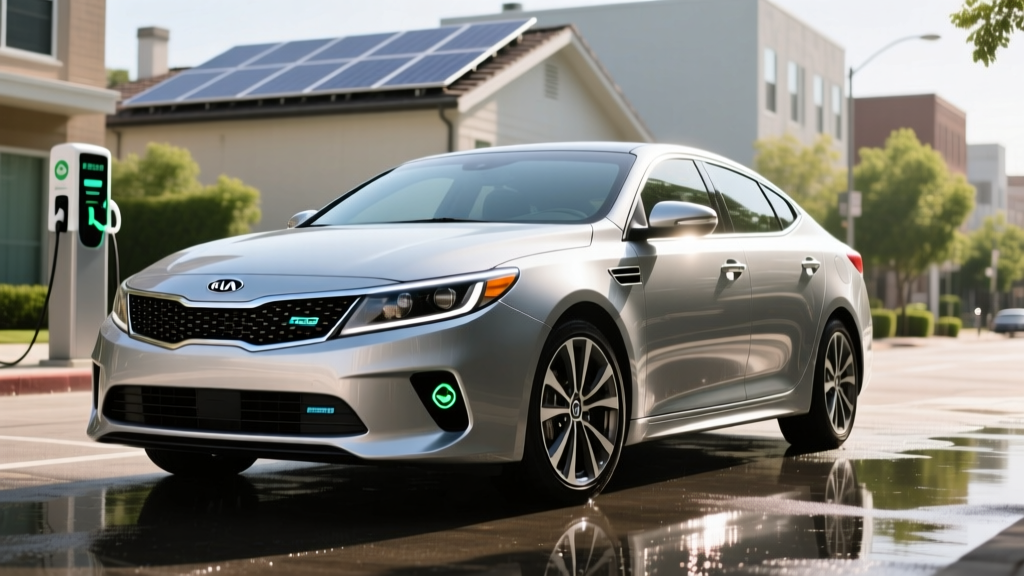
The 2013 Kia Optima Hybrid pairs a 2.4-liter four-cylinder engine with a 47-hp electric motor to deliver an EPA-estimated 35 MPG combined — strong numbers for a midsize sedan that still offers a spacious trunk and highway comfort. More than a decade after its debut, this first-generation Optima Hybrid remains a practical entry point for drivers who want hybrid efficiency without a plug-in requirement or a premium price tag.
On the used market in 2026, expect to find the 2013 Optima Hybrid priced between $6,500 and $10,500 depending on mileage and condition. That undercuts comparable 2013 Toyota Camry Hybrids and 2013 Ford Fusion Hybrids by $1,000–$2,500, making it a budget-conscious pick — though with some trade-offs in long-term battery reliability that we'll address below.
Before we dig into the specs, let's clarify what this car is and isn't, because Kia's hybrid lineup can confuse shoppers.
HEV vs PHEV: What the 2013 Kia Optima Hybrid Actually Is
Conventional Hybrid (HEV) — This car: The 2013 Optima Hybrid is a standard hybrid. It charges its small battery through regenerative braking and the gasoline engine. You never plug it in. It cannot drive on electric power alone for meaningful distances (only brief low-speed EV-mode creeping).
Plug-in Hybrid (PHEV) — Not this car: Kia did not offer a plug-in Optima until the 2017 model year. The 2013 Optima has no plug, no electric-only range to speak of, and no federal tax credit eligibility under §30D. If you're looking for electric-only commuting from Kia, you'd need to look at newer PHEV models like the Niro PHEV or Sorento PHEV.
Full EV (BEV) — Different category entirely: Battery-electric vehicles like the Kia EV6 or Niro EV run purely on electricity, require charging infrastructure, and qualify for up to $7,500 in federal credits (subject to IRS sourcing and income rules). The 2013 Optima Hybrid is none of these things.
Fuel Economy: EPA Ratings vs Real-World MPG
| Metric | EPA Estimate | Real-World Expectation |
|---|---|---|
| City MPG | 35 MPG | 33–37 MPG (hybrids often beat EPA city) |
| Highway MPG | 39 MPG | 34–38 MPG (highway speeds reduce regen benefit) |
| Combined MPG | 35 MPG | 33–36 MPG (mixed driving) |
| Fuel Tank Capacity | 17.2 gallons | — |
| Total Range | ~602 miles | ~550–580 miles real-world |
Source: EPA Fuel Economy Guide.
Why real-world can exceed EPA in the city: Hybrids recapture braking energy and shut off the engine at stops. Stop-and-go traffic actually improves hybrid efficiency compared to the EPA test cycle. Owners who drive predominantly urban routes regularly report 36–38 MPG. Conversely, sustained 75+ mph highway driving with A/C running can drop figures into the low 30s.
Cold-weather impact: Expect a 5–10% MPG reduction in freezing temperatures. The engine runs longer to heat the cabin and the battery's charge/discharge efficiency drops in cold. In northern winters, 31–33 MPG combined is typical.
Powertrain and Performance Specs
| Specification | 2013 Kia Optima Hybrid |
|---|---|
| Engine | 2.4L inline-4 Atkinson cycle |
| Engine HP | 169 hp @ 6,000 rpm |
| Electric Motor | 47 hp (35 kW) permanent-magnet |
| Combined System Output | 206 hp |
| Transmission | 6-speed automatic (no CVT) |
| 0–60 mph | ~8.6 seconds |
| Hybrid Battery | 1.4 kWh lithium-polymer (Li-Po) |
| Drivetrain | Front-wheel drive |
| Curb Weight | 3,496 lbs |
The 6-speed automatic is a distinguishing feature. Most competitors — Toyota Camry Hybrid, Ford Fusion Hybrid — use continuously variable transmissions (CVTs). The Optima Hybrid's conventional gearbox delivers more natural acceleration feel with defined shift points, though it sacrifices a small amount of efficiency compared to a CVT's seamless ratio optimization.
At 206 combined horsepower, the Optima Hybrid has adequate passing power. The electric motor fills in torque at low RPMs before the gas engine reaches its power band, so initial acceleration from a stop is responsive. Highway merging is confident, if not sporty.
Hybrid Battery: Lifespan, Warranty, and Replacement Cost
Original Hybrid Battery Warranty: Kia covered the 2013 Optima Hybrid's lithium-polymer battery for 10 years / 100,000 miles (whichever came first) from the original in-service date. For most 2013 models, this warranty expired between 2023 and 2024 unless the car was sold very late in the model year.
Emissions warranty: The hybrid system components also fall under the federal 8-year/80,000-mile emissions warranty, which has similarly expired for nearly all 2013 examples.
Expected battery lifespan: Lithium-polymer hybrid batteries in the Optima typically last 120,000–180,000 miles before capacity loss becomes noticeable. Unlike full EVs, the Optima Hybrid uses only a fraction of its 1.4 kWh pack (the system buffers the top and bottom of the charge range to reduce stress), so degradation is gradual. Many first-generation Optima Hybrids have surpassed 150,000 miles on the original battery.
Replacement cost (2026 estimates):
- Dealer OEM replacement: $2,800–$3,800 (battery + labor)
- Refurbished/aftermarket battery: $1,500–$2,200 (battery + labor at independent hybrid specialist)
- Individual cell replacement: $400–$800 (if only one or two cells have failed — requires a shop with hybrid cell-balancing equipment)
Warning signs of battery degradation: Watch for reduced MPG (dropping below 30 combined), the battery charge indicator rarely reaching full, the engine running more frequently at low speeds, or a "Check Hybrid System" warning on the dash. A pre-purchase OBD-II scan can read the battery's State of Health (SoH) and individual cell voltages — insist on this before buying.
Reliability Record and Common Issues
The 2013 Optima Hybrid carries a mixed reliability reputation. The conventional 2.4L Theta II engine family had known issues (excessive oil consumption, connecting-rod bearing failures) that led to a major Kia recall and class-action settlement. However, the hybrid variant uses a modified Atkinson-cycle version that runs under less thermal stress, and it has been largely spared the worst of those failures.
Common issues specific to the 2013 Optima Hybrid:
- Hybrid system clutch actuator wear: The clutch that engages/disengages the electric motor can develop rough transitions around 100,000–130,000 miles. Repair: $800–$1,500.
- 12V auxiliary battery drain: The conventional 12V battery (separate from the hybrid pack) can drain if the car sits for extended periods. Replacement: $150–$250.
- Brake actuator noise: The regenerative braking system's actuator can produce a humming or grinding sound at higher mileages. Not always a failure — sometimes normal operation — but worth a mechanic's evaluation.
- Infotainment lag: The 2013 UVO infotainment system is dated by 2026 standards. Functional but slow. Aftermarket head-unit upgrades are common.
Check NHTSA recall records for any open recalls on a specific VIN before purchase. The Theta II engine recall is the most critical to confirm has been addressed.
Used Pricing and Tax Credit Eligibility
2026 used-market pricing:
- 80,000–100,000 miles: $8,500–$10,500
- 100,000–130,000 miles: $7,000–$8,500
- 130,000–170,000 miles: $5,500–$7,000
Federal tax credit (§30D): The 2013 Kia Optima Hybrid does not qualify for the federal new-vehicle EV tax credit, which applies only to plug-in vehicles (PHEVs and BEVs). Conventional hybrids that don't plug in are ineligible.
Used clean vehicle credit (§25E): This credit (up to $4,000 or 30% of sale price, whichever is less) applies only to used plug-in EVs and PHEVs purchased from a dealer. The Optima Hybrid, as a non-plug-in HEV, is not eligible for this credit either.
Bottom line on incentives: You're paying full price for this car. The savings come from the low purchase price and strong fuel economy, not from tax credits.
Who Should Buy the 2013 Kia Optima Hybrid?
Pros
- 35 MPG combined is competitive with Camry/Fusion hybrids
- Low used-car pricing — strong value per MPG
- 6-speed automatic avoids CVT drone
- Spacious trunk (10.8 cu ft — hybrid battery eats some space but still usable)
- No plug required — works anywhere gas stations exist
- Strong low-speed torque from electric motor assist
Cons
- Original hybrid battery warranty has expired on most examples
- Theta II engine family reputation (verify recall completion)
- No federal tax credit eligibility
- 2013 infotainment is outdated — no Apple CarPlay/Android Auto
- Hybrid battery replacement could cost $2,000–$3,500 out of pocket
- Lower resale demand than Toyota Camry Hybrid
2013 Optima Hybrid vs Alternatives: Which Fits You?
| Factor | 2013 Kia Optima Hybrid (HEV) | Used PHEV (e.g., Prius Prime) | Used BEV (e.g., 2018+ Leaf) |
|---|---|---|---|
| Plug-in required? | No | Optional (but needed for EV range) | Yes — mandatory |
| Electric-only range | None meaningful | 20–25 miles (PHEV) | 100–226 miles (BEV) |
| Combined MPG / MPGe | 35 MPG | 54 MPG + 133 MPGe (EV mode) | 111 MPGe |
| Tax credit eligible? | No | Used credit possible (§25E) | Used credit possible (§25E) |
| Best for | No home charging, budget buyer, long highway miles | Short commute + home charger, wants gas backup | Home charging available, wants lowest fuel cost |
| Used price range (2026) | $5,500–$10,500 | $18,000–$28,000 | $12,000–$22,000 |
Choose the 2013 Optima Hybrid if: You lack home charging access, drive mostly highway miles where hybrids lose less to gas cars, want the cheapest possible fuel-efficient vehicle, and don't want to worry about charging infrastructure.
Choose a used PHEV instead if: You have a garage or driveway where you can install a Level 2 charger, your daily commute is under 25 miles (covering it entirely on electric), and you want the tax-credit benefit plus near-zero fuel cost on weekdays with gas flexibility for road trips.
Choose a used BEV instead if: You have reliable home charging, want the lowest cost-per-mile (electricity at $0.13/kWh averages $0.04/mile vs the Optima's ~$0.10/mile at 35 MPG and $3.50/gallon), and are ready to plan road-trip charging stops.
Frequently Asked Questions
How many MPG does the 2013 Kia Optima Hybrid get?
The EPA rates it at 35 city / 39 highway / 35 combined. Real-world owners typically see 33–37 MPG combined, with city-heavy driving sometimes pushing above the EPA estimate thanks to regenerative braking. Cold weather and sustained high-speed highway driving can drop figures to 31–33 MPG.
Can the 2013 Kia Optima Hybrid drive on electric power only?
Only in very limited circumstances — crawling at low speeds (under 25 mph) for short distances. The 1.4 kWh battery is far too small for meaningful electric-only driving. This is a conventional hybrid, not a plug-in. If electric-only commuting matters to you, look at a PHEV like the Kia Niro PHEV or Toyota Prius Prime.
Is the 2013 Optima Hybrid reliable, and what does a battery replacement cost?
The hybrid system itself is generally durable, with batteries lasting 120,000–180,000 miles. The main concern is the Theta II engine family's history of oil consumption and bearing issues — confirm the engine recall was completed on any car you're considering. A hybrid battery replacement runs $1,500–$3,800 depending on whether you go refurbished or OEM dealer. The original 10-year/100,000-mile battery warranty has expired for nearly all 2013 examples.
Does the 2013 Kia Optima Hybrid qualify for any tax credit?
No. Federal tax credits under §30D (new vehicle) and §25E (used clean vehicle) apply only to plug-in vehicles — PHEVs and BEVs. The Optima Hybrid is a conventional HEV that doesn't plug in, so it's ineligible for federal incentives. Some states have offered hybrid incentives in the past, but most have shifted focus to plug-in vehicles. Check your state's current energy office website for any remaining programs.
Should I buy the 2013 Optima Hybrid or a newer used hybrid?
If budget is the primary driver, the 2013 Optima Hybrid at $6,000–$10,000 is hard to beat on a cost-per-MPG basis. However, a 2016+ Toyota Prius or 2017+ Kia Niro Hybrid will deliver 50+ MPG for $12,000–$18,000, with more remaining battery warranty life and modern safety features (automatic emergency braking, lane-keeping). If you can stretch the budget, the newer options pay for themselves in fuel savings within 2–3 years of average driving.
What should I check before buying a used 2013 Optima Hybrid?
Four essentials: (1) Confirm the Theta II engine recall was performed — check the VIN on NHTSA.gov. (2) Get an OBD-II hybrid battery health scan showing individual cell voltages and State of Health. (3) Test-drive for smooth hybrid-system transitions (no jerking when switching between electric and gas). (4) Verify maintenance records, especially oil change intervals — the Atkinson-cycle engine is sensitive to oil neglect.