Quick Verdict: The 2013 Jetta Hybrid in 2026
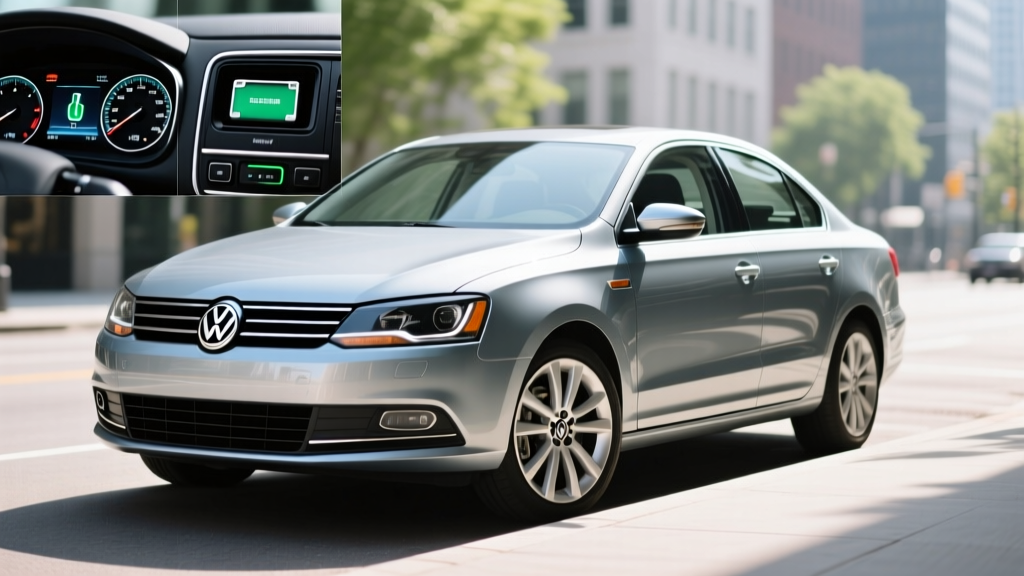
The 2013 Volkswagen Jetta Hybrid was VW's first mainstream attempt at a gasoline-electric sedan for the U.S. market, slotting a turbocharged 1.4-liter engine and a compact electric motor between the front wheels. Over a decade later, it remains one of the more engaging compact hybrids you can pick up on the used market — but prospective buyers need to understand what they're getting: a conventional hybrid (HEV), not a plug-in hybrid (PHEV), and a car whose battery system has aged well beyond its original warranty window.
If you're cross-shopping a used 2013 Jetta Hybrid against a used Toyota Prius, Honda Civic Hybrid, or Ford Fusion Hybrid, this guide gives you the exact numbers and ownership realities you need before signing.
HEV vs PHEV: What the 2013 Jetta Hybrid Actually Is
This is the single most common point of confusion for used hybrid shoppers, so let's be precise:
The 2013 Jetta Hybrid is a conventional hybrid electric vehicle (HEV). It has no plug, no electric-only driving mode of meaningful distance, and no ability to charge from a wall outlet or public charger. The small 1.1 kWh lithium-ion battery recharges exclusively through regenerative braking and the gasoline engine.
| Feature | HEV (2013 Jetta Hybrid) | PHEV (e.g., 2026 RAV4 Prime) | BEV (e.g., 2026 Tesla Model 3) |
|---|---|---|---|
| Plug-in charging | No | Yes | Yes |
| Electric-only range | ~0.5 mi (creep only) | 30–45 mi | 250–360 mi |
| Battery size | 1.1 kWh | 13–22 kWh | 50–100 kWh |
| DC fast charging | No | Rare (some models) | Yes |
| Federal tax credit (new) | None | Up to $7,500 (§30D) | Up to $7,500 (§30D) |
| Fuels on gasoline alone | Yes | Yes | No |
The distinction matters because the Jetta Hybrid's electric motor exists to assist the gas engine and enable engine-off coasting at low speeds — not to replace gasoline driving. You will never plug this car in. You will always buy gas. The benefit is simply better fuel economy than a gas-only Jetta of the same era.
How Many MPG Does the 2013 Jetta Hybrid Get?
The EPA rated the 2013 Jetta Hybrid at 45 MPG combined — broken down as 42 MPG city and 48 MPG highway. This was competitive for 2013, though it trailed the Toyota Prius (50 MPG combined) and the then-current Honda Civic Hybrid (44 MPG combined).
| Metric | EPA Rating | Real-World Expectation |
|---|---|---|
| City MPG | 42 | 40–46 (hybrids often exceed EPA in stop-and-go) |
| Highway MPG | 48 | 43–47 (sustained 75+ mph reduces hybrid advantage) |
| Combined MPG | 45 | 41–46 depending on driving mix |
| Fuel tank capacity | 13.2 gallons | ~540–600 mi real-world range per tank |
Per fueleconomy.gov, owner-reported averages for the 2013 Jetta Hybrid cluster around 41–44 MPG combined — slightly below the EPA sticker. This is consistent with what we see in real-world testing: VW's hybrid system of this era delivers its best numbers in mixed suburban driving, not sustained highway cruising.
Why hybrids often beat EPA in the city: Regenerative braking recaptures energy during deceleration, and the engine shuts off at stops. In stop-and-go traffic, the electric motor does more work, and the gas engine runs less. Highway driving at 75+ MPH is where the Jetta Hybrid's advantage narrows — the 1.4L TSI turbo does most of the work, and the hybrid system contributes less.
Powertrain Specs: What's Under the Hood
| Specification | 2013 Jetta Hybrid |
|---|---|
| Engine | 1.4L TSI turbocharged 4-cylinder |
| Engine output | 150 hp / 184 lb-ft torque |
| Electric motor output | 27 hp / 114 lb-ft torque |
| Combined system output | 170 hp / 184 lb-ft torque |
| Transmission | 7-speed DSG dual-clutch automatic |
| Drivetrain | Front-wheel drive |
| 0–60 mph | ~8.3 seconds (est.) |
| Battery type | Lithium-ion (1.1 kWh total / ~0.6 kWh usable) |
| Battery location | Behind rear seat (reduces trunk by ~2 cu ft) |
| Curb weight | ~3,330 lbs |
The 170 combined horsepower made the 2013 Jetta Hybrid noticeably quicker than a Prius of the same year (134 hp combined) and gave it a more confident highway merge. The 7-speed DSG transmission, however, is a known maintenance item — more on that below.
VW's hybrid system in this generation uses a compact electric motor sandwiched between the engine and transmission. It enables brief electric-only creeping at very low speeds (parking lots, stoplights), engine-off coasting on gentle downhills, and torque-fill during acceleration. It is not designed for sustained electric-only driving.
Battery Health, Warranty, and Replacement Cost
Original warranty: VW covered the 2013 Jetta Hybrid's lithium-ion battery for 8 years / 100,000 miles (10 years / 150,000 miles in CARB states including CA, CT, MA, ME, NJ, NY, OR, RI, VT, WA). That warranty has expired for virtually every 2013 Jetta Hybrid on the road today.
Current status (2026): Any 2013 Jetta Hybrid you buy is now 13 years old. Battery coverage falls entirely on the used buyer unless a certified-pre-owned (CPO) extension was purchased — and VW CPO warranties rarely extend hybrid battery coverage beyond the original 8/100k term.
How has the battery held up? VW's 1.1 kWh lithium-ion pack is small and conservatively managed, meaning it doesn't cycle deeply. Real-world degradation reports from owners at 100,000–150,000 miles suggest capacity loss of roughly 10–20%, which translates to a modest MPG drop (1–3 MPG) rather than a catastrophic failure. The battery is not the primary concern on a used 2013 Jetta Hybrid — the DSG transmission and turbocharger are higher-risk items.
Battery replacement cost: A new OEM hybrid battery from Volkswagen for the 2013 Jetta Hybrid runs approximately $2,500–$3,800 for the part alone, plus $500–$900 in labor. Refurbished or salvage units can be found for $800–$1,500 but carry no meaningful warranty. Given that a clean 2013 Jetta Hybrid sells for $5,000–$8,500 in 2026, a full OEM battery replacement can represent 30–60% of the car's value — a critical consideration for buyers.
Pricing, Tax Credits, and Ownership Cost
As a used vehicle, the 2013 Jetta Hybrid does not qualify for the federal §30D new EV/PHEV tax credit. It also does not qualify for the Used Clean Vehicle Credit (up to $4,000 under §25E), because that credit applies only to used battery-electric vehicles (BEVs) and plug-in hybrids (PHEVs) — conventional hybrids like the Jetta Hybrid are excluded. Per IRS guidance on the used clean vehicle credit, the vehicle must have a plug to qualify.
| Cost Factor | 2013 Jetta Hybrid (Used) |
|---|---|
| Typical used price (2026) | $5,000–$8,500 (60k–120k miles) |
| Federal tax credit eligibility | None (HEV, no plug) |
| State incentives | Varies — most state rebates target PHEVs/BEVs |
| Annual fuel cost (12,000 mi/yr, $3.50/gal) | ~$933 at 45 MPG combined |
| Compared to gas-only 2013 Jetta (30 MPG) | ~$1,400/yr — hybrid saves ~$467/yr |
| Insurance (avg.) | $1,100–$1,500/yr |
The fuel savings are real but modest. At roughly $470/year in fuel savings over a comparable gas Jetta, the hybrid premium pays for itself within a few years — but if you're facing a $3,000+ battery replacement, those savings get eaten quickly.
Reliability: What to Watch For
The 2013 Jetta Hybrid's powertrain is more complex than a Toyota Hybrid Synergy Drive system, and it shows in long-term reliability data. Key areas to inspect or budget for:
- DSG transmission (7-speed dry-clutch DQ200): This is the single biggest reliability concern. The dry-clutch DSG in this model year has a history of mechatronic unit failures, clutch wear, and shuddering under light acceleration. Repair costs run $2,000–$4,000. Always test-drive in stop-and-go conditions and listen for clunks or hesitation.
- Turbocharger: The 1.4L TSI turbo is generally reliable if oil changes were performed on schedule (every 5,000–7,500 miles with full synthetic). High-mileage examples may show wastegate rattle or boost leaks.
- Water pump / thermostat housing: A known failure point on VW's EA211 1.4T engine. Replacement runs $600–$900.
- Hybrid battery cooling fan: Located in the trunk area. If it fails, the battery overheats and the car derates power. Listen for unusual fan noise from the rear parcel shelf.
- 12V auxiliary battery: Like all hybrids, the Jetta Hybrid has a standard 12V battery that can fail independently of the hybrid pack. A dead 12V battery will prevent the car from starting even if the hybrid battery is fully charged.
According to NHTSA records, the 2013 Jetta Hybrid has a small number of recalls related to the DSG transmission software and rear suspension (certain build dates). Confirm recall completion via the VIN at nhtsa.gov before purchasing.
Who Should Buy This Hybrid — And Who Shouldn't
Choose the 2013 Jetta Hybrid if:
- You want better-than-average MPG (45 combined) without plugging in
- You prefer VW's driving dynamics over a Prius or Civic Hybrid
- You find a well-maintained example under $7,000 with DSG service records
- Your commute is mixed suburban/city (where the hybrid system shines)
- You don't have access to home or workplace charging (making a PHEV/BEV impractical)
Look elsewhere if:
- You want electric-only driving — consider a used PHEV like the Toyota Prius Prime or Chevy Volt
- You prioritize bulletproof reliability — a used Toyota Prius (3rd gen, 2010–2015) has a stronger track record
- You want federal or state tax credits — those require a PHEV or BEV
- You plan to keep the car 5+ years and can't budget for a potential $3,000 battery or $3,000 DSG repair
- Your driving is mostly highway — the hybrid advantage shrinks, and a clean diesel Jetta TDI of the same era gets comparable highway MPG
Pros
- 45 MPG combined is strong for a turbo-powered compact sedan
- 170 hp combined — significantly quicker than a Prius
- DSG gives a sportier driving feel than typical hybrid CVTs
- No plug required — works with any fueling situation
- Low used entry price ($5,000–$8,500)
Cons
- DSG transmission is a known high-cost failure point
- Hybrid battery warranty is expired; replacement is costly vs. car value
- No electric-only range of any practical distance
- No federal or state tax credit eligibility
- Trunk space reduced by battery placement (13.1 cu ft vs. 15.7 cu ft in gas Jetta)
- Parts availability declining as model ages
Hybrid vs PHEV vs EV: Which Fits You in 2026?
If you're researching the 2013 Jetta Hybrid, you're likely weighing it against other electrified options. Here's a practical framework:
| Scenario | Best Fit | Why |
|---|---|---|
| No home charging, long commute, low budget | Used HEV (Jetta Hybrid, Prius) | No plug needed, reliable fuel savings |
| Home charging available, short daily commute | Used PHEV (Volt, Prius Prime) | Most miles on electricity, gas for road trips |
| Home charging, predictable routes, want lowest cost/mile | Used or new BEV (Model 3, Bolt, Leaf) | No gas, minimal maintenance, cheapest fuel |
| Want tax credits, buying new | New PHEV or BEV | §30D credit up to $7,500 for qualifying models |
| Want zero maintenance risk on a $6,000 budget | Gas-only used car | Simpler powertrain, cheaper repairs |
The 2013 Jetta Hybrid occupies a narrow niche: it's best for buyers who want the MPG benefit of a hybrid, can't plug in, and are comfortable with VW maintenance risk in exchange for a more engaging drive than a Prius offers. If you have any ability to charge at home, a used PHEV or BEV will deliver lower operating costs and a more modern driving experience.
Frequently Asked Questions
How many MPG does the 2013 Jetta Hybrid get?
The EPA rates it at 42 city / 48 highway / 45 combined MPG. Real-world owner reports average 41–44 combined, with city driving often reaching or exceeding the EPA city figure and sustained highway driving at 75+ MPH falling to the low 40s.
Can the 2013 Jetta Hybrid drive on electric power alone?
Only at very low speeds for short distances (roughly half a mile in parking-lot conditions). The 1.1 kWh battery is far too small for meaningful electric-only driving. This is a conventional hybrid, not a plug-in hybrid.
Does the 2013 Jetta Hybrid qualify for any tax credit?
No. As a conventional hybrid with no plug, it does not qualify for the federal §30D new vehicle credit or the §25E used clean vehicle credit. Some states historically offered hybrid incentives, but most have shifted to PHEV and BEV-only programs. Check your state's current rules at your local DMV or energy office.
Is the 2013 Jetta Hybrid reliable?
Moderately. The hybrid system itself is relatively trouble-free, but the 7-speed dry-clutch DSG transmission is a known weak point with expensive failure modes. The 1.4L turbo engine is solid if well-maintained. Overall, it's less reliable long-term than a Toyota Prius of the same era but more engaging to drive.
What does a hybrid battery replacement cost?
Expect $2,500–$3,800 for a new OEM battery plus $500–$900 in labor, totaling $3,000–$4,700. Refurbished units are available for $800–$1,500. Given the car's used value of $5,000–$8,500, this is a significant expense — factor it into your purchase decision.
How does the 2013 Jetta Hybrid compare to a 2013 Toyota Prius?
The Prius gets better fuel economy (50 vs. 45 MPG combined), has a vastly stronger reliability record, and costs less to maintain. The Jetta Hybrid offers more horsepower (170 vs. 134), a sportier transmission (DSG vs. CVT), and a more solid highway ride. If reliability is your top priority, the Prius wins. If driving feel matters more, the Jetta Hybrid is the pick.