Quick Verdict: The 2013 Insight Hybrid in 2026
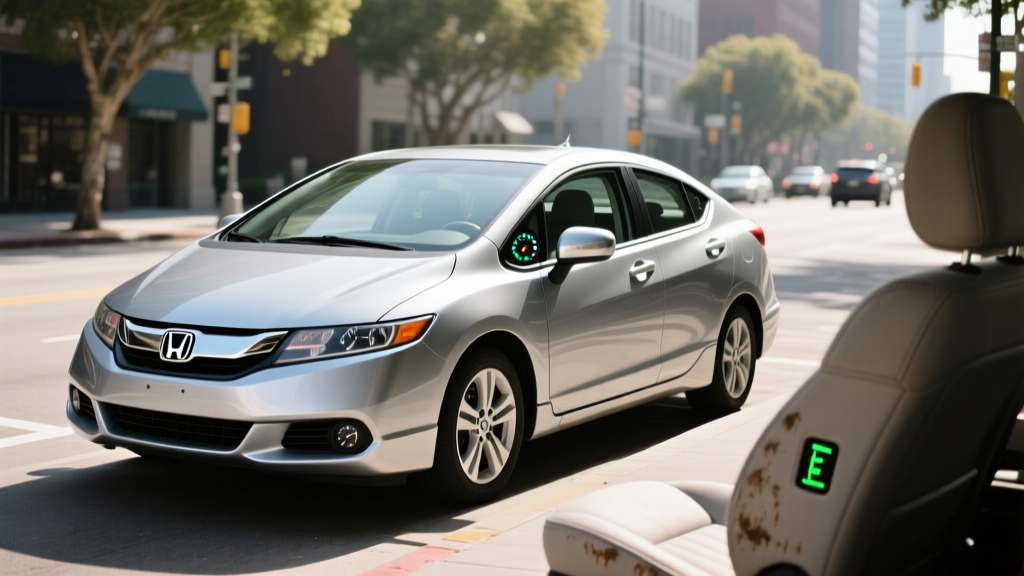
The 2013 Honda Insight is a conventional hybrid electric vehicle (HEV) — not a plug-in — that Honda positioned as the most affordable hybrid on the U.S. market when it launched. Powered by Honda's Integrated Motor Assist (IMA) system pairing a 1.3-liter gasoline engine with a small electric motor, the Insight delivers an EPA-rated 42 MPG combined. In 2026, it remains a budget-friendly used hybrid option for commuters who want Prius-level efficiency at a fraction of the cost, though it sacrifices power, refinement, and cargo versatility compared to modern alternatives.
This guide breaks down everything a prospective used buyer or current owner needs to know: real-world fuel economy, IMA battery health and replacement costs, reliability track record, and whether the 2013 Insight still makes sense versus newer hybrids, PHEVs, or full EVs.
2013 Honda Insight Hybrid: Core Specifications
| Specification | Value |
|---|---|
| Powertrain Type | Conventional Hybrid (HEV) — no plug-in |
| Engine | 1.3L i-VTEC inline-4 (88 hp @ 5,800 rpm) |
| Electric Motor (IMA) | 10 kW (13 hp) @ 1,500 rpm |
| Combined System Output | 98 hp / 123 lb-ft torque |
| Transmission | CVT (continuously variable) |
| Hybrid Battery | 0.6 kWh Nickel-Metal Hydride (NiMH) |
| EPA Fuel Economy | 41 city / 44 highway / 42 combined MPG |
| Fuel Tank | 10.6 gallons |
| Total Range | ~445 miles |
| 0-60 mph | ~10.2 seconds |
| Cargo Volume | 15.9 cu ft (rear seats up) |
| Curb Weight | ~2,735 lbs |
| Original MSRP (base) | $18,600 (2013) |
| Typical Used Price (2026) | $5,500–$9,000 depending on mileage/condition |
Fuel Economy: EPA Ratings vs. Real-World MPG
The EPA rates the 2013 Honda Insight at 41 city / 44 highway / 42 combined MPG, according to fueleconomy.gov. These numbers were competitive in 2013 and still hold up respectably today, though they fall short of the current-generation Toyota Prius (57 MPG combined) and Hyundai Ioniq Hybrid (58 MPG combined).
| Driving Scenario | EPA Rating | Real-World Expectation |
|---|---|---|
| City | 41 MPG | 42–48 MPG (hybrids excel in stop-and-go) |
| Highway | 44 MPG | 38–42 MPG (small engine works hard at speed) |
| Combined | 42 MPG | 39–45 MPG depending on driving mix |
| Cold Weather (below 30°F) | — | 34–38 MPG (engine runs more for cabin heat) |
How many MPG does the 2013 Insight hybrid get in practice? Owner reports on Fuelly and Honda forums consistently show lifetime averages between 39 and 45 MPG. City-heavy commuters often exceed the EPA city rating — a hallmark of parallel hybrid systems that lean on regenerative braking and electric assist in stop-and-go traffic. Highway driving is the Insight's weak point: the 1.3L engine lacks the displacement to cruise efficiently at 75+ mph, and the car's lightweight construction means wind noise and engine strain increase noticeably.
Compared to the 2013 Toyota Prius (50 MPG combined), the Insight trails by roughly 8 MPG. Over 15,000 annual miles at $3.50/gallon, that difference costs about $175/year in extra fuel — meaningful but not dealbreaking for a car that typically costs $3,000–$5,000 less on the used market.
IMA Hybrid System: How It Works
The 2013 Insight uses Honda's Integrated Motor Assist (IMA) system, a mild parallel hybrid architecture fundamentally different from Toyota's Hybrid Synergy Drive. Here's how it breaks down:
- Gasoline engine: 1.3-liter i-VTEC inline-4 producing 88 hp. This is the primary power source.
- Electric motor: A thin 10 kW (13 hp) motor sandwiched between the engine and CVT. It assists during acceleration and captures energy during braking — it cannot propel the car alone at meaningful speeds.
- NiMH battery pack: A compact 0.6 kWh nickel-metal hydride pack located behind the rear seats. It recharges via regenerative braking and engine power — no plug-in charging is required or possible.
- Auto Idle Stop: The engine shuts off at red lights and restarts seamlessly when you lift off the brake, saving fuel in city driving.
- ECON mode: A driver-selectable mode that dulls throttle response and reduces A/C load to maximize efficiency.
The IMA system is simpler and lighter than Toyota's full-hybrid setup, but it delivers less electric assist and cannot drive on electric power alone beyond very low-speed creeping. This is a key distinction: the Insight is a conventional hybrid (HEV), not a plug-in hybrid (PHEV).
HEV vs. PHEV: Where the Insight Fits
| Feature | 2013 Honda Insight (HEV) | Plug-In Hybrid (e.g., Prius Prime) | Full EV (e.g., Chevy Bolt) |
|---|---|---|---|
| Plug-in charging? | No — self-charging | Yes — 25-40 mi electric range | Yes — 200+ mi range |
| Electric-only driving? | No (assist only) | Yes, short distances | Yes, exclusively |
| Fuel economy | 42 MPG combined | 50+ MPG + electric miles | 120+ MPGe |
| Home charging needed? | No | Recommended (120V or 240V) | Required (240V ideal) |
| Federal tax credit (new)? | None | Up to $7,500 (§30D) | Up to $7,500 (§30D) |
| Typical used price (2026) | $5,500–$9,000 | $18,000–$28,000 | $14,000–$22,000 |
Hybrid Battery Lifespan, Warranty, and Replacement Cost
For any used hybrid buyer, battery health is the central concern. The 2013 Insight's IMA battery is a nickel-metal hydride (NiMH) pack — a mature, proven chemistry that degrades more predictably than early lithium-ion packs.
Original Battery Warranty
- Federal emissions/hybrid component warranty: 8 years / 80,000 miles (required by federal law)
- CARB-state warranty: 10 years / 150,000 miles (California and states adopting CARB standards)
- Capacity threshold: Honda warranted the battery against failure or significant capacity loss affecting hybrid system function
- Status in 2026: All 2013 models are now outside original warranty coverage unless an extended warranty was purchased
Is the 2013 Insight hybrid reliable, and what does battery replacement cost? The IMA system in the third-generation Insight (2010–2014) has a mixed reliability record. Common issues include:
- IMA battery degradation: NiMH cells lose capacity over time and with heat exposure. Most owners report noticeable degradation between 100,000 and 150,000 miles, though many packs function adequately well beyond that.
- IMA battery warning light: When the system detects a fault, an IMA warning illuminates on the dash. The car remains drivable on the gasoline engine alone, but fuel economy drops to roughly 30–35 MPG and regenerative braking is disabled.
- 12V battery drain: The Insight's small 12V accessory battery can discharge if the car sits unused for extended periods, preventing the IMA system from starting.
IMA battery replacement cost in 2026:
- Refurbished/remanufactured pack: $1,200–$1,800 installed (most common route for a car in this price range)
- New OEM Honda pack: $2,500–$3,500 installed (often exceeds the car's value)
- Individual cell replacement (DIY/specialist): $400–$800 (requires technical skill; not widely offered by dealerships)
Given that a well-maintained 2013 Insight trades for $5,500–$9,000, a refurbished IMA battery at $1,500 represents a significant but manageable repair. Many owners report refurbished packs lasting 60,000–100,000 additional miles.
Driving Experience and Practical Ownership
The 2013 Insight drives like a lightweight, economy-focused hatchback. The CVT keeps the engine in its efficient band but drones noticeably under hard acceleration. With just 98 combined horsepower, merging onto highways requires planning — the 0-60 mph time of approximately 10.2 seconds places it among the slowest cars in its class.
Ride and handling: The Insight uses a torsion-beam rear suspension (simpler and cheaper than the multi-link setup in the contemporary Civic). Ride quality is firm, and road noise is prominent above 60 mph. Steering is light and numb, typical of efficiency-focused vehicles from this era.
Interior and cargo: The cabin uses hard, budget-grade plastics throughout. The digital speedometer and analog tachometer layout is functional. Cargo space is 15.9 cubic feet with the rear seats upright — competitive with compact hatchbacks — and the 60/40 split rear seat folds flat for longer items. However, the IMA battery pack slightly intrudes into the cargo floor, raising the load height.
Technology: The 2013 model year offered an available navigation system with a 6.5-inch screen, Bluetooth hands-free, and USB audio. The Eco Assist system provides real-time feedback on driving efficiency via color-changing ambient bars flanking the speedometer — a useful tool for hypermilers. No Apple CarPlay, Android Auto, or modern driver-assist features are available.
Tax Credits, Incentives, and Total Cost of Ownership
Does the 2013 Honda Insight qualify for any tax credit? No. The Insight is a conventional hybrid (HEV), not a plug-in vehicle. Federal tax credits under IRS §30D apply only to plug-in electric vehicles (BEVs and PHEVs) with sufficient battery capacity. The Insight's 0.6 kWh NiMH pack does not qualify, and the hybrid-specific tax credits that existed in the mid-2000s expired long before 2013. There is no federal, and generally no state, purchase incentive for buying a used conventional hybrid in 2026.
However, the Insight's low purchase price and strong fuel economy make its total cost of ownership compelling:
| Annual Cost Factor | 2013 Insight (42 MPG) | 2013 Civic Gas (32 MPG) | Difference |
|---|---|---|---|
| Fuel (15,000 mi/yr @ $3.50/gal) | $1,250 | $1,641 | Insight saves $391/yr |
| Insurance (avg.) | $1,100–$1,300 | $1,100–$1,300 | Comparable |
| Maintenance | $400–$600 | $400–$600 | Comparable (no plug-in components) |
| 5-year fuel cost | $6,250 | $8,203 | Insight saves ~$1,950 |
The Insight's maintenance profile is straightforward: standard oil changes, brake jobs (regenerative braking extends pad life significantly — many owners report 80,000+ miles on original pads), and tire rotations. There are no plug-in charging components, onboard chargers, or complex thermal management systems to service.
Who Should Buy the 2013 Insight — And Who Shouldn't
Reasons to Choose the 2013 Insight
- Lowest entry price for a reliable hybrid hatchback ($5,500–$9,000 used)
- Strong city MPG (often exceeds EPA 41 MPG rating in stop-and-go)
- No plug-in charging needed — works for apartment dwellers and street parkers
- Simple IMA system means lower repair complexity than full hybrids or PHEVs
- Proven Honda engineering with wide parts availability
- Lightweight and easy to park in urban environments
Reasons to Look Elsewhere
- Underpowered (98 hp combined, 10.2s 0-60) — struggles on highway merges
- Highway MPG trails EPA rating; less efficient than Prius overall
- IMA battery replacement risk ($1,200–$1,800 refurbished) as cars age past 120K miles
- Budget interior materials and high road noise
- No modern safety tech (no automatic emergency braking, lane-keep, or blind-spot monitoring)
- No tax credits or incentives available
- Discontinued after 2014 — no new models or updated features
Choose the 2013 Insight If:
- Your budget is under $10,000 and you want hybrid efficiency
- Your commute is city-heavy (stop-and-go maximizes IMA benefits)
- You cannot install a home charger (apartment, condo, street parking)
- You prioritize low purchase price over performance or tech
Choose a Newer Hybrid, PHEV, or EV Instead If:
- You want 50+ MPG combined (look at a used Prius or Ioniq)
- You have home charging access and a short commute (a used PHEV like the Prius Prime gives 25+ electric miles)
- You want modern ADAS safety features (automatic braking, lane centering)
- You need highway passing power or plan long road trips frequently
- You want eligibility for the used EV tax credit (up to $4,000 under §25E for qualifying used BEVs and PHEVs — conventional hybrids excluded)
Frequently Asked Questions
How many MPG does the 2013 Honda Insight hybrid get?
The EPA rates the 2013 Insight at 41 city / 44 highway / 42 combined MPG. Real-world owners typically report 39–45 MPG combined, with city-heavy drivers often exceeding 42 MPG thanks to regenerative braking and idle stop. Highway-only driving at 75+ mph can drop efficiency to 36–38 MPG.
Is the 2013 Honda Insight a plug-in hybrid?
No. The 2013 Insight is a conventional hybrid (HEV). It charges its small NiMH battery through regenerative braking and the gasoline engine. There is no plug, no charging port, and no electric-only driving range. You fuel it exclusively at gas stations, just like a standard car.
How long does the 2013 Insight's IMA battery last?
Most IMA NiMH packs last between 100,000 and 150,000 miles before significant degradation, though many continue functioning beyond that with reduced electric assist. Heat is the primary enemy — cars in hot climates (Arizona, Texas) tend to see earlier battery issues. A refurbished replacement pack costs $1,200–$1,800 installed and typically adds 60,000–100,000 more miles of service.
Is the 2013 Honda Insight reliable?
The Insight's powertrain is generally reliable — the 1.3L engine and CVT are simple and proven. The primary reliability concern is IMA battery degradation with age and mileage. Other reported issues include premature brake wear on early models (largely resolved by 2013), and occasional 12V battery drain if the car sits for weeks. Overall, it rates as an average-to-above-average used hybrid for reliability, per owner surveys and repair databases.
Does the 2013 Insight qualify for any tax credit in 2026?
No. Federal tax credits under IRS §30D (new vehicle) and §25E (used vehicle) apply only to plug-in electric vehicles — battery electric vehicles (BEVs) and plug-in hybrids (PHEVs). The Insight is a conventional hybrid with no plug-in capability, so it does not qualify for any federal EV tax credit. Some states previously offered hybrid incentives, but most have expired or shifted to plug-in vehicles only.
How does the 2013 Insight compare to the Toyota Prius?
The 2013 Toyota Prius delivers 50 MPG combined (vs. the Insight's 42), has a more spacious interior, a more powerful hybrid system (134 hp combined), and Toyota's full-hybrid architecture that allows brief electric-only driving at low speeds. However, used Prius prices in 2026 typically run $10,000–$16,000 — significantly more than the Insight's $5,500–$9,000 range. If budget is the primary constraint, the Insight offers strong value; if efficiency and space matter more, the Prius is the stronger choice.
Hybrid vs. PHEV vs. EV — which should I choose?
A conventional hybrid (HEV) like the Insight is best if you want better fuel economy without changing your habits — no plug, no range anxiety, just fill up at any gas station. A plug-in hybrid (PHEV) is ideal if you have home charging and a commute under 30 miles — you can drive on electricity most days and use gas for longer trips. A full EV (BEV) makes the most sense if you have reliable home charging, want the lowest per-mile fuel cost, and are ready to plan around public charging for road trips. The Insight fits the first category: maximum simplicity, moderate efficiency gains, minimum cost.
Sources: U.S. EPA fueleconomy.gov, IRS §30D Clean Vehicle Credits, Honda Automobiles press archives.