Quick Verdict: A Milestone Hybrid That Still Holds Up
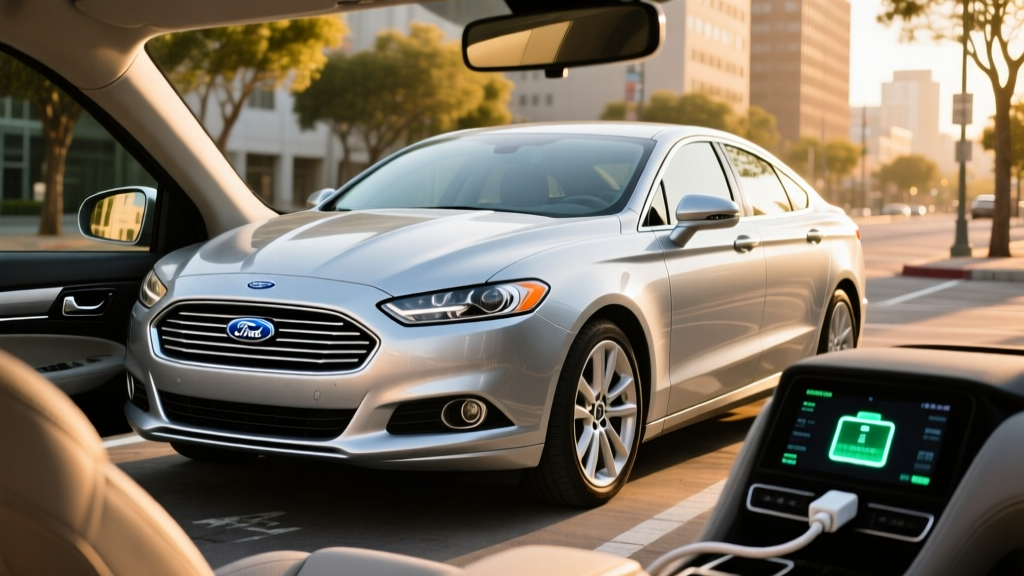
The 2013 Ford Fusion Hybrid was a watershed moment for midsize sedans. With an EPA rating of 47 city / 47 highway / 47 combined MPG, it briefly claimed the crown as the most fuel-efficient midsize sedan in America — beating the Toyota Camry Hybrid and Hyundai Sonata Hybrid of its era. Ford achieved this through a 2.0-liter Atkinson-cycle four-cylinder paired with a 118-hp electric motor and a lithium-ion battery pack, a notable upgrade from the nickel-metal hydride cells in the previous generation.
More than a decade later, the 2013 Fusion Hybrid remains a popular used-car target. But buyers need to know what they're getting into: real-world fuel economy, aging battery health, replacement costs, and whether this first-gen lithium-ion pack still delivers. This guide covers everything a prospective used buyer needs before signing the paperwork.
EPA Fuel Economy vs. Real-World MPG
The EPA numbers for the 2013 Fusion Hybrid were class-leading when new. Here's the official breakdown from fueleconomy.gov:
| Metric | Value |
|---|---|
| City MPG | 47 |
| Highway MPG | 47 |
| Combined MPG | 47 |
| Annual Fuel Cost (est.) | $1,050 (based on 15,000 mi/yr at ~$3.20/gal) |
This gap between EPA and real-world is typical for hybrids of this era. The 2013 Fusion Hybrid's powertrain was optimized for the EPA test cycle, and Ford later revised the software calibration for 2014+ models, which dropped the official rating to 44/41/43 MPG (city/highway/combined) to better reflect what drivers actually saw.
Powertrain Specs: Engine, Motor, and Combined Output
The 2013 Fusion Hybrid uses Ford's second-generation hybrid system. Unlike a plug-in hybrid (PHEV), this is a conventional hybrid (HEV) — it never needs to be plugged in. The battery recharges through regenerative braking and the gasoline engine.
| Component | Specification |
|---|---|
| Engine | 2.0L Atkinson-cycle I-4 |
| Engine Power | 141 hp @ 6,000 rpm |
| Electric Motor | 118 hp / 88 kW permanent-magnet AC |
| Combined System Output | 188 hp (net) |
| Transmission | electronically-controlled CVT (eCVT) |
| Battery Type | Lithium-ion (Li-ion) |
| Battery Capacity | 1.4 kWh (total) / ~0.8 kWh usable |
| Drivetrain | Front-wheel drive |
| 0–60 MPH | ~7.9 seconds (Car and Driver tested) |
The 2013 Fusion Hybrid is a conventional hybrid (HEV). It cannot be plugged in and has no meaningful electric-only range (it can creep short distances at low speed on battery alone, typically under 1 mile). Ford also sold the Fusion Energi (a PHEV variant) starting in 2013, which featured a larger 7.6 kWh battery, could be plugged in, and offered about 19–21 miles of electric-only range. If you need plug-in capability, you want the Energi — not the Hybrid.
Battery Health, Warranty, and Replacement Cost
For any used hybrid buyer, battery condition is the top concern. The 2013 Fusion Hybrid's lithium-ion pack was a significant upgrade over the older NiMH batteries, offering better energy density and thermal management. But after 12+ years, degradation is a real factor.
Battery Replacement Cost: A new OEM replacement battery pack from Ford runs approximately $2,500–$3,500 for the part alone. With labor at a dealership, expect a total bill of $3,500–$5,000. Third-party refurbished or reconditioned packs are available for $1,500–$2,500 installed through independent hybrid specialists. Some shops offer cell-level repair (replacing only degraded modules) for $800–$1,500, though results vary.
How to Check Battery Health Before Buying:
- Use an OBD-II scanner with hybrid-compatible software (such as FORScan) to pull the battery's State of Health (SoH) percentage. A reading above 75–80% is acceptable for a vehicle of this age.
- Check the dashboard's "EV" indicator — if the car rarely enters electric-only mode or the engine runs constantly, the battery may be heavily degraded.
- Look at real-world MPG: if the previous owner reports consistently sub-35 MPG combined, the battery likely needs attention.
- Request a hybrid battery diagnostic report from a Ford dealer (typically $100–$150 for the service).
Reliability and Common Issues
The 2013 Fusion Hybrid's powertrain — particularly the eCVT and hybrid system — has proven to be one of the more reliable components of the vehicle. The eCVT has no traditional belts, clutches, or friction bands to wear out; it uses planetary gearsets and electric motor-generators that are remarkably durable.
Common non-powertrain issues to watch for:
- Inflatable rear seatbelts (optional on some trims): These were a 2013-exclusive feature that proved problematic and expensive to repair.
- Transmission shudder or hesitation: Some owners reported a subtle shudder during low-speed acceleration. This is often related to the eCVT's control software and can sometimes be improved with a PCM update.
- 12V auxiliary battery drain: Like many hybrids, the Fusion Hybrid can drain its conventional 12V battery if left sitting for extended periods. A dead 12V battery can prevent the car from starting even if the hybrid battery is fully charged.
- Brake actuator recall: Ford issued recalls for certain 2013 Fusion models related to the brake system. Check NHTSA.gov using the VIN to confirm all recalls have been addressed.
Overall, the hybrid powertrain itself is among the least problematic aspects of this car. The engine, eCVT, and hybrid battery management system have aged well relative to the rest of the vehicle's components.
Pricing: What You'll Pay for a Used 2013 Fusion Hybrid
As of early 2026, used 2013 Ford Fusion Hybrid pricing varies significantly by mileage, condition, and battery health:
| Condition / Mileage | Approximate Price Range |
|---|---|
| Excellent, under 80k miles | $9,500–$12,000 |
| Good, 80k–120k miles | $7,000–$9,500 |
| Fair, 120k–160k miles | $5,000–$7,000 |
| High mileage, 160k+ (battery likely needs service) | $3,500–$5,000 |
Tax Credit Eligibility: The 2013 Fusion Hybrid does not qualify for the federal §30D new clean vehicle tax credit (that credit applies only to new EVs and PHEVs meeting current battery-sourcing and MSRP requirements). However, if purchased from a dealer for under $25,000, a used 2013 Fusion Hybrid may qualify for the used clean vehicle credit (IRC §25E) — up to $4,000 or 30% of the sale price, whichever is less. Key requirements include: buyer income under $75,000 (single) / $150,000 (joint), purchase from a licensed dealer, and the vehicle must be a qualified plug-in electric or fuel-cell vehicle. Important caveat: the conventional Fusion Hybrid (HEV) does not qualify for §25E because it is not a plug-in vehicle. Only the Fusion Energi (PHEV) would be eligible. Always verify current rules on IRS.gov before relying on this credit.
Who Should Buy the 2013 Fusion Hybrid vs. Alternatives
Pros
- Excellent city MPG (real-world 44+ in stop-and-go)
- Smooth, quiet hybrid powertrain
- Comfortable ride and spacious interior
- Strong safety ratings (IIHS Top Safety Pick+)
- Low used pricing relative to Camry Hybrid
- No plug-in needed — fuel and go
Cons
- Real-world highway MPG falls short of EPA (36–40)
- Hybrid battery warranty has expired on nearly all examples
- Trunk space reduced by battery pack (~12 cu ft vs 16 in gas model)
- Infotainment (SYNC) feels dated by 2026 standards
- No DC fast charging or plug-in capability
- Some early-build reliability quirks (inflatable belts, PCM issues)
Decision Framework: Is This the Right Car for You?
Choose the 2013 Fusion Hybrid if: You do mostly city and suburban driving, want maximum fuel savings without plugging in, can budget $3,500–$5,000 for a potential battery replacement down the road, and value a comfortable midsize sedan at a bargain used price.
Choose a newer PHEV (like a used Prius Prime or Fusion Energi) if: You have home charging access, want 20–40 miles of electric-only range for short commutes, and can spend $15,000+ on a newer vehicle with remaining battery warranty.
Choose a full EV (like a used Bolt EV or Model 3) if: You have reliable home Level 2 charging, drive under 250 miles daily, want zero tailpipe emissions, and are ready to leave gasoline behind entirely.
Skip the 2013 Fusion Hybrid if: Your commute is mostly highway (a diesel or efficient gas car may match its real-world highway MPG), or you need cargo space (the battery compromises trunk volume significantly).
Frequently Asked Questions
How many MPG does the 2013 Fusion Hybrid actually get?
The EPA rates it at 47 city / 47 highway / 47 combined. In real-world driving, owners typically see 39–43 MPG combined, with city driving often hitting 44–48 MPG and highway cruising at 70+ MPH dropping to 36–40 MPG. Cold weather and aggressive driving reduce these figures further.
Does the 2013 Fusion Hybrid need to be plugged in?
No. This is a conventional hybrid (HEV), not a plug-in hybrid (PHEV). The battery charges automatically through regenerative braking and the gasoline engine. You never plug it in — just fill up with gas as you would any other car. If you want plug-in capability, look at the 2013 Fusion Energi instead.
How far can the 2013 Fusion Hybrid drive on electric power alone?
Practically, not far. The 1.4 kWh battery can propel the car at very low speeds (under 25 MPH) for roughly 0.5–1 mile under ideal conditions. This is not a meaningful electric-only range — it's designed for low-speed maneuvering and brief engine-off coasting, not electric commuting. Again, the Fusion Energi PHEV offers 19–21 miles of electric range if that's what you need.
Is the 2013 Fusion Hybrid reliable?
The hybrid powertrain (engine, eCVT, and battery management) has proven quite reliable. The eCVT in particular is a durable design with few wear components. Non-powertrain issues — inflatable seatbelts, SYNC infotainment glitches, and 12V battery drain — are more common complaints. Always run a VIN check through NHTSA for open recalls and get a pre-purchase inspection that includes a hybrid battery diagnostic.
What does a replacement hybrid battery cost?
Expect to pay $3,500–$5,000 at a Ford dealer for a new OEM battery pack installed. Third-party refurbished packs run $1,500–$2,500 installed, and cell-level repairs can cost $800–$1,500. Many 2013 Fusion Hybrids are still running on their original battery packs, but at 12+ years old, budgeting for a replacement is prudent.
Does the 2013 Fusion Hybrid qualify for any tax credit?
As a used conventional hybrid (HEV), the 2013 Fusion Hybrid does not qualify for the federal §30D new vehicle credit or the §25E used clean vehicle credit (which requires a plug-in electric or fuel-cell vehicle). No federal tax incentive applies. Some states may offer minimal used hybrid incentives, but these are rare and vary by jurisdiction. Check your state's energy office for details.
How does it compare to a Toyota Camry Hybrid of the same year?
The 2013 Camry Hybrid is rated at 43 city / 39 highway / 41 combined MPG — slightly below the Fusion Hybrid's EPA numbers, though real-world results are closer. The Camry Hybrid typically commands higher used prices ($11,000–$15,000 for comparable mileage) due to Toyota's stronger reliability reputation and better battery longevity track record. The Fusion Hybrid is the value play; the Camry Hybrid is the safer long-term bet if budget allows.