Quick Verdict: A Practical Used Hybrid Wagon Worth Considering
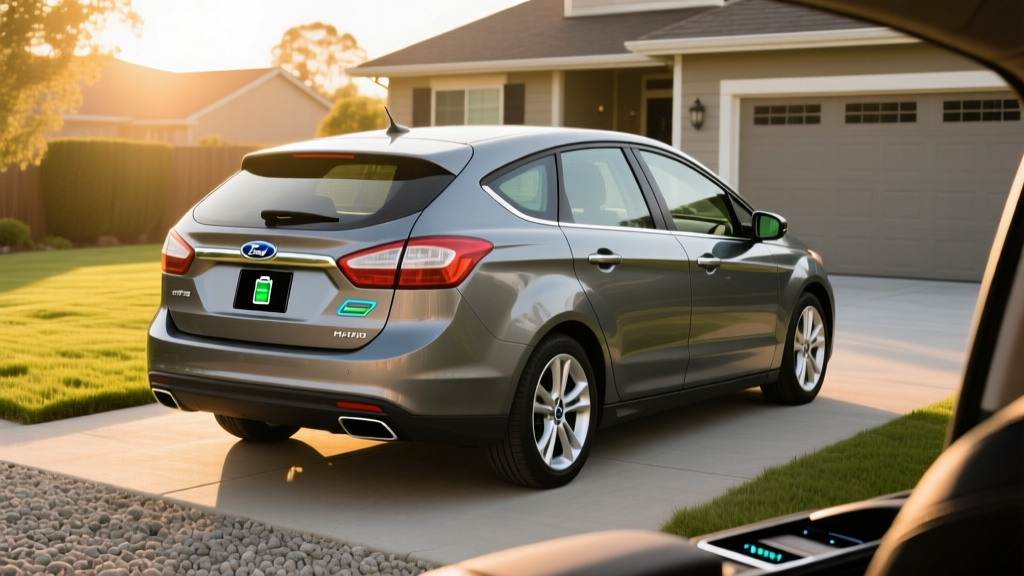
The 2013 Ford C-Max Hybrid is a compact multi-activity vehicle (think tall hatchback/small wagon) that Ford positioned against the Toyota Prius V. With an EPA-estimated 47 MPG combined, a spacious interior, and a refined 2.0L Atkinson-cycle powertrain, it remains a compelling option on the used market in 2026 — particularly for buyers who want hybrid efficiency without plug-in complexity. However, early-model-year reliability concerns and a revised EPA rating mean shoppers need to go in with eyes open.
This guide covers everything a used-car buyer needs to know: real-world fuel economy, battery longevity, replacement costs, and how the C-Max Hybrid stacks up against full EVs and modern plug-in hybrids.
HEV vs. PHEV: Understanding the C-Max Lineup
Ford sold the C-Max in two electrified variants for 2013. Understanding the distinction is critical before shopping:
C-Max Hybrid (HEV)
- Type: Conventional hybrid — no plug, no external charging
- Battery: 1.6 kWh lithium-ion (sealed, self-charging via regenerative braking and engine)
- Electric-only driving: Very short low-speed EV mode (~0.5–1 mile), not a practical electric range
- Refueling: Gasoline only, just like any conventional car
C-Max Energi (PHEV)
- Type: Plug-in hybrid — requires external charging for EV mode
- Battery: 7.6 kWh lithium-ion (usable ~5.5 kWh)
- Electric-only range: 21 miles EPA (EV mode before the gas engine engages)
- Total range: ~620 miles combined (electric + gasoline)
- Charging: Level 1 (120V) ~7 hours; Level 2 (240V) ~2.5 hours; no DC fast charging
This article focuses on the conventional C-Max Hybrid (HEV). If you see a C-Max with a charge port on the front fender, that's the Energi PHEV — a different vehicle with different economics.
Fuel Economy: EPA Ratings and Real-World MPG
| Metric | EPA Estimate | Real-World Expectation |
|---|---|---|
| City | 47 MPG | 44–50 MPG (hybrids often beat EPA in city) |
| Highway | 47 MPG | 38–43 MPG (aerodynamic drag hurts at speed) |
| Combined | 47 MPG | 40–46 MPG depending on driving mix |
Important context: When the 2013 C-Max Hybrid launched, Ford originally advertised 47 MPG across the board. After customer complaints and an EPA review, Ford revised the label to 43 city / 41 highway / 42 combined for 2014 and offered goodwill payments to early buyers. The 2013 model year retains the original 47/47/47 sticker, but real-world results typically land in the low-to-mid 40s.
Why real-world varies: Hybrids excel in stop-and-go city driving where regenerative braking recaptures energy and the electric motor handles low-speed propulsion. Sustained highway speeds above 70 mph reduce the hybrid advantage because the gasoline engine does most of the work and aerodynamic drag increases exponentially. Cold weather also reduces battery efficiency — expect a 5–10% MPG drop in winter conditions below 30°F.
Powertrain and Performance Specifications
| Specification | 2013 Ford C-Max Hybrid |
|---|---|
| Engine | 2.0L Atkinson-cycle 4-cylinder |
| Engine Power | 141 hp @ 6,000 rpm |
| Electric Motor | Permanent-magnet AC synchronous, 88 kW (118 hp) |
| Combined System Output | 188 hp (net) |
| Transmission | electronically controlled CVT (eCVT) |
| 0–60 mph | ~8.5 seconds |
| Drivetrain | Front-wheel drive |
| Battery | 1.6 kWh lithium-ion, 270V nominal |
| Curb Weight | ~3,640 lbs |
| Cargo Volume | 24.5 cu ft (rear seats up) / 52.6 cu ft (rear seats folded) |
| Fuel Tank | 13.5 gallons |
| Total Range (est.) | ~565–635 miles per tank |
The powertrain pairs Ford's 2.0L Atkinson-cycle engine with a Toyota-style power-split eCVT — not a belt-driven CVT like those found in some Nissan models, but a planetary gearset that blends engine and motor power seamlessly. The result is smooth, linear acceleration without the rubber-band feel that plagues lesser CVTs. At 188 combined horsepower, the C-Max Hybrid has adequate passing power and is notably quicker than the contemporary Prius V (134 hp combined).
Battery Longevity, Warranty, and Replacement Costs
Original Battery Warranty
Federal emissions/hybrid component warranty: 8 years / 100,000 miles (whichever comes first) for the hybrid battery pack and related components. California and states that follow CARB standards extended this to 10 years / 150,000 miles.
For a 2013 model in 2026: The factory warranty has expired for all examples regardless of mileage. Any battery failure is an out-of-pocket repair.
How Long Do C-Max Hybrid Batteries Actually Last?
The 1.6 kWh lithium-ion pack in the C-Max Hybrid is relatively small and is never fully charged or fully depleted — Ford's battery management system maintains a state-of-charge window between roughly 30% and 70% to minimize degradation. This partial-cycling strategy significantly extends cell life.
Based on owner reports and taxi/fleet data, most C-Max Hybrid batteries reach 150,000–200,000 miles before noticeable capacity loss. Some fail earlier due to thermal stress or cell imbalance; others exceed 250,000 miles with minimal degradation. The key factors affecting lifespan are:
- Climate: Prolonged exposure to extreme heat (Arizona, Texas summers) accelerates degradation more than cold climates
- Mileage: Higher total miles = more charge cycles, though partial cycles are gentler than full cycles
- Storage: Vehicles left sitting for weeks with a very low or very high state of charge risk cell damage
Battery Replacement Cost
If the hybrid battery fails out of warranty, expect the following:
- New OEM battery from Ford: $3,000–$4,500 (parts + labor at a dealership) — though availability for a 2013 model may be limited in 2026
- Refurbished/remanufactured pack: $1,500–$2,500 from independent hybrid specialists
- Individual cell/module replacement: $500–$1,200 if only specific modules have failed (requires a shop with hybrid diagnostic capability)
Before purchasing, request a hybrid battery health report. Many Ford dealers can pull the battery's state-of-health (SoH) data via OBD-II diagnostics, showing capacity retention as a percentage of original.
Pricing and Tax Credit Eligibility in 2026
Used Market Pricing
As of early 2026, the 2013 Ford C-Max Hybrid trades in the used market at approximately:
- 80,000–110,000 miles, clean title: $6,500–$8,500
- 110,000–150,000 miles: $4,500–$6,500
- 150,000+ miles or salvage title: $2,500–$4,500
Prices vary by region, trim (S, SE, SEL), condition, and whether the battery has been replaced or tested.
Tax Credit Eligibility
Federal §30D new-vehicle EV/PHEV credit: The C-Max Hybrid does NOT qualify. It is a conventional HEV (not plug-in), and the credit applies only to new plug-in vehicles meeting battery-sourcing and MSRP requirements under current IRS rules.
Federal used clean-vehicle credit (IRC §25E): Up to $4,000 or 30% of the sale price (whichever is less), but only for plug-in electric vehicles or fuel-cell vehicles. Conventional hybrids like the C-Max Hybrid are excluded.
Bottom line: There is no federal tax credit for purchasing a used 2013 C-Max Hybrid. Some states or municipalities may offer minor incentives for hybrid ownership — check your state's energy office for current programs.
Reliability: What Owners and Data Show
The 2013 C-Max Hybrid had a mixed reliability record in its early years. The most commonly reported issues include:
- Hybrid battery cooling fan: Some owners report fan failures around 80,000–120,000 miles, which can lead to battery overheating if not addressed
- 12V auxiliary battery: Like many hybrids, the C-Max uses a conventional 12V battery to power electronics — premature failure is a known complaint
- eCVT transmission: Generally robust; Ford's power-split design has fewer wear components than traditional automatics
- Infotainment (MyFord Touch): The 2013 SYNC/MyFord Touch system is widely criticized for slow response, freezing, and Bluetooth connectivity issues — a functional annoyance, not a mechanical concern
NHTSA recall data shows a limited number of recalls for the 2013 C-Max Hybrid, mostly related to software updates for the hybrid powertrain control module. Verify that all recall campaigns have been completed on any used example you consider.
Who Should Buy the 2013 C-Max Hybrid?
Choose the C-Max Hybrid if:
- You want a fuel-efficient daily driver under $8,000 without plug-in charging requirements
- You drive a city-heavy commute where hybrid MPG advantages are maximized (40+ MPG achievable)
- You need more cargo space than a Prius but don't want an SUV
- You lack access to home or workplace charging, making a full EV or PHEV impractical
Look at a full EV (e.g., used Chevrolet Bolt, Nissan LEAF) if:
- You have reliable Level 2 home charging
- Your daily driving is under 100 miles round-trip
- You want to eliminate gasoline costs and maintenance (no oil changes, no spark plugs)
Consider a modern PHEV (e.g., Toyota RAV4 Prime, Prius Prime) if:
- You want 25–45 miles of electric-only range for daily commuting with gasoline backup for road trips
- You have Level 2 charging access at home
- Your budget allows a newer vehicle ($25,000+)
Pros and Cons
Pros
- Strong combined MPG in city driving (40–47 real-world)
- Spacious hatchback cargo area (52.6 cu ft max)
- 188 hp — more power than most 2013-era hybrids
- Refined eCVT powertrain with smooth power delivery
- Affordable used pricing ($4,500–$8,500 in 2026)
- No plug-in charging infrastructure needed
Cons
- EPA rating revised downward after launch (actual ~42 combined vs. original 47 sticker)
- Factory hybrid battery warranty expired on all 2013 examples
- MyFord Touch infotainment is outdated and unreliable
- No federal tax credit eligibility (conventional HEV)
- Highway MPG drops significantly above 70 mph
- Discontinued after 2018 — parts availability may narrow long-term
Frequently Asked Questions
How many MPG does the 2013 Ford C-Max Hybrid actually get?
The original EPA sticker reads 47 city / 47 highway / 47 combined. However, Ford revised these estimates for the 2014 model year to 43/41/42 after real-world testing showed the original numbers were optimistic. Expect 40–46 MPG combined in mixed driving, with city driving yielding better results than sustained highway speeds.
Does the 2013 C-Max Hybrid need to be plugged in?
No. The C-Max Hybrid is a conventional hybrid (HEV) that charges its small 1.6 kWh battery through regenerative braking and the gasoline engine. You never plug it in. The C-Max Energi (a separate PHEV model) does require plugging in for its 21-mile electric range.
How much does it cost to replace the hybrid battery?
A new OEM replacement runs $3,000–$4,500 at a dealership. Refurbished packs from independent hybrid specialists cost $1,500–$2,500. Individual module repairs can be as low as $500–$1,200 if only specific cells have failed. Most C-Max Hybrid batteries last 150,000–200,000 miles before significant degradation.
Is the 2013 C-Max Hybrid reliable?
Average to slightly below average for its era. The powertrain and eCVT are generally durable, but early models had issues with the hybrid battery cooling fan, 12V battery, and MyFord Touch infotainment. Verify all NHTSA recalls have been completed and get a pre-purchase inspection that includes hybrid battery health diagnostics.
Does the 2013 C-Max Hybrid qualify for any tax credit?
No federal tax credit applies. The §30D new-vehicle credit and §25E used clean-vehicle credit both require a plug-in electric vehicle or fuel-cell vehicle. Conventional hybrids are ineligible. Some state or local utility programs may offer minor incentives — check your jurisdiction.
How does the C-Max Hybrid compare to the Toyota Prius V?
The C-Max Hybrid offers more horsepower (188 vs. 134), a quieter cabin, and slightly better highway manners. The Prius V has a marginal edge in real-world fuel economy (42–44 combined vs. 40–46 for the C-Max) and a stronger long-term reliability track record. Cargo volumes are comparable (~52–54 cu ft max). The Prius V tends to command higher used prices due to Toyota's reliability reputation.
Can the 2013 C-Max Hybrid run on electric power alone?
Only in very limited circumstances — at low speeds (under ~25 mph) for roughly half a mile, such as creeping through a parking lot or in heavy traffic. The gasoline engine engages frequently, and the 1.6 kWh battery is far too small for meaningful electric-only driving. This is normal for conventional hybrids.