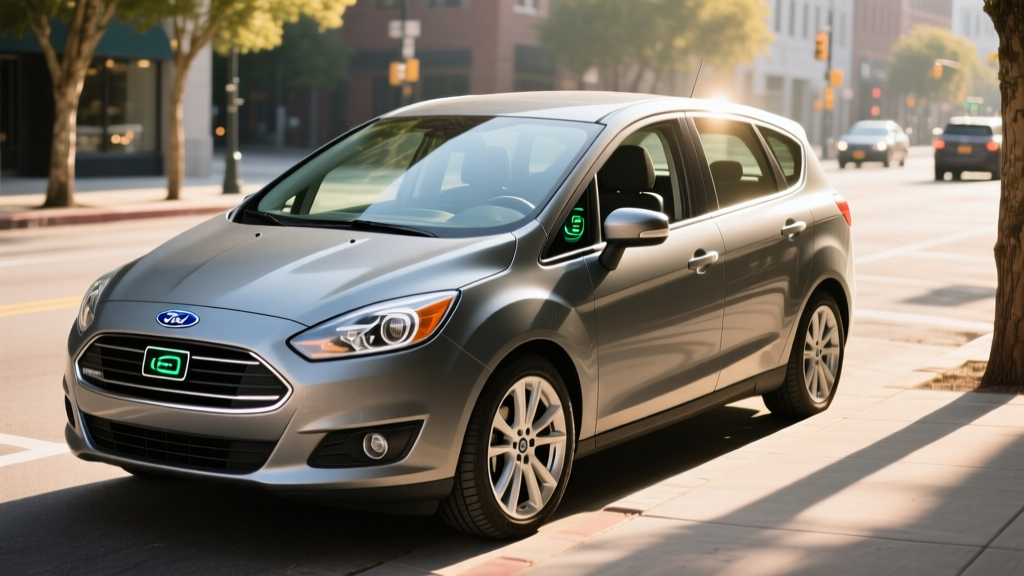
Why the 2013 Ford C-Max Hybrid SEL Still Matters in 2026
If you're searching for a 2013 Ford C-Max Hybrid SEL hatchback on the used market, you're likely weighing fuel savings against the risks of buying a 13-year-old hybrid. The C-Max Hybrid was Ford's direct answer to the Toyota Prius V, offering a taller hatchback roofline, a more engaging driving experience, and an EPA-estimated 47 MPG combined — a figure that drew both praise and controversy when it launched.
From a 2026 perspective, the C-Max Hybrid remains one of the most affordable entry points into hybrid ownership. Clean examples of the SEL trim (the higher of the two trims offered) typically sell between $6,000 and $9,500 depending on mileage and condition, making it a serious budget alternative to newer hybrids that start above $28,000.
But the C-Max has a complicated history. Ford faced a class-action lawsuit over its original EPA fuel-economy claims, which were revised downward after real-world testing showed lower numbers. This guide covers exactly what you're getting — the real MPG, the hybrid system's reliability, battery replacement costs, and whether this hatchback still makes sense versus a modern PHEV or full EV.
HEV vs. PHEV: Understanding the C-Max Lineup
The 2013 C-Max came in two electrified variants, and confusing them is the most common mistake used-car shoppers make:
C-Max Hybrid (HEV)
- Type: Conventional hybrid — no plug, no external charging
- Battery: 1.4 kWh lithium-ion (usable capacity much smaller)
- Electric-only driving: Brief low-speed assists only (under ~1 mile at very low speeds)
- Refueling: Gasoline only, at any station
- EPA combined: 43 MPG (revised from original 47 MPG claim)
C-Max Energi (PHEV)
- Type: Plug-in hybrid — requires external charging for EV range
- Battery: 7.6 kWh lithium-ion
- Electric-only range: 21 miles (EPA)
- Refueling: Plug to charge + gasoline
- EPA combined: 100 MPGe (electric + gas) / 43 MPG (gas only)
This article focuses on the C-Max Hybrid (HEV) in the SEL trim. If you're looking at an Energi, the PHEV variant has different battery considerations, a Level 2 charging port (no DC fast charging), and qualifies for a now-expired federal tax credit that only applied at original purchase.
Fuel Economy: EPA Numbers vs. Real-World MPG
The C-Max Hybrid's fuel-economy story requires context. Ford originally marketed the car with a 47/47/47 MPG (city/highway/combined) label. After complaints and a class-action settlement, Ford revised the EPA label to reflect more realistic testing.
| Metric | Original EPA Label | Revised EPA Label (Current) |
|---|---|---|
| City MPG | 47 | 42 |
| Highway MPG | 47 | 38 |
| Combined MPG | 47 | 40 |
Source: EPA Fuel Economy Guide — 2013 Ford C-Max Hybrid
According to fueleconomy.gov, the revised official EPA rating for the 2013 C-Max Hybrid is 40 MPG combined (42 city / 38 highway). This was part of Ford's voluntary restatement, and affected owners received reimbursement.
Real-World MPG: What Owners Actually Report
On fuel-economy tracking platforms like Fuelly, 2013 C-Max Hybrid owners report a lifetime average hovering between 38 and 42 MPG, with many drivers consistently achieving the 40 MPG mark in mixed driving. Hybrids inherently excel in city traffic where regenerative braking recaptures energy and the engine shuts off at stops. Expect:
- City-heavy driving: 40–44 MPG (hybrid system maximizes regen and EV-mode assists)
- Highway-heavy driving: 35–38 MPG (aerodynamic drag reduces hybrid advantage; the 2.0L engine works harder)
- Cold weather (below 35°F): 33–37 MPG (engine runs more often for cabin heat; battery efficiency drops)
- Summer mixed driving: 40–43 MPG (optimal conditions for hybrid efficiency)
Compared to a 2013 non-hybrid compact hatchback averaging 28–30 MPG combined, the C-Max Hybrid still delivers roughly 30–35% fuel savings in typical use — a meaningful advantage even 13 years after production.
Powertrain and Performance Specs
| Specification | 2013 Ford C-Max Hybrid SEL |
|---|---|
| Engine | 2.0L Atkinson-cycle I4 |
| Engine HP / Torque | 141 hp / 129 lb-ft |
| Electric Motor | Permanent-magnet AC synchronous |
| Combined System Output | 188 hp |
| Transmission | Electronic CVT (eCVT, planetary gearset) |
| Hybrid Battery | 1.4 kWh lithium-ion (air-cooled) |
| Drivetrain | Front-wheel drive |
| 0–60 mph | ~8.1 seconds (est.) |
| Cargo Volume | 24.5 cu ft (rear seats up) / 52.6 cu ft (folded) |
| Curb Weight | ~3,641 lbs |
The 2.0-liter Atkinson-cycle four-cylinder paired with Ford's eCVT is the same powertrain architecture found in the Fusion Hybrid of the same era. The 188 combined horsepower figure was class-leading for 2013 and gives the C-Max noticeably better acceleration than the contemporary Prius (134 hp combined). The eCVT is not a belt-driven CVT — it uses a planetary gearset to blend engine and motor power, which is mechanically simpler and generally more durable than traditional CVTs.
SEL Trim Features
The SEL was the upper trim for 2013, adding over the base SE:
- Leather-trimmed seats
- SYNC with MyFord Touch (8-inch touchscreen)
- Sony premium audio (9 speakers)
- Rear parking sensors
- Auto-dimming rearview mirror
- Keyless entry with push-button start
- 17-inch alloy wheels
Hybrid Battery Reliability and Replacement Cost
Original Battery Warranty
Ford warranted the C-Max Hybrid's lithium-ion battery pack for 8 years / 100,000 miles (10 years / 150,000 miles in California Air Resources Board states including CA, NY, MA, and others that follow CARB emissions warranty rules).
In 2026, all original factory battery warranties have expired for every 2013 C-Max on the road. Any battery failure is now an out-of-pocket expense.
How Long Do C-Max Hybrid Batteries Last?
The 1.4 kWh lithium-ion pack in the C-Max Hybrid is small and works under relatively mild stress compared to larger EV batteries. Ford's hybrid system uses a conservative state-of-charge window — the battery never fully charges or fully depletes — which significantly extends cell life. Based on owner reports and fleet data:
- Typical lifespan: 120,000–180,000 miles before notable capacity loss
- High-mileage examples: Many C-Max Hybrids used as taxis and rideshare vehicles have surpassed 200,000 miles on the original pack
- Age-related degradation: At 13 years old, calendar aging (not just mileage) becomes a factor. Heat exposure accelerates cell degradation, so vehicles in hot climates (AZ, TX, FL) face higher risk
Battery Replacement Cost
If the hybrid battery fails, here's what to budget:
- New OEM battery (Ford): $2,500–$3,500 for the pack + $500–$800 labor = $3,000–$4,300 total
- Remanufactured/refurbished pack: $1,500–$2,200 + labor = $2,000–$3,000 total
- Individual cell/module replacement: Some hybrid-specialty shops can replace failed modules rather than the entire pack for $800–$1,500, though this requires a shop with hybrid battery diagnostic capability
Given that a clean 2013 C-Max Hybrid SEL costs $6,000–$9,500, a full OEM battery replacement can represent 35–50% of the vehicle's value. This is the single biggest financial risk in buying this car used.
Pre-Purchase Battery Check
Before buying, have a hybrid-qualified technician perform:
- A battery state-of-health (SoH) scan using Ford's IDS tool or an equivalent OBD-II hybrid diagnostic
- A voltage delta test across individual modules (large deltas indicate weak cells)
- A live-data road test monitoring battery temperature, charge/discharge rates, and engine-on/off cycling frequency
Does the 2013 C-Max Hybrid Qualify for Any Tax Credit?
No. The 2013 Ford C-Max Hybrid does not qualify for any federal tax credit in 2026, for several reasons:
- IRS §30D Clean Vehicle Credit applies only to new vehicle purchases and requires the vehicle to be placed in service after specific dates. The C-Max Hybrid, as a conventional HEV (not a plug-in), never qualified for the §30D credit even at original sale — only the C-Max Energi (PHEV) did.
- Used EV credit (§25E): This credit, worth up to $4,000 or 30% of the sale price for qualifying used electrified vehicles, applies only to plug-in vehicles (BEVs and PHEVs). Conventional hybrids like the C-Max Hybrid are excluded.
- State incentives: A handful of states offer modest rebates or HOV-lane access for hybrids, but most hybrid-specific incentives have expired or transitioned to plug-in-only programs. Check your state's current energy office or DMV for any remaining hybrid benefits.
For the latest federal credit rules, refer to the IRS Clean Vehicle Credit page.
Who Should Buy This Hybrid vs. a PHEV or Full EV?
Choose the 2013 C-Max Hybrid SEL if:
- Your budget is under $10,000 and you want maximum fuel efficiency per dollar
- You lack access to home or workplace charging (apartment, street parking, no garage outlet)
- Your commute is city-heavy with stop-and-go traffic where hybrid regen shines
- You want a practical hatchback with 52.6 cu ft of cargo space without paying new-car prices
- You're comfortable accepting battery replacement risk on a 13-year-old vehicle
Consider a PHEV instead (e.g., used Prius Prime, used C-Max Energi) if:
- You have home Level 2 charging and a short commute (under 25 miles) you could drive entirely on electricity
- You want to reduce gasoline consumption to near-zero on weekdays while keeping gas flexibility for road trips
- You want to potentially qualify for the used PHEV tax credit (§25E) — up to $4,000 on qualifying models purchased from a dealer
Consider a full EV (e.g., used Bolt, used Model 3) if:
- You have reliable home charging and your daily driving is under 200 miles
- You want zero tailpipe emissions and minimal maintenance (no oil changes, no engine, no transmission)
- You want to qualify for the used EV tax credit (§25E) — up to $4,000 on qualifying pre-owned BEVs
- You're willing to spend $12,000–$18,000+ for a used EV with modern range (200+ miles)
Ownership Costs and Long-Term Value
Beyond fuel, here's what owning a 2013 C-Max Hybrid SEL costs in 2026:
- Insurance: Typically $90–$130/month for a clean-record driver (hybrids generally carry slightly lower premiums than comparable EVs due to lower repair costs)
- Maintenance: Standard gasoline-vehicle maintenance applies — oil changes ($40–$70 synthetic), brake pads last longer due to regenerative braking, coolant flushes per Ford's schedule. Budget $600–$900/year for an aging vehicle.
- Fuel cost at 40 MPG: At $3.40/gallon and 12,000 miles/year = ~$1,020/year in gasoline. Compare to a 28 MPG compact at $1,457/year — a savings of roughly $437 annually.
- Depreciation: Minimal at this point. The car has already depreciated to its floor. Well-maintained examples hold value reasonably well among budget hybrid buyers.
Pros
- 40 MPG combined real-world saves $400+ annually vs. gas-only compact
- 188 hp combined — noticeably quicker than contemporary Prius
- Spacious hatchback cargo area (52.6 cu ft with seats folded)
- SEL trim includes leather, Sony audio, and premium features
- Proven, simple planetary eCVT — no belt to fail
- Very affordable used entry into hybrid ownership ($6K–$9.5K)
Cons
- All factory battery warranties expired — replacement is $2,000–$4,300 out of pocket
- MyFord Touch infotainment is slow, buggy, and dated by 2026 standards
- Revised EPA MPG (40 combined) fell short of original 47 MPG marketing
- No DC fast charging, no plug — purely gasoline-fueled
- No eligibility for any current federal tax credit
- Ford discontinued the C-Max in the US after 2018 — parts availability narrowing for body/trim pieces
Common Issues to Check Before Buying
Based on NHTSA complaint data and owner forums, watch for these known issues:
- 12V battery drain: The C-Max Hybrid uses a conventional 12V battery to power electronics. If it dies, the car won't start — even though the hybrid battery is full. Parasitic drains from the SYNC module and telematics are a known cause. Budget for a replacement AGM 12V battery ($150–$200) if the current one is over 4 years old.
- MyFord Touch / SYNC freezes: The 8-inch touchscreen is prone to freezing, lagging, and unresponsive inputs. Ford issued software updates, but many 2013 examples still run outdated firmware. An APIM (Accessory Protocol Interface Module) failure requires a $400–$700 replacement.
- Door latch recalls: Ford issued recalls for door latches that could fail to secure. Check the VIN on NHTSA's recall lookup to confirm all recalls were performed.
- Coolant intrusion (2.0L engine): Some 2.0L Atkinson-cycle engines in this generation developed coolant leaks into cylinders. Watch for white exhaust smoke, rough idle, or coolant loss without visible external leaks.
- Transmission shudder: While the eCVT is generally robust, some owners report a shudder during low-speed transitions between EV and engine mode. This can sometimes be resolved with a software update, but in high-mileage examples may indicate motor-generator wear.
Frequently Asked Questions
How many MPG does the 2013 Ford C-Max Hybrid actually get?
The revised EPA rating is 42 city / 38 highway / 40 combined MPG. Real-world owners typically report 38–42 MPG in mixed driving, with city-heavy commutes sometimes reaching 43–44 MPG and highway-only trips dropping to 35–38 MPG. Cold weather reduces efficiency by roughly 8–12%.
Is the 2013 C-Max Hybrid a plug-in vehicle?
No. The C-Max Hybrid is a conventional HEV — it charges its small 1.4 kWh battery exclusively through regenerative braking and the gasoline engine. You never plug it in. The separate C-Max Energi variant is the plug-in hybrid (PHEV) with 21 miles of electric-only range.
How far can the C-Max Hybrid drive on electric power alone?
Effectively zero meaningful distance. The hybrid system uses brief electric-only assists at very low speeds (under ~25 mph) for short bursts — typically a few hundred yards. It is not designed for sustained electric-only driving. If you want electric-only capability, look at the C-Max Energi PHEV or a full BEV.
What does a replacement hybrid battery cost for the C-Max?
A new OEM Ford hybrid battery pack costs $2,500–$3,500, with labor adding $500–$800, for a total of $3,000–$4,300. Remanufactured packs run $2,000–$3,000 installed. Individual module replacement at a hybrid specialist can cost $800–$1,500. Given the car's $6,000–$9,500 used value, battery failure is the primary financial risk.
Is the 2013 C-Max Hybrid reliable?
The powertrain (2.0L engine + eCVT) is generally reliable, with the planetary gearset eCVT proving more durable than belt-driven CVTs. The hybrid battery typically lasts 120,000–180,000 miles. The main reliability concerns are the MyFord Touch infotainment system, 12V battery parasitic drains, and potential coolant intrusion on high-mileage engines. A pre-purchase inspection by a hybrid-qualified technician is strongly recommended.
Does the 2013 C-Max Hybrid qualify for any tax credit in 2026?
No. As a conventional hybrid (not plug-in), the C-Max Hybrid never qualified for the federal §30D credit and is not eligible for the §25E used-vehicle credit, which applies only to plug-in vehicles (BEVs and PHEVs). Some states may offer minimal hybrid incentives, but most have shifted to plug-in-only programs.
Should I buy a C-Max Hybrid or a used Prius instead?
The C-Max offers more power (188 hp vs. 134 hp for a 2013 Prius) and a more spacious cargo area. The Prius typically achieves slightly better real-world MPG (48–50 combined) and has a longer track record of battery longevity with wider aftermarket support. If fuel economy is your sole priority, the Prius wins. If you want a more engaging drive with hatchback utility at a similar price, the C-Max is a strong alternative.