The 2013 Ford C-Max Hybrid at a Glance
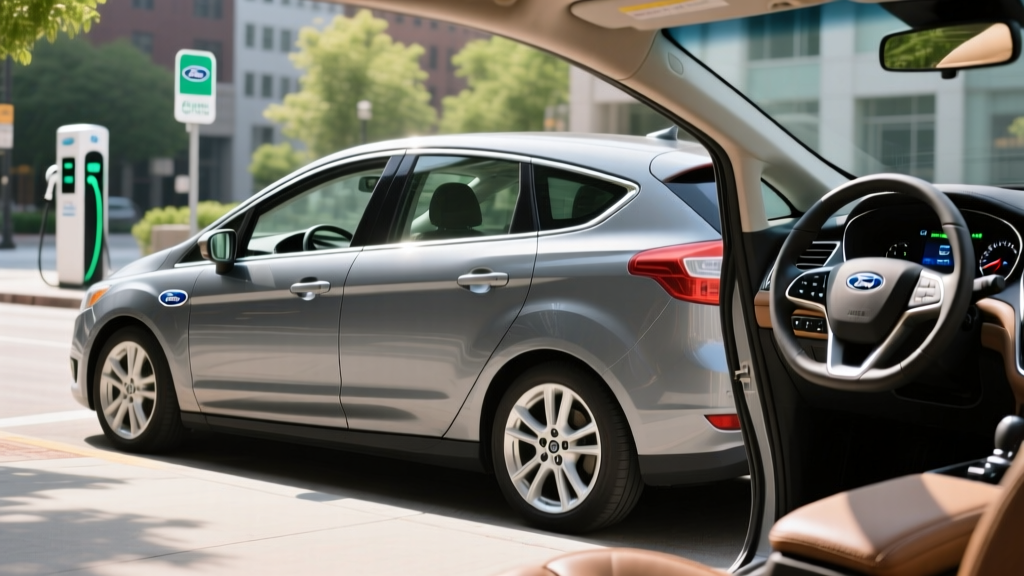
Launched as Ford's answer to the Toyota Prius V, the 2013 C-Max Hybrid is a compact hybrid hatchback that promised Prius-rivaling efficiency with more engaging driving dynamics. Over a decade later, it remains a popular used-hybrid search — buyers want to know if the EPA's 47 MPG combined holds up in 2026, whether the high-voltage battery is a ticking time bomb, and what a replacement actually costs. This guide answers those questions with hard data.
Ford discontinued the C-Max Hybrid after the 2018 model year in the U.S., so every example on the market today is a used vehicle. That changes the buying calculus significantly: no federal tax credits apply, battery age matters more than battery size, and real-world ownership data from the past 13 years tells a clearer story than any 2013 press release could.
Fuel Economy: EPA Ratings vs. Real-World MPG
When it launched, the 2013 C-Max Hybrid was originally EPA-rated at 47 MPG city / 47 MPG highway / 47 MPG combined — an unusually symmetrical number that drew scrutiny. After a class-action lawsuit and an EPA review, Ford voluntarily revised the fuel economy labels for 2013–2014 C-Max Hybrids downward. The corrected EPA ratings, which you'll find on fueleconomy.gov, are as follows:
| Metric | City | Highway | Combined |
|---|---|---|---|
| MPG | 42 | 37 | 40 |
What Owners Actually See
Real-world data from owner-reported sources like Fuelly shows the 2013 C-Max Hybrid averaging roughly 39–43 MPG combined across thousands of fill-ups. The split between city and highway is where this hybrid shines: conventional hybrids (HEVs) recapture braking energy in stop-and-go traffic, so city driving often yields 43–46 MPG. Highway cruising at 70+ MPH drops efficiency to the mid-30s because the electric motor provides less assist at sustained high speeds and the 2.0L Atkinson-cycle engine carries more of the load.
In cold weather (below 40°F), expect a 5–10% fuel economy penalty as the engine runs more frequently to generate cabin heat and the battery's charge-acceptance rate drops. This is normal for all hybrids and is less severe than the 20–30% range loss a full EV experiences in winter.
HEV vs. PHEV: Which C-Max Are You Looking At?
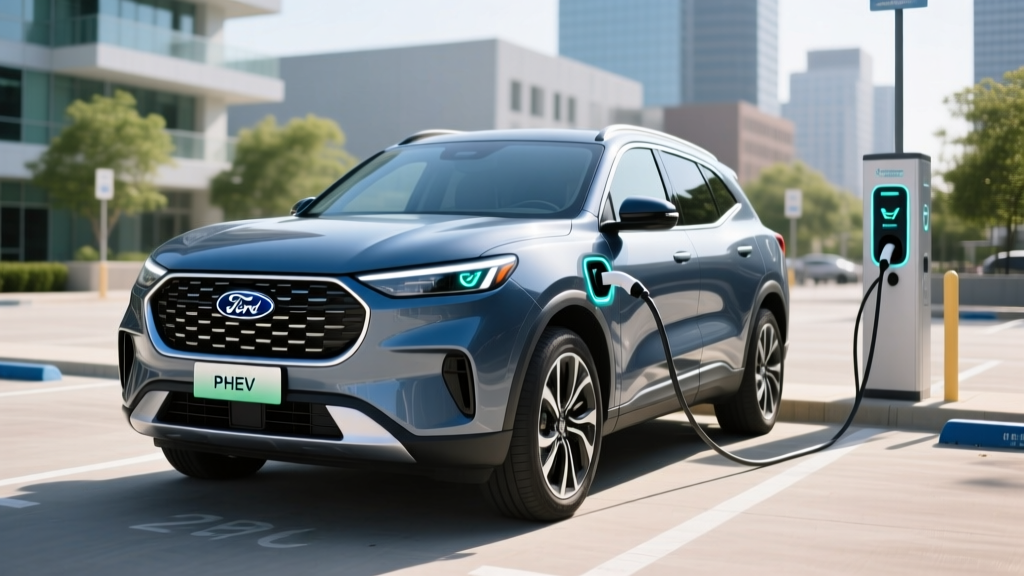
Ford sold two electrified C-Max variants for the 2013 model year. Confusing them is a common buyer mistake, so here's the distinction:
| Attribute | C-Max Hybrid (HEV) | C-Max Energi (PHEV) |
|---|---|---|
| Plug-in charging? | No — never needs to be plugged in | Yes — 120V (Level 1) or 240V (Level 2) |
| Battery capacity | 1.4 kWh (net) | 7.6 kWh (net usable) |
| Electric-only range | N/A (motor assists engine) | ~21 miles (EPA) |
| EPA combined MPG / MPGe | 40 MPG | 100 MPGe (elec) / 38 MPG (gas) |
| Total range | ~570 miles | ~550 miles (elec + gas) |
| Cargo space (rear seats up) | 24.5 cu ft | 19.2 cu ft (battery intrudes) |
| DC fast charging? | N/A | No — Level 1/2 only |
Key takeaway: The C-Max Hybrid (HEV) never needs to be plugged in — it recharges its small battery through regenerative braking and the gasoline engine. The C-Max Energi (PHEV) has a larger battery that you plug in to charge, giving roughly 21 miles of electric-only driving before the gas engine takes over. If you're searching for the "2013 C-Max Hybrid," you're almost certainly looking at the HEV. Confirm the badge on the liftgate before purchasing.
Powertrain and Performance Specs
| Spec | Value |
|---|---|
| Engine | 2.0L Atkinson-cycle 4-cylinder |
| Engine power | 141 hp @ 6,000 rpm |
| Electric motor power | 118 hp (88 kW) |
| Combined system output | 188 hp |
| Transmission | eCVT (planetary gearset, no belts) |
| 0–60 mph | ~8.1 seconds |
| Drivetrain | Front-wheel drive |
| Fuel tank | 13.5 gallons |
| Towing capacity | Not rated for towing |
The eCVT in the C-Max Hybrid is Toyota-licensed planetary gearset technology — not a belt-and-cone CVT like you'd find in some Nissan or Subaru models. This is a significant reliability advantage: there are no belts to wear or cones to slip. The eCVT is widely considered one of the most durable transmission designs in modern automotive engineering.
High-Voltage Battery: Health, Warranty, and Replacement Cost
How Long Do C-Max Hybrid Batteries Last?
The 2013 C-Max Hybrid uses a 1.4 kWh (net) nickel-metal hydride (NiMH) high-voltage battery pack manufactured by Sanyo. NiMH chemistry is less energy-dense than modern lithium-ion but has a well-documented longevity profile — Toyota's Prius uses similar chemistry and routinely sees batteries last 150,000–200,000 miles.
For the C-Max Hybrid, real-world battery longevity data is mixed but generally positive:
- Typical lifespan: 120,000–180,000 miles before significant capacity loss (below 70% state of health)
- Failure mode: Individual cell imbalance rather than catastrophic pack failure — one or two modules degrade faster, triggering a check-engine light (P0A80 or similar)
- Age factor: At 13 years old, calendar degradation matters even on low-mileage examples. NiMH cells slowly lose capacity regardless of use
Battery Replacement Cost in 2026
| Option | Cost Range | Warranty |
|---|---|---|
| New OEM pack (Ford dealer) | $3,500–$5,000 | 3 yr / unlimited mi |
| Remanufactured pack (GreenTech, Dorman) | $2,000–$3,200 | 1–3 yr |
| Used/salvage pack | $800–$1,500 | 30–90 days |
| Individual module replacement (indie shop) | $400–$1,000 | Varies |
Before buying any used 2013 C-Max Hybrid, have a qualified hybrid technician perform a battery state-of-health (SoH) test using a scan tool that reads individual module voltages. A healthy pack shows modules within 0.2V of each other. A spread of 0.5V or more signals imbalance and a likely near-term replacement need.
Does the 2013 C-Max Hybrid Qualify for Any Tax Credit?
No. The federal §30D Clean Vehicle Credit applies only to new plug-in electric vehicles (BEVs and PHEVs) purchased new. The 2013 C-Max Hybrid is a conventional hybrid (HEV) — it has no plug, no electric-only driving range, and was never eligible for the federal tax credit even when new.
The IRS §30D rules are explicit: only vehicles with a battery capacity of at least 7 kWh that can be recharged from an external power source qualify. The C-Max Hybrid's 1.4 kWh NiMH pack is recharged solely by the engine and regenerative braking.
The C-Max Energi (PHEV variant) did qualify for a federal tax credit when new (up to $3,750 based on its battery size), but that credit expired for Ford in 2018 when the manufacturer hit the 200,000-vehicle cap under the pre-2023 rules. In 2026, no used-hybrid or used-PHEV federal credit applies to the C-Max line under the current used clean vehicle credit, which requires a sale price of $25,000 or less and applies only to BEVs and PHEVs — not conventional hybrids.
Who Should Buy the 2013 C-Max Hybrid in 2026?
Choose the C-Max Hybrid If:
- You want a budget-friendly hybrid under $8,000–$12,000 (used market)
- Your driving is mostly city and suburban stop-and-go
- You need hatchback cargo space (24.5 cu ft) without stepping up to an SUV
- You don't have access to home or workplace charging (no plug needed)
- You want proven eCVT reliability with no belts or clutches to replace
Skip the C-Max Hybrid If:
- You primarily drive highway miles (a diesel or efficient gas car may match its 37 MPG hwy)
- You want electric-only driving — consider a used PHEV like a Prius Prime or Volt instead
- The battery SoH test comes back poor and the seller won't negotiate replacement cost
- You need AWD or towing capability
- You want current-model safety tech (automatic emergency braking, lane-keeping) — these weren't available on the 2013 C-Max
Hybrid vs. PHEV vs. Full EV: Which Fits Your Situation?
The decision framework is straightforward in 2026:
- HEV (like the C-Max Hybrid): No plug, no behavior change, ~40 MPG. Best for buyers without reliable charging access who want lower fuel costs with zero lifestyle adjustment.
- PHEV (like the C-Max Energi or a used Prius Prime): Plugs in, 20–45 miles electric-only, then operates as a hybrid. Best for buyers with home charging who commute under 40 miles round-trip but want gas-engine flexibility for road trips.
- Full EV (BEV): No gas engine, 200–400+ miles of range. Best for buyers with home Level 2 charging who want the lowest per-mile fuel cost and minimal maintenance. Consider a used Chevrolet Bolt, Nissan Leaf, or Tesla Model 3 in the same price range.
Frequently Asked Questions
How many MPG does the 2013 C-Max Hybrid actually get?
The corrected EPA rating is 42 city / 37 highway / 40 combined. Real-world owners report 39–43 MPG combined on average, with city driving often reaching 43–46 MPG thanks to regenerative braking. Highway-only trips at 75 MPH may drop to 34–36 MPG.
Is the 2013 C-Max Hybrid reliable?
Mechanically, the powertrain is solid — the 2.0L Atkinson-cycle engine and eCVT planetary gearset have proven durable well past 150,000 miles. The main reliability risk is the high-voltage NiMH battery, which is now 13 years old. Budget for a battery replacement ($2,000–$4,000) if the pack hasn't been swapped. Common non-hybrid issues include power steering assist faults (recalled — check NHTSA records) and minor electrical gremlins with the SYNC infotainment system.
What is the battery replacement cost for the 2013 C-Max Hybrid?
A new OEM battery from a Ford dealer runs $3,500–$5,000 installed. Remanufactured packs from aftermarket suppliers cost $2,000–$3,200. Used salvage packs can be found for $800–$1,500 but carry significant risk given their age. Some independent hybrid specialists offer individual module replacement for $400–$1,000 if only one or two cells have failed.
Does the 2013 C-Max Hybrid need to be plugged in?
No. The C-Max Hybrid is a conventional hybrid (HEV). It charges its battery entirely through regenerative braking and the gasoline engine. You never plug it in — you only fill the 13.5-gallon gas tank. If you see a charge port on a C-Max, you're looking at the Energi (PHEV) variant.
Does the 2013 C-Max Hybrid qualify for any tax credit in 2026?
No. The federal §30D Clean Vehicle Credit only applies to plug-in vehicles (BEVs and PHEVs). The C-Max Hybrid is a conventional HEV with no plug. No federal tax credit is available, and most state hybrid incentives have also expired. Check your specific state's current incentive programs for any remaining used-vehicle rebates.
How does the 2013 C-Max Hybrid compare to a 2013 Prius V?
The C-Max Hybrid offers slightly more horsepower (188 hp vs. 134 hp for the Prius V) and a more engaging driving experience. The Prius V edges ahead on cargo space (34.3 cu ft vs. 24.5 cu ft) and real-world fuel economy consistency. Both use proven eCVT technology. Battery replacement costs are comparable. The Prius V has a larger used-parts ecosystem and stronger resale value.