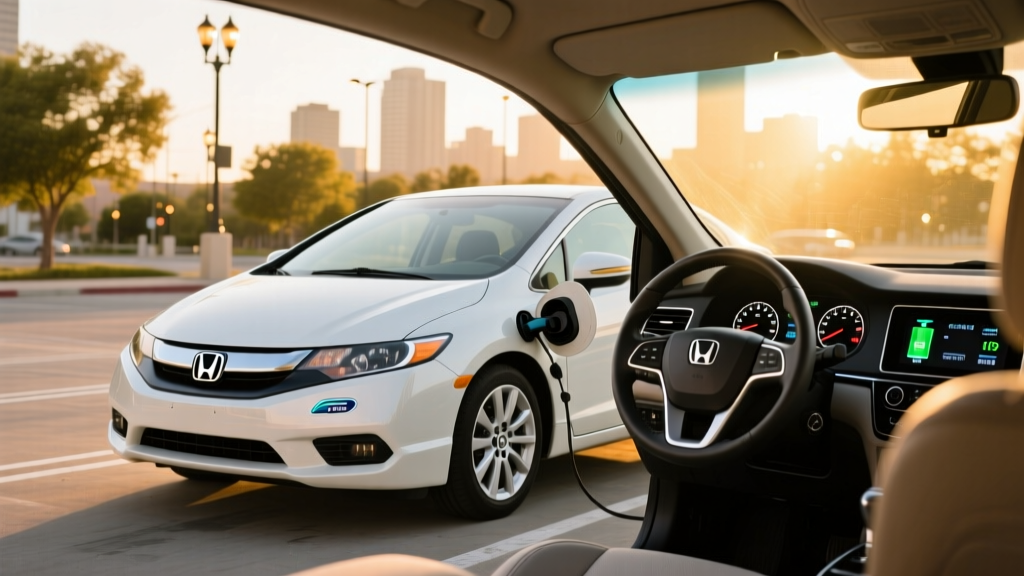
The 2013 Honda Civic Hybrid occupies a specific niche in the used-car market: it's a compact sedan from Honda's Integrated Motor Assist (IMA) era, offering mild-hybrid fuel economy without the complexity of a full hybrid system like Toyota's. For budget-conscious buyers exploring electrified vehicles without committing to a plug-in, this model remains a relevant data point. But how does a decade-old hybrid hold up in 2026 — especially regarding battery health, real-world MPG, and ownership costs?
This guide covers the 2013 Civic Hybrid's powertrain specs, EPA and real-world fuel economy, IMA battery longevity and replacement costs, and whether it still makes sense versus a newer hybrid, a PHEV, or a full EV.
2013 Civic Hybrid Powertrain: How Honda's IMA System Works
The 2013 Civic Hybrid uses Honda's Integrated Motor Assist (IMA) system — a mild-hybrid architecture, not a full hybrid like the Toyota Prius. Here's what that means in practice:
- Engine: 1.5-liter inline-4, producing 90 hp and 97 lb-ft of torque
- Electric motor: 20 hp (15 kW) thin motor sandwiched between engine and transmission
- Combined output: 110 hp at 5,500 rpm, 123 lb-ft of torque
- Transmission: Continuously Variable Transmission (CVT)
- Drivetrain: Front-wheel drive
- Battery: Nickel-metal hydride (NiMH), approximately 0.5 kWh total capacity
The IMA system cannot drive the car on electric power alone (unlike Toyota's Hybrid Synergy Drive or any modern PHEV). The electric motor assists the gasoline engine during acceleration and enables regenerative braking. The engine also features cylinder deactivation — it can shut down all four cylinders under light-load cruising to save fuel.
Fuel Economy: EPA Ratings and Real-World MPG
The 2013 Civic Hybrid carries EPA ratings that were competitive for its era. Here's the official breakdown from fueleconomy.gov:
| Metric | Value |
|---|---|
| City MPG | 44 |
| Highway MPG | 44 |
| Combined MPG | 44 |
| Annual fuel cost (15,000 mi/yr) | ~$1,050 (at $3.10/gal) |
Real-world expectations: Honda's IMA system is relatively modest in its electric assist, so real-world results vary more than with Toyota's full-hybrid system. Owners commonly report:
- City driving: 38–44 MPG (hybrids generally meet or exceed EPA city ratings in stop-and-go traffic thanks to regenerative braking and engine shut-off)
- Highway driving: 40–46 MPG (cylinder deactivation helps at steady speeds)
- Mixed driving: 38–43 MPG
- Cold weather penalty: Expect 3–6 MPG loss in winter. The engine runs more often to heat the cabin and maintain battery temperature.
For context, the 2026 Toyota Prius achieves an EPA-estimated 57 MPG combined — a significant leap driven by more powerful electric motors, lithium-ion batteries, and improved aerodynamics. The 2013 Civic Hybrid's 44 MPG was strong for its time but trails current-generation hybrids by roughly 25–30%.
IMA Battery Lifespan, Degradation, and Replacement Cost
The most common concern for any used-hybrid buyer is battery health. The 2013 Civic Hybrid uses a nickel-metal hydride (NiMH) pack — older chemistry compared to the lithium-ion packs in modern hybrids and EVs. Here's what to expect:
Degradation patterns: NiMH batteries in Honda's IMA system have a documented history of gradual capacity loss. Unlike lithium-ion packs that degrade slowly and predictably, NiMH cells can develop individual cell imbalances that trigger the IMA warning light. Common failure mileage: 80,000–130,000 miles, though some units last well beyond 150,000 miles with proper care.
Replacement costs in 2026:
| Option | Cost Range | Notes |
|---|---|---|
| OEM Honda replacement | $2,000–$3,000 | Dealer-installed; increasingly difficult to source for 2013 models |
| Aftermarket/remanufactured | $1,200–$2,000 | Third-party suppliers; warranty varies (1–3 years typical) |
| Individual cell rebuild (DIY/specialist) | $400–$900 | Replace only failed cells; requires technical skill; not widely available |
Signs of IMA battery trouble: The IMA warning light on the dashboard, reduced fuel economy (dropping below 35 MPG consistently), and the battery gauge showing fewer bars than normal. If you're evaluating a used 2013 Civic Hybrid, ask for maintenance records showing whether the IMA battery has been replaced, and check for any stored diagnostic codes via an OBD-II scan.
How the 2013 Civic Hybrid Compares: HEV vs PHEV vs EV
Buyers considering a 2013 Civic Hybrid are typically weighing it against three alternatives. Here's how they stack up for a driver covering 12,000 miles per year:
| Vehicle Type | Example | Efficiency | Est. Annual Cost | Plugs In? |
|---|---|---|---|---|
| Conventional Hybrid (HEV) | 2013 Civic Hybrid | 44 MPG | ~$1,050 | No |
| Modern Hybrid (HEV) | 2026 Toyota Prius LE | 57 MPG | ~$810 | No |
| Plug-in Hybrid (PHEV) | 2026 Toyota Prius Prime | 44 mi electric + 52 MPG gas | ~$450–$750* | Yes (Level 1/2) |
| Full EV (BEV) | 2026 Hyundai Ioniq 6 SE | 140 MPGe / 361 mi range | ~$500–$700* | Yes (Level 1/2/DC) |
*Annual cost for PHEV and EV varies significantly based on electricity rates, home charging access, and percentage of miles driven on electricity vs gasoline.
Does the 2013 Civic Hybrid Qualify for Any Tax Credit?
No. The 2013 Honda Civic Hybrid does not qualify for the federal §30D Clean Vehicle Credit. Under current IRS rules, the §30D credit applies only to new plug-in vehicles (BEVs and PHEVs) meeting battery-sourcing, critical-mineral, MSRP cap, and buyer income requirements. Conventional hybrids (HEVs) that cannot plug in have never qualified for the current federal EV tax credit structure.
At the time of its original sale (2013), the Civic Hybrid was eligible for a now-expired alternative motor vehicle credit, but that provision has long since sunset. Some states offered their own hybrid incentives in the early 2010s, but those have also expired.
Used EV credit (IRC §25E): The federal used clean vehicle credit of up to $4,000 applies only to used BEVs and PHEVs priced at $25,000 or less. Since the 2013 Civic Hybrid is a conventional HEV, it does not qualify for this credit either.
Who Should Buy the 2013 Civic Hybrid — And Who Shouldn't
Choose This Hybrid If:
- Your budget is under $8,000–$12,000 for a used hybrid
- You drive mostly city or suburban miles where regen braking helps
- You want hybrid fuel savings without plugging in
- You value Honda's general mechanical reliability and parts availability
- You don't need the latest safety tech or infotainment
Look Elsewhere If:
- You want electric-only driving or plug-in capability
- You need a vehicle that qualifies for federal tax credits
- You prioritize maximum MPG — modern hybrids achieve 50+ MPG
- You want current safety features (automatic emergency braking, lane-keeping assist)
- The IMA battery has not been replaced and the car has 100,000+ miles
Pricing and What to Expect on the Used Market
As of early 2026, the 2013 Honda Civic Hybrid trades in the used market at roughly:
- Private party (good condition, ~90,000 mi): $7,500–$10,000
- Dealer retail (good condition, ~90,000 mi): $9,000–$12,500
- High-mileage examples (130,000+ mi): $5,000–$7,500
These prices assume the IMA battery is functional. If the battery needs replacement, factor in $1,200–$3,000 — which can represent 15–40% of the car's total value. Always negotiate based on battery condition.
Frequently Asked Questions
How many MPG does the 2013 Civic Hybrid actually get?
The EPA rates it at 44 MPG city, 44 highway, and 44 combined. In real-world driving, most owners see 38–44 MPG depending on driving style, terrain, and climate. City driving tends to match or slightly exceed the EPA rating thanks to regenerative braking; highway driving at 75+ MPH may drop to 38–40 MPG.
Is the 2013 Civic Hybrid a plug-in hybrid?
No. It is a conventional hybrid (HEV) using Honda's IMA system. It does not plug in and cannot drive on electric power alone. It uses regenerative braking and engine optimization to improve fuel economy. Honda did not offer a plug-in version of the Civic in 2013.
How reliable is the IMA battery and what does replacement cost?
The NiMH IMA battery typically lasts 80,000–130,000 miles before significant degradation or cell failure. Replacement costs range from $400 (specialist cell rebuild) to $3,000 (OEM dealer replacement). Aftermarket remanufactured packs cost $1,200–$2,000. Honda's original warranty (8 yr/100,000 mi, or 10 yr/150,000 mi in CARB states) has expired for all 2013 models.
Does the 2013 Civic Hybrid qualify for any federal tax credit?
No. The federal §30D Clean Vehicle Credit and the §25E Used Clean Vehicle Credit both require plug-in capability (BEV or PHEV). Conventional hybrids like the Civic Hybrid do not qualify for any current federal tax incentive.
Should I buy a 2013 Civic Hybrid or a newer used Prius?
A used Toyota Prius (2012–2015 generation) typically offers similar or better MPG (50 combined), a more robust full-hybrid system that can drive short distances on electric only, and widely available aftermarket battery replacements. The Civic Hybrid may be cheaper to purchase upfront, but the Prius generally offers better long-term hybrid-system reliability and higher fuel economy. If budget allows, a 2016+ Prius with Toyota's Safety Sense package adds modern driver-assistance features the 2013 Civic lacks entirely.
What's the difference between Honda's IMA and Toyota's hybrid system?
Honda's IMA is a mild-hybrid system: the electric motor assists the gas engine but cannot propel the car independently. Toyota's Hybrid Synergy Drive is a full-hybrid system: the electric motor can drive the wheels alone at low speeds, the engine can shut off completely during coasting and stops, and the system recovers more energy through regenerative braking. This is why the Prius achieves higher MPG and can creep through parking lots on electric power alone while the Civic Hybrid cannot.