The 2013 Tahoe Hybrid in 2026: A Used-Buyer Reality Check
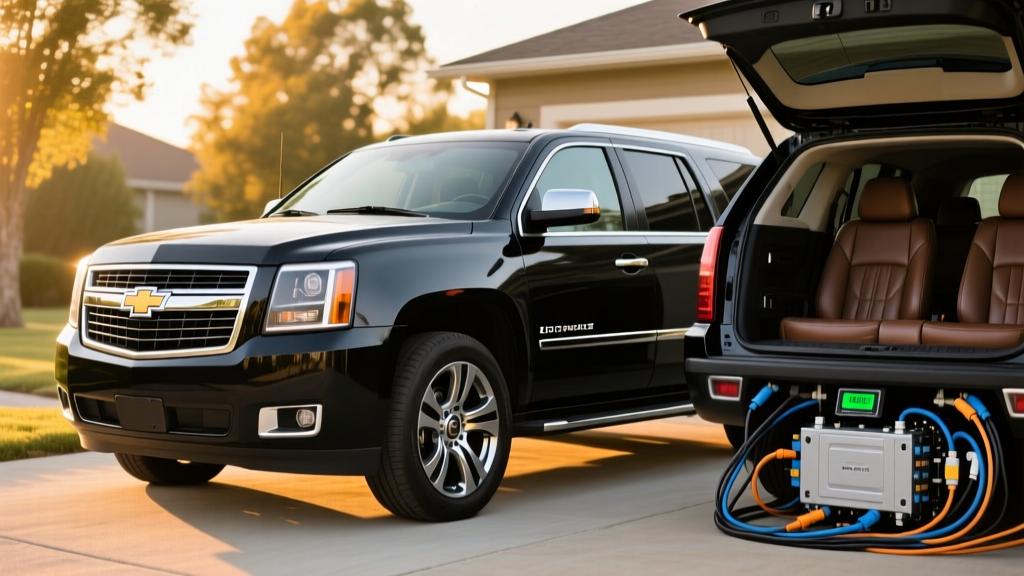
The 2013 Chevrolet Tahoe Hybrid was the last model year of GM's Two-Mode full-size SUV hybrid experiment. Built on the GMT900 platform alongside the GMC Yukon Hybrid and Cadillac Escalade Hybrid, it paired a 6.0L V8 with a two-motor continuously variable transmission to deliver a then-impressive 21 MPG combined — a meaningful gain over the standard Tahoe's 15 MPG combined. For used-car shoppers in 2026 considering a Chevrolet Tahoe Hybrid 2013 model, the value proposition has shifted: these SUVs now trade between $6,000 and $12,000 depending on mileage and condition, and the hybrid battery is likely approaching or past its original warranty window.
This guide breaks down the real-world fuel economy, powertrain specs, hybrid battery longevity, replacement costs, and whether this 13-year-old HEV still earns a spot in your driveway versus a newer hybrid, PHEV, or full EV alternative.
The 2013 Tahoe Hybrid is a conventional hybrid electric vehicle (HEV), not a plug-in hybrid (PHEV). It does not have a charging port, cannot be plugged in, and offers zero electric-only driving range. Its 1.5 kWh nickel-metal hydride (NiMH) battery recharges exclusively through regenerative braking and the gasoline engine. If you're looking for electric-only commuting, you need a PHEV or BEV — this Tahoe simply improves fuel economy over the gas-only model.
Fuel Economy: EPA Numbers vs. Real-World MPG
The EPA rated the 2013 Chevrolet Tahoe Hybrid at 20 MPG city / 23 MPG highway / 21 MPG combined for both 2WD and 4WD configurations. That represented a roughly 40% improvement over the conventional 5.3L V8 Tahoe of the same era, which returned approximately 15 MPG combined.
| Configuration | City MPG | Highway MPG | Combined MPG |
|---|---|---|---|
| 2WD Hybrid | 20 | 23 | 21 |
| 4WD Hybrid | 20 | 23 | 21 |
| 2013 Tahoe 5.3L V8 (Gas, 2WD) | 15 | 21 | 17 |
Source: EPA / fueleconomy.gov
Real-World MPG: What Owners Actually Report
Owner-reported data on Fuelly and enthusiast forums shows most 2013 Tahoe Hybrid drivers average between 18 and 22 MPG combined in mixed driving. The Two-Mode system excels in stop-and-go city traffic — where the electric motors handle low-speed propulsion and the engine shuts off at stops — so city MPG can actually meet or exceed the EPA's 20 MPG estimate. Highway driving at sustained 70+ MPH speeds, especially with a loaded cabin or towing, pushes consumption toward 17–19 MPG. Cold-weather operation in northern climates can drop observed economy by 1–3 MPG due to extended engine warm-up cycles and reduced battery efficiency in the NiMH pack.
Powertrain & Performance Specs
The 2013 Tahoe Hybrid used GM's Two-Mode Hybrid system — a technically sophisticated setup that combined a 6.0-liter Vortec V8 (with cylinder deactivation, branded Active Fuel Management) and two 60-kW electric motors housed within a specialized electronically variable transmission (EVT). This was a full hybrid system, meaning the Tahoe could move under electric-only power at low speeds (typically up to ~25 MPH for short distances), though GM never published an official electric-only range figure.
| Specification | Value |
|---|---|
| Gasoline Engine | 6.0L V8 Vortec (VVT + AFM cylinder deactivation) |
| Engine Power | 332 HP @ 5,100 RPM |
| Electric Motors | 2 × 60 kW (combined system output) |
| Combined System Power | 379 HP |
| Transmission | Two-Mode EVT (electrically variable transmission) |
| Hybrid Battery | 1.5 kWh NiMH (nickel-metal hydride) |
| 0–60 MPH | ~8.2 seconds (est.) |
| Towing Capacity | 5,800 lbs (2WD) / 5,600 lbs (4WD) |
| Fuel Tank | 26 gallons |
| Total Driving Range | ~546 miles (combined EPA) |
Hybrid Battery Lifespan, Warranty & Replacement Cost
This is the single most important factor for anyone evaluating a used 2013 Tahoe Hybrid in 2026. The 1.5 kWh NiMH battery pack was covered by GM's original hybrid component warranty: 8 years / 100,000 miles (extended to 10 years / 150,000 miles in California Air Resources Board states and those adopting CARB emissions standards). For a 2013 model, that factory warranty expired no later than 2023 by time — meaning every surviving Tahoe Hybrid is now operating on an out-of-warranty battery.
Original warranty: 8 years / 100,000 miles (federal) — expired for all 2013 models.
CARB-state warranty: 10 years / 150,000 miles — also expired by 2023.
Current status: Any replacement battery installed by a previous owner may carry its own aftermarket warranty (typically 1–3 years). Ask for documentation.
How Long Do These NiMH Packs Last?
NiMH hybrid batteries in GM's Two-Mode system have demonstrated reasonable longevity, with many examples reaching 130,000–180,000 miles before significant capacity loss triggers check-engine codes or noticeable fuel-economy degradation. Unlike lithium-ion packs in modern EVs, NiMH batteries degrade more gradually but are also more sensitive to heat and deep cycling. A 2013 Tahoe with 150,000+ miles and its original battery is a risk — plan for replacement as a near-term expense.
Replacement Cost Breakdown
If the hybrid battery fails, here's what to budget:
- OEM-equivalent new battery pack: $2,500–$3,500 (part only)
- Remanufactured battery pack: $1,500–$2,500 (part only)
- Installation labor: $500–$1,000 (2–4 hours at a hybrid-qualified shop)
- Total out-of-pocket: $2,000–$4,500 depending on new vs. remanufactured and labor rates
Independent hybrid battery shops and mobile replacement services have become more common, often offering remanufactured packs at the lower end of this range. Dealership OEM replacement will push toward the upper bound. This is a meaningful expense on a vehicle worth $6,000–$12,000, so factor it into your purchase negotiation.
Tax Credits & Incentives: What Applies in 2026?
The 2013 Chevrolet Tahoe Hybrid does not qualify for any current federal tax credit. The IRS §30D Clean Vehicle Credit applies exclusively to new qualifying plug-in electric vehicles (BEVs and PHEVs with ≥7 kWh battery capacity) and certain used EVs under the §25E Previously-Owned Clean Vehicle Credit. The Tahoe Hybrid is a conventional HEV with a 1.5 kWh NiMH pack — it was never eligible for federal plug-in credits even when new, and it does not meet the battery-capacity or plug-in requirements for any current incentive.
Some states historically offered rebates for conventional hybrids, but most of those programs have sunset or shifted exclusively to PHEVs and BEVs. Check your state's current energy-office or DMV website for any residual incentives, but expect none for a used 2013 HEV purchase.
Used Market Pricing in 2026
As of early 2026, the 2013 Chevrolet Tahoe Hybrid trades in the following ranges on the used market:
| Condition / Mileage | Price Range |
|---|---|
| 80,000–100,000 mi, excellent, documented battery | $10,000–$12,000 |
| 100,000–140,000 mi, good, original battery | $7,500–$9,500 |
| 140,000+ mi, fair, battery unknown or failing | $5,000–$7,000 |
The Hybrid trim was originally priced at approximately $53,000–$56,000 MSRP when new — a substantial premium over the base Tahoe. That premium has fully depreciated, and the hybrid badge now carries a valuation discount in many cases due to battery-age concerns.
Pros and Cons: The Honest Assessment
✓ Pros
- 21 MPG combined is strong for a body-on-frame, 3-row SUV
- 379 combined HP provides confident acceleration and merging
- 5,800-lb towing capacity retained (only ~200-lb penalty vs. gas model)
- Low-speed electric-only creeping reduces noise in neighborhoods
- Proven GMT900 platform — abundant used parts and mechanic familiarity
- Purchase price has fully depreciated from $55K+ new
✗ Cons
- NiMH battery is 13 years old — replacement is a $2K–$4.5K liability
- No electric-only commuting range; this is a fuel-efficiency play only
- No federal or state tax credits available
- Two-Mode EVT transmission is complex; specialist knowledge needed for repairs
- Outdated infotainment and safety tech vs. any 2020+ vehicle
- Limited production means fewer used examples and harder parts sourcing for hybrid-specific components
Who Should Buy This vs. a Modern Hybrid, PHEV, or EV
Decision Framework
Choose the 2013 Tahoe Hybrid if: You need a 3-row body-on-frame SUV with towing capability, your budget is strictly under $12,000, you drive mostly city/suburban routes where the hybrid system shines, and you're prepared to budget $3,000–$4,000 for a potential battery replacement.
Choose a newer conventional hybrid (e.g., 2022+ Toyota Highlander Hybrid) if: You can spend $30,000–$45,000, want a modern warranty (10-year/150,000-mile hybrid battery), updated safety features (AEB, lane-keep), and similar 3-row practicality with 35–36 MPG combined.
Choose a PHEV (e.g., Chrysler Pacifica Hybrid, Toyota RAV4 Prime) if: You have home charging access, want 25–42 miles of electric-only commuting, and can spend $35,000+. PHEVs may still qualify for the §25E used-vehicle credit (up to $4,000) on the used market if they meet age and price requirements.
Choose a full EV (e.g., used Tesla Model X, Rivian R1S) if: You want zero tailpipe emissions, home charging convenience, minimal maintenance, and can invest $35,000+. You'll sacrifice some towing range but gain dramatically lower per-mile energy costs.
Reliability Verdict: What Breaks and What Doesn't
The GMT900 platform underlying the 2013 Tahoe is one of GM's most durable — the frame, suspension, and body are known to reach 200,000+ miles with routine maintenance. The 6.0L Vortec V8 (LFA/LC9 variant) is a proven engine, and Active Fuel Management issues that plagued some GM V8s of this era were largely addressed by the 2011+ refresh.
The hybrid-specific components carry the real risk:
- NiMH battery pack: As discussed, age-related degradation is now the primary concern. Expect 130K–180K mile total lifespan from an original pack.
- Two-Mode EVT transmission: Generally reliable but complex. Failures are uncommon but expensive ($3,000–$5,000+ to rebuild or replace) when they occur. Fluid changes at recommended intervals are critical.
- Inverter/Power electronics: Rarely fail, but replacement cost is high ($1,500–$3,000) when they do. Ensure the cooling system for the power electronics has been serviced.
- Regenerative braking system: Blended braking can feel different from conventional Tahoe models; brake actuators are generally durable but check for recalls and TSBs.
Before purchasing, insist on a pre-purchase inspection by a technician with GM hybrid system experience. A hybrid-specific OBD-II scan can reveal battery cell imbalance or pending hybrid system codes that a standard scan might miss.
Frequently Asked Questions
How many MPG does the 2013 Chevrolet Tahoe Hybrid get?
The EPA rates it at 20 MPG city, 23 MPG highway, and 21 MPG combined. Real-world owners typically report 18–22 MPG combined depending on driving mix. City driving favors the hybrid system; sustained highway speeds and towing reduce economy.
Can the 2013 Tahoe Hybrid drive on electric power only?
Only at very low speeds (under ~25 MPH) for short distances, such as creeping through a parking lot or stop-and-go traffic. It has no meaningful electric-only range and no plug — this is a conventional HEV, not a PHEV. If electric-only commuting matters to you, look at a PHEV like the Chrysler Pacifica Hybrid (32 miles electric-only) or a full BEV.
Is the 2013 Tahoe Hybrid reliable?
The underlying GMT900 platform and 6.0L V8 are proven durable. The hybrid-specific components — particularly the 13-year-old NiMH battery and the Two-Mode EVT — are the reliability wildcard. Budget for a battery replacement ($2,000–$4,500) as a near-term ownership cost if the original pack is still in place.
What does a replacement hybrid battery cost for the 2013 Tahoe?
Between $2,000 and $4,500 installed, depending on whether you choose a remanufactured or new-equivalent pack and your local labor rates. Remanufactured packs from hybrid specialists typically cost $1,500–$2,500 for the part alone.
Does the 2013 Tahoe Hybrid qualify for any tax credit in 2026?
No. It is a conventional hybrid (HEV) with a 1.5 kWh battery and no plug-in capability. The IRS §30D credit requires a plug-in vehicle with at least 7 kWh of battery capacity, and the §25E used-vehicle credit has similar plug-in requirements. No federal or typical state incentives apply to this model.
Should I buy a 2013 Tahoe Hybrid or a newer gas-only Tahoe?
If you find a well-maintained Hybrid with a recently replaced battery at a comparable price to a gas-only 2013 Tahoe (which gets ~15–17 MPG combined), the Hybrid is the better buy — the 4–6 MPG advantage saves roughly $400–$700 per year in fuel at 15,000 miles driven annually (assuming $3.50/gallon). But if the Hybrid's battery is original and untested, the gas model's simpler powertrain may be the lower-risk choice.
How does the 2013 Tahoe Hybrid compare to modern hybrid SUVs?
A 2025 Toyota Highlander Hybrid delivers 35–36 MPG combined with a modern lithium-ion battery, 10-year/150,000-mile hybrid warranty, Toyota Safety Sense 2.5+, and CarPlay — but starts around $40,000 new. The 2013 Tahoe Hybrid gives you body-on-frame towing and a rock-bottom used price, at the cost of 15 fewer MPG, outdated tech, and battery-age risk. They serve different buyers and budgets.