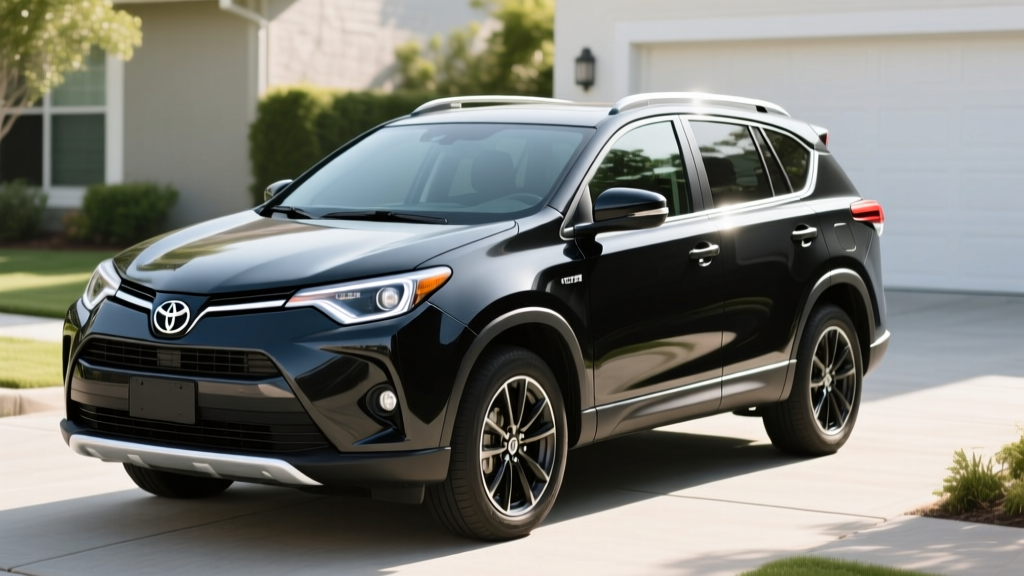
The 2012 Toyota Highlander Hybrid occupies a specific niche in the used-SUV market: a three-row family hauler that sips fuel like a compact sedan while offering the cargo space and all-weather capability buyers expect from a midsize crossover. More than a decade after it rolled off the line, this second-generation hybrid SUV remains one of the most searched used hybrids — and for good reason. Toyota's Hybrid Synergy Drive proved remarkably durable, and the Highlander's 28 MPG combined rating still holds up against many newer non-hybrid SUVs.
This guide covers everything a 2026 used-car shopper needs to know: real-world fuel economy, the hybrid powertrain layout, battery longevity and replacement costs, reliability data, and whether this aging hybrid still makes financial sense compared to a modern PHEV or full EV.
2012 Toyota Highlander Hybrid Fuel Economy: EPA vs. Real World
The EPA rated the 2012 Highlander Hybrid at 28 MPG combined, broken down as 28 MPG city and 28 MPG highway. For a 4,500-pound, three-row AWD SUV, those figures were exceptional in 2012 and remain competitive today against many gasoline-only midsize crossovers.
| Driving Condition | EPA Estimate | Real-World Expectation |
|---|---|---|
| City | 28 MPG | 27–30 MPG (hybrids excel in stop-and-go) |
| Highway | 28 MPG | 25–27 MPG (aerodynamic drag dominates at 70+ mph) |
| Combined | 28 MPG | 26–28 MPG |
| Cold Weather (below 32°F) | Not rated | 23–25 MPG (engine runs more for cabin heat) |
Why real-world MPG often matches or beats EPA in the city: Toyota's hybrid system recovers kinetic energy during braking and uses the electric motor for low-speed driving, where gasoline engines are least efficient. Owners who do mostly suburban and city driving frequently report 29–30 MPG. Highway-heavy commuters, however, should expect a slight drop below the EPA sticker, as the electric motor contributes less at sustained high speeds.
According to fueleconomy.gov, the 2012 Highlander Hybrid saves an estimated $1,500 in fuel costs over five years compared to the average new vehicle, based on 15,000 miles driven annually. Against its non-hybrid sibling — the 2012 Highlander V6 AWD rated at 19 MPG combined — the hybrid saves roughly $700–$900 per year in fuel at current gas prices.
Powertrain: 306 Horsepower From a V6 Hybrid System
The 2012 Highlander Hybrid uses Toyota's Hybrid Synergy Drive, pairing a 3.5-liter V6 gasoline engine with two electric motor-generators and a nickel-metal hydride (NiMH) battery pack. This is a conventional hybrid (HEV), not a plug-in hybrid — it charges its own battery through regenerative braking and the gasoline engine. You never plug it in.
| Specification | Detail |
|---|---|
| Engine | 3.5L V6 Atkinson-cycle |
| Engine Output | 228 hp / 212 lb-ft torque |
| Electric Motors | Front motor-generator + rear motor-generator (eAWD) |
| Combined System Output | 306 hp (net) |
| Transmission | eCVT (planetary gearset, not a belt CVT) |
| Drivetrain | Electronic on-demand AWD (eAWD) |
| Battery Type | Nickel-Metal Hydride (NiMH) |
| Battery Capacity | ~1.9 kWh (nominal) |
| 0–60 mph | ~7.8 seconds |
| Towing Capacity | 3,500 lbs |
| Curb Weight | ~4,500 lbs |
The eAWD system is worth explaining. Unlike mechanical AWD with a driveshaft to the rear axle, the Highlander Hybrid uses a dedicated rear electric motor that engages when the system detects front-wheel slip. This means there's no mechanical connection between the front and rear axles — reducing weight and drivetrain losses. The trade-off is that the rear motor provides limited torque, so this system is designed for snow, rain, and light off-road conditions, not serious trail use.
HEV vs. PHEV vs. EV: Where Does the 2012 Highlander Hybrid Fit?
Used-car shoppers cross-shopping a 2012 Highlander Hybrid will encounter modern PHEVs and EVs. Here's how the three electrified powertrain types compare for a family SUV buyer in 2026:
| Factor | 2012 Highlander Hybrid (HEV) | Modern PHEV SUV (e.g., 2026 RAV4 Prime) | Modern EV SUV (e.g., 2026 Ioniq 5) |
|---|---|---|---|
| Plug-in Required? | No — self-charging | Yes — for electric range | Yes — always |
| Electric-Only Range | None (EV assist only at low speed) | 35–42 miles | 250–310 miles |
| Fuel Economy | 28 MPG combined | 38 MPG (gas) / 94 MPGe (electric) | N/A (electric only) |
| Used Price Range (2026) | $10,000–$16,000 | $35,000–$45,000 (CPO) | $28,000–$40,000 (used) |
| Federal Tax Credit | Not eligible | Up to $7,500 (if eligible, new purchase) | Up to $7,500 (new) / $4,000 (used EV credit) |
| Maintenance Complexity | Low — proven Toyota V6 | Moderate — dual powertrains | Low — fewer moving parts |
| Three Rows? | Yes (7 seats) | No (most compact PHEVs) | Limited options |
The 2012 Highlander Hybrid is the right choice if: you need three rows, cannot charge at home, want the lowest possible purchase price for an electrified SUV, and drive a mix of city and highway miles. It's also ideal for buyers in apartments or condos without charging access.
Consider a modern PHEV or EV instead if: you have home charging, a shorter commute (where PHEV electric-only range shines), only need two rows, or want modern safety tech (automatic emergency braking, lane-keeping assist) that the 2012 model lacks.
Hybrid Battery Lifespan, Warranty, and Replacement Cost
For any used hybrid buyer, battery health is the single biggest financial unknown. Here's what you need to know about the 2012 Highlander Hybrid's NiMH pack:
| Battery Detail | Specification |
|---|---|
| Battery Chemistry | Nickel-Metal Hydride (NiMH) |
| Original Warranty | 8 years / 100,000 miles (10 years / 150,000 miles in CARB states) |
| Warranty Status in 2026 | Expired for virtually all examples |
| Typical Lifespan | 150,000–200,000+ miles with normal use |
| Dealer Replacement Cost | $3,000–$4,500 (OEM battery + labor) |
| Independent/Refurbished Replacement | $1,500–$2,500 (reconditioned pack or individual module replacement) |
NiMH longevity reality: Toyota's NiMH packs in this era have proven remarkably durable. Many 2012 Highlander Hybrids are still running on their original battery at 150,000+ miles. Unlike lithium-ion packs, NiMH degrades gradually rather than experiencing sudden capacity cliffs. You'll notice reduced fuel economy and more frequent engine engagement before the battery fails outright.
What to check when buying: Ask for a hybrid battery health report from a Toyota dealer or an independent hybrid specialist. The key metric is the battery's internal resistance and voltage delta between modules. A large delta indicates weak modules that will trigger a hybrid system warning within months. Some independent shops offer module-level replacement for $800–$1,200, replacing only the degraded cells rather than the entire pack.
Reliability, Safety, and Common Issues
The 2012 Highlander Hybrid benefits from Toyota's reputation for conservative engineering. The 3.5L V6 (2GR-FXE) is one of the most reliable engines Toyota has produced, and the eCVT transmission — which uses a planetary gearset with no belts, clutches, or bands — has virtually no wear components.
Common issues reported by owners:
- Hybrid battery cooling fan: The fan filter (located behind the third-row seat on the driver's side) can clog with dust and pet hair, causing the battery to overheat. Clean this filter every 15,000 miles — it takes five minutes and requires no tools.
- Brake actuator: The regenerative braking system uses an electro-hydraulic brake actuator that can fail around 100,000–130,000 miles. Replacement runs $1,200–$1,800 at a dealer. Symptoms include a firm brake pedal, ABS warning light, or a braking system warning on the dash.
- Water pump: Both the engine water pump and the inverter coolant pump should be inspected. The inverter pump is electric and can fail silently — check for coolant flow in the inverter reservoir under the hood.
- 12V auxiliary battery: Located in the rear cargo area, the 12V battery can fail without obvious symptoms. If the hybrid system won't start or you see dashboard flickering, check this battery first.
The 2012 Highlander Hybrid earned an IIHS Top Safety Pick designation with "Good" ratings in moderate overlap front, side, roof strength, and rear crash tests. However, it lacks modern active safety features — no automatic emergency braking, no lane departure warning, no adaptive cruise control. Buyers prioritizing crash-avoidance technology should factor this into their decision.
Pricing and Tax Credit Eligibility in 2026
As of early 2026, used 2012 Toyota Highlander Hybrids trade between $10,000 and $16,000 depending on mileage, condition, and trim (Base or Limited). Higher-mileage examples (150,000+) cluster around $10,000–$12,000, while well-maintained Limited trims under 120,000 miles command $14,000–$16,000.
Federal tax credit status: The 2012 Highlander Hybrid does not qualify for the IRS §30D Clean Vehicle Credit. That credit applies only to new plug-in electric vehicles (BEVs and PHEVs) meeting battery sourcing, MSRP, and buyer income requirements. Conventional hybrids (HEVs) have not qualified for a federal purchase credit since the original Hybrid Tax Credit expired for Toyota in 2007.
There is also no federal used-EV credit available here — the §25E used clean vehicle credit (up to $4,000) applies only to used BEVs and PHEVs, not conventional hybrids. Some states may offer minimal incentives for used hybrid purchases, but these are rare and vary by jurisdiction. Check your state's energy office or department of environmental quality for current programs.
Who Should Buy the 2012 Highlander Hybrid?
Pros
- 28 MPG combined — exceptional for a 3-row AWD SUV
- Proven Toyota reliability with simple NiMH battery
- eAWD for snow and rain without fuel penalty
- Low purchase price ($10K–$16K used)
- No plug-in charging required
- Strong towing capacity (3,500 lbs)
- Spacious interior with 7-passenger seating
Cons
- No modern active safety features (AEB, lane-keeping)
- Hybrid battery warranty expired on all examples
- Dated infotainment — no Apple CarPlay/Android Auto
- NiMH battery limits EV-mode capability
- Brake actuator repairs can be costly
- Third row is tight for adults
- No federal or state tax incentives
Best fit: Budget-conscious families who need three rows, live in regions with winter weather, lack home charging access, and prioritize low running costs over cutting-edge technology. A well-maintained example at $12,000–$14,000 with under 130,000 miles represents strong value — annual fuel savings of $700–$900 over the non-hybrid V6 model offset maintenance risks.
Look elsewhere if: you want modern driver-assistance features, plan to keep the vehicle beyond 200,000 miles without budgeting for a potential battery replacement, or have access to home charging and could benefit from a PHEV's electric-only commute capability.
Frequently Asked Questions
How many MPG does the 2012 Toyota Highlander Hybrid get?
The EPA rates it at 28 MPG city, 28 MPG highway, and 28 MPG combined. Real-world owners typically see 26–30 MPG depending on driving conditions. City-heavy driving often yields slightly higher numbers due to regenerative braking, while sustained highway speeds above 70 mph can drop fuel economy to 25–27 MPG.
Is the 2012 Highlander Hybrid a plug-in?
No. This is a conventional hybrid (HEV), not a plug-in hybrid (PHEV). The battery charges itself through regenerative braking and the gasoline engine. You never plug it in, and it has no meaningful electric-only driving range — the electric motor assists the gas engine and enables brief low-speed electric movement, but cannot power the vehicle independently for any distance.
How much does it cost to replace the hybrid battery?
A new OEM battery from a Toyota dealer typically costs $3,000–$4,500 installed. Independent hybrid specialists offer refurbished packs for $1,500–$2,500, and individual module replacement can cost as little as $800–$1,200 if only a few cells have degraded. Most original batteries last 150,000–200,000+ miles.
Is the 2012 Highlander Hybrid reliable?
Yes, it ranks among the most reliable hybrid SUVs of its era. The 3.5L V6 engine and eCVT transmission have excellent longevity records. The main reliability concerns are the hybrid battery (age-related degradation), the brake actuator ($1,200–$1,800 replacement), and the inverter coolant pump. Regular maintenance of the hybrid battery cooling fan filter significantly extends battery life.
Does the 2012 Highlander Hybrid qualify for any tax credit?
No. Federal hybrid tax credits for Toyota vehicles expired in 2007. The current IRS §30D Clean Vehicle Credit applies only to new plug-in vehicles (BEVs and PHEVs), and the §25E used clean vehicle credit (up to $4,000) also requires a plug-in powertrain. Conventional hybrids receive no federal purchase incentive. Check your state's energy office for any local programs.
How does it compare to a modern hybrid SUV?
Modern hybrid SUVs like the 2026 Toyota Grand Highlander Hybrid achieve 35–36 MPG combined and include standard automatic emergency braking, lane-keeping assist, and modern infotainment — but start around $42,000 new. The 2012 model offers 28 MPG at a fraction of the price, making it a value play for buyers who can accept older safety technology and a higher likelihood of age-related maintenance.
Sources: EPA Fuel Economy — 2012 Toyota Highlander Hybrid, IRS Clean Vehicle Credits, IIHS 2012 Highlander Safety Ratings