Quick Verdict: A Proven Hybrid Workhorse Entering Its Second Decade
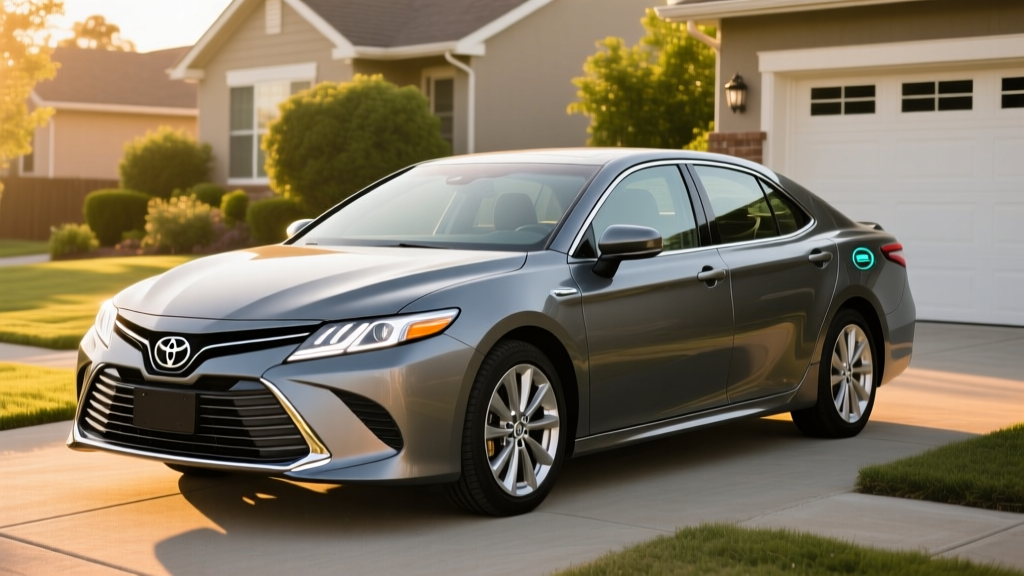
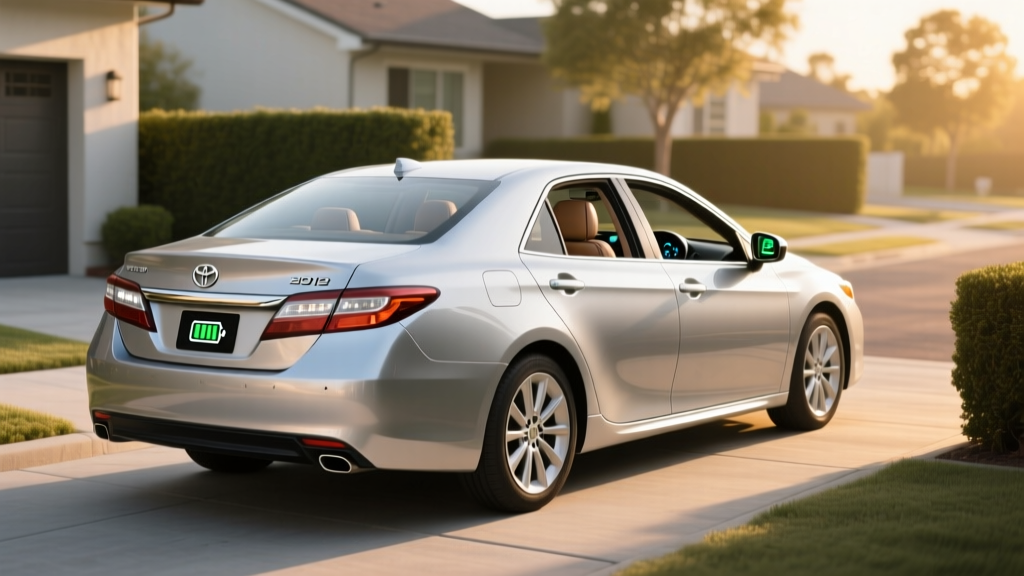
The 2012 Toyota Camry Hybrid sedan occupies a specific niche in 2026: it's a used-market value play for buyers who want proven hybrid efficiency without the upfront cost of a new electrified vehicle. With an EPA-rated 40 MPG combined and Toyota's Hybrid Synergy Drive powertrain now backed by over a decade of real-world durability data, this generation Camry Hybrid remains one of the most sensible used sedans available — provided you understand what you're getting and what to inspect before purchase.
This was the first model year of the XV50 generation, which brought a more powerful 2.5-liter four-cylinder engine and a redesigned hybrid transaxle. Toyota also offered the LE and XLE trims, giving buyers a choice between value and premium features. In 2026, well-maintained examples typically sell for $7,000–$11,000 depending on mileage and condition, making it accessible to budget-conscious commuters.
HEV vs PHEV vs EV: Where the 2012 Camry Hybrid Fits
Before diving into specs, it's critical to understand what the 2012 Camry Hybrid is — and isn't. This is a conventional hybrid electric vehicle (HEV), meaning it cannot be plugged in. The battery charges exclusively through regenerative braking and the gasoline engine. There is no electric-only driving mode beyond very low-speed, short-distance creep (roughly 1 mile at under 25 mph under ideal conditions).
Hybrid Types at a Glance
| Feature | HEV (2012 Camry Hybrid) | PHEV (e.g., RAV4 Prime) | BEV (e.g., Tesla Model 3) |
|---|---|---|---|
| Plug-in charging | No | Yes | Yes |
| Electric-only range | ~1 mi at low speed | 25–42 mi typical | 250–360 mi typical |
| Gasoline engine | Yes (primary) | Yes (backup) | No |
| Federal tax credit (new) | None | Up to $7,500 (§30D) | Up to $7,500 (§30D) |
| Used EV credit (§25E) | Not eligible | Up to $4,000 | Up to $4,000 |
| Home charger needed | No | Recommended | Required |
Who should choose the 2012 Camry Hybrid? Drivers who want lower fuel costs without changing their refueling habits. You'll never need to find a charging station, install a home charger, or plan road trips around DC fast chargers. If your daily commute is under 30 miles and you want the lowest total cost of ownership on a tight budget, this HEV is a strong candidate.
Who should look elsewhere? If you have home charging access and want to drive mostly on electricity, a newer PHEV or BEV will deliver dramatically lower per-mile energy costs and may qualify for the §25E used clean vehicle credit (up to $4,000, or 30% of the sale price, whichever is less, for eligible used EVs and PHEVs under $25,000). The 2012 Camry Hybrid does not qualify for this credit because it is a conventional HEV, not a plug-in vehicle.
Fuel Economy: EPA Ratings and Real-World MPG
The 2012 Camry Hybrid's headline number is its efficiency. Here's the official EPA breakdown, verified via fueleconomy.gov:
| Metric | 2012 Camry Hybrid LE | 2012 Camry Hybrid XLE |
|---|---|---|
| City MPG | 43 | 40 |
| Highway MPG | 39 | 38 |
| Combined MPG | 41 | 39 |
| Fuel tank capacity | 17.0 gal | 17.0 gal |
| Total range (est.) | ~697 mi | ~663 mi |
Note the LE trim's slight advantage: it rides on lighter 16-inch steel wheels with low-rolling-resistance tires, while the XLE adds 17-inch alloys and extra sound insulation that increases weight and aerodynamic drag.
Real-World MPG: What Owners Actually Report
Toyota hybrids tend to perform close to — and sometimes above — their EPA city ratings in stop-and-go driving because regenerative braking recaptures energy that a gas car wastes as heat. On Fuelly, owner-reported averages for the 2012 Camry Hybrid cluster around 38–42 MPG combined, with many city-heavy drivers reporting 43–45 MPG.
However, real-world highway driving at sustained 70–80 mph speeds typically yields 34–37 MPG. Hybrids lose their city advantage on the highway because the electric motor assists less at steady high speeds, and the Atkinson-cycle engine operates less efficiently under sustained high load. Cold weather (below 35°F) can drop observed MPG by 3–5 MPG due to increased engine idling for cabin heat and reduced battery efficiency.
Hybrid Battery Warranty — Original vs. Remaining in 2026
When new, Toyota covered the 2012 Camry Hybrid's battery pack under its Hybrid System Warranty: 8 years / 100,000 miles (extended to 10 years / 150,000 miles in California and states that follow CARB emissions rules). As of 2026, all original factory coverage has expired for every 2012 model — even in CARB states, the 10-year/150,000-mile window closed by December 2022 at the latest.
Any remaining battery coverage would come from an aftermarket extended warranty or a certified-pre-owned (CPO) program if the car was sold through a Toyota dealer within the original window. Always verify documentation.
Powertrain: Engine, Motor, and Combined Output
The 2012 Camry Hybrid uses Toyota's second-generation Hybrid Synergy Drive, pairing a gasoline engine with two motor-generators through a planetary-gear eCVT transaxle. There are no fixed gears — the system continuously blends engine and motor power.
| Specification | Detail |
|---|---|
| Engine | 2.5L Atkinson-cycle 4-cylinder (2AR-FXE) |
| Engine power | 156 hp @ 5,700 rpm / 156 lb-ft @ 4,500 rpm |
| Electric motor (MG2) | 105 kW (141 hp) |
| Net combined system output | 200 hp |
| Transmission | eCVT (planetary gearset, no fixed ratios) |
| Hybrid battery | 1.6 kWh nickel-metal hydride (NiMH), 244.8V nominal |
| 0–60 mph | ~7.6 seconds |
| Drivetrain | Front-wheel drive |
| Curb weight | ~3,435–3,495 lb (LE/XLE) |
A few technical notes for the spec-curious: The 1.6 kWh NiMH battery is small by modern standards — today's PHEVs carry 13–20 kWh, and BEVs carry 60–100 kWh. But this pack isn't designed for electric-only range. It functions as an energy buffer, capturing regenerative braking energy and releasing it for acceleration assist. Toyota deliberately limits the state-of-charge window (roughly 40–80%) to minimize degradation, which is why these packs routinely last 150,000+ miles.
The Atkinson cycle delays intake valve closing, effectively reducing the compression stroke while maintaining a full expansion stroke. This sacrifices low-end torque (hence the electric motor's assist) but improves thermal efficiency — the core reason this powertrain achieves 40+ MPG.
Hybrid Battery Lifespan and Replacement Cost
This is the single most common question from used hybrid buyers, and the honest answer requires separating internet myths from data.
How Long Do These Batteries Actually Last?
Toyota's NiMH hybrid batteries have an exceptional longevity track record. Based on fleet data, owner surveys, and taxi/commercial use studies:
- Typical lifespan: 150,000–200,000 miles before significant capacity loss
- Failure rate before 100,000 miles: Under 1–2%
- Age-related degradation: NiMH cells degrade with calendar age regardless of mileage. A 2012 model in 2026 is 14 years old — even low-mileage examples may show reduced capacity
- Common failure mode: Individual cell imbalance rather than total pack failure. One or two weak cells drag down the entire series
Replacement Costs in 2026
| Option | Cost Range | Warranty | Notes |
|---|---|---|---|
| New OEM Toyota pack | $2,500–$3,500 (parts only) | 3 yr / 36,000 mi | Dealer-installed total: $3,500–$5,000 |
| Remanufactured pack | $1,200–$2,000 | 1–3 yr varies | Reconditioned cells; quality varies by vendor |
| Used/salvage pack | $500–$1,000 | 30–90 days typical | High risk — unknown remaining life |
| Individual cell replacement | $300–$800 | Varies | Requires hybrid-savvy shop; balances the pack |
Before purchasing a 2012 Camry Hybrid, request a hybrid battery health check. Many Toyota dealers can pull a "Hybrid Battery Report" showing individual block voltages and internal resistance. A healthy pack shows block voltages within 0.2V of each other at rest. Wider variance signals cell imbalance and a likely near-term replacement need. Independent hybrid specialists (not general mechanics) can perform the same diagnostic.
Pricing, Tax Credits, and Total Cost of Ownership
Used Market Pricing (2026)
Based on current used-car market data:
- 80,000–100,000 miles: $9,000–$11,000
- 100,000–140,000 miles: $7,500–$9,500
- 140,000–180,000 miles: $5,500–$7,500
- 180,000+ miles: $4,000–$6,000 (battery condition is critical at this mileage)
Tax Credit Eligibility
The 2012 Camry Hybrid does not qualify for any current federal clean vehicle tax credit. Specifically:
- §30D New Clean Vehicle Credit: Only applies to new plug-in vehicles (PHEVs and BEVs) with qualifying battery sourcing. The Camry Hybrid is an HEV — ineligible.
- §25E Used Clean Vehicle Credit: Applies to used PHEVs and BEVs sold for $25,000 or less through a licensed dealer. Again, HEVs are excluded by statute.
- State incentives: A handful of states offer rebates for used hybrids, but these are rare and change frequently. Check your state's energy office or DMV for current programs.
For the latest rules, consult the IRS clean vehicle credits page.
Five-Year Ownership Cost Estimate
Assuming 15,000 miles/year, $3.50/gallon regular unleaded, and a $9,000 purchase price:
| Cost Category | Annual | 5-Year Total |
|---|---|---|
| Fuel (40 MPG avg, 15k mi/yr) | $1,313 | $6,563 |
| Insurance (national avg, used sedan) | $1,100 | $5,500 |
| Maintenance (oil, tires, brakes) | $600 | $3,000 |
| Purchase price | — | $9,000 |
| Total 5-year cost | ~$24,063 |
Compare this to a similarly priced used gas-only midsize sedan averaging 26 MPG combined: fuel cost alone would be ~$2,019/year, adding $3,530 more in fuel over five years. The hybrid's efficiency advantage is real and measurable.
Pros and Cons for 2026 Used Buyers
Pros
- Proven 40+ MPG combined in real-world driving
- No plug-in infrastructure needed — fuel like any gas car
- Toyota reliability; 200,000+ mile lifespans are common
- Smooth, quiet eCVT with no gear-shift shock
- Spacious cabin (103 cu ft passenger volume) and 14.1 cu ft trunk
- Low annual fuel cost (~$1,300 at 15k mi/yr)
- Strong used-parts availability and hybrid-specialist shop network
Cons
- 14-year-old hybrid battery is near or past its statistical lifespan
- No federal tax credit eligibility (HEV, not PHEV/BEV)
- Dated infotainment — no Apple CarPlay, Android Auto, or USB-C
- Modest 200 hp; adequate but not quick by 2026 standards
- Highway MPG drops to mid-30s at 75+ mph
- NiMH battery is heavier and less energy-dense than modern lithium packs
- Original safety tech is basic — no automatic emergency braking or lane-keep assist
Hybrid vs PHEV vs EV: Which Powertrain Fits You?
Decision Framework
Choose the 2012 Camry Hybrid (HEV) if:
- You cannot charge at home or work (apartment, street parking)
- Your budget is under $12,000 and you need reliable daily transportation
- You drive a mix of city and highway and want consistent efficiency without behavior changes
- You want the lowest-risk, simplest ownership experience — no new charging habits to learn
Choose a used PHEV (e.g., 2017+ Prius Prime, 2018+ Clarity PHEV) if:
- You can install a Level 2 charger at home
- Your daily commute is under 25 miles (covers most PHEV electric-only ranges)
- You want electric commuting with gas-engine backup for road trips
- The used vehicle qualifies for the §25E credit (up to $4,000 off)
Choose a used BEV (e.g., 2019+ Chevrolet Bolt, 2018+ Nissan LEAF) if:
- You have reliable home or workplace Level 2 charging
- Your daily driving is under 150 miles and you rarely take 300+ mile road trips
- You want the lowest per-mile energy cost (electricity at $0.13/kWh ≈ $0.04/mi vs. gas at ~$0.09/mi)
- You qualify for the §25E used EV credit
Frequently Asked Questions
How many MPG does the 2012 Toyota Camry Hybrid get?
The EPA rates the 2012 Camry Hybrid LE at 43 city / 39 highway / 41 combined MPG. The XLE trim is rated at 40/38/39 MPG. In real-world driving, city-heavy commuters often report 42–45 MPG, while sustained highway driving at 70–80 mph yields 34–37 MPG. Cold weather reduces observed economy by 3–5 MPG.
Can I plug in the 2012 Camry Hybrid to charge it?
No. The 2012 Camry Hybrid is a conventional HEV with no plug-in capability. The 1.6 kWh NiMH battery charges exclusively through regenerative braking and the gasoline engine. Toyota did not offer a plug-in Camry until the 2026 model year (Camry PHEV, announced for select markets). If you want a plug-in Toyota sedan, look at used Prius Prime models (2017+).
Is the 2012 Camry Hybrid reliable, and what does battery replacement cost?
Yes — the 2012 Camry Hybrid has an above-average reliability record. The 2AR-FXE engine and eCVT transaxle are among Toyota's most durable powertrains. The main risk in 2026 is the 14-year-old NiMH hybrid battery. A new OEM replacement costs $3,500–$5,000 installed; remanufactured packs run $1,200–$2,000. Many hybrid specialists can replace individual cells for $300–$800 if only a few blocks have degraded.
Does the 2012 Camry Hybrid qualify for any tax credit?
No. Federal clean vehicle tax credits (§30D for new, §25E for used) apply only to plug-in vehicles — PHEVs and BEVs with sufficient battery capacity. Conventional hybrids like the Camry Hybrid are excluded by statute. Some states or municipalities may offer minor incentives for fuel-efficient vehicles, but these vary by jurisdiction. Check your state energy office for current programs.
How does the 2012 Camry Hybrid compare to a 2012 Prius?
The 2012 Prius (third generation) is rated at 50 MPG combined vs. the Camry Hybrid's 41 MPG. However, the Camry offers significantly more interior space (103 vs. 94 cu ft passenger volume), a larger trunk (14.1 vs. 21.6 cu ft — the Prius hatchback actually wins cargo), a smoother ride, and a more powerful 200 hp powertrain vs. the Prius's 134 hp. If pure efficiency is paramount, the Prius wins. If comfort and highway cruising matter more, the Camry Hybrid is the better car.
What should I check before buying a used 2012 Camry Hybrid?
Prioritize these inspections: (1) Hybrid battery health report — ask a Toyota dealer or hybrid specialist to pull block voltage data. (2) Brake actuator — Toyota issued a recall for certain 2012–2014 Camry Hybrids related to the brake booster; verify recall completion via NHTSA's VIN lookup. (3) Transmission fluid — the eCVT uses Toyota ATF WS fluid; check service records. (4) General 14-year-old car items: suspension bushings, water pump, A/C compressor, and timing chain tensioner. (5) Rust inspection on the undercarriage if the car was driven in snow-belt states.