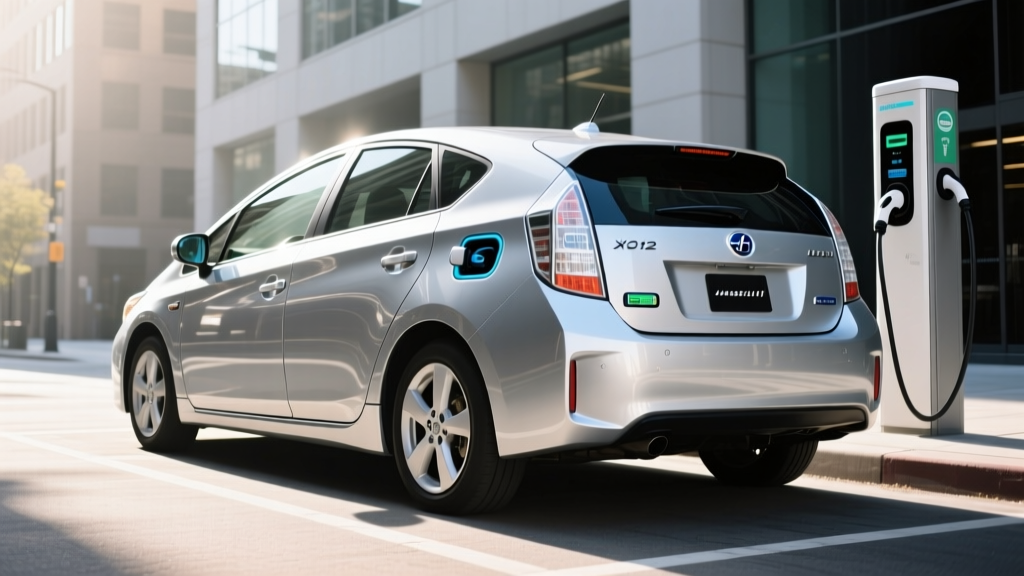
The 2012 Toyota Prius Plug-In Hybrid was Toyota's first production plug-in, bridging the gap between the conventional Prius HEV and a full battery-electric vehicle. Over a decade later, it remains one of the most affordable entries into plug-in hybrid ownership on the used market — typically selling for $7,000–$12,000 depending on mileage and battery condition. But with a modest 11-mile electric-only range by today's standards, does this early PHEV still make sense in 2026?
This buyer's guide covers everything a used-car shopper needs to know: real-world MPG, battery degradation risks, charging logistics, and whether this aging PHEV still holds up against modern hybrids and EVs.
2012 Prius Plug-In Hybrid: Core Specifications
| Specification | 2012 Prius Plug-In Hybrid |
|---|---|
| Powertrain | 1.8L 4-cyl Atkinson-cycle + electric motor (PHEV) |
| Combined Horsepower | 134 hp (net system output) |
| Battery (Usable) | 4.4 kWh lithium-ion |
| EPA Electric-Only Range | 11 miles |
| EPA EV Mode MPGe | 95 MPGe |
| EPA MPG (Charge-Sustaining) | 50 city / 49 highway / 50 combined |
| Total Combined Range | ~540 miles (EV + gas) |
| Level 1 Charging (120V) | ~3 hours (full charge) |
| Level 2 Charging (240V) | ~1.5 hours (full charge) |
| DC Fast Charging | Not supported |
| Connector | J1772 (Level 1 & Level 2) |
| 0–60 mph | ~9.1 seconds |
| Cargo Volume | 21.6 cu ft (rear seats up) |
| Original MSRP | $32,000–$39,500 (before incentives) |
| Used Price (2026 est.) | $7,000–$12,000 |
HEV vs. PHEV: What the 2012 Prius Plug-In Actually Is
It's critical to understand that the 2012 Prius Plug-In Hybrid is a plug-in hybrid (PHEV), not a conventional hybrid (HEV). The standard 2012 Prius (non-plug-in) is an HEV — it charges its small battery solely through regenerative braking and the gasoline engine. You never plug it in.
| Feature | 2012 Prius (HEV) | 2012 Prius Plug-In (PHEV) |
|---|---|---|
| Plugs in to charge? | No | Yes (J1772) |
| Battery size | ~1.3 kWh (NiMH) | 4.4 kWh (Li-ion) |
| Electric-only driving | ~1 mile at low speed | 11 miles EPA |
| EPA Combined MPG | 50 MPG | 50 MPG (after battery depleted) |
| EV-mode MPGe | N/A | 95 MPGe |
| Charge time (Level 2) | N/A | ~1.5 hours |
The Plug-In's larger 4.4 kWh lithium-ion battery pack (compared to the standard Prius's 1.3 kWh nickel-metal hydride) enables genuine electric-only commuting for short distances. Once the battery depletes, the car operates identically to a conventional Prius hybrid — seamlessly blending gas and electric power without any driver intervention.
Electric-Only Range: 11 Miles EPA, but What's Real?
The EPA rated the 2012 Prius Plug-In at 11 miles of electric-only range. In practice, most owners report between 9 and 13 miles depending on conditions:
- Best case (mild weather, flat city streets, 35–45 mph): 12–14 miles before the engine kicks in
- Typical mixed driving: 10–11 miles
- Highway speeds (65+ mph): 7–9 miles — the engine engages sooner under heavy load
- Cold weather (below 35°F): 7–9 miles — cabin heating demands energy, and battery chemistry is less efficient at low temperatures
Eleven miles sounds modest in 2026, when PHEVs like the Toyota RAV4 Prime deliver 42 miles of EV range. But for a short commute — say, 6 miles each way to a train station or office — the 2012 Plug-In can cover the entire trip on electricity if you charge at both ends. Over a work year, that eliminates a meaningful amount of gasoline consumption.
Important caveat for used buyers: Battery degradation will reduce this range. A 2012 model with its original battery pack may now deliver only 7–9 miles of EV range due to 12+ years of charge cycling and calendar aging. A battery health check (available at any Toyota dealer via the hybrid system diagnostic) is essential before purchase.
Fuel Economy: EPA Ratings and Real-World MPG
| Driving Mode | City | Highway | Combined |
|---|---|---|---|
| EV Mode (electric only) | 95 MPGe combined | ||
| Charge-Sustaining (hybrid mode) | 50 MPG | 49 MPG | 50 MPG |
Once the battery is depleted, the 2012 Prius Plug-In operates as a conventional hybrid and returns the same 50 MPG combined as the standard Prius. According to fueleconomy.gov, this was among the highest fuel-economy ratings of any vehicle sold in 2012.
Real-world MPG observations:
- City drivers frequently report 52–56 MPG in warm weather — hybrids always outperform their EPA city rating because regenerative braking recaptures energy in stop-and-go traffic.
- Highway-heavy drivers typically see 44–48 MPG at 70–75 mph, as aerodynamic drag and sustained engine load reduce efficiency.
- Cold weather (below freezing) can drop observed MPG to 40–44 MPG as the engine runs more frequently for cabin heat and the battery operates less efficiently.
If you plug in nightly and your daily driving stays under 15 miles, you may go weeks without visiting a gas station. Owners who never plug in, however, are simply driving a slightly heavier conventional Prius — still getting 50 MPG, but wasting the PHEV's electric advantage.
Charging the 2012 Prius Plug-In: What You Need to Know
The 2012 Prius Plug-In uses a standard J1772 connector and accepts both Level 1 (120V household outlet) and Level 2 (240V) AC charging. It does not support DC fast charging — a limitation of its era, as DC fast-charge capability was rare on PHEVs until later models like the Mitsubishi Outlander PHEV.
| Charging Level | Power | Time (0–100%) | Setup |
|---|---|---|---|
| Level 1 (120V) | ~1.4 kW | ~3 hours | Standard household outlet; included cordset |
| Level 2 (240V) | ~3.3 kW (onboard charger limit) | ~1.5 hours | Requires 240V outlet or hardwired station |
With only 4.4 kWh of battery capacity, the charging times are short even on Level 1. Most owners find that plugging into a standard 120V outlet overnight is entirely sufficient — the battery will fully recharge in about 3 hours, well before morning. A Level 2 station is convenient but not strictly necessary for this vehicle, which saves used buyers the $500–$2,000 cost of a dedicated home charging installation.
The vehicle's onboard charger is limited to 3.3 kW, so even if you connect to a 7.2 kW or 11.5 kW Level 2 station, the car will only draw 3.3 kW. This is perfectly adequate for a 4.4 kWh pack but means you won't benefit from faster Level 2 hardware.
Powertrain and Driving Experience
The 2012 Prius Plug-In pairs a 1.8-liter Atkinson-cycle 4-cylinder engine (98 hp on its own) with an electric motor integrated into the transaxle, producing a combined 134 net horsepower. This is the same Hybrid Synergy Drive system used in the third-generation Prius (2010–2015), one of Toyota's most proven and thoroughly debugged hybrid architectures.
Performance is adequate rather than exciting: 0–60 mph takes approximately 9.1 seconds. In EV mode, acceleration from a stop is surprisingly responsive thanks to instant electric torque, but the engine engages under hard acceleration or above roughly 52 mph. The transition between electric and gas power is smooth — Toyota's hybrid system was already highly refined by 2012.
The Plug-In variant carries approximately 130 lbs more weight than the standard Prius due to the larger battery pack, but the difference is barely perceptible in everyday driving. Handling, ride quality, and noise levels are essentially identical to the conventional Prius.
Battery Health, Warranty, and Replacement Costs
Original Battery Warranty
Toyota warranted the 2012 Prius Plug-In's hybrid battery for 8 years / 100,000 miles (10 years / 150,000 miles in California and states adopting CARB emissions standards). As of 2026, all original warranty coverage has expired unless the vehicle has exceptionally low mileage and is registered in a CARB state — and even then, the 10-year clock ran out in 2022.
Battery degradation reality: The 4.4 kWh lithium-ion pack in the 2012 Plug-In has generally held up better than early Nissan Leaf batteries (which suffered from passive air cooling and rapid capacity loss). Toyota's thermal management and conservative charge/discharge buffers have preserved most packs reasonably well. That said, after 12+ years, expect 15–30% capacity loss, translating to 7–9 miles of real-world EV range instead of the original 11.
Battery replacement cost: If the hybrid battery fails or degrades to an unacceptable level, owners face several options:
- New OEM battery from Toyota: $2,500–$3,500 (parts + dealer labor)
- Refurbished/remanufactured battery: $1,200–$2,000 from third-party hybrid specialists
- Individual cell/module replacement: $500–$1,000 at independent hybrid repair shops (replacing only the weak modules rather than the full pack)
Many 2012 Prius Plug-In owners report their original batteries still functioning at 120,000+ miles, though with reduced EV range. A pre-purchase hybrid battery health check (measuring individual module voltages and internal resistance) is the single most important step when evaluating a used example. Toyota dealers can run this diagnostic, as can independent hybrid specialists.
The conventional 12V auxiliary battery (a separate, smaller battery that powers electronics) typically requires replacement every 4–6 years and costs $200–$350 — standard maintenance for any vehicle.
Reliability and Common Issues
The third-generation Prius platform (2010–2015) is widely regarded as one of Toyota's most reliable, and the Plug-In variant benefits from the same proven drivetrain. NHTSA records show relatively few complaints for this model year.
Known issues to inspect:
- Head gasket failure (EGR-related): The 1.8L 2ZR-FXE engine in third-gen Priuses can develop head gasket issues, often linked to clogged EGR (Exhaust Gas Recirculation) passages. Symptoms include coolant loss, overheating, and misfires. Typically occurs between 100,000–150,000 miles. Repair cost: $1,500–$2,500. Preventative EGR cleaning every 50,000 miles is strongly recommended.
- Brake actuator recall: Some 2012 Prius models were subject to brake system recalls. Verify recall status via the VIN at nhtsa.gov/recalls.
- Inverter coolant pump: Can fail around 80,000–120,000 miles. Replacement: $400–$700.
- Oil consumption: Some 1.8L engines consume oil at higher rates. Check oil level regularly and review maintenance records.
Beyond these items, the Prius Plug-In's hybrid transaxle, regenerative braking system, and power electronics have proven exceptionally durable. Many examples exceed 200,000 miles with basic maintenance.
Tax Credits and Incentives (Used PHEV in 2026)
When new, the 2012 Prius Plug-In qualified for a $2,500 federal tax credit (based on its 4.4 kWh battery — the §30D credit formula awarded $2,500 for batteries between 4 and 5 kWh). That credit is long expired for new purchases.
For used buyers in 2026: Under the current IRS Used Clean Vehicle Credit (§25E), you may qualify for a credit equal to 30% of the sale price, up to $4,000, if all of the following apply:
- The vehicle is purchased from a licensed dealer (private-party sales do not qualify)
- The sale price is $25,000 or less (easily met — used 2012 Plug-Ins sell for $7,000–$12,000)
- The vehicle is at least 2 model years old (met — 2012 qualifies)
- Your modified adjusted gross income does not exceed $75,000 (single), $112,500 (head of household), or $150,000 (joint)
- You have not claimed another used clean vehicle credit in the prior 3 years
- The vehicle has a battery capacity of at least 7 kWh — the 2012 Prius Plug-In's 4.4 kWh battery does NOT meet this threshold
Critical limitation: The §25E used-vehicle credit requires a minimum battery capacity of 7 kWh. The 2012 Prius Plug-In's 4.4 kWh pack falls below this threshold, meaning it does not qualify for the federal used-EV tax credit. This is an important distinction that eliminates a potential $2,100–$3,600 credit for buyers who might otherwise expect it.
Some states offer their own incentives for used hybrid or PHEV purchases, but these vary widely. Check your state's energy office or DMV for current programs.
Who Should Buy the 2012 Prius Plug-In Hybrid?
Pros
- Extremely low fuel costs: 50 MPG combined, 95 MPGe in EV mode
- Proven Toyota hybrid reliability; parts widely available
- Very affordable used entry into PHEV ownership ($7,000–$12,000)
- Can charge on a standard 120V outlet — no expensive home install required
- Strong cargo space (21.6 cu ft) and practical hatchback design
- Low maintenance costs (no timing belt, regenerative braking extends pad life)
Cons
- Only 11 miles EPA EV range (likely 7–9 miles on a used example)
- No DC fast charging capability
- Modest 134 hp — slow by modern standards
- Original battery warranty expired; replacement costs $1,200–$3,500
- Does not qualify for the federal used clean vehicle credit (battery under 7 kWh)
- Dated infotainment; no Apple CarPlay or Android Auto
- EGR-related head gasket risk at higher mileage
PHEV vs. EV vs. Conventional Hybrid: Which Fits You?
Choosing between a used 2012 Prius Plug-In, a full EV, or a conventional hybrid depends on your driving patterns, charging access, and budget:
Choose the 2012 Prius Plug-In (PHEV) if: You have a short commute (under 12 miles one-way), access to a 120V outlet at home or work, want to reduce gasoline consumption without range anxiety, and are working within a tight budget ($7,000–$12,000). It's ideal as a second car or for someone who drives mostly locally but occasionally takes longer road trips.
Choose a full EV (BEV) if: You have reliable home Level 2 charging, your daily driving is under 200 miles, you want zero tailpipe emissions and minimal maintenance, and your budget allows $20,000+ for a used EV (e.g., a 2018–2020 Chevrolet Bolt or Nissan Leaf). EVs qualify for the used-vehicle tax credit (up to $4,000) since their batteries exceed 7 kWh.
Choose a conventional hybrid (HEV) if: You cannot plug in at home or work, you want maximum simplicity with no charging logistics, and you prioritize low cost and proven reliability. A used 2012–2015 standard Prius HEV delivers the same 50 MPG without the plug-in complexity — and avoids the battery degradation concern of a PHEV you can't charge.
Frequently Asked Questions
How many MPG does the 2012 Prius Plug-In Hybrid get?
The EPA rates it at 50 MPG combined (50 city / 49 highway) when operating in hybrid mode after the battery is depleted. In EV mode, it achieves 95 MPGe. Real-world city driving often yields 52–56 MPG thanks to regenerative braking, while highway-heavy trips at 70+ mph typically return 44–48 MPG.
How far can the 2012 Prius Plug-In go on electric only?
The EPA rated it at 11 miles of electric-only range when new. On a used 2012 example in 2026, expect approximately 7–9 miles due to battery degradation over 12+ years. Cold weather and highway speeds further reduce this to as low as 6–7 miles.
Is the 2012 Prius Plug-In reliable, and what does a battery replacement cost?
Yes — the third-generation Prius platform is among Toyota's most reliable. The main concerns are EGR-related head gasket issues above 100,000 miles and hybrid battery degradation. A new OEM replacement battery costs $2,500–$3,500; refurbished options run $1,200–$2,000. Many original batteries are still functioning at 120,000+ miles, though with reduced EV range.
Does the 2012 Prius Plug-In qualify for any tax credit in 2026?
No. While it originally qualified for a $2,500 federal credit when new, the current §25E used clean vehicle credit requires a minimum 7 kWh battery. The 2012 Plug-In's 4.4 kWh pack does not meet this threshold. State incentives vary — check your local programs.
Do I need to install a Level 2 charger at home?
No. The 2012 Prius Plug-In's 4.4 kWh battery charges fully in about 3 hours on a standard 120V household outlet using the included cordset. A Level 2 (240V) station reduces this to ~1.5 hours but is not necessary for daily use given the small battery size.
What's the difference between the 2012 Prius and the 2012 Prius Plug-In?
The standard 2012 Prius is a conventional hybrid (HEV) — it never plugs in and has a 1.3 kWh NiMH battery. The Prius Plug-In (PHEV) has a larger 4.4 kWh lithium-ion battery, a J1772 charging port, and 11 miles of electric-only range. Once the battery depletes, both cars operate identically as hybrids returning 50 MPG combined.
How long will the hybrid battery last?
Toyota's lithium-ion PHEV batteries have proven durable, with many lasting 150,000+ miles and 15+ years before requiring replacement. However, capacity loss of 15–30% is normal over that period, reducing EV range. Regular use (frequent charge/discharge cycles) actually helps maintain battery health more than letting the car sit unused for extended periods.
Sources: EPA fueleconomy.gov, IRS §25E Used Clean Vehicle Credit, NHTSA 2012 Toyota Prius Plug-In.