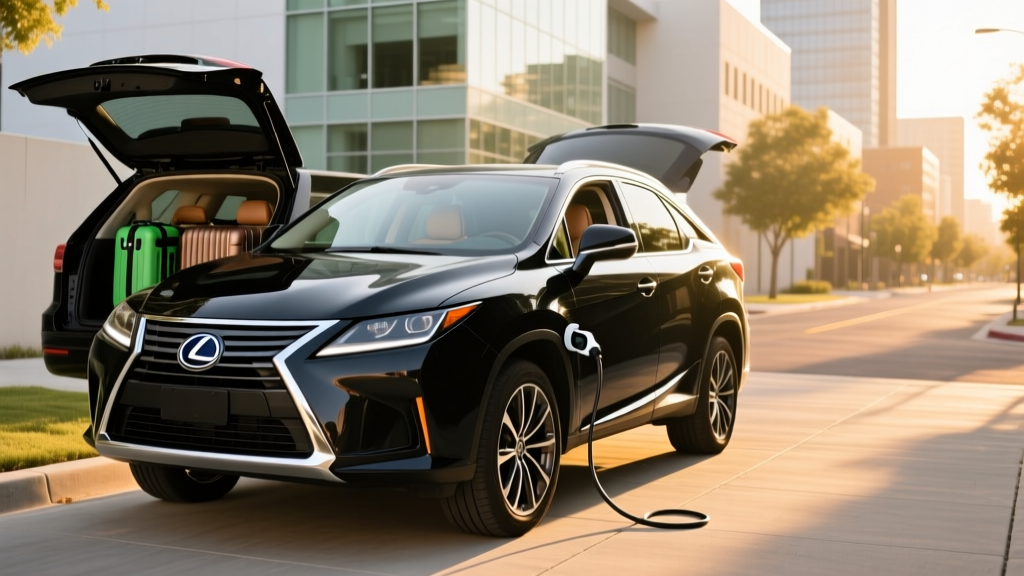
If you're searching for a 2012 Lexus hybrid SUV, you're almost certainly looking at the Lexus RX 450h — the only hybrid SUV Lexus offered that model year. Over a decade after it left the showroom floor, this second-generation RX hybrid remains one of the most popular used luxury hybrids on the market, and for good reason: Toyota/Lexus hybrid synergy drive technology from this era has proven remarkably durable.
This guide covers everything a 2026 used-car buyer needs to know: real-world fuel economy, powertrain specs, battery longevity, replacement costs, and how the RX 450h stacks up against modern alternatives — including whether it still makes financial sense versus a newer PHEV or full EV.
2012 Lexus RX 450h: Hybrid SUV Specifications at a Glance
| Specification | Value |
|---|---|
| Powertrain Type | Conventional Hybrid (HEV) — no plug-in |
| Engine | 3.5L V6 Atkinson-cycle + 2 electric motors (AWD) / 1 motor (FWD) |
| Combined Horsepower | 295 hp (net system output) |
| EPA City MPG | 32 mpg (AWD) / 32 mpg (FWD) |
| EPA Highway MPG | 28 mpg (AWD) / 28 mpg (FWD) |
| EPA Combined MPG | 30 mpg |
| Hybrid Battery | Nickel-Metal Hydride (NiMH), ~3.6 kWh (not plug-in) |
| Drivetrain | FWD or AWD (rear electric motor on AWD) |
| 0–60 mph | ~7.4 seconds (AWD) |
| Cargo Volume | 40.0 cu ft (rear seats up) / 80.3 cu ft (folded) |
| Towing Capacity | 3,500 lbs |
| Original MSRP (2012) | ~$45,610 (base, before destination) |
| 2026 Used Price Range | ~$9,000–$15,500 depending on mileage/condition |
Fuel Economy: EPA Ratings vs. Real-World MPG
The EPA rated the 2012 RX 450h at 30 mpg combined (32 city / 28 highway) for both FWD and AWD configurations. That city-biased rating is a hallmark of conventional hybrid architecture: the electric motor handles low-speed driving where gas engines are least efficient, while the gasoline V6 takes over at highway speeds.
| Driving Cycle | FWD | AWD |
|---|---|---|
| City | 32 mpg | 32 mpg |
| Highway | 28 mpg | 28 mpg |
| Combined | 30 mpg | 30 mpg |
Real-world expectations in 2026: Owners consistently report that the RX 450h meets or slightly exceeds its EPA city rating in stop-and-go traffic — 31–34 mpg is common for urban-heavy commutes. Highway-only trips at 75+ mph typically drop to 25–27 mpg, as the NiMH battery and electric motors contribute less at sustained high speeds. Cold-weather driving (below 30°F) can reduce fuel economy by 10–15% due to extended engine warm-up cycles and increased accessory loads. Source: fueleconomy.gov — 2012 Lexus RX 450h.
How the Hybrid Powertrain Works: HEV vs. PHEV Explained
Important distinction: The 2012 Lexus RX 450h is a conventional hybrid (HEV), not a plug-in hybrid (PHEV). It cannot be plugged in, has no electric-only driving range, and does not qualify for federal EV tax credits. Here's how the two types differ:
| Feature | 2012 RX 450h (HEV) | Modern PHEV (e.g., 2026 RAV4 Prime) |
|---|---|---|
| Plugs in to charge? | No — charges via regenerative braking & engine | Yes — Level 1/Level 2 |
| Electric-only range | None (EV mode limited to ~1 mile at very low speed) | 25–42 miles typical |
| Battery size | ~3.6 kWh NiMH | ~18–20 kWh lithium-ion |
| Federal tax credit | No (expired for this model year) | Up to $7,500 (§30D, subject to eligibility) |
| Operates without plugging in? | Yes — always runs as a hybrid | Yes — reverts to hybrid mode after battery depletes |
The RX 450h's Hybrid Synergy Drive pairs a 3.5-liter Atkinson-cycle V6 (producing roughly 245 hp on its own) with a front-mounted electric motor and, on AWD models, an independent rear electric motor. The system's combined net output is 295 hp. A planetary-gear eCVT (electronically controlled continuously variable transmission) seamlessly blends power sources — there are no fixed gear shifts.
The NiMH battery pack (~3.6 kWh) is small by modern standards, but it doesn't need to be large: its job is to buffer energy captured from regenerative braking and assist during acceleration, not to drive the vehicle independently for meaningful distances.
Hybrid Battery Reliability, Lifespan, and Replacement Cost
The NiMH battery in the RX 450h is one of the most proven hybrid battery packs Toyota/Lexus has ever built. Data from owner communities, repair shops, and fleet operators shows that these packs routinely last 150,000–200,000+ miles before significant capacity degradation forces replacement. Many 2010–2015 RX 450h examples are still running on their original battery packs at 14+ years old.
Signs of hybrid battery degradation:
- Noticeable fuel economy drop (e.g., falling from 30 to 22–25 mpg)
- More frequent engine cycling on and off
- Dashboard hybrid system warning light
- Reduced regenerative braking feel
Replacement cost in 2026:
- Dealer OEM replacement: $3,500–$5,000 (new Toyota/Lexus pack with installation)
- Aftermarket/refurbished pack: $1,500–$2,800 (reconditioned NiMH modules from reputable suppliers)
- Individual cell/module replacement: $500–$1,200 (replacing only failed modules, done by specialized hybrid repair shops)
For a used 2012 RX 450h purchase in 2026, the smart move is to have the hybrid battery's state of health (SoH) checked with a Techstream or equivalent OBD-II scanner that reads individual module voltages. A healthy pack should show module voltages within 0.2V of each other at rest. Any shop experienced with Toyota/Lexus hybrids can perform this check for $50–$100.
Is the 2012 RX 450h Reliable? Long-Term Ownership Data
Beyond the hybrid battery, the 2012 RX 450h benefits from Lexus's reputation for build quality and the mechanical simplicity of the eCVT design. The planetary-gear transmission has no clutch packs, bands, or torque converter to wear out — it's essentially bulletproof when fluid is changed at recommended intervals.
Common non-hybrid issues reported at high mileage (120k+):
- Water pump failure (the electric water pump on the 2GR-FXE V6 is a known wear item around 100k–140k miles; $400–$700 replacement)
- Rack-and-pinion steering clunk (intermediate shaft; $300–$600)
- Brake actuator assembly wear (the hybrid-specific regenerative braking actuator can fail at 130k+ miles; $1,200–$1,800 at dealer)
- Dashboard cracking (cosmetic, common on 2010–2012 RX models in sun-exposed climates)
Overall, the RX 450h earns strong reliability marks. Consumer surveys and repair databases consistently rate it above average for its class. The key is proactive maintenance: coolant flushes (both engine and inverter coolant circuits), transmission fluid drain-and-fill every 60k miles, and brake actuator health monitoring.
Tax Credits and Incentives: What Applies in 2026?
The 2012 Lexus RX 450h does not qualify for the federal §30D clean vehicle tax credit. That credit applies only to new plug-in electric vehicles (BEVs and PHEVs) meeting current battery sourcing, MSRP caps, and buyer income requirements under IRS rules. Conventional hybrids (HEVs) have not qualified for federal purchase credits since the original Hybrid Tax Credit expired for Toyota/Lexus vehicles in 2007 due to the manufacturer sales cap.
What about used-EV credits? The §25E used clean vehicle credit (up to $4,000 or 30% of sale price, whichever is less) applies only to used BEVs and PHEVs — not conventional hybrids. The RX 450h is ineligible.
State-level considerations: A handful of states have offered hybrid-specific rebates or HOV lane access historically, but most of these programs have ended or shifted focus to plug-in vehicles. Check your state's current energy or DMV website for any residual incentives. For most buyers in 2026, the 2012 RX 450h's financial advantage comes purely from fuel savings and low purchase price — not from tax incentives.
2012 RX 450h vs. Modern Alternatives: HEV, PHEV, or EV?
If you're cross-shopping the 2012 RX 450h against modern options, here's a practical decision framework:
- Your budget is $10,000–$16,000 and you want a luxury-badged hybrid SUV
- You can't charge at home (no garage, apartment living, no outlet access)
- You drive mostly in the city where the hybrid system shines (32 mpg)
- You want proven, low-risk hybrid technology with widespread repair support
- You don't need modern ADAS features (the 2012 model lacks automatic emergency braking, lane-keeping assist)
- You can charge at home (Level 2) and your daily commute is under 35 miles
- You want electric-only driving for most trips plus gas flexibility for road trips
- You qualify for the §30D federal tax credit (income and MSRP requirements apply)
- You want current safety technology (AEB, lane centering, blind-spot monitoring)
- You have reliable home charging and your trips rarely exceed 250 miles
- You want the lowest per-mile energy cost (electricity vs. gasoline)
- You want minimal maintenance (no oil changes, no transmission fluid, no spark plugs)
- You can absorb a higher upfront purchase price offset by tax credits and fuel savings
Pros and Cons of the 2012 Lexus RX 450h in 2026
Pros
- Proven hybrid system with 200k+ mile battery lifespan common
- 30 mpg combined is still competitive for a midsize luxury SUV
- Smooth, quiet powertrain with 295 hp — adequate passing power
- Low used entry price ($9k–$15.5k) vs. new hybrid SUVs ($40k+)
- No plug-in infrastructure needed — just fill up with gas
- Lexus build quality: interior materials, ride comfort, cabin insulation
- 3,500-lb towing capacity is useful for small trailers/boats
Cons
- No electric-only range — always burns gasoline
- Dated infotainment (no Apple CarPlay/Android Auto without aftermarket head unit)
- No modern ADAS (no automatic emergency braking, no lane-keeping assist)
- Out-of-warranty hybrid battery is a $1,500–$5,000 potential expense
- Brake actuator replacement is costly at high mileage ($1,200–$1,800)
- No federal or state tax credits available
- Highway fuel economy (25–27 mpg real) trails modern turbo-4 and diesel SUVs
Buying Tips for a Used 2012 Lexus RX 450h
If you've decided the 2012 RX 450h fits your needs, here are the critical pre-purchase steps:
- Hybrid battery health scan: Pay a Toyota/Lexus-savvy shop $50–$100 to read individual battery module voltages and check for imbalance. This is the single most important check on any used hybrid.
- Verify maintenance history: Look for records of inverter coolant changes, transmission fluid service, and water pump replacement.
- Check for recalls: Verify on NHTSA.gov that all open recalls (including the brake actuator and fuel system recalls issued for this model year) have been completed.
- Inspect the brake actuator: Listen for unusual clicking or pumping sounds from the brake system at startup. A failing actuator triggers a dashboard warning and is expensive to replace.
- Test the AWD system: On AWD models, find a wet or gravel surface and confirm the rear wheels engage under acceleration from a stop.
- Budget for immediate maintenance: Set aside $800–$1,500 for fluids, filters, and potential water pump replacement at purchase — standard practice for any 12+ year-old vehicle.
Frequently Asked Questions
How many MPG does the 2012 Lexus RX 450h hybrid SUV get?
The EPA rates it at 32 city / 28 highway / 30 combined mpg. Real-world driving typically yields 28–33 mpg in mixed use, with city-heavy commutes sometimes exceeding the EPA city rating and highway-only driving at 75+ mph dropping to 25–27 mpg.
Does the 2012 RX 450h need to be plugged in to charge?
No. The RX 450h is a conventional hybrid (HEV), not a plug-in hybrid. Its small NiMH battery recharges entirely through regenerative braking and the gasoline engine. You never plug it in — you simply refuel at a gas station like any other vehicle.
How long does the hybrid battery last, and what does replacement cost?
The NiMH battery pack commonly lasts 150,000–200,000+ miles. Replacement costs range from $500–$1,200 for individual module repair, $1,500–$2,800 for a refurbished pack, or $3,500–$5,000 for a new OEM dealer replacement. Most 2012 examples still on the road in 2026 are on their original battery.
Does the 2012 Lexus RX 450h qualify for any tax credit in 2026?
No. The federal hybrid tax credit for Toyota/Lexus vehicles expired in 2007 after the manufacturer hit the 60,000-unit sales cap. The current §30D credit applies only to new plug-in vehicles (BEVs and PHEVs), and the §25E used-EV credit also requires a plug-in powertrain. The RX 450h is ineligible for any federal purchase incentive.
Is the 2012 RX 450h a good buy compared to a newer hybrid or EV?
For buyers on a $10k–$16k budget who can't charge at home and want a reliable luxury SUV with strong fuel economy, the 2012 RX 450h is an excellent value. However, if you can charge at home, a modern PHEV like the RAV4 Prime offers 42 miles of electric-only driving and qualifies for tax credits. If your budget allows $35k+, a newer BEV provides lower operating costs and modern safety tech.
What's the difference between the FWD and AWD versions?
The AWD model adds an independent rear electric motor (no mechanical driveshaft) that engages the rear wheels when traction is needed. Fuel economy ratings are identical for both configurations per the EPA. The AWD system adds roughly 100 lbs and provides confident traction in rain and light snow, though it's not a substitute for a dedicated off-road SUV.
Sources: fueleconomy.gov, IRS §30D Clean Vehicle Credits, NHTSA Recall Lookup.