Quick Verdict: A Proven Entry Point to Hybrid Ownership
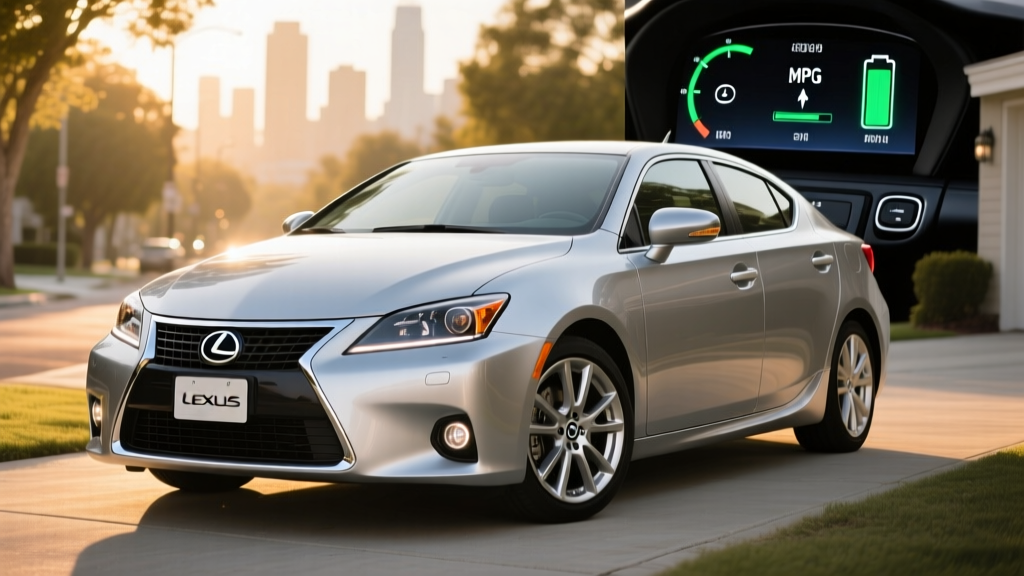
The 2012 Lexus CT 200h remains one of the most accessible luxury-badged hybrids on the used market in 2026. Built on Toyota's third-generation Prius powertrain, it delivers an EPA-rated 42 MPG combined in a premium compact hatchback package. For buyers who want hybrid fuel economy without plug-in infrastructure, the CT 200h offers bulletproof reliability, low running costs, and Lexus build quality — though its 134 combined horsepower and aging infotainment remind you this is a 14-year-old vehicle.
This guide covers everything a used-car shopper needs: real-world MPG data, hybrid battery lifespan and replacement costs, powertrain specs, and whether this conventional hybrid (HEV) still makes sense against modern plug-in hybrids (PHEVs) and full EVs.
Understanding the CT 200h: Conventional Hybrid, Not Plug-In
The 2012 Lexus CT 200h is a conventional hybrid electric vehicle (HEV). It cannot be plugged in. It has no electric-only driving range to speak of (less than 1 mile at very low speeds). The gasoline engine and regenerative braking recharge a small 1.3 kWh nickel-metal hydride (NiMH) battery pack. This is fundamentally different from a plug-in hybrid (PHEV) like the Toyota RAV4 Prime or a full battery-electric vehicle (BEV) like the Tesla Model 3.
Here's why that distinction matters for your purchase decision:
| Feature | HEV (CT 200h) | PHEV (e.g., RAV4 Prime) | BEV (e.g., Model 3) |
|---|---|---|---|
| Plug-in required? | No | Yes (optional) | Yes (mandatory) |
| Electric-only range | <1 mile | 25–42 miles | 250–360+ miles |
| Battery size | 1.3 kWh (NiMH) | 14–18 kWh (NMC) | 50–82 kWh (NMC/LFP) |
| Fueling | Gas only | Gas + electricity | Electricity only |
| Federal tax credit (new) | $0 | Up to $7,500 (§30D) | Up to $7,500 (§30D) |
| Home charging needed? | No | Recommended | Essential |
The CT 200h's appeal is simplicity: you drive it like any gas car, it refuels at any gas station, and the hybrid system quietly slashes your fuel consumption — especially in city driving where regenerative braking and electric-motor assist do the most work.
Fuel Economy: EPA Ratings vs. Real-World MPG
According to fueleconomy.gov, the 2012 Lexus CT 200h carries the following EPA estimates:
| Driving Condition | EPA MPG |
|---|---|
| City | 43 MPG |
| Highway | 40 MPG |
| Combined | 42 MPG |
Real-World MPG Expectations: The CT 200h's hybrid system excels in stop-and-go city driving, where many owners report 44–48 MPG. Highway driving at 70+ MPH typically yields 37–40 MPG due to higher aerodynamic drag and less regenerative braking opportunity. In cold weather (below 30°F), expect a 3–5 MPG drop as the engine runs more frequently to maintain cabin heat and battery temperature. Over a mixed-driving year of 12,000 miles, most owners average 40–44 MPG — right at or slightly above the EPA combined figure.
At a national average of $3.20/gallon (early 2026), the CT 200h costs roughly $915 per year in fuel for 12,000 miles of mixed driving. Compare that to a similarly sized non-hybrid luxury hatchback averaging 26 MPG combined, which would cost about $1,475 per year — a savings of roughly $560 annually with the Lexus hybrid.
Powertrain and Performance Specs
The CT 200h shares Toyota's proven Hybrid Synergy Drive system with the third-generation Prius (2010–2015). Here are the exact figures:
| Specification | 2012 Lexus CT 200h |
|---|---|
| Engine | 1.8L inline-4 (2ZR-FXE, Atkinson cycle) |
| Engine power | 98 hp @ 5,200 rpm |
| Electric motor power | 80 hp (60 kW) |
| Combined system output | 134 hp |
| Transmission | ECVT (planetary gearset, not a belt CVT) |
| 0–60 mph | 9.8 seconds |
| Drivetrain | Front-wheel drive |
| Hybrid battery | 1.3 kWh, NiMH (28 modules) |
| Curb weight | 3,130 lbs |
| EPA Combined MPG | 42 |
| Fuel tank | 11.9 gallons |
| Total range (est.) | ~475 miles |
The 9.8-second 0–60 time is the CT 200h's most common criticism. This is not a quick car, and highway merging requires planning. However, the electric motor's instant torque makes it surprisingly responsive from 0–30 mph in city driving. The ECVT is a planetary gearset — not a rubber-band belt CVT — so it avoids the droning sensation common in other CVT-equipped vehicles.
Lexus added a drive-mode selector (Eco, Normal, Sport, EV) that adjusts throttle mapping and steering weight. Eco mode maximizes fuel economy by softening throttle response and reducing A/C compressor load. EV mode forces electric-only operation below ~25 mph for short distances (parking lots, residential streets) but depletes the small battery quickly.
Hybrid Battery Lifespan, Warranty, and Replacement Cost
Battery longevity is the number-one concern for used hybrid buyers. Here's what the data shows for the CT 200h's NiMH pack:
Original Warranty: Lexus warranted the hybrid battery for 8 years/100,000 miles (10 years/150,000 miles in California and states adopting CARB emissions standards). For a 2012 model, the factory warranty has expired in most states as of 2020.
Expected Lifespan: The CT 200h's NiMH battery is one of the most proven hybrid packs ever built, shared with the Prius. Real-world data from taxi fleets and high-mileage owners shows these packs routinely lasting 150,000–200,000 miles before significant capacity loss. Many exceed 200,000 miles with proper care.
Replacement Cost (2026):
- New OEM Lexus battery: $2,200–$3,000 (installed at dealer)
- Refurbished/remanufactured battery: $1,000–$1,800 (installed at independent hybrid shop)
- Individual module replacement: $300–$600 (if only 1–2 of 28 modules have failed)
Unlike the large lithium-ion packs in modern EVs (which cost $8,000–$20,000+ to replace), the CT 200h's small NiMH battery is affordable to service. Many independent hybrid specialists now offer refurbished packs with 3–5 year warranties. The battery's modular design also means a shop can replace individual failed modules rather than the entire pack, further reducing cost.
Signs of hybrid battery degradation: Watch for reduced MPG (especially city MPG dropping below 38), the battery charge indicator showing fewer bars than usual, the engine running more frequently at stops, or a "Check Hybrid System" warning on the dash. A hybrid battery health scan at any Toyota/Lexus dealer or independent hybrid shop can assess State of Health (SoH) in minutes.
Maximizing battery life: Avoid leaving the car parked for extended periods (weeks) with the battery fully depleted. Drive it regularly — hybrid batteries prefer use to sitting. The CT 200h's battery management system prevents full discharge and overcharge automatically, so no special charging routine is needed (there's nothing to plug in).
Reliability and Ownership Costs
The 2012 CT 200h benefits from one of the most thoroughly validated powertrains in automotive history. The 2ZR-FXE engine and Hybrid Synergy Drive system powered millions of Prius vehicles worldwide with exceptional longevity. NHTSA crash testing gave the CT 200h a 4-star overall safety rating.
Common issues to check on a used 2012 CT 200h:
- Brake actuator: Some 2010–2013 CT 200h and Prius models experienced premature brake actuator wear. Listen for unusual brake pedal feel or a brake warning light. Replacement costs $1,200–$1,800.
- Water pump: The electric water pump was subject to a recall on some 2011–2013 models. Verify recall completion via the VIN on NHTSA's website.
- 12V auxiliary battery: Like all hybrids, the CT 200h has a conventional 12V battery (located in the rear cargo area) that powers electronics. These typically last 4–6 years and cost $180–$250 to replace.
- Infotainment: The 2012 CT 200h's infotainment system is dated by 2026 standards — no Apple CarPlay, no Android Auto, and a resistive touchscreen that feels slow. Aftermarket head-unit upgrades are available for $400–$800.
Annual ownership cost estimate (2026, used purchase):
- Fuel: ~$915/year (12,000 mi @ 42 MPG, $3.20/gal)
- Insurance: ~$1,100–$1,400/year (varies by state/driver)
- Maintenance: ~$400–$600/year (oil changes every 10K mi, tires, brakes — regenerative braking extends pad life significantly)
- Depreciation: Minimal — 2012 CT 200h values have largely bottomed out at $6,000–$10,000 depending on mileage and condition
Pricing and Tax Credit Eligibility
The 2012 Lexus CT 200h is available only on the used market. As of early 2026, typical pricing:
| Condition / Mileage | Approximate Price (2026) |
|---|---|
| Excellent, under 80K miles | $9,500–$11,500 |
| Good, 80K–120K miles | $7,500–$9,500 |
| Fair, 120K–160K miles | $5,500–$7,500 |
| High mileage, 160K+ miles | $4,000–$6,000 |
Federal tax credit: The IRS §30D clean vehicle credit applies only to new qualified plug-in EVs and fuel-cell vehicles, and to certain used EVs and PHEVs under the §25E used clean vehicle credit (up to $4,000, 30% of sale price, for vehicles with a battery capacity of at least 7 kWh). The CT 200h does not qualify for any federal tax credit — it is a conventional HEV with a 1.3 kWh battery, well below the 7 kWh minimum, and it cannot be plugged in.
Some states offer rebates for used hybrid purchases, but these vary widely. Check your state's energy or environmental agency for current programs.
CT 200h vs. Modern Alternatives: Which Should You Choose?
Pros
- 42 MPG combined with zero behavior change (no plugging in)
- Proven Toyota hybrid reliability, 200K+ mile battery life
- Affordable battery replacement ($1,000–$3,000)
- Lexus build quality, quiet cabin, premium materials
- Low purchase price ($5,500–$11,500 used)
- Strong city MPG (43+ EPA, often 45+ real-world)
- Hatchback cargo versatility (14.3 cu ft, 37.4 cu ft folded)
Cons
- Slow: 9.8-second 0–60, sluggish highway merging
- Dated infotainment (no CarPlay/Android Auto)
- Firm ride on sport suspension (F Sport models especially)
- No plug-in option — no electric-only commuting
- No federal tax credit eligibility
- Aging safety tech (no automatic emergency braking, no lane-keep)
- Rear seat space is tight for taller passengers
Choose the 2012 Lexus CT 200h if:
- You want maximum MPG without changing your fueling habits (no home charger needed)
- Your budget is under $12,000 and you want a luxury-badged hatchback
- You do mostly city/suburban driving where hybrid efficiency shines
- You value long-term reliability and low maintenance costs
- You don't need rapid acceleration or modern driver-assist features
Choose a modern PHEV (e.g., Toyota Prius Prime, RAV4 Prime) if:
- You have home charging access and want 25–44 miles of electric-only commuting
- You want a new-vehicle warranty and current safety tech (AEB, lane-keep, adaptive cruise)
- You qualify for the §30D federal tax credit (up to $7,500 for eligible new PHEVs)
Choose a full BEV (e.g., Chevy Equinox EV, Tesla Model 3) if:
- You have reliable home Level 2 charging and want zero gasoline use
- You want the lowest per-mile energy cost (~$0.04–$0.06/mile on home electricity vs. ~$0.08/mile for the CT 200h)
- You're ready to plan around DC fast charging for road trips
Frequently Asked Questions
How many MPG does the 2012 Lexus CT 200h get?
The EPA rates the 2012 CT 200h at 43 city / 40 highway / 42 combined MPG. In real-world driving, most owners average 40–44 MPG combined, with city driving often exceeding 44 MPG and highway cruising at 70+ MPH returning 37–40 MPG. Cold weather reduces fuel economy by roughly 3–5 MPG.
Is the CT 200h a plug-in hybrid?
No. The 2012 Lexus CT 200h is a conventional hybrid (HEV). It has no plug, no charging port, and no meaningful electric-only range. The 1.3 kWh NiMH battery recharges exclusively through regenerative braking and the gasoline engine. You fuel it only with gasoline, like any conventional car.
How long does the hybrid battery last, and what does replacement cost?
The CT 200h's NiMH hybrid battery typically lasts 150,000–200,000+ miles based on fleet and owner data. A new OEM replacement costs $2,200–$3,000 installed; refurbished packs run $1,000–$1,800. Individual module repair is possible for $300–$600 if only a few cells fail. The original 8-year/100,000-mile hybrid battery warranty has expired on all 2012 models.
Does the 2012 CT 200h qualify for any tax credit?
No. Federal clean vehicle tax credits (§30D for new, §25E for used) require a minimum battery capacity of 7 kWh and plug-in capability. The CT 200h's 1.3 kWh NiMH battery and HEV powertrain make it ineligible for any federal EV or PHEV tax credit. Check your state's energy office for any local hybrid incentives.
Is the 2012 CT 200h reliable?
Yes. The CT 200h uses Toyota's third-generation Hybrid Synergy Drive, one of the most proven powertrains ever produced. The 1.8L Atkinson-cycle engine and planetary ECVT are known for 200,000+ mile longevity with basic maintenance. The main wear items to watch are the brake actuator (listen for unusual pedal feel), the 12V auxiliary battery (replace every 4–6 years), and the hybrid battery itself at very high mileage.
How does the CT 200h compare to a Prius?
Mechanically, the CT 200h and 2010–2015 Prius share the same powertrain, so fuel economy and reliability are nearly identical (the Prius is rated at 44 MPG combined — 2 MPG higher due to lighter weight and more aerodynamic body). The CT 200h trades a small amount of efficiency for a premium interior, lower seating position, sportier styling, and Lexus dealership experience. Cargo space is similar (14.3 cu ft for the CT vs. 21.6 cu ft for the Prius liftback).
Should I buy a used CT 200h or a new hybrid in 2026?
If your budget is under $12,000, the CT 200h offers outstanding value — low fuel costs, proven reliability, and affordable maintenance. If you can spend $28,000–$38,000, a new Toyota Prius (57 MPG combined) or Prius Prime PHEV (44 miles electric-only, 52 MPG combined after) delivers dramatically better fuel economy, modern safety tech, Apple CarPlay/Android Auto, and a full factory warranty. The decision comes down to budget and how much you value current technology versus rock-bottom acquisition cost.