Quick Verdict: A First-Generation Hybrid That Punches Above Its Weight
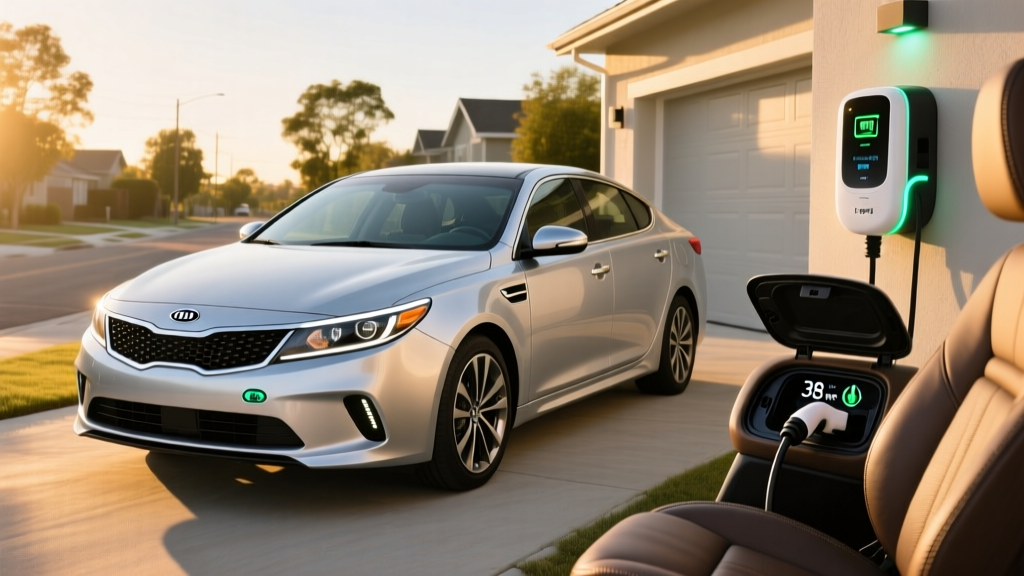
The 2012 Kia Optima Hybrid was Kia's first serious attempt at a mainstream gasoline-electric sedan, slotting into a competitive segment alongside the Toyota Camry Hybrid and Ford Fusion Hybrid. Built as a conventional hybrid electric vehicle (HEV) — not a plug-in — it requires no charging infrastructure and delivers an EPA-rated 35 MPG combined. For used-car shoppers in 2026 evaluating affordable hybrid sedans under $8,000, the 2012 Optima Hybrid remains a data-point worth examining, though its age and first-generation powertrain quirks demand careful scrutiny.
This guide covers the exact fuel economy figures, powertrain specifications, battery longevity expectations, and ownership economics you need to decide whether a used 2012 Optima Hybrid fits your commute — or whether a newer PHEV or full EV serves you better.
HEV vs. PHEV: Where the 2012 Optima Hybrid Fits
Before evaluating specs, it's essential to place this vehicle correctly in the electrification spectrum. The 2012 Optima Hybrid is a conventional hybrid (HEV). It cannot be plugged in. Its small battery recharges exclusively through regenerative braking and the gasoline engine. This is fundamentally different from a plug-in hybrid (PHEV) or a battery electric vehicle (BEV).
| Feature | 2012 Optima Hybrid (HEV) | Typical PHEV (e.g., 2026 RAV4 Prime) | Full EV (e.g., 2026 Ioniq 6) |
|---|---|---|---|
| Plug-in charging? | No | Yes | Yes |
| Electric-only range | ~0.5 mi at low speed | 35–42 mi | 270–360 mi |
| Battery size | 1.4 kWh (NiMH) | 18.1 kWh (Li-ion) | 77.4 kWh (Li-ion) |
| Fuel/energy | Gasoline only | Gasoline + electricity | Electricity only |
| Tax credit (new) | None | Up to $7,500 (§30D) | Up to $7,500 (§30D) |
The Optima Hybrid's 1.4 kWh nickel-metal hydride (NiMH) battery pack is far too small to meaningfully drive on electric power alone. Kia quoted roughly 0.5 miles of EV-only crawling at speeds under 25 mph — essentially an extended engine-off coast mode, not true electric driving. If you need plug-in electric range, this is not the vehicle. If you want better MPG without changing your refueling habits, it delivers.
Fuel Economy: EPA Ratings and Real-World MPG
The EPA rated the 2012 Kia Optima Hybrid at 35 MPG combined, split as 34 MPG city and 39 MPG highway. These figures placed it slightly behind the 2012 Toyota Camry Hybrid (41 combined) but ahead of the base four-cylinder Optima (28 combined).
| Driving Cycle | EPA Rating | Real-World Expectation |
|---|---|---|
| City | 34 MPG | 33–37 MPG (hybrids excel in stop-and-go) |
| Highway | 39 MPG | 35–38 MPG (aero drag and higher speeds reduce regen benefit) |
| Combined | 35 MPG | 33–36 MPG |
Per fueleconomy.gov, the 2012 Optima Hybrid consumes approximately 2.9 gallons per 100 miles. At $3.40/gallon (2026 national average), that translates to roughly $1,360 in annual fuel cost for a 15,000-mile driver — about $400 less per year than the non-hybrid 2.4L Optima.
Why Hybrids Often Beat EPA in the City
Conventional hybrids recapture kinetic energy during braking and low-speed driving, which is where gasoline-only vehicles waste the most fuel. Owners who drive predominantly in urban traffic frequently report exceeding the 34 MPG city estimate by 1–3 MPG. Highway-heavy commuters, however, should expect to fall slightly short of the 39 MPG highway sticker, as regenerative braking provides less benefit at sustained high speeds and the added weight of the hybrid system (roughly 200 lbs over the gas model) works against efficiency.
Powertrain Specs: Engine, Motor, and Combined Output
The 2012 Optima Hybrid pairs a 2.4-liter Atkinson-cycle four-cylinder engine with a 30 kW (40 hp) electric motor integrated into the transmission housing. Unlike Toyota's planetary-gear power-split device, Kia used a parallel hybrid architecture with a six-speed automatic transmission — a choice that gives the car a more conventional driving feel but sacrifices some low-speed electric-only smoothness.
| Specification | Value |
|---|---|
| Engine | 2.4L Atkinson-cycle I4 |
| Engine output | 169 hp @ 6,000 rpm / 154 lb-ft @ 4,250 rpm |
| Electric motor | 30 kW (40 hp) / 151 lb-ft |
| Combined system output | 206 hp / 195 lb-ft |
| Transmission | 6-speed automatic |
| Battery | 1.4 kWh NiMH (47 cells, 270V nominal) |
| 0–60 mph | ~8.5 seconds (Motor Trend tested) |
| Curb weight | 3,496 lbs |
| Drivetrain | Front-wheel drive |
The 206 combined horsepower is competitive with non-hybrid midsize sedans of the era. Acceleration is adequate for merging and passing, though the six-speed automatic can hunt for gears under hard throttle — a common complaint in early reviews. The electric motor fills torque gaps during shifts, which smooths the experience compared to the gas-only model, but it lacks the seamless electric launch feel of Toyota's eCVT-based system.
Battery Longevity, Warranty, and Replacement Cost
For any used hybrid buyer, the traction battery is the single largest financial risk. Here's what you need to know about the 2012 Optima Hybrid's NiMH pack.
Original Battery Warranty
Kia covered the 2012 Optima Hybrid battery under its powertrain warranty for 10 years / 100,000 miles (original owner) or 5 years / 60,000 miles (second owner, depending on state). Federal emissions warranty requirements also mandate hybrid battery coverage for 8 years / 80,000 miles minimum. For a 2012 model, original warranty coverage expired no later than 2022 or 100,000 miles — whichever came first.
NiMH Battery Degradation Reality
Nickel-metal hydride batteries are proven technology — Toyota's Prius used NiMH for over a decade with excellent longevity data. NiMH cells degrade more gracefully than early lithium-ion packs, typically losing 15–25% capacity over 10–15 years. However, the 2012 Optima Hybrid's battery is now 14 years old. Even with graceful degradation, expect measurable capacity loss that may manifest as slightly reduced fuel economy and less frequent engine-off coasting.
Replacement Cost
If the hybrid battery fails outright, replacement options in 2026 include:
- OEM new battery (Kia dealer): $2,500–$3,500 including labor — often uneconomical on a vehicle worth $5,000–$8,000
- Remanufactured/reconditioned pack: $1,200–$2,000 from specialty hybrid shops (e.g., GreenTech Automotive, Independent Hybrid services)
- Individual cell replacement: $600–$1,000 if only a few cells have failed — requires a shop with hybrid battery diagnostic capability
Before purchasing any used 2012 Optima Hybrid, insist on a hybrid battery state-of-health (SoH) scan using an OBD-II tool capable of reading Kia hybrid parameters. A healthy pack should show cell voltage variance under 0.2V across all 47 cells.
Pricing and Tax Credit Eligibility in 2026
The 2012 Kia Optima Hybrid originally carried an MSRP of $25,700 (base) to roughly $31,000 (fully loaded with EX trim, leather, navigation, and panoramic sunroof). In the 2026 used market, expect to pay:
- $4,500–$6,000 for examples with 120,000+ miles
- $6,000–$8,500 for examples under 100,000 miles in good condition
Tax Credits: None Available
The 2012 Optima Hybrid does not qualify for the federal §30D clean vehicle credit. That credit applies only to new plug-in vehicles (PHEVs and BEVs) meeting current battery-sourcing and critical-mineral requirements, MSRP caps ($55,000 sedans), and buyer income limits. Conventional HEVs have never qualified for §30D. The now-expired §30B alternative motor vehicle credit for hybrids ended for Kia after the manufacturer hit its 60,000-unit cap years ago.
Some states offer modest used-EV rebates that occasionally include PHEVs, but conventional HEVs are excluded from virtually all current incentive programs. Check your state's energy office for local details, but budget with the assumption of zero incentives.
Reliability and Ownership Costs
The 2012 Optima Hybrid earned mixed reliability marks. While the 2.4L Theta II engine and hybrid system are fundamentally sound, this model year falls within Kia's broader engine recall campaigns related to manufacturing debris in certain Theta II engines. Before purchasing, verify that all recall work — particularly the knock-sensor detection system (KSDS) software update and any engine inspection/replacement — has been completed at a Kia dealer.
Other common issues reported by owners include:
- Hybrid system cooling fan failure: The electric fan cooling the hybrid battery can fail, triggering a hybrid system warning. Replacement: $300–$500.
- Brake actuator wear: The electro-hydraulic brake system (which blends regenerative and friction braking) has a more complex master cylinder than conventional cars. Expect $800–$1,200 if it needs replacement at high mileage.
- 12V auxiliary battery drain: Like all hybrids, the Optima Hybrid still uses a standard 12V lead-acid battery for accessories. Parasitic drain can kill it if the car sits unused for weeks.
Insurance costs for a 2012 Optima Hybrid are low by 2026 standards — typically $900–$1,300 annually depending on your profile — as the vehicle's value has depreciated significantly.
Pros
- 35 MPG combined without any lifestyle change — no plugs, no charging apps
- Comfortable ride, spacious rear seat, large trunk (15.4 cu ft)
- Kia's 10-year powertrain warranty was class-leading when new
- Low purchase price in the used market ($5K–$8K)
- NiMH battery is proven, repairable technology
Cons
- 14-year-old hybrid battery is a financial risk without warranty coverage
- Theta II engine recall history — verify all recall work is complete
- Slower and less refined than Toyota's hybrid system from the same era
- No plug-in capability — you'll never drive on electricity alone meaningfully
- No federal or state tax incentives available
Who Should Choose This Hybrid vs. a PHEV or Full EV?
Choose the 2012 Optima Hybrid (used HEV) if:
- Your budget is under $8,000 and you need a reliable daily commuter
- You lack access to home or workplace charging (apartment, street parking)
- Your commute is 20–50 miles round trip with mixed city/highway driving
- You want better MPG without learning any new refueling habits
Choose a used PHEV (e.g., 2018+ Prius Prime, 2020+ RAV4 Prime) if:
- You have access to a standard 120V outlet at home (Level 1 charging is sufficient for most PHEVs overnight)
- Your daily driving is under 30 miles — a PHEV can cover this on electricity alone
- You want to reduce gasoline consumption by 60–80% on weekdays while keeping gas for road trips
Choose a used or new full EV if:
- You can install a Level 2 home charger (240V, $500–$1,500 installation)
- Your daily driving is under 200 miles
- You want near-zero maintenance costs and the lowest per-mile energy cost (~$0.04–$0.06/mile on residential electricity vs. ~$0.10–$0.12/mile in this hybrid)
Frequently Asked Questions
How many MPG does the 2012 Kia Optima Hybrid get?
The EPA rates it at 34 city / 39 highway / 35 combined. Real-world results cluster between 33–37 MPG depending on driving mix, with city-heavy drivers often exceeding the EPA city estimate thanks to regenerative braking.
Can the 2012 Optima Hybrid drive on electric power only?
Technically yes, but only for about half a mile at speeds under 25 mph. This is not a plug-in hybrid — the 1.4 kWh battery is far too small for meaningful electric-only driving. Think of it as engine-off coasting, not electric mode.
Does the 2012 Optima Hybrid qualify for any tax credit?
No. The federal §30D credit applies only to new plug-in vehicles (BEVs and PHEVs). Conventional hybrids like this Optima have never qualified. State incentives also exclude HEVs in nearly all jurisdictions. See IRS §30D guidelines for current plug-in vehicle credit rules.
Is the hybrid battery reliable, and what does replacement cost?
The NiMH battery is proven technology with gradual degradation characteristics. At 14 years old, expect some capacity loss. Full OEM replacement runs $2,500–$3,500; remanufactured packs cost $1,200–$2,000. Always get an OBD-II hybrid battery health scan before purchasing.
How does the 2012 Optima Hybrid compare to the Camry Hybrid of the same year?
The 2012 Camry Hybrid achieves 41 MPG combined vs. the Optima's 35 — a meaningful 6 MPG advantage, especially in city driving where the Toyota system excels. The Optima Hybrid offers a sportier driving feel and more aggressive styling, but if fuel economy is your primary goal, the Camry Hybrid is the stronger pick.
Should I worry about the Theta II engine recall?
Yes — this is a critical pre-purchase check. Certain 2011–2014 Kia 2.4L Theta II engines were subject to recalls for potential bearing wear and engine seizure. Confirm with a Kia dealer (using the VIN) that all recall campaigns, including the knock-sensor detection system update, have been performed. An unaddressed recall is a deal-breaker.