Quick Verdict: A Proven First-Generation Hybrid Entering Its Second Decade
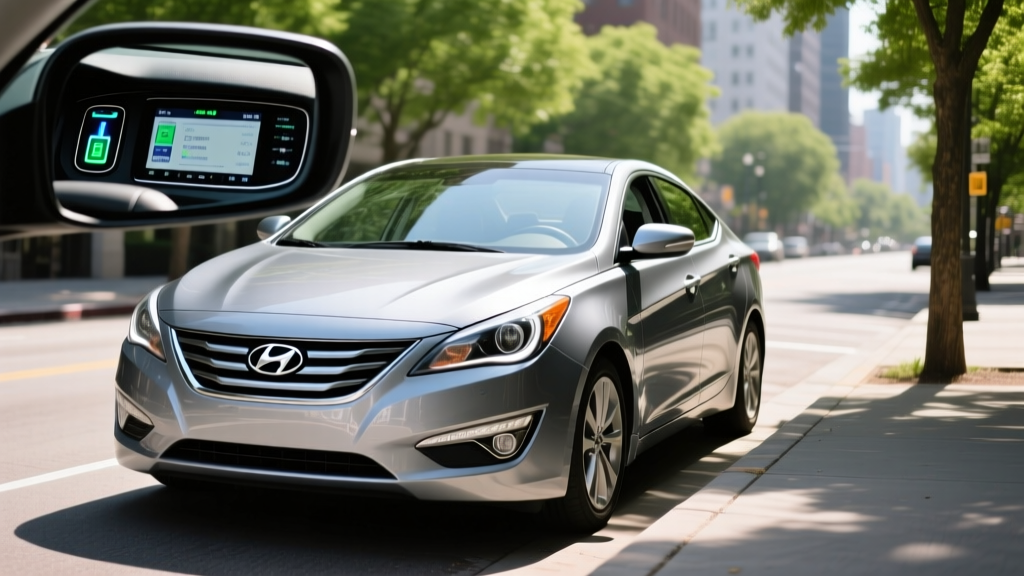
The 2012 Hyundai Sonata Hybrid was Hyundai's first serious entry into the midsize hybrid sedan market, competing directly with the Toyota Camry Hybrid and Ford Fusion Hybrid. As a conventional hybrid electric vehicle (HEV), it requires no plug — the 1.4 kWh battery charges entirely through regenerative braking and the gasoline engine. For used-car shoppers in 2026 evaluating whether a 14-year-old hybrid is a smart buy, the Sonata Hybrid offers a compelling mix of low operating costs and straightforward maintenance, but battery age is the single biggest variable to investigate before purchasing.
The 2012 Sonata Hybrid is a conventional hybrid (HEV). It cannot be plugged in. The small battery assists the gas engine and captures energy during braking. A plug-in hybrid (PHEV) has a larger battery (typically 10–25 kWh), can be charged from a wall outlet or public charger, and offers 20–45 miles of electric-only driving before the gas engine engages. Hyundai did not offer a Sonata PHEV until the 2016 model year. If you need electric-only commuting capability, this 2012 model is not it.
2012 Hyundai Sonata Hybrid: Key Specifications
| Specification | Value |
|---|---|
| Powertrain Type | Conventional Hybrid (HEV) — no plug |
| Gasoline Engine | 2.4L inline-4 Atkinson cycle, 166 hp |
| Electric Motor | 30 kW (40 hp) permanent-magnet synchronous |
| Combined System Output | 206 hp |
| Transmission | 6-speed automatic (no CVT) |
| Hybrid Battery | 1.4 kWh lithium-polymer (Li-Po) |
| EPA Fuel Economy | 35 city / 40 highway / 37 combined MPG |
| Fuel Tank | 18.5 gallons |
| Total Range | ~647 miles (EPA combined) |
| 0–60 mph | ~8.5 seconds |
| Original MSRP | $25,850 (base) |
| 2026 Used Market (typical) | $5,500–$9,000 depending on mileage/condition |
Sources: fueleconomy.gov, Hyundai Motor America press archives.
How Many MPG Does the 2012 Sonata Hybrid Actually Get?
The EPA rated the 2012 Hyundai Sonata Hybrid at 35 MPG city, 40 MPG highway, and 37 MPG combined. That's unusual for a hybrid — most HEVs achieve higher city MPG than highway because regenerative braking recaptures more energy in stop-and-go traffic. The Sonata Hybrid's higher highway figure is partly a function of its 6-speed automatic transmission, which allows efficient cruising at sustained speeds, and the Atkinson-cycle 2.4L engine's efficiency at moderate loads.
Real-World MPG vs. EPA Sticker
Owner-reported data on forums and fuel-tracking platforms consistently shows real-world combined fuel economy between 33 and 38 MPG for the 2012 Sonata Hybrid. Drivers who commute primarily in city traffic with frequent stops often see figures at or slightly above the EPA city rating of 35 MPG — regenerative braking is at its most effective under these conditions. Highway-only road trips at 75+ mph tend to yield 34–36 MPG, slightly below the EPA highway estimate.
| Driving Scenario | EPA Rating | Real-World Expectation |
|---|---|---|
| City / stop-and-go | 35 MPG | 34–37 MPG |
| Highway (65–70 mph) | 40 MPG | 35–38 MPG |
| Highway (75+ mph) | 40 MPG | 33–36 MPG |
| Combined (mixed) | 37 MPG | 33–38 MPG |
| Cold weather (below 30°F) | N/A | 30–34 MPG |
Cold-weather note: Like all hybrids, the Sonata's fuel economy drops in winter. The engine runs more frequently to provide cabin heat (there is no electric heater in this generation), and battery efficiency decreases at low temperatures. Expect a 10–15% MPG reduction in sustained sub-freezing conditions.
Hybrid Battery: Lifespan, Warranty, and Replacement Cost
The 2012 Sonata Hybrid uses a 1.4 kWh lithium-polymer (Li-Po) battery pack located behind the rear seats. This is a relatively small battery by modern standards — for comparison, a 2026 PHEV typically carries 13–25 kWh, and a full BEV runs 60–100+ kWh. The Sonata's battery isn't designed to propel the car on electricity alone for meaningful distances; it assists the gas engine during acceleration and stores recaptured braking energy.
How Long Do These Batteries Last?
Lithium-polymer hybrid batteries in the Sonata have proven durable. Many owners report 150,000–200,000+ miles on the original pack without significant degradation. The 1.4 kWh pack operates within a narrow state-of-charge window (roughly 30–70%), which dramatically reduces stress on the cells compared to a full EV battery that cycles through a wider range. However, at 14 years old, any original battery is operating on borrowed time. Calendar aging — degradation that occurs regardless of mileage — becomes a real factor.
Battery Replacement Cost in 2026
If the hybrid battery fails or degrades significantly, replacement options include:
- New OEM battery from Hyundai: $2,500–$3,500 (parts only; installation adds $500–$1,000)
- Refurbished/remanufactured battery: $1,200–$2,000 installed
- Individual cell/module replacement: $500–$1,200 at a specialist hybrid shop (only failed modules replaced)
For a vehicle worth $5,500–$9,000, a full OEM battery replacement at $3,500–$4,500 total is a significant percentage of the car's value. This is the central economic risk of buying any 14-year-old hybrid. Before purchasing, request a hybrid battery health check from a qualified technician — many Hyundai dealers and independent hybrid specialists can read the battery's state-of-health (SoH) via OBD-II diagnostics.
Is the 2012 Sonata Hybrid Reliable?
The 2012 model year was the second year of Hyundai's YF-generation Sonata Hybrid, and it carried over some first-year teething issues from the 2011 debut. Common complaints tracked by NHTSA and owner communities include:
- Hybrid system hesitation: A brief lag when accelerating from a stop as the system transitions between electric motor and gas engine. Some owners describe this as a "lurch" — it's a characteristic of the 6-speed automatic rather than a defect, but it takes adjustment if you're coming from a CVT-equipped Toyota hybrid.
- Hybrid battery cooling fan: The battery pack has its own cooling fan located near the rear parcel shelf. If it becomes clogged with dust or fails, battery temperature rises and the system limits hybrid operation. Cleaning the fan intake periodically is recommended.
- Brake actuator: The electro-hydraulic brake system, which blends regenerative and friction braking, has had occasional failures at higher mileages. Replacement runs $800–$1,500.
- Standard Sonata issues: The 2.4L Theta II engine in non-hybrid Sonatas of this era had well-documented connecting-rod bearing failures. The hybrid uses a different engine variant (the 2.4L Atkinson-cycle MPI) that has not shown the same pattern of catastrophic failures, but maintenance records are essential.
Overall, the hybrid powertrain itself — the electric motor, inverter, and battery management system — has proven more reliable than the conventional Sonata's powertrain in many cases. The simpler mechanical load on the engine (supplemented by the electric motor) and the absence of a traditional starter motor reduce wear points.
Does the 2012 Sonata Hybrid Qualify for Any Tax Credit?
No. The 2012 Hyundai Sonata Hybrid does not qualify for the federal §30D Clean Vehicle Credit. That credit applies only to new plug-in electric vehicles (PHEVs and BEVs) meeting specific battery-sourcing, MSRP, and buyer-income requirements as defined by the IRS. Conventional hybrids like the Sonata Hybrid have not qualified for federal purchase incentives since the early Hybrid Tax Credit was phased out for Hyundai in 2010.
On the used market, the Used Clean Vehicle Credit (§25E) offers up to $4,000 (30% of sale price, capped) — but only for used PHEVs and BEVs, not conventional hybrids. The 2012 Sonata Hybrid is ineligible.
Some states offer registration or inspection fee reductions for hybrid vehicles, but these are typically minor ($50–$100/year savings). Check your state DMV for specifics.
Hybrid vs. PHEV vs. Full EV: Which Should You Choose?
If you're cross-shopping the 2012 Sonata Hybrid against other electrified options in 2026, here's a practical decision framework based on your driving profile:
| Your Situation | Conventional Hybrid (HEV) | Plug-in Hybrid (PHEV) | Full EV (BEV) |
|---|---|---|---|
| No home charging access (apartment/street parking) | ✓ Best choice | ✗ Defeats the purpose | ✗ Very difficult |
| Short commute (under 30 mi), home charging available | Good | ✓ Best choice | ✓ Excellent |
| Frequent road trips (300+ mi) | ✓ Best choice | Good (gas backup) | Requires planning |
| Tight budget (under $10K) | ✓ Best choice | Limited options | Limited options |
| Want lowest fuel cost per mile | ~$0.09/mi | ~$0.04/mi (electric) | ✓ ~$0.04/mi |
| Want federal tax credit | ✗ None | ✓ Up to $7,500 (new) | ✓ Up to $7,500 (new) |
Bottom line: The 2012 Sonata Hybrid is the right pick if you want a low-cost, no-plug-required, fuel-efficient sedan and you lack reliable access to charging infrastructure. If you can charge at home and have a budget above $15,000, a used PHEV like the Toyota Prius Prime or a used BEV like the Nissan Leaf or Chevrolet Bolt will deliver lower per-mile fuel costs and a more modern driving experience.
Pros and Cons of Buying a 2012 Sonata Hybrid in 2026
Pros
- 37 MPG combined — 40% better fuel economy than the gas-only 2012 Sonata (26 MPG combined)
- No plug required — works with your existing gas-station routine
- Spacious midsize cabin with 16.4 cu-ft trunk (only 0.6 cu-ft less than gas model)
- 6-speed automatic feels natural — no CVT drone
- Low annual fuel cost: ~$1,350/year at 15,000 mi and $3.50/gal
- Strong safety ratings (IIHS Top Safety Pick for 2012)
- Used pricing well under $10,000 in most markets
Cons
- Original hybrid battery warranty has expired — replacement risk of $2,000–$4,500
- No electric-only driving mode — this is not a PHEV
- Acceleration feel can be sluggish and hesitant from stops
- 2012 infotainment is dated (no Apple CarPlay/Android Auto, small screen)
- No DC fast charging capability (irrelevant for HEV, but worth noting for comparison)
- Hybrid battery takes up trunk space (reduced from 17.0 to 16.4 cu-ft vs. gas model)
- Not eligible for any federal tax credit, new or used
Frequently Asked Questions
How many MPG does the 2012 Hyundai Sonata Hybrid get?
The EPA rates it at 35 city / 40 highway / 37 combined MPG. Real-world driving typically yields 33–38 MPG combined depending on driving style, terrain, and climate. Cold weather can reduce this to 30–34 MPG.
Can I plug in the 2012 Sonata Hybrid to charge it?
No. This is a conventional hybrid (HEV), not a plug-in hybrid (PHEV). The battery charges exclusively through regenerative braking and the gasoline engine. There is no charging port and no electric-only driving range beyond very low-speed, short-distance creeping.
How much does it cost to replace the hybrid battery?
A new OEM battery from Hyundai runs $2,500–$3,500 for the part alone, with installation adding $500–$1,000. Refurbished batteries cost $1,200–$2,000 installed. Individual module replacement at a hybrid specialist can be as low as $500–$1,200 if only specific cells have failed.
Is the 2012 Sonata Hybrid reliable at high mileage?
The hybrid powertrain components (motor, inverter, battery management) have been generally reliable well past 150,000 miles. The primary risks at high mileage are hybrid battery degradation (calendar age is now the main factor), brake actuator wear, and general vehicle age issues. A pre-purchase inspection with a hybrid battery SoH check is strongly recommended.
Does the 2012 Sonata Hybrid qualify for a tax credit?
No. The federal §30D new-vehicle credit and §25E used-vehicle credit both require plug-in capability (PHEV or BEV). Conventional hybrids are not eligible. Some states may offer minor registration discounts, but there is no meaningful purchase incentive available for this vehicle in 2026.
Should I buy a 2012 Sonata Hybrid or spend more on a newer Prius?
If your budget is strictly under $10,000, the Sonata Hybrid offers strong value with competitive MPG and a roomier cabin than a same-year Prius. However, if you can stretch to $12,000–$16,000, a 2016–2019 Toyota Prius will likely have a fresher battery (fewer years of calendar aging), more advanced safety features, and better long-term parts availability. The Prius also achieves 50+ MPG combined, a significant advantage over the Sonata's 37 MPG.
What's the difference between the Sonata Hybrid and the Sonata Plug-in Hybrid?
Hyundai introduced the Sonata Plug-in Hybrid (PHEV) for the 2016 model year — four years after this 2012 HEV. The PHEV variant featured a 9.8 kWh battery, approximately 27 miles of electric-only range, and a charging port for Level 1/Level 2 charging. If you want plug-in capability in a Sonata, you need a 2016–2019 model year PHEV, not this 2012 HEV.