The 2012 Honda CR-Z hybrid occupies a strange corner of the used-car market: a two-seat sport compact that promised fun driving dynamics with hybrid efficiency. More than a decade after its debut, buyers still search for this car — drawn by its low curb weight, manual transmission option, and Honda's hybrid reliability reputation. But does a 14-year-old hybrid hold up in 2026? This guide breaks down the real-world fuel economy, IMA battery longevity, ownership costs, and whether the CR-Z still makes sense against modern hybrids, PHEVs, and EVs.
What Is the 2012 Honda CR-Z Hybrid?
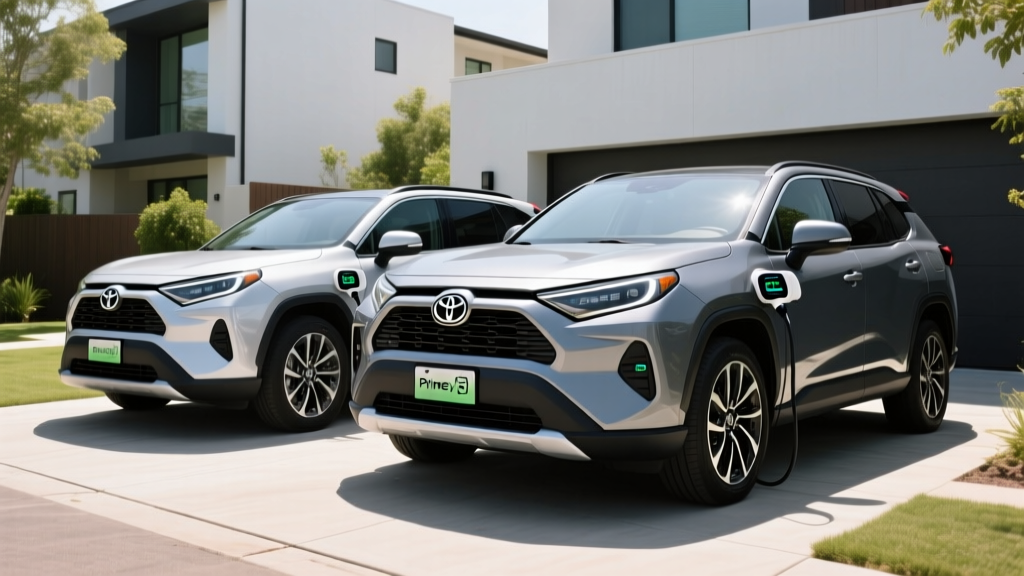
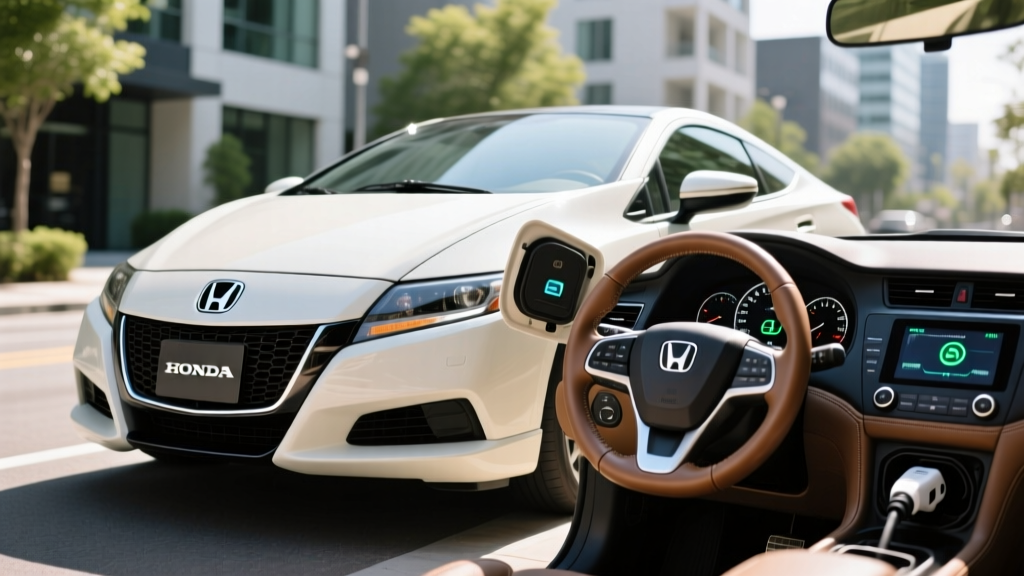
The 2012 Honda CR-Z is a conventional hybrid (HEV), not a plug-in hybrid. It uses Honda's Integrated Motor Assist (IMA) system — a parallel hybrid setup where a small electric motor sandwiched between the engine and transmission provides supplemental torque. The battery recharges through regenerative braking and the gasoline engine; you never plug it in. This is a critical distinction from plug-in hybrids (PHEVs) like the Toyota RAV4 Prime or modern EVs, which require external charging.
HEV vs PHEV: Where the CR-Z Fits
| Feature | 2012 Honda CR-Z (HEV) | Typical PHEV (e.g., RAV4 Prime) |
|---|---|---|
| Plug-in required? | No — self-charging | Yes — Level 1 or Level 2 |
| Electric-only range | None (motor assists engine only) | 25–42 miles |
| Battery size | 0.6 kWh (NiMH) | 13–18 kWh (lithium-ion) |
| Federal tax credit (new) | None (expired long ago) | Up to $7,500 (§30D, if eligible) |
| Drivetrain complexity | Low — simple parallel hybrid | Higher — dual power sources |
Fuel Economy: EPA Ratings vs Real-World MPG
The 2012 CR-Z came with two transmission choices, and fuel economy differs between them. Here are the official EPA estimates from fueleconomy.gov:
| Transmission | City MPG | Highway MPG | Combined MPG |
|---|---|---|---|
| 6-speed manual | 31 | 39 | 34 |
| CVT automatic | 35 | 39 | 37 |
The CVT model achieves 37 MPG combined — respectable for a sport compact, though not class-leading even in 2012 (the contemporary Prius managed 50 MPG combined). The manual transmission sacrifices 3 MPG combined, a trade-off enthusiasts willingly made for engagement.
Real-World MPG: What Owners Actually See
Hybrids tend to exceed EPA city estimates in stop-and-go traffic, where regenerative braking recaptures energy. The CR-Z is no exception. Owner-reported data on Fuelly and Honda forums consistently shows 36–42 MPG combined for CVT models driven conservatively. Aggressive driving — which the CR-Z's sporty character invites — drops real-world figures to 30–33 MPG. Highway-only driving at 75+ MPH yields roughly 36–38 MPG, close to the sticker.
One quirk of the IMA system: the electric motor's contribution is modest (13 hp, 58 lb-ft of torque). Unlike Toyota's Hybrid Synergy Drive, the IMA motor cannot propel the car on electric power alone. Its role is torque fill during acceleration and enabling idle stop-start. This means city MPG gains over a comparable gas-only car are smaller than what Toyota or Hyundai hybrids deliver.
Powertrain and Performance Specs
| Specification | 2012 Honda CR-Z |
|---|---|
| Engine | 1.5L inline-4 i-VTEC |
| Engine output | 111 hp @ 6,000 rpm / 106 lb-ft @ 1,000–1,500 rpm |
| Electric motor | 13 hp (10 kW) / 58 lb-ft |
| Combined system output | 122 hp / 128 lb-ft (CVT); 122 hp / 123 lb-ft (MT) |
| Battery | 0.6 kWh NiMH (nickel-metal hydride) |
| 0–60 mph | ~9.7 seconds |
| Curb weight | ~2,765 lbs |
| Drivetrain | Front-wheel drive |
| EPA combined MPG | 37 (CVT) / 34 (MT) |
The CR-Z is not fast by any modern standard. A 9.7-second 0–60 time trails most current compact crossovers. What it offers is a lightweight, tossable chassis with a precise shifter (manual models) and a 3-Mode Drive System that lets you toggle between Sport, Normal, and Econ — adjusting throttle response, steering weight, and A/C behavior.
The 0.6 kWh NiMH battery pack sits behind the seats. It's tiny compared to modern hybrid batteries (a 2026 Toyota Prius uses a 4.08 kWh lithium-ion pack) and serves only as a buffer for regen capture and assist bursts. Honda designed it for shallow cycling, which aids longevity but limits electric assist to brief intervals.
IMA Battery Health, Warranty, and Replacement Cost
The number-one concern for any used hybrid buyer is battery health. The CR-Z's NiMH IMA battery was originally covered by Honda's hybrid battery warranty:
Original Honda IMA Battery Warranty
- Duration: 8 years / 80,000 miles (10 years / 150,000 miles in CARB states including CA, CT, ME, MA, NJ, NY, OR, RI, VT, WA)
- Coverage: Defects and capacity loss triggering IMA warning light
- Current status for 2012 models: Warranty expired for most vehicles by 2020–2022 (8-year mark). CARB-state vehicles with under 150,000 miles may still have residual coverage through 2022–2023 at the latest.
How Long Does the CR-Z IMA Battery Last?
NiMH batteries degrade more gracefully than early lithium-ion packs but are not immune to aging. Based on owner reports and hybrid specialist data:
- Typical lifespan: 10–15 years or 120,000–180,000 miles before significant capacity loss
- Failure mode: Gradual capacity reduction rather than sudden death. The IMA system becomes less effective, MPG drops 3–5 MPG, and eventually the IMA warning light illuminates.
- 2026 reality: Most 2012 CR-Z vehicles are now 14 years old. Many will be on their original battery approaching end-of-life, or already on a replacement.
IMA Battery Replacement Cost
If the IMA battery fails outside warranty, here's what to expect:
| Option | Cost Range | Notes |
|---|---|---|
| Dealer OEM replacement | $2,500–$3,500 | New NiMH pack, installed; often exceeds the car's value |
| Aftermarket/refurbished pack | $1,200–$2,000 | Reconditioned cells from hybrid specialists like BumbleBee Batteries or Dorman |
| Individual cell replacement (DIY) | $300–$600 | Requires technical skill; replaces only failed cells within the pack |
Given that a clean 2012 CR-Z sells for $5,000–$9,000 in 2026's used market, a dealer battery replacement can total 30–60% of the vehicle's value. This is the single biggest financial risk of buying one.
Checking IMA Battery Health Before Buying
Before purchasing a used CR-Z, take these steps:
- Check for the IMA warning light on the dash at startup. If it's illuminated, the battery needs service.
- Use an OBD-II scanner (or ask a mechanic) to read IMA battery state of charge (SoC) and voltage balance across cells. Healthy packs show cells within 0.1V of each other.
- Review maintenance records for any prior IMA battery replacement or recalibration.
- Test the auto idle-stop feature — if the engine doesn't shut off at red lights, the IMA system may be degraded.
Pricing and Tax Credit Eligibility
The 2012 Honda CR-Z originally started at approximately $19,995 MSRP (base) and topped out around $24,000 fully loaded with navigation. In the 2026 used market:
| Condition | Typical Price Range |
|---|---|
| Fair (high miles, cosmetic wear) | $4,000–$6,000 |
| Good (average miles, clean title) | $6,000–$8,500 |
| Excellent (low miles, manual, documented) | $8,500–$12,000 |
Does the 2012 CR-Z Qualify for Any Tax Credit?
No. The federal hybrid tax credit for conventional HEVs like the CR-Z was phased out for Honda vehicles years ago, and the current IRS §30D Clean Vehicle Credit applies only to new battery electric vehicles (BEVs) and plug-in hybrids (PHEVs) meeting battery sourcing, MSRP, and buyer income requirements. Used EVs can qualify for up to $4,000 under §25E, but that credit also excludes conventional hybrids.
The CR-Z is ineligible for any current federal incentive. State-level incentives vary — check your state's energy office or AFDC's state law database for local programs, though most target plug-in vehicles.
Reliability and Long-Term Ownership
The CR-Z benefits from Honda's strong reliability reputation and a relatively simple powertrain. Key ownership considerations:
- Engine: The 1.5L i-VTEC is a proven, low-stress design. Timing chain (not belt) eliminates a common maintenance item. Expect 200,000+ miles with routine oil changes.
- IMA system: Simpler than Toyota's full-hybrid setup — fewer failure points but also fewer redundant systems. The electric motor itself rarely fails; battery degradation is the primary concern.
- Transmission: Both the 6-speed manual and CVT have acceptable reliability records. The CVT in particular is less problematic than some Nissan CVTs of the same era, though Honda CVT fluid should be changed every 30,000–50,000 miles.
- Safety: The CR-Z earned Good ratings from IIHS in frontal offset and side-impact tests. Standard stability control and six airbags. No advanced driver-assist features — this is a pre-ADAS vehicle.
Insurance costs are low — typically $800–$1,200 annually for a clean-record driver, reflecting the car's low power output and modest replacement value.
Pros
- Engaging manual transmission option (rare in hybrids)
- Lightweight, nimble handling at 2,765 lbs
- 37 MPG combined (CVT) with real-world potential for 40+
- Low insurance and maintenance costs
- Distinctive, aging-well design
- Honda reliability in engine and drivetrain
Cons
- Sluggish 9.7-second 0–60 time
- Tiny back seat area (strictly two-seater with parcel shelf)
- IMA battery replacement risk at 14 years old
- No electric-only driving capability
- Limited cargo space (~20 cu ft behind seats)
- No modern safety tech (no AEB, lane-keep, blind-spot)
- Modest hybrid efficiency gains vs modern HEVs
2012 CR-Z vs Modern Alternatives: Hybrid, PHEV, or EV?
If you're considering a 2012 CR-Z, you're likely weighing it against other used or new electrified options. Here's a decision framework:
Choose the 2012 CR-Z if:
- You want an affordable, fun-to-drive used hybrid under $8,000
- You prefer a manual transmission (almost no modern hybrids offer one)
- Your commute is short-to-moderate and you lack home charging access
- You accept the IMA battery replacement risk as part of ownership
Choose a modern used HEV (2020+ Prius, Corolla Hybrid, Accord Hybrid) if:
- You want 50+ MPG combined with a larger lithium-ion battery and more electric assist
- You need four doors and practical cargo space
- You want modern ADAS (automatic emergency braking, lane-keeping)
Choose a PHEV (RAV4 Prime, Prius Prime) if:
- You have home Level 2 charging and a commute under 40 miles
- You want electric-only daily driving with gas backup for road trips
- You're buying new or CPO and want to use the $7,500 federal credit (§30D eligible models)
Choose a full EV (Bolt, Model 3, Ioniq 5) if:
- You have reliable home charging and your daily driving is under 250 miles
- You want minimal maintenance (no oil changes, no transmission fluid)
- You want the lowest per-mile fuel cost — electricity at $0.04–$0.15/mile vs the CR-Z's ~$0.10–$0.13/mile at 37 MPG
Frequently Asked Questions
How many MPG does the 2012 Honda CR-Z hybrid get?
The EPA rates the CVT-equipped 2012 CR-Z at 35 city / 39 highway / 37 combined MPG. The 6-speed manual drops to 31/39/34. Real-world driving typically yields 36–42 MPG combined for conservative CVT drivers, or 30–33 MPG with aggressive driving.
Can the 2012 CR-Z drive on electric power only?
No. The CR-Z is a conventional hybrid (HEV) using Honda's IMA system. The 13-hp electric motor assists the gasoline engine during acceleration but cannot propel the car independently. There is no electric-only mode and no plug-in capability.
Is the 2012 CR-Z hybrid reliable?
The engine and transmission are reliable with proper maintenance. The main risk is the 14-year-old NiMH IMA battery, which is approaching or past its typical 10–15 year lifespan. Budget $1,200–$3,500 for a potential battery replacement. Verify IMA health via OBD-II scan before purchase.
What does a CR-Z IMA battery replacement cost?
Dealer OEM replacement runs $2,500–$3,500. Aftermarket refurbished packs cost $1,200–$2,000 installed. DIY cell-level repair is possible for $300–$600 but requires hybrid battery experience.
Does the 2012 Honda CR-Z qualify for any tax credit in 2026?
No. The federal §30D Clean Vehicle Credit applies only to new BEVs and PHEVs meeting specific battery sourcing, MSRP caps, and buyer income requirements. The used EV credit (§25E) also excludes conventional hybrids. The CR-Z is ineligible for all current federal EV/hybrid incentives.
How does the CR-Z compare to a Prius of the same year?
The 2012 Prius achieves 50 MPG combined — 13 MPG better than the CR-Z CVT — and offers four doors, five seats, and a more capable full-hybrid system (Toyota HSD). The CR-Z trades efficiency for sportier styling, a manual transmission option, and a lighter, more engaging drive. If MPG is your priority, the Prius wins. If driving engagement matters more, the CR-Z has no contemporary hybrid rival.
Is the CR-Z a good first hybrid to buy used?
It can be, provided you verify the IMA battery condition and understand the replacement cost risk. The CR-Z's simplicity (small NiMH pack, parallel hybrid, no plug-in complexity) makes it one of the least intimidating used hybrids to own. However, a used 2018+ Toyota Corolla Hybrid or Honda Insight offers more modern efficiency, better safety tech, and a younger battery — at a higher purchase price.