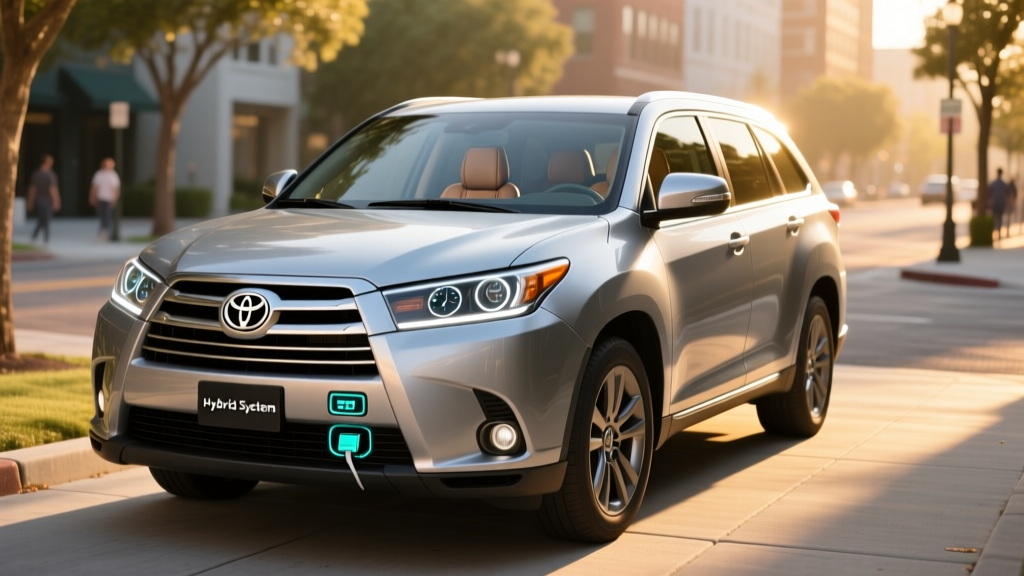
The 2012 Toyota Highlander Hybrid occupies a specific niche in the used SUV market: a three-row, all-wheel-drive family hauler that sips fuel like a midsize sedan. More than a decade after its debut, it remains one of the most reliable hybrid SUVs ever built, and its Synergy Drive powertrain has proven capable of surpassing 200,000 miles with basic maintenance. For buyers in 2026 weighing a used hybrid against a newer gas-only SUV or a modern plug-in hybrid, this guide breaks down exactly what the 2012 Highlander Hybrid delivers — and where it falls short.
What Is the 2012 Highlander Hybrid? (HEV, Not PHEV)
The 2012 Toyota Highlander Hybrid is a conventional hybrid electric vehicle (HEV). It does not plug in. It has no electric-only driving range. Instead, it uses Toyota's Hybrid Synergy Drive system to pair a 3.5-liter V6 gasoline engine with two electric motor-generators and a compact nickel-metal hydride (NiMH) battery pack. The system recovers energy during braking and deceleration, stores it in the battery, and uses it to assist the gas engine during acceleration and to power the vehicle at low speeds.
HEV vs PHEV: What's the Difference?
| Feature | HEV (2012 Highlander Hybrid) | PHEV (e.g., 2026 RAV4 Prime) |
|---|---|---|
| Plugs in? | No | Yes |
| Electric-only range | None (motor assists only) | ~42 miles |
| Battery size | ~1.9 kWh (NiMH) | ~18.1 kWh (Li-ion) |
| Federal tax credit (new) | None | Up to $7,500 (§30D) |
| Charging required | Never — self-charging | Recommended for EV range |
If you're looking for electric-only commuting or a vehicle that qualifies for the federal §30D plug-in tax credit, this is not it. The Highlander Hybrid is designed for drivers who want better fuel economy without changing their refueling habits.
Fuel Economy: EPA MPG and Real-World Results
The EPA rated the 2012 Highlander Hybrid at 28 MPG combined (28 city / 28 highway). For a 4,500-pound, three-row AWD SUV, those numbers were exceptional in 2012 and remain competitive today against many newer non-hybrid midsize crossovers.
| Driving Condition | EPA Estimate | Real-World Expectation |
|---|---|---|
| City | 28 MPG | 27–30 MPG (hybrids excel in stop-and-go) |
| Highway | 28 MPG | 25–27 MPG (aero drag + weight at 70+ mph) |
| Combined | 28 MPG | 26–28 MPG |
| Cold weather (below 30°F) | — | 23–25 MPG (engine runs more for cabin heat) |
According to fueleconomy.gov, real-world owners report an average of 26.8 MPG, which aligns closely with the EPA figure. Hybrids tend to match or exceed their EPA city ratings because regenerative braking recovers more energy in traffic. Highway driving is the opposite: the Highlander Hybrid's boxy shape and 4,500-pound curb weight work against it at sustained speeds above 65 mph.
Annual fuel cost estimate: At $3.40/gallon and 15,000 miles/year, expect to spend roughly $1,820 on gasoline. A comparable gas-only 2012 Highlander V6 AWD (19 MPG combined) would cost about $2,680 — a savings of approximately $860 per year with the hybrid.
Powertrain Specs: V6 Hybrid Synergy Drive
The 2012 Highlander Hybrid uses Toyota's well-proven third-generation hybrid system adapted for a larger vehicle platform:
| Specification | Detail |
|---|---|
| Engine | 3.5L V6 (2GR-FXE), Atkinson cycle |
| Engine output | 230 hp @ 5,600 rpm / 242 lb-ft torque |
| Front electric motor | 167 hp / 247 lb-ft |
| Rear electric motor | 68 hp / 147 lb-ft (powers rear axle — AWD) |
| Net combined system output | 280 hp |
| Transmission | eCVT (electronically controlled continuously variable) |
| Drivetrain | Electronic on-demand AWD (eAWD) |
| 0–60 mph | ~7.8 seconds |
| Towing capacity | 3,500 lbs |
| Curb weight | ~4,500 lbs |
The eAWD system is worth noting: there is no mechanical driveshaft connecting the front and rear axles. Instead, the rear electric motor engages the rear wheels only when the system detects slip or during hard acceleration. This means the AWD is effective in rain and light snow but is not designed for serious off-road use. It also eliminates a major source of mechanical complexity and potential maintenance cost.
Hybrid Battery: Lifespan, Warranty, and Replacement Cost
The high-voltage battery in the 2012 Highlander Hybrid is a nickel-metal hydride (NiMH) pack with approximately 1.9 kWh of capacity. It is located under the second-row seat and is significantly smaller than the lithium-ion packs found in modern PHEVs and BEVs.
Battery Warranty (When New)
- Hybrid battery warranty: 8 years / 100,000 miles (10 years / 150,000 miles in California and states adopting CARB emissions standards)
- Hybrid system components: 8 years / 100,000 miles (inverter, motor-generators, control module)
- Capacity retention threshold: Toyota warranted the battery against failure, not a specific degradation percentage — NiMH packs in Toyota hybrids typically retain 80%+ capacity well past 150,000 miles
Real-world battery longevity: Toyota's NiMH hybrid batteries have an outstanding track record. Data from owner forums, repair shops, and fleet operators consistently show these packs lasting 150,000–200,000+ miles before requiring replacement. Many first-generation Prius batteries (an older, less refined system) have exceeded 250,000 miles. The 2012 Highlander Hybrid benefits from Toyota's third-generation hybrid system with improved thermal management.
Battery replacement cost (2026):
| Option | Cost Range | Notes |
|---|---|---|
| New OEM Toyota battery | $3,000–$4,200 | Dealer-installed; includes labor |
| Refurbished/remanufactured pack | $1,500–$2,500 | Replaced modules; 1–3 year warranty typical |
| Individual module replacement | $400–$900 | Only failed modules replaced; requires diagnostic testing |
For a used 2012 Highlander Hybrid in 2026, the original warranty has almost certainly expired unless the vehicle has unusually low mileage. Budget $2,000–$4,000 as a contingency for a potential battery replacement, though many examples will never need one.
Reliability and Common Issues
The 2012 Highlander Hybrid benefits from one of the strongest reliability reputations in the automotive industry. The 2GR-FXE V6 engine and Toyota's hybrid system are among the most thoroughly proven powertrains ever mass-produced. According to NHTSA records, there are no widespread safety recalls specific to the hybrid system.
Known issues to check for in a used example:
- Inverter coolant pump: Some 2012–2013 Highlander Hybrids were subject to a recall for the hybrid inverter coolant pump. Verify this recall (if applicable) was completed. The repair is free at any Toyota dealer.
- Brake actuator: Toyota's regenerative braking system uses an electro-hydraulic brake actuator that can fail on higher-mileage examples. Replacement runs $1,200–$1,800. Test for firm, consistent brake feel and listen for unusual pump noises when pressing the brake pedal while stationary.
- Standard V6 maintenance: The gasoline engine requires standard maintenance — timing chain (no belt to replace), spark plugs at 120,000 miles, transmission fluid service at 60,000–100,000 miles.
- 12V auxiliary battery: Like all hybrids, the Highlander has a standard 12V battery that powers electronics. It typically lasts 4–6 years and is inexpensive to replace.
Pricing, Tax Credits, and Ownership Economics
As a conventional hybrid, the 2012 Highlander Hybrid does not qualify for the federal §30D new clean vehicle tax credit or the §25E used clean vehicle credit (which applies only to BEVs and PHEVs, not HEVs). There are no federal incentives available for purchasing a used conventional hybrid in 2026.
Used market pricing (2026 estimates):
| Condition / Mileage | Approximate Price |
|---|---|
| Excellent, under 100k miles | $14,000–$17,000 |
| Good, 100k–150k miles | $10,000–$14,000 |
| Fair, 150k–200k miles | $7,000–$10,000 |
5-year ownership cost comparison (estimates at 15,000 miles/year):
| Cost Factor | 2012 Highlander Hybrid | 2012 Highlander V6 Gas |
|---|---|---|
| Purchase price (avg) | $12,000 | $10,000 |
| Fuel (5 years) | $9,100 | $13,400 |
| Insurance (5 years) | $6,500 | $6,500 |
| Maintenance (5 years) | $3,000 | $3,200 |
| Hybrid battery reserve | $2,000 | — |
| 5-year total | ~$32,600 | ~$33,100 |
The hybrid's higher purchase price is largely offset by fuel savings within 2–3 years. If you keep the vehicle for 5+ years and drive primarily in city or mixed conditions, the hybrid is the more economical choice — even accounting for a potential battery replacement.
Highlander Hybrid vs. Modern PHEVs and EVs: Which Fits You?
Pros: 2012 Highlander Hybrid
- Proven reliability — 200k+ mile powertrain lifespan common
- 28 MPG combined without any lifestyle change (no plugging in)
- Three-row seating for up to 7 passengers
- Electronic AWD for all-weather capability
- Low purchase price in 2026 used market
- 3,500-lb towing capacity
Cons: 2012 Highlander Hybrid
- No electric-only range; always burns gasoline
- Dated infotainment (no Apple CarPlay / Android Auto)
- No modern ADAS (no automatic emergency braking, no lane-keeping)
- NiMH battery will eventually need replacement ($2k–$4k)
- No federal tax credits available
- Higher emissions than a PHEV or BEV
Choose the 2012 Highlander Hybrid If:
- You need three rows and AWD on a budget under $15,000
- You can't charge at home (apartment, street parking, no garage)
- You prioritize long-term reliability and low maintenance over technology
- Your driving is mostly city/suburban where the hybrid system excels
Choose a Modern PHEV (e.g., 2026 RAV4 Prime, Grand Cherokee 4xe) If:
- You can install a Level 2 home charger and have a short commute
- You want electric-only driving for daily errands (30–42 miles)
- You want modern safety tech (AEB, lane-keeping, adaptive cruise)
- You may qualify for the §30D federal tax credit (up to $7,500, subject to MSRP caps, income limits, and battery sourcing requirements — see IRS §30D guidelines)
Choose a Full EV (e.g., 2026 Kia EV9, Tesla Model Y) If:
- You want zero tailpipe emissions and lowest per-mile fuel cost
- You have reliable home charging and access to DC fast chargers for road trips
- You want minimal maintenance (no oil changes, no transmission fluid)
- You're willing to pay a higher upfront price for lower operating costs
Frequently Asked Questions
How many MPG does the 2012 Highlander Hybrid get?
The EPA rates it at 28 MPG combined (28 city / 28 highway). Real-world owners average about 26–28 MPG depending on driving mix. In city-heavy driving, expect to match or slightly exceed the EPA figure thanks to regenerative braking. Highway-heavy driving at 70+ mph typically yields 25–27 MPG.
Does the 2012 Highlander Hybrid plug in?
No. It is a conventional hybrid (HEV), not a plug-in hybrid (PHEV). The battery charges itself through regenerative braking and the gasoline engine. You never plug it in — you simply fill it with gasoline like any other car.
How far can it drive on electric power alone?
The 2012 Highlander Hybrid has no meaningful electric-only range. The electric motors assist the gas engine and can propel the vehicle at very low speeds (under 25 mph) for brief distances, but the engine is always running or ready to engage. If electric-only driving matters to you, look at a PHEV like the Toyota RAV4 Prime (42 miles electric) or a full BEV.
Is the hybrid battery reliable and what does replacement cost?
Toyota's NiMH hybrid batteries are among the most reliable in the industry, commonly lasting 150,000–200,000+ miles. A new OEM replacement costs $3,000–$4,200 installed. Refurbished packs run $1,500–$2,500, and individual module repairs can cost as little as $400–$900. Most 2012 examples still on the road have the original battery pack.
Does the 2012 Highlander Hybrid qualify for any tax credit?
No. The federal §30D clean vehicle credit and §25E used clean vehicle credit apply only to plug-in electric vehicles (BEVs and PHEVs), not conventional hybrids. Some states may offer minimal incentives for hybrid purchases, but these are rare in 2026. Check your state's energy office for current programs.
Is the 2012 Highlander Hybrid good in snow?
Yes, within reason. The electronic AWD system (eAWD) automatically sends power to the rear wheels when slip is detected. Combined with the hybrid system's smooth torque delivery and a set of quality winter tires, it performs well in moderate snow and ice. It is not a dedicated off-road vehicle, and ground clearance is a typical crossover 8.0 inches.
How does it compare to a newer hybrid SUV?
A 2026 Toyota Highlander Hybrid achieves 35 MPG combined — a 25% improvement over the 2012 model — and includes modern safety tech (Toyota Safety Sense 2.5+), Apple CarPlay, and a lithium-ion battery. However, a used 2026 example costs $40,000+. The 2012 model delivers 70–80% of the fuel savings at a fraction of the purchase price, making it a strong value pick for budget-conscious buyers who don't need the latest technology.