Why the 2012 Ford Escape Hybrid Still Matters in 2026
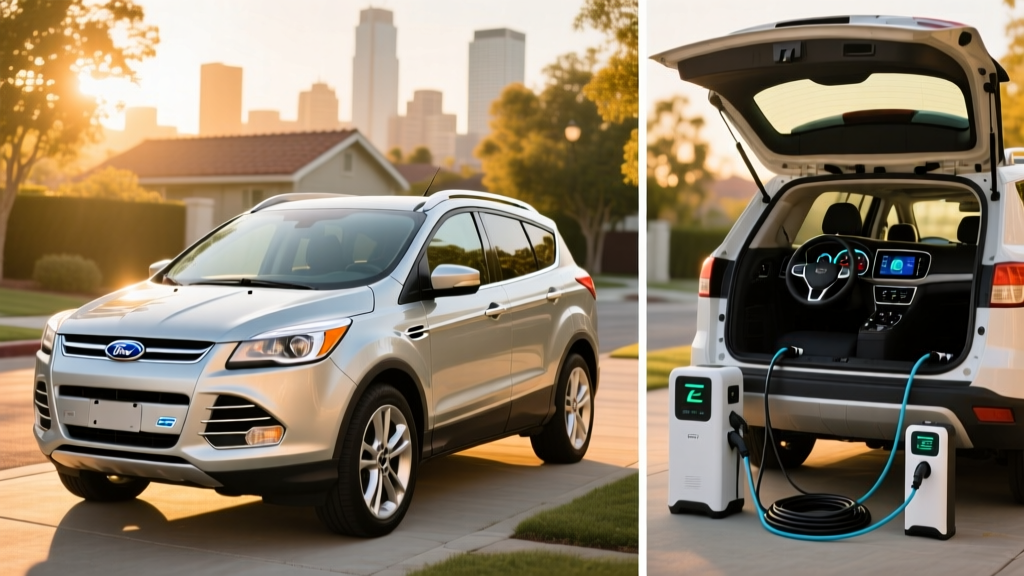
If you're searching for a ford escape hybrid suv 2012 model on the used market, you're looking at one of the earliest mainstream compact hybrid SUVs ever sold in the United States. Ford discontinued the Escape Hybrid after the 2012 model year, replacing it with the Ford Fusion Hybrid and later the Escape plug-in hybrid (PHEV) in subsequent generations. But the 2012 model remains a fixture on the used-car market thanks to its rugged build, straightforward hybrid system, and genuinely impressive fuel economy for its era.
This guide covers everything a used-car buyer or current owner needs to know: EPA and real-world MPG, the hybrid powertrain specs, battery longevity and replacement costs, and how this conventional hybrid (HEV) stacks up against modern PHEVs and full EVs available today.
The 2012 Ford Escape Hybrid is a conventional hybrid (HEV) — it does not plug in. The battery charges exclusively through regenerative braking and the gasoline engine. If you're looking for electric-only driving or plug-in capability, you'd want the later-generation Ford Escape PHEV (introduced for 2020) or a different model entirely. This guide focuses exclusively on the 2012 HEV.
Fuel Economy: EPA Ratings and Real-World MPG
The headline reason buyers sought out the Escape Hybrid was fuel economy. The 2012 model came in two drivetrain configurations — front-wheel drive (FWD) and all-wheel drive (AWD) — with slightly different EPA ratings for each.
| Drivetrain | City MPG | Highway MPG | Combined MPG |
|---|---|---|---|
| FWD | 34 | 31 | 32 |
| AWD (4WD) | 31 | 27 | 29 |
Source: fueleconomy.gov
Real-World MPG: What Owners Actually Report
Conventional hybrids like the Escape tend to exceed their EPA city rating in stop-and-go traffic because regenerative braking recaptures energy that a gas-only car wastes as heat. Multiple owner surveys and Fuelly data show the FWD Escape Hybrid averaging 30–35 MPG combined in mixed driving, with some careful drivers reporting 36+ MPG in warm-weather city conditions.
Highway driving is where the advantage narrows. At sustained 70–80 mph speeds, the 2.5-liter engine does most of the work, and real-world highway figures hover closer to 28–30 MPG for the FWD model. Cold weather also reduces efficiency — expect a 5–10% MPG drop in winter months when the engine runs more frequently to provide cabin heat.
Powertrain and Performance Specs
The 2012 Escape Hybrid pairs Ford's 2.5-liter Atkinson-cycle four-cylinder engine with an AC synchronous electric motor, both integrated into a power-split continuously variable transmission (eCVT). This is the same planetary-gearset architecture Toyota pioneered with the Prius, and Ford licensed similar technology for this generation.
| Specification | Value |
|---|---|
| Gasoline Engine | 2.5L Atkinson-cycle I-4 |
| Engine Horsepower | 156 HP @ 6,000 RPM |
| Electric Motor | AC synchronous permanent-magnet |
| Combined System Output | 177 HP |
| Transmission | eCVT (power-split device) |
| Hybrid Battery | ~1.8 kWh NiMH (nickel-metal hydride) |
| 0–60 MPH | ~10.5 seconds (est.) |
| Drivetrain Options | FWD or AWD |
| Towing Capacity | 1,000 lbs |
Performance is adequate rather than quick. The 177 combined horsepower moves the ~3,800-lb SUV competently around town, and the eCVT provides seamless, shift-free acceleration. However, highway passing requires planning — this is not a performance-oriented vehicle.
Hybrid Battery: Chemistry, Lifespan, and Replacement Cost
The 2012 Escape Hybrid uses a nickel-metal hydride (NiMH) battery pack located beneath the rear cargo floor. Unlike modern lithium-ion (NMC or LFP) packs found in current EVs and PHEVs, NiMH is a mature, robust chemistry that tolerates heat and deep cycling well but is heavier and less energy-dense.
When new, Ford covered the Escape Hybrid's battery with an 8-year / 100,000-mile warranty (extended to 10 years / 150,000 miles in California Air Resources Board states). As of 2026, all original factory warranties have expired on 2012 models.
Real-world data shows these NiMH packs lasting 150,000–200,000+ miles before significant capacity loss. Many 2005–2012 Escape Hybrids are still running on their original batteries at 180,000+ miles, though with some fuel-economy degradation as cells age.
Battery Replacement Options and Costs
If the hybrid battery fails or degrades significantly, owners have three main options:
- OEM replacement from Ford: Approximately $3,000–$4,500 for the battery module, plus $500–$800 labor. Availability may be limited as Ford has reduced production of legacy NiMH packs.
- Aftermarket / refurbished packs: $1,500–$2,500 from third-party hybrid battery specialists. These use reconditioned cells and typically carry a 1–3 year warranty.
- Individual cell replacement: A skilled hybrid technician can identify and replace only the weak cells for $800–$1,500 total. This requires specialized diagnostic equipment.
For a used 2012 Escape Hybrid valued at $4,000–$7,000 in 2026, a full OEM battery replacement can represent a significant percentage of the vehicle's value. Factor this into your purchase decision — always ask for hybrid battery health diagnostics before buying.
Used Market Pricing and Tax Credit Eligibility
As of 2026, the 2012 Ford Escape Hybrid trades on the used market in a range of approximately $4,000–$8,000, depending on mileage, condition, and drivetrain. Lower-mileage FWD examples in good shape command the top of that range.
Does the 2012 Escape Hybrid Qualify for Any Tax Credit?
No. The federal §30D new clean vehicle credit applies only to new vehicle purchases and has specific battery sourcing, MSRP cap, and income requirements. The separate Used Clean Vehicle Credit (§25E) offers up to $4,000 (or 30% of the sale price, whichever is less) for qualifying used EVs and PHEVs purchased from a dealer — but it requires the vehicle to have a plug. Since the 2012 Escape Hybrid is a conventional HEV with no plug-in capability, it does not qualify for either the new or used federal EV tax credit.
Some states offer their own incentives for hybrid vehicles, but most state-level programs have also shifted toward plug-in and battery-electric vehicles. Check your state's current incentive database — but don't count on any credit for this model.
How the 2012 Escape Hybrid Compares: HEV vs PHEV vs EV
If you're considering the 2012 Escape Hybrid, you're likely weighing it against modern alternatives. Here's how the decision framework breaks down:
| Factor | 2012 Escape HEV | Modern PHEV (e.g., 2026 Escape PHEV) | Full EV (e.g., 2026 Tesla Model Y) |
|---|---|---|---|
| Plug Required? | No | Yes (for EV mode) | Yes |
| Electric-Only Range | 0 miles | ~37 miles | ~300+ miles |
| Combined MPG / MPGe | 32 MPG | ~40 MPG (gas) / 105 MPGe | ~120 MPGe |
| Used Price (2026) | $4,000–$8,000 | $25,000–$35,000 | $28,000–$45,000 |
| Federal Tax Credit | None | Up to $7,500 (new)* | Up to $7,500 (new)* |
| Home Charging Needed? | No | Recommended | Essential |
*Federal §30D credit eligibility depends on MSRP caps, buyer income limits, and battery critical-mineral sourcing rules per current IRS guidance. Verify at irs.gov.
- Your budget is under $8,000 and you need an SUV
- You have no access to home or workplace charging
- Your commute is mostly city / stop-and-go driving
- You want minimal complexity — no plug, no range planning
- You can install a Level 2 home charger
- You want electric-only commuting (PHEV for short trips, EV for full electric)
- You want to qualify for federal or state incentives
- You prioritize modern safety tech and infotainment
Reliability and Ownership Costs
The 2012 Escape Hybrid benefits from Ford's second generation of hybrid technology (the first-generation system debuted in the 2005 Escape Hybrid). By 2012, most early teething issues had been resolved. The eCVT transmission — which has no traditional gears, belts, or clutches — is one of the most durable transmissions ever put in a consumer vehicle.
Key reliability considerations for a 2026 buyer:
- Hybrid battery age: Even if mileage is low, the NiMH pack is 14 years old. Calendar aging degrades cells regardless of use. Budget for a potential $1,500–$3,000 battery service within your first few years of ownership.
- Brake longevity: Regenerative braking means the friction brakes are used less often. Original brake pads lasting 80,000–100,000 miles is common on Escape Hybrids.
- Cooling system: The hybrid system has its own coolant loop. Verify that the hybrid cooling system has been serviced per the maintenance schedule — neglected coolant can damage the inverter.
- Standard maintenance: Oil changes, spark plugs, and air filters follow the conventional 2.5L engine schedule. No hybrid-specific routine maintenance is required beyond monitoring battery health.
Insurance costs for a 2012 Escape Hybrid are low by 2026 standards — typically $80–$130/month depending on your state and driving record, reflecting the vehicle's low replacement value.
Pros and Cons at a Glance
Pros
- 34 MPG city / 32 combined (FWD) — still competitive in 2026
- No plug required — works for apartment dwellers and street parkers
- eCVT is extremely durable with minimal moving parts
- Proven NiMH battery with 150K–200K+ mile track record
- Low used price ($4K–$8K) makes it an accessible hybrid entry point
- AWD option available for snow-belt buyers
Cons
- 14-year-old vehicle — general age-related wear expected
- No federal or state tax credit eligibility
- NiMH battery replacement cost ($1,500–$4,500) can rival vehicle value
- Outdated infotainment — no Apple CarPlay, Android Auto, or modern safety tech
- Modest 177 HP — sluggish highway merging and passing
- No electric-only driving capability
- Towing limited to 1,000 lbs
Frequently Asked Questions
How many MPG does the 2012 Ford Escape Hybrid get?
The EPA rates the FWD model at 34 city / 31 highway / 32 combined MPG. The AWD version is rated at 31 city / 27 highway / 29 combined. In real-world city driving, many owners report matching or slightly exceeding the EPA city figure thanks to aggressive regenerative braking. Highway mileage tends to fall 2–4 MPG below the sticker at sustained speeds above 70 mph.
Is the 2012 Ford Escape Hybrid a plug-in vehicle?
No. The 2012 Escape Hybrid is a conventional hybrid (HEV). It has no charging port and cannot be plugged in. The battery recharges through regenerative braking and the gasoline engine. Ford did not offer a plug-in Escape until the 2020 model year.
How much does it cost to replace the hybrid battery?
A new OEM NiMH battery pack costs approximately $3,000–$4,500 plus $500–$800 in labor. Refurbished aftermarket packs run $1,500–$2,500, and individual cell-level repairs can be done for $800–$1,500. Given the vehicle's $4,000–$8,000 used value, a full OEM replacement is often not cost-effective — most owners opt for refurbished packs or cell-level service.
Is the 2012 Escape Hybrid reliable?
Yes, with a caveat. The hybrid powertrain itself (engine, eCVT, motor) is among the most reliable Ford has ever built. The planetary eCVT has no wear items like clutch packs or belts. The main risk factor in 2026 is battery age — even low-mileage examples have 14-year-old NiMH cells that may be nearing end of life. Get a hybrid system diagnostic before purchase.
Does the 2012 Ford Escape Hybrid qualify for a tax credit?
No. The federal §30D new vehicle credit and §25E used vehicle credit both require plug-in capability. The 2012 Escape Hybrid is a conventional HEV with no plug, so it does not qualify for any federal EV tax incentive. Some states may have minor hybrid incentives — check your state's energy office for current programs.
Should I buy a 2012 Escape Hybrid or a newer plug-in hybrid?
If your budget is under $8,000 and you cannot charge at home, the 2012 Escape Hybrid is one of the best fuel-economy values on the used market. If you can spend $20,000+ and have access to a Level 2 charger, a used PHEV like the 2020+ Escape PHEV or Toyota RAV4 Prime gives you 30–42 miles of electric-only range, modern safety features, and potential tax credit eligibility. Your daily commute distance and charging access should drive the decision.
For current federal incentive rules, visit the IRS Used Clean Vehicle Credit page. For official fuel economy data, see fueleconomy.gov.