Quick Verdict: The 2012 Escape Hybrid at a Glance
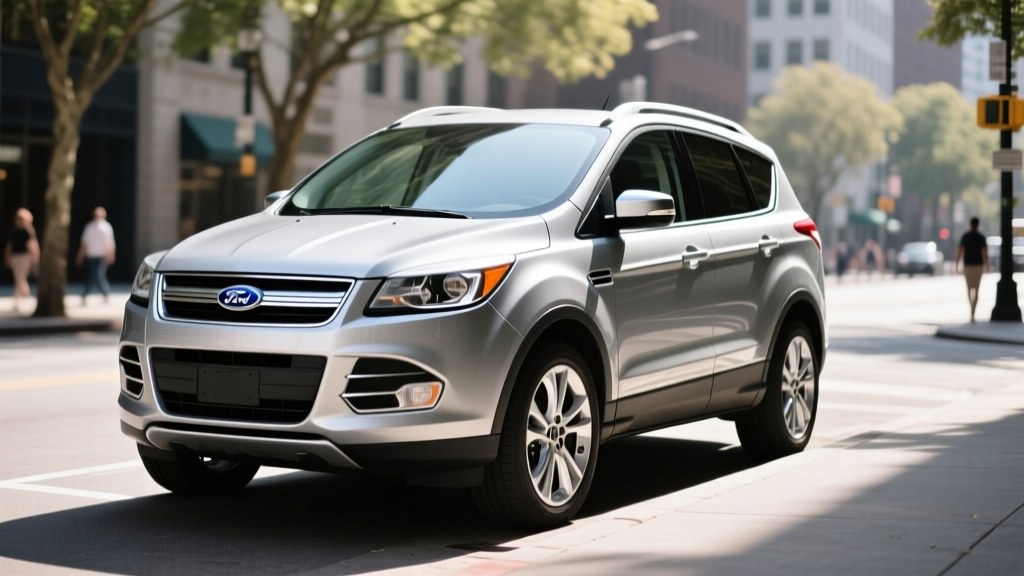
The 2012 Ford Escape Hybrid was the final model year of Ford's first-generation hybrid SUV before the nameplate transitioned to the redesigned 2013 Escape (which dropped the hybrid in favor of the EcoBoost and later the Escape PHEV). As a used vehicle in 2026, the 2012 Escape Hybrid remains one of the most affordable entry points into hybrid ownership — typically selling for $5,500–$9,000 depending on mileage and condition. With an EPA-rated 34 MPG city, it still outperforms most gas-only compact SUVs of its era. However, prospective buyers must weigh the aging nickel-metal hydride (NiMH) battery, limited cargo space compared to modern hybrids, and the reality that this vehicle is now 14 years old.
| Specification | Value |
|---|---|
| Powertrain | 2.5L Atkinson-cycle I4 + electric motor (HEV) |
| Combined Horsepower | 177 hp (net system output) |
| Transmission | eCVT (planetary gearset, not belt-driven) |
| EPA MPG (City / Hwy / Combined) | 34 / 31 / 33 |
| Fuel Tank | 15.3 gallons |
| Total Range (EPA est.) | ~505 miles |
| Hybrid Battery | NiMH, ~1.8 kWh (nominal) |
| Drivetrain | FWD standard; AWD available (AWD drops MPG to 30/27/29) |
| 0–60 mph | ~9.7 seconds (FWD) |
| Cargo Volume (behind rear seats) | 29.2 cu ft |
| Towing Capacity | 1,000 lbs (3,500 lbs with towing package) |
| Original MSRP (2012) | $30,570 (base FWD) – $33,320 (AWD Limited) |
| Used Price Range (2026) | $5,500 – $9,000 |
HEV vs PHEV: Understanding the 2012 Escape Hybrid
A critical distinction for shoppers: the 2012 Ford Escape Hybrid is a conventional hybrid (HEV), not a plug-in hybrid (PHEV). This means:
- No plug-in charging required. The battery recharges entirely through regenerative braking and the gasoline engine. You fuel it like any other car at a gas station.
- No electric-only range. Unlike a PHEV (e.g., the later Ford Escape PHEV with ~37 miles of electric-only driving), the 2012 Escape Hybrid cannot drive meaningful distances on electricity alone. The electric motor assists the gas engine at low speeds and during acceleration, but the vehicle always relies on gasoline for sustained travel.
- No federal tax credit eligibility. The IRS §30D clean vehicle credit applies only to plug-in vehicles (BEVs and PHEVs) with sufficient battery capacity and meeting sourcing requirements. Conventional hybrids like this one have not qualified for federal purchase credits since the original Hybrid Tax Credit expired for Ford in 2009.
If you're comparing this to Ford's current electrified lineup: the 2026 Ford Escape PHEV offers 37 miles of electric-only range and a combined 405 miles of total range, but starts around $40,000 new. The 2012 Escape Hybrid costs a fraction of that on the used market, making it a budget play — not a technology play.
Fuel Economy: EPA Ratings vs Real-World MPG
According to fueleconomy.gov, the 2012 Ford Escape Hybrid FWD achieves:
| Drivetrain | City MPG | Highway MPG | Combined MPG |
|---|---|---|---|
| FWD | 34 | 31 | 33 |
| AWD | 30 | 27 | 29 |
Real-world expectations: Hybrid fuel economy tends to exceed EPA city estimates in stop-and-go driving because regenerative braking recovers more energy at lower speeds. Many owners report 33–36 MPG in mixed city driving with the FWD model. However, sustained highway driving at 75+ mph typically yields 28–30 MPG as the aerodynamic drag of the boxy Escape bodywork overwhelms the hybrid system's efficiency advantage. In cold weather (below 30°F), expect a 5–10% reduction in fuel economy due to engine warm-up cycles and reduced battery efficiency in the NiMH pack.
For context, the non-hybrid 2012 Escape with the 2.5L gas engine and 6-speed automatic achieves 22/28/24 MPG (city/highway/combined). The hybrid's ~37% combined fuel economy improvement translates to roughly 120 fewer gallons per year at 15,000 miles driven — approximately $380–$450 in annual fuel savings at current gas prices.
Powertrain Deep Dive: How the Hybrid System Works
The 2012 Escape Hybrid pairs a 2.5-liter Atkinson-cycle inline-four engine (156 hp, 136 lb-ft torque) with a permanent-magnet AC synchronous electric motor integrated into Ford's eCVT transaxle. The combined net system output is 177 hp.
The eCVT is not a conventional belt-and-cone CVT. It uses a planetary gearset — the same architecture Toyota pioneered with the Prius and licensed/shared with Ford under a cross-licensing agreement. This design is mechanically robust with no belts, chains, or friction clutches to wear out, contributing to the powertrain's long-term durability.
The system operates in several modes automatically:
- EV mode: At very low speeds (typically under 25 mph) with light throttle, the vehicle can creep short distances (a few hundred feet) on electric power alone.
- Hybrid mode: The engine and motor work together, with the eCVT seamlessly blending power sources.
- Regenerative braking: Lift-off and braking events send kinetic energy back into the NiMH battery, recovering energy that a conventional vehicle would waste as heat.
- Engine-only mode: At steady highway cruising, the gasoline engine may operate independently while the electric motor idles.
Battery Lifespan, Warranty & Replacement Cost
Original Battery Warranty: Ford covered the 2012 Escape Hybrid's NiMH battery for 8 years / 100,000 miles (10 years / 150,000 miles in California and states that adopted CARB emissions standards). As of 2026, all original factory battery warranties have expired, even in CARB states.
Battery longevity in practice: The NiMH battery in the 2012 Escape Hybrid has proven reasonably durable, with many examples reaching 150,000–200,000 miles before significant degradation. Unlike modern lithium-ion packs, NiMH chemistry is more tolerant of full charge/discharge cycles but suffers from gradual capacity loss over time — typically manifesting as reduced low-speed EV-mode range and slightly lower fuel economy rather than sudden failure.
Replacement cost: If the hybrid battery fails or degrades beyond usefulness:
- New OEM battery from Ford: $2,500–$3,500 (part only, if still available — Ford has been discontinuing NiMH packs for older models)
- Remanufactured aftermarket battery: $1,200–$2,000 from suppliers like Green Bean Battery or Dorman
- Used/salvage battery: $400–$800, though this carries the risk of inheriting someone else's degradation
- Labor: $300–$600 at an independent shop; $500–$900 at a dealership
Total replacement cost: $1,500–$4,400 depending on the route chosen. For a vehicle worth $5,500–$9,000, this is a significant expense that buyers must factor into the purchase decision. Before buying, request a hybrid battery health check — many scan tools can read the battery's state of health (SoH) and individual cell voltage balance.
Reliability, Safety & Common Issues
The 2012 Escape Hybrid's eCVT and hybrid system are among the most reliable components in the vehicle. The planetary gearset design has no wear items comparable to a traditional automatic transmission's clutch packs. However, the vehicle as a whole has some known issues:
- Hybrid battery cooling fan: The blower motor that cools the NiMH pack (located under the rear cargo floor) can fail, leading to battery overheating and reduced performance. Replacement: $200–$400.
- Brake actuator assembly: The electro-hydraulic brake unit that enables regenerative braking has a known failure mode in 2010–2012 Escape Hybrids. Symptoms include a hard brake pedal and loss of regen. Ford issued a customer satisfaction program for some model years. Replacement: $1,200–$1,800.
- Electric power steering (EPS): Some owners report intermittent EPS faults. This was a known issue across the Escape platform.
- Rust: The 2008–2012 Escape platform is prone to rear subframe and rocker panel corrosion, particularly in salt-belt states. Inspect thoroughly underneath.
Safety: The 2012 Escape received a 4-star overall rating from NHTSA (out of 5) and was rated Good by IIHS in the moderate overlap front and side crash tests. However, it was rated Marginal in the roof strength test — a concern for rollover protection. Modern 2026 compact SUVs significantly outperform this vehicle in crash safety, particularly with standard automatic emergency braking, lane-keeping, and blind-spot monitoring — none of which are available on the 2012 Escape.
Tax Credits, Incentives & Total Ownership Cost
Federal tax credits: The 2012 Ford Escape Hybrid does not qualify for the IRS §30D Clean Vehicle Credit. That credit is exclusively for plug-in vehicles (BEVs and PHEVs) meeting battery sourcing, MSRP caps, and buyer income limits as outlined on irs.gov. Conventional hybrids have not been eligible for federal purchase incentives since the original Energy Policy Act hybrid credits phased out for Ford in 2009.
State incentives: A handful of states offer modest incentives for hybrid vehicles (e.g., HOV lane access in some jurisdictions, reduced registration fees), but these vary widely and many have expired. Check your state's DMV or energy office for current programs.
5-Year Ownership Cost Estimate (Used 2012 Escape Hybrid FWD, 12,000 miles/year):
| Category | Annual Cost | 5-Year Total |
|---|---|---|
| Purchase Price (avg.) | — | $7,250 |
| Fuel (33 MPG combined, $3.40/gal) | $1,236 | $6,180 |
| Insurance (avg.) | $900 | $4,500 |
| Maintenance & Repairs | $700 | $3,500 |
| Hybrid Battery Reserve | — | $2,000 |
| Registration & Taxes | $150 | $750 |
| Total (5 years) | ~$24,180 |
For comparison, a 2012 Escape with the 2.5L gas engine (24 MPG combined) would cost roughly $1,700/year in fuel — about $464 more annually. Over five years, the hybrid saves approximately $2,320 in fuel, partially offsetting the potential battery replacement risk.
Who Should Buy the 2012 Escape Hybrid — And Who Shouldn't
Pros
- Very low purchase price ($5,500–$9,000)
- Strong city fuel economy (34 MPG EPA, often 33–36 real-world)
- Proven eCVT powertrain with no belts or clutches to wear
- Higher ground clearance than a Prius for light trails or snow
- 3,500-lb towing capacity (with tow package) — rare for hybrids of this era
- No plug-in charging infrastructure needed
Cons
- Aging NiMH battery with $1,500–$4,400 replacement risk
- No modern ADAS features (no AEB, no lane-keeping, no blind-spot)
- Poor IIHS roof strength rating
- Boxy, dated interior with limited tech (no Apple CarPlay/Android Auto)
- Highway MPG drops significantly (28–30 real-world at 75 mph)
- Cargo space (29.2 cu ft) trails modern hybrid SUVs
- AWD version sacrifices 4 MPG combined
Choose the 2012 Escape Hybrid if: You need an affordable, no-plug-required hybrid for city-heavy commuting, you're comfortable with older-vehicle maintenance, and you want SUV ride height without paying new-car prices. It's well-suited as a second vehicle, a budget commuter, or a first hybrid for someone testing whether hybrid ownership fits their lifestyle before committing to a new PHEV or BEV.
Look elsewhere if: You want modern safety technology, you drive mostly highway miles (the hybrid advantage shrinks), you need reliable long-term ownership without major repair risk, or you want to qualify for federal tax credits. In those cases, consider a used 2017+ Toyota RAV4 Hybrid ($15,000–$22,000), a new 2026 Hyundai Tucson Hybrid ($34,000+), or a new 2026 Ford Escape PHEV ($40,000+) if you have home charging and want electric-only commuting.
Frequently Asked Questions
How many MPG does the 2012 Escape Hybrid get?
The EPA rates the FWD model at 34 city / 31 highway / 33 combined MPG. The AWD version drops to 30/27/29. In real-world driving, owners typically see 33–36 MPG in city conditions and 28–30 MPG on the highway. Cold weather and aggressive driving can reduce these figures by 5–10%.
Does the 2012 Escape Hybrid need to be plugged in?
No. The 2012 Escape Hybrid is a conventional hybrid (HEV), not a plug-in hybrid. The battery charges entirely through regenerative braking and the gasoline engine. You never plug it in — you only refuel at a gas station.
How far can it drive on electric power alone?
Effectively zero meaningful distance. The electric motor assists at very low speeds (under ~25 mph) for brief stretches — perhaps a few hundred feet in a parking lot or at a stoplight. It cannot sustain electric-only driving like a PHEV or BEV. If you want electric-only commuting, you need a plug-in vehicle.
Is the hybrid battery reliable, and what does replacement cost?
The NiMH battery typically lasts 150,000–200,000 miles with gradual capacity loss rather than sudden failure. The original 8-year/100,000-mile warranty has expired on all 2012 models. Replacement costs $1,500–$4,400 depending on whether you choose a remanufactured, used, or OEM pack. Have the battery health checked before purchase.
Does the 2012 Escape Hybrid qualify for any tax credit?
No. The IRS §30D Clean Vehicle Credit applies only to plug-in electric vehicles (BEVs and PHEVs) that meet battery sourcing, MSRP, and income requirements. Conventional hybrids are not eligible. The original hybrid tax credits under the Energy Policy Act phased out for Ford vehicles in 2009.
How does it compare to a modern hybrid SUV?
A 2026 Toyota RAV4 Hybrid achieves 41 MPG combined (vs. 33 for the 2012 Escape Hybrid), includes standard AEB, lane-keeping, and blind-spot monitoring, offers 37.6 cu ft of cargo space, and comes with a 10-year/150,000-mile hybrid battery warranty. However, it starts at ~$33,000 new — roughly 4–5× the cost of a used 2012 Escape Hybrid.
Is the eCVT transmission reliable?
Yes. The eCVT in the 2012 Escape Hybrid uses a planetary gearset with no belts, chains, or friction clutches. It is one of the most durable transmission designs in the automotive industry and is shared in concept with the Toyota Prius. Failures are rare; most issues stem from the brake actuator or cooling system rather than the transaxle itself.