Quick Verdict: A Proven Hybrid Workhorse at a Bargain Price
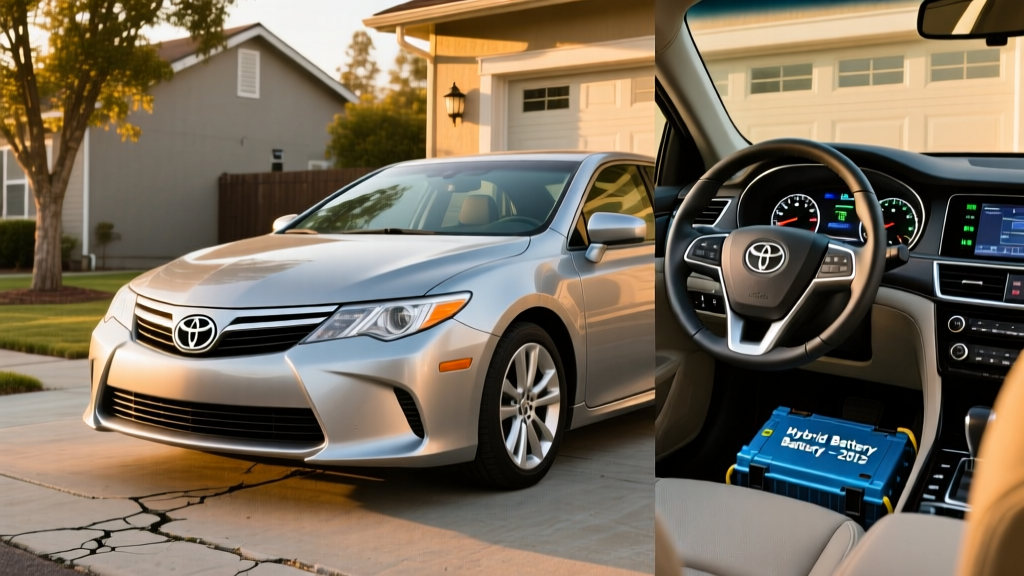
The 2012 Toyota Camry Hybrid XLE occupies a specific niche in 2026's used-car market: a mid-size sedan that delivers genuine fuel savings without the complexity, range anxiety, or charging infrastructure requirements of a plug-in vehicle. With an EPA-rated 40 MPG combined and a track record of bulletproof reliability, this third-generation Camry Hybrid remains one of the smartest budget-conscious purchases for commuters who want to cut fuel costs without plugging in.
But at 14 years old, prospective buyers need clear data on battery health, replacement costs, and how this HEV (conventional hybrid electric vehicle) compares to the newer PHEVs and full EVs flooding the market. This guide covers every number that matters.
| Specification | 2012 Camry Hybrid XLE |
|---|---|
| Powertrain Type | Conventional Hybrid (HEV) — no plug-in |
| Engine | 2.5L 4-cylinder Atkinson-cycle (156 hp) |
| Electric Motor | 105 kW (141 hp) synchronous motor |
| Combined System Output | 200 hp net |
| Transmission | eCVT (planetary gearset) |
| Hybrid Battery | 1.6 kWh NiMH (nickel-metal hydride) |
| EPA Fuel Economy | 40 city / 38 highway / 40 combined MPG |
| Fuel Tank | 17.2 gallons |
| Total Range | ~688 miles (EPA combined) |
| 0-60 mph | ~7.6 seconds |
| Curb Weight | ~3,595 lbs |
| Cargo Volume | 13.1 cu ft (trunk) |
| Original MSRP (XLE) | ~$29,970 (2012) |
| Typical 2026 Used Price | $7,500–$12,000 (condition/mileage dependent) |
Fuel Economy: EPA Ratings vs. Real-World MPG
The 2012 Camry Hybrid carries an EPA rating of 40 MPG city / 38 highway / 40 combined, according to fueleconomy.gov. Unlike full EVs where real-world range often falls short of the sticker, conventional hybrids like this Camry frequently exceed their EPA city estimates in stop-and-go driving, where regenerative braking recaptures the most energy.
What Owners Actually Report
Aggregated owner data from Fuelly and hybrid forums shows real-world combined averages between 38–44 MPG, with city-dominant commuters regularly seeing 42–45 MPG. Highway-heavy driving at 75+ mph drops efficiency to roughly 34–37 MPG, as the electric motor contributes less at sustained high speeds and aerodynamic drag increases.
| Driving Scenario | Expected MPG |
|---|---|
| EPA City (sticker) | 40 |
| EPA Highway (sticker) | 38 |
| EPA Combined (sticker) | 40 |
| Real-World City (stop-and-go) | 42–45 |
| Real-World Highway (65-70 mph) | 37–40 |
| Real-World Highway (75+ mph) | 34–37 |
| Cold Weather (below 30°F, short trips) | 33–38 |
Cold-weather note: Like all hybrids, the NiMH battery loses efficiency in freezing temperatures, and the engine runs more frequently to maintain cabin heat. Expect a 5–15% fuel economy penalty in winter conditions, depending on trip length and climate severity.
HEV vs. PHEV vs. Full EV: Which Powertrain Fits You?
The 2012 Camry Hybrid is a conventional hybrid (HEV). It does not plug in. It has no electric-only driving range to speak of (the small 1.6 kWh NiMH battery provides brief low-speed electric assist, typically under 1 mile at very low speeds). It generates all its electricity from the gasoline engine and regenerative braking.
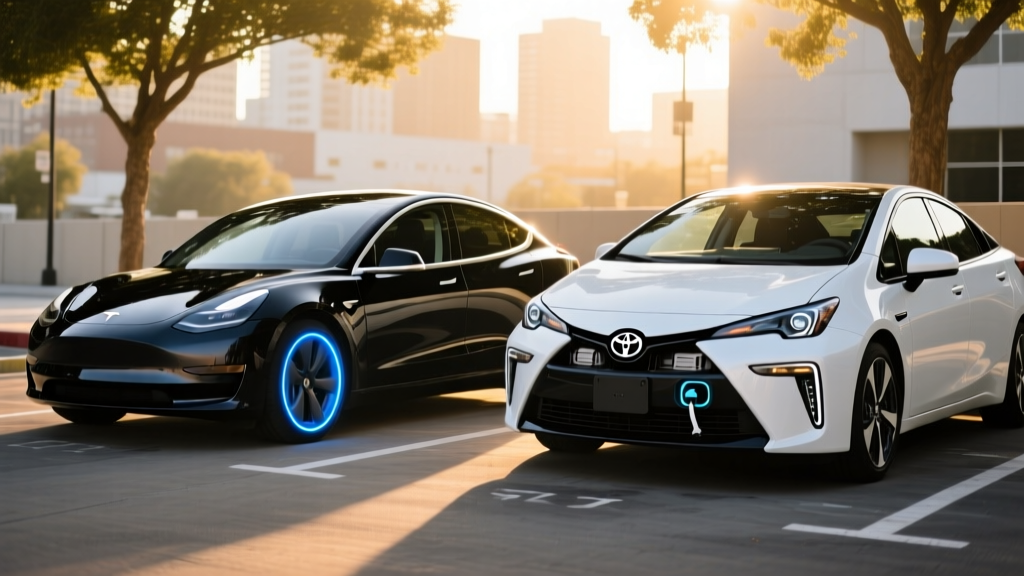
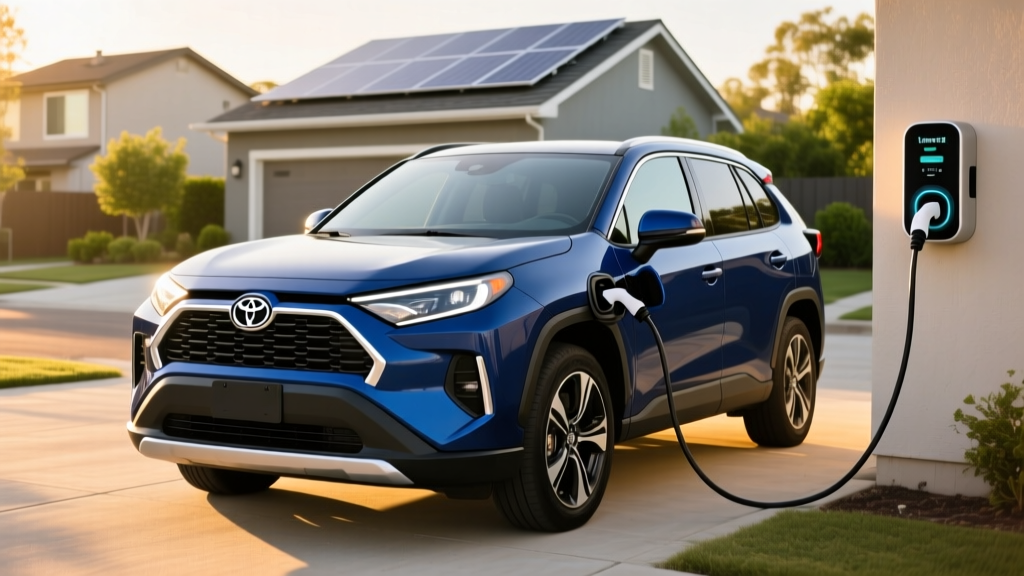
This is fundamentally different from a plug-in hybrid (PHEV) like the Toyota RAV4 Prime or a full battery-electric vehicle (BEV) like the Tesla Model 3. Here's how the three powertrain types compare for a buyer considering this Camry:
| Factor | HEV (this Camry) | PHEV (e.g., RAV4 Prime) | Full EV (e.g., Model 3) |
|---|---|---|---|
| Plugs In? | No | Yes (Level 1/2) | Yes (Level 1/2/DC) |
| Electric-Only Range | ~0 miles | 25–42 miles | 250–360 miles |
| Gasoline Required? | Yes (always) | Yes (after EV range) | No |
| Home Charging Needed? | No | Recommended | Essential |
| Fuel Cost (per mile) | ~$0.10–$0.13 | ~$0.04 (EV) / ~$0.12 (gas) | ~$0.03–$0.06 |
| Maintenance | Low (oil, brakes last longer) | Low-moderate | Very low |
| Tailpipe Emissions | Low | Low (zero in EV mode) | Zero |
| Federal Tax Credit (new) | None | Up to $7,500 (§30D) | Up to $7,500 (§30D) |
| Upfront Cost (2026 new) | ~$28,000–$35,000 | ~$43,000–$55,000 | ~$38,000–$55,000+ |
Decision Framework
Choose the 2012 Camry Hybrid (HEV) if: You want maximum simplicity, no charging infrastructure, low purchase price, and proven long-term reliability. You drive 10,000–15,000 miles/year and want to cut fuel costs by ~40% vs. a comparable gas sedan.
Choose a PHEV if: You have home charging access, a short commute (under 30 miles), and want to drive mostly on electricity while keeping a gas engine for road trips.
Choose a full EV if: You have reliable home Level 2 charging, want the lowest per-mile operating cost, and your daily driving stays within ~200 miles.
Hybrid Battery Health, Warranty, and Replacement Cost
The single biggest concern for any used-hybrid buyer is the traction battery. The 2012 Camry Hybrid uses a 1.6 kWh nickel-metal hydride (NiMH) pack located behind the rear seat. This is a mature, well-understood chemistry — less energy-dense than modern lithium-ion but extremely durable.
Original Toyota Hybrid Battery Warranty
- Standard states: 8 years / 100,000 miles (whichever comes first)
- CARB states (CA, NY, MA, and others adopting California emissions rules): 10 years / 150,000 miles
- Coverage: Defects and capacity loss below a defined threshold (typically ~60% of original capacity)
For a 2012 model in 2026, the original factory warranty has expired in all cases unless the vehicle has exceptionally low mileage and is registered in a CARB state with an extended powertrain transfer provision.
Battery Lifespan: What the Data Shows
Toyota's NiMH hybrid batteries have demonstrated exceptional longevity in fleet and owner data. The median lifespan before significant degradation or failure is 150,000–200,000 miles, with many units lasting 250,000+ miles. The key degradation factors are:
- Heat exposure: Vehicles in hot climates (AZ, TX, FL) see earlier battery degradation. The Camry Hybrid's battery is air-cooled, not liquid-cooled, making it more susceptible to thermal stress.
- Deep cycling: NiMH batteries degrade faster when regularly depleted to very low states of charge. Toyota's battery management system (BMS) maintains a buffer — the car never uses the full 1.6 kWh — which significantly extends cycle life.
- Age: Even low-mileage examples may show capacity loss after 12–15 years due to calendar aging of NiMH cells.
Replacement Costs in 2026
| Option | Cost Range | Notes |
|---|---|---|
| New OEM Toyota battery | $3,000–$4,000 (installed) | Full new NiMH pack from Toyota dealer |
| Remanufactured battery | $1,500–$2,500 (installed) | Rebuilt with tested cells; 1–3 year warranty typical |
| Used/salvage battery | $500–$1,200 (plus install) | From a wrecked Camry; condition uncertain |
| Individual cell/module replacement | $300–$800 (specialist shop) | Only bad modules replaced; requires diagnostic expertise |
At the $7,500–$12,000 typical purchase price for a 2012 Camry Hybrid XLE, a $2,000 remanufactured battery replacement still keeps total investment well below a new vehicle. Many independent hybrid specialists now offer module-level repairs that can extend battery life at a fraction of full-pack replacement cost.
Pre-Purchase Battery Check
Before buying, request a hybrid battery health report. A Toyota dealer can pull State of Health (SoH) data via Techstream diagnostics. Look for:
- Internal resistance variance between modules (should be within ~0.02 ohms)
- Voltage delta across modules at rest (should be within ~0.2V)
- Charge/discharge cycle test results
Third-party apps like Dr. Prius (with an OBD-II dongle) can also run a battery life-expectancy test for under $30 in equipment.
Powertrain and Driving Experience
The 2012 Camry Hybrid XLE pairs a 2.5-liter Atkinson-cycle four-cylinder engine (156 hp, 156 lb-ft torque) with a 105 kW permanent-magnet synchronous electric motor. Combined net output is 200 horsepower, routed through Toyota's eCVT — not a belt-driven CVT but a planetary gearset that blends engine and motor power seamlessly.
The result is smooth, linear acceleration with no gear shifts to feel. The 0–60 mph time of approximately 7.6 seconds is adequate for merging and passing, though it won't feel quick by modern EV standards (where instant torque delivers sub-5-second times in many models).
Regenerative Braking and Driving Modes
The Camry Hybrid offers three drive modes:
- EV Mode: Forces electric-only operation at very low speeds (under ~25 mph, for less than ~1 mile). Useful for creeping through a parking garage.
- Eco Mode: Softens throttle response and reduces A/C compressor load for maximum efficiency.
- Normal/Power Mode: Standard and more aggressive throttle mapping for highway merging.
Regenerative braking is progressive and well-calibrated. The brake pedal blends regen and friction braking smoothly — a common complaint in early hybrids (grabby, unpredictable braking) was largely resolved by this generation. Brake pad life is typically 60,000–100,000 miles thanks to regen handling most deceleration.
The XLE Trim: What You Get
The XLE was the top trim for the 2012 Camry Hybrid, and it came well-equipped for its era. Standard features on the Hybrid XLE included:
- Leather-trimmed seats with heated front seats
- Dual-zone automatic climate control
- Smart Key with push-button start
- Backup camera
- 7-inch touchscreen with Entune audio (Bluetooth, USB)
- 17-inch alloy wheels
- Auto-dimming rearview mirror with compass and HomeLink
- Cruise control (conventional, not adaptive)
Notable omissions by 2026 standards: no Apple CarPlay/Android Auto (the Entune system is outdated), no adaptive cruise control, no lane-keeping assist, and no blind-spot monitoring on most examples. The safety suite is basic — ABS, stability control, and 10 airbags — but it lacks the ADAS features now standard on most new vehicles.
Tax Credits and Ownership Economics
As a conventional hybrid (HEV), the 2012 Camry Hybrid does not qualify for the federal §30D new clean vehicle credit, the used EV credit (§25E), or any current federal plug-in incentive. These credits are reserved for vehicles with plug-in capability and minimum battery capacities (PHEVs and BEVs).
Some states historically offered rebates for conventional hybrids, but nearly all have shifted incentives exclusively to PHEVs and BEVs. Check your state's energy office or Alternative Fuels Data Center for any remaining local programs.
Total Cost of Ownership (Used Purchase, 5-Year Projection)
| Cost Category | 2012 Camry Hybrid XLE (5-Year Est.) | Comparable Gas Sedan (5-Year Est.) |
|---|---|---|
| Purchase Price | $9,500 (avg) | $8,000 (avg) |
| Fuel (15,000 mi/yr × 5 yr) | $6,375 (40 MPG, $3.40/gal) | $9,188 (28 MPG, $3.40/gal) |
| Insurance | $5,500 | $5,500 |
| Maintenance & Repairs | $3,500 (incl. potential battery) | $3,000 |
| Estimated Total | $24,875 | $25,688 |
| Fuel Savings vs. Gas | ~$2,813 over 5 years | |
The Camry Hybrid breaks even against a comparable gas Camry within 3–4 years of typical driving, with savings growing as mileage accumulates. If the hybrid battery holds up (and statistically, it likely will at typical mileages), the economics strongly favor the hybrid.
Reliability and Common Issues
The 2012 Camry Hybrid benefits from Toyota's Hybrid Synergy Drive, one of the most thoroughly proven powertrains in automotive history. The eCVT has no belts, no clutches, and no traditional friction components to wear out — it is fundamentally simpler and more durable than a conventional automatic transmission.
Known Issues Beyond the Battery
- Brake actuator assembly: Some 2012–2014 Camry Hybrids experienced premature wear in the brake actuator (the electrohydraulic unit that blends regen and friction braking). Toyota issued a warranty enhancement (ZE6) extending coverage to 10 years/150,000 miles for affected vehicles. Check whether this service was performed.
- Water pump (electric): The inverter coolant pump can fail around 100,000–130,000 miles. Replacement is ~$400–$600.
- 12V auxiliary battery: Like all hybrids, the Camry has a standard 12V battery (in the trunk) that powers electronics. It typically lasts 4–6 years and is a standard replacement.
- Entune head unit: The factory touchscreen is known to become unresponsive or develop a "white screen" failure. Aftermarket replacement with a modern CarPlay/Android Auto unit is a popular $300–$500 upgrade.
According to NHTSA data, the 2012 Camry Hybrid has a modest recall and complaint record compared to the broader fleet, with no systemic powertrain failures beyond the items noted above.
Pros and Cons at a Glance
Pros
- 40+ MPG real-world in city driving — genuine fuel savings
- Proven, durable powertrain with 200,000+ mile potential
- No charging infrastructure required — just add gas
- Low purchase price ($7,500–$12,000 used)
- Comfortable XLE trim with leather and heated seats
- Strong resale demand for well-maintained examples
- eCVT reliability exceeds conventional automatics
Cons
- Outdated infotainment — no CarPlay/Android Auto
- No modern ADAS (no AEB, lane-keep, adaptive cruise)
- NiMH battery will eventually need replacement ($1,500–$4,000)
- Trunk space reduced to 13.1 cu ft by battery placement
- Air-cooled battery vulnerable in extreme heat climates
- No federal or state tax credits available
- Average safety ratings by current standards
Frequently Asked Questions
How many MPG does the 2012 Camry Hybrid XLE actually get?
The EPA rates it at 40 city / 38 highway / 40 combined. Real-world owners report 38–45 MPG depending on driving mix. City-heavy commutes with frequent stops maximize regenerative braking and often exceed the EPA city figure. Sustained highway driving above 75 mph drops efficiency to the mid-30s.
Does this hybrid need to be plugged in?
No. The 2012 Camry Hybrid is a conventional hybrid (HEV), not a plug-in hybrid (PHEV). It charges its small 1.6 kWh battery entirely through the gasoline engine and regenerative braking. You fuel it exactly like a regular car.
How long will the hybrid battery last, and what does replacement cost?
Toyota's NiMH hybrid batteries typically last 150,000–200,000 miles, with many exceeding 250,000 miles. A remanufactured replacement costs $1,500–$2,500 installed; a new OEM battery runs $3,000–$4,000. At the used purchase price of this vehicle, even a full battery replacement keeps total cost competitive with a newer gas car.
Does the 2012 Camry Hybrid qualify for any tax credit?
No. Federal tax credits under §30D and §25E apply only to plug-in vehicles (PHEVs and BEVs) with minimum battery capacities. Conventional hybrids like this Camry do not qualify for any current federal incentive. State-level hybrid incentives have largely been phased out in favor of plug-in vehicle programs.
Is the 2012 Camry Hybrid reliable compared to a gas Camry?
Yes. The hybrid powertrain has fewer wearable components than a conventional powertrain (no traditional transmission, longer brake life due to regen, no starter motor or alternator). The primary additional risk is eventual hybrid battery replacement, but this is a known, predictable cost. The eCVT is widely regarded as one of the most durable transmissions ever produced.
Should I buy this or a newer used hybrid like a 2018+ Camry Hybrid?
If budget is the primary constraint, the 2012 offers nearly identical fuel economy (the 2018+ is rated at 44–52 MPG combined, a modest improvement) at a fraction of the price. However, the newer generation adds Toyota Safety Sense (AEB, lane-keep, adaptive cruise), Apple CarPlay, and a lithium-ion battery. If you can stretch to $16,000–$20,000, the 2018+ is the more complete vehicle. If you need to stay under $12,000, the 2012 is still an excellent value.
How does this compare to buying a full EV like a used Nissan Leaf or Chevy Bolt?
A used Leaf or Bolt offers zero tailpipe emissions and lower per-mile fuel costs (electricity vs. gasoline), but requires home charging access and comes with range limitations (75–259 miles depending on model and battery condition). The Camry Hybrid is the better choice if you lack reliable charging, frequently drive 300+ miles in a day, or live in an area with sparse public charging infrastructure. The EV makes more sense for shorter, predictable commutes with overnight home charging.