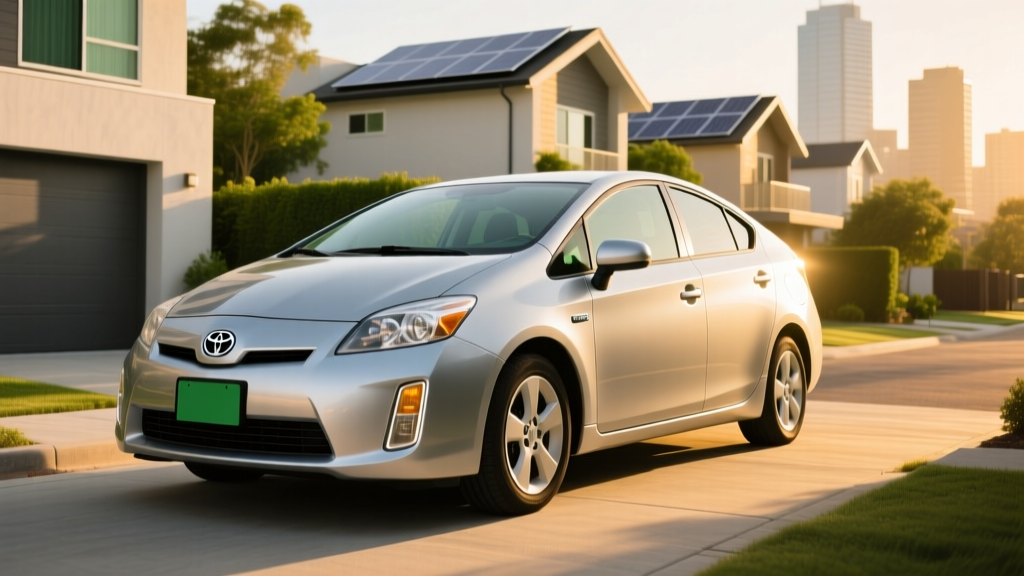
The 2011 Toyota Prius is one of the most consequential vehicles ever sold in the United States. As the third-generation model, it refined the hybrid formula that made Toyota the default choice for fuel-conscious drivers long before battery-electric vehicles became mainstream. Now, well over a decade after it rolled off the assembly line, the 2011 Prius is flooding the used-car market at bargain prices — often under $8,000, sometimes under $5,000. For budget-minded buyers, it raises a practical question: does this aging hybrid still deliver?
The short answer is yes — but with important caveats around battery health, replacement cost, and the reality of owning a 15-year-old hybrid. This guide breaks down everything you need to know about the 2011 Toyota Prius hybrid from a 2026 ownership perspective: real MPG, battery longevity, what a replacement actually costs, and how it stacks up against modern hybrids, PHEVs, and EVs.
2011 Prius Powertrain and Efficiency Specs
The third-generation Prius (model years 2010–2015) uses Toyota's Hybrid Synergy Drive system — a series-parallel full hybrid architecture. This is a conventional hybrid electric vehicle (HEV), meaning it cannot be plugged in. It generates all its electricity internally through the gasoline engine and regenerative braking.
| Specification | Value |
|---|---|
| Powertrain type | Conventional Hybrid (HEV) — no plug-in |
| Gasoline engine | 1.8L 4-cylinder Atkinson cycle (98 hp) |
| Electric motor | 60 kW (80 hp) permanent-magnet AC synchronous |
| Net combined horsepower | 134 hp |
| Transmission | Planetary eCVT (continuously variable) |
| Hybrid battery | 1.3 kWh nominal (NiMH, 201.6V pack) |
| Drivetrain | Front-wheel drive |
| Curb weight | ~3,042 lbs |
| 0–60 mph | ~9.8 seconds |
| Fuel tank capacity | 11.9 gallons |
| EPA combined MPG | 50 MPG |
| EPA city / highway MPG | 51 city / 48 highway |
| Total driving range (EPA est.) | ~595 miles |
The 1.3 kWh nickel-metal hydride (NiMH) battery is tiny by modern standards — a 2026 Toyota Prius Prime PHEV carries a 13.6 kWh lithium-ion pack. But in a conventional HEV, the battery doesn't need to store much energy. It acts as a buffer, capturing regenerative braking energy and enabling short electric-only assists at low speeds. The Prius can creep on electric power alone at parking-lot speeds (roughly up to 15 mph for very short distances), but it is not designed for meaningful electric-only driving.
Real-World MPG: What Owners Actually See
The 2011 Prius carries an EPA rating of 51 city / 48 highway / 50 combined MPG, according to fueleconomy.gov. That 50 MPG combined figure was class-leading when the car was new and remains remarkably competitive in 2026.
Real-world fuel economy, however, depends heavily on driving style, climate, and — critically — the condition of the aging hybrid battery.
- City driving (healthy battery): 47–52 MPG — hybrids shine in stop-and-go traffic where regen braking recovers energy
- Highway driving: 43–48 MPG — the Atkinson-cycle engine is efficient but less dominant at sustained speeds
- Cold weather (below 30°F): 40–45 MPG — cabin heating draws from the engine, and NiMH chemistry is less efficient in cold
- With degraded battery: 38–44 MPG combined — a worn pack forces the engine to run more often, eroding the hybrid advantage
The single biggest variable for a used 2011 Prius buyer is battery state of health (SoH). A Prius with a healthy NiMH pack will still deliver near-EPA numbers. One with a degraded pack will still run — the car won't strand you — but you'll see the engine cycle on more frequently and fuel economy drop noticeably. We'll address battery health assessment and replacement costs below.
Conventional Hybrid vs. PHEV vs. EV: Where the 2011 Prius Fits
Understanding the 2011 Prius requires understanding the three electrified vehicle categories available to today's buyers:
| Feature | HEV (2011 Prius) | PHEV (e.g., 2026 Prius Prime) | BEV (e.g., Tesla Model 3) |
|---|---|---|---|
| Plug-in charging? | No — self-charging | Yes — plug in for EV range | Yes — sole energy source |
| Electric-only range | ~0.5 mi at low speed | ~44 miles | 250–400+ miles |
| Gasoline engine? | Yes (primary power) | Yes (backup/extended range) | No |
| Combined efficiency | 50 MPG | 52 MPG + 127 MPGe (EV mode) | 132 MPGe (varies by model) |
| Fuel/energy cost per mile | ~$0.07 (gas at $3.50/gal) | ~$0.03 (electric) / $0.07 (gas) | ~$0.03–0.05 (electric) |
| Home charging needed? | No | Recommended for full benefit | Essential |
| Federal tax credit (§30D) | Not eligible | Up to $3,750 (varies) | Up to $7,500 (varies) |
| Used purchase price (2026) | $4,000–$9,000 | $28,000–$38,000 new | $25,000–$50,000+ |
The 2011 Prius occupies a specific niche: maximum fuel efficiency with zero infrastructure requirements. You never plug it in. You fuel it at any gas station. It just works. For buyers without access to home charging — apartment dwellers, street parkers, those in areas with sparse public charging infrastructure — a conventional HEV like this remains the most practical path to dramatically lower fuel consumption.
Hybrid Battery Health: The #1 Used Prius Concern
The 2011 Prius uses a nickel-metal hydride (NiMH) traction battery rated at 1.3 kWh nominal capacity. Toyota's original hybrid battery warranty for this model year was 8 years / 100,000 miles (extended to 10 years / 150,000 miles in California Air Resources Board states and those that adopted CARB emissions standards).
- Original factory warranty: 8 yr / 100,000 mi (non-CARB states) or 10 yr / 150,000 mi (CARB states)
- Warranty status in 2026: Expired for virtually all 2011 models — the newest are 15 years old
- Typical NiMH lifespan: 12–18 years / 150,000–200,000+ miles with gradual capacity loss
- Failure mode: Gradual degradation (reduced MPG, more engine cycling) rather than sudden death
NiMH batteries degrade differently than modern lithium-ion packs. They tend to lose capacity gradually rather than failing catastrophically. A 2011 Prius with 180,000 miles on an original battery will almost certainly have measurable capacity loss — expect 15–30% degradation — but the car will still drive. The telltale signs of a tired NiMH pack include:
- Engine starts more frequently, even at low speeds and when the battery gauge shows charge
- Fuel economy drops below 42–44 MPG combined on routes that previously yielded higher numbers
- Battery state-of-charge gauge fluctuates rapidly (drops from full to near-empty in minutes)
- Reduced regenerative braking feel
- Check hybrid system warning light (indicates a fault, not just degradation)
Battery Replacement Costs in 2026
If the hybrid battery in a 2011 Prius needs replacement, owners have three realistic options:
| Option | Cost Range (2026) | Details |
|---|---|---|
| New OEM Toyota battery | $2,200–$3,000 (parts + labor) | Direct from Toyota dealer; full new NiMH pack; best longevity |
| Refurbished/reconditioned pack | $800–$1,500 (parts + labor) | Replacement of failed modules within existing pack; shorter lifespan; quality varies by shop |
| Used/salvage pack | $400–$800 (parts + labor) | From a wrecked Prius; unknown remaining life; cheapest but riskiest |
| Aftermarket new pack (e.g., Green Bean Battery) | $1,200–$1,800 | New NiMH modules from third-party; often includes warranty; growing option |
For context, a $1,500 battery investment in a $6,000 Prius still yields a vehicle with 50 MPG capability and potentially another 100,000+ miles of service. Many owners consider this a worthwhile repair — especially compared to the cost of a new vehicle.
You can assess battery health before purchase using an OBD-II scanner app (such as Dr. Prius or Torque) to read the battery's internal resistance and voltage delta across modules. A voltage spread of less than 0.20V across all 28 modules under load generally indicates a healthy pack.
Reliability, Maintenance, and Known Issues
The 2011 Prius is one of the most reliable vehicles Toyota has ever built. The planetary eCVT transmission — which has no traditional belts, clutches, or gears to wear — routinely exceeds 300,000 miles with basic fluid maintenance. The 1.8L 2ZR-FXE Atkinson-cycle engine is under-stressed and long-lived. NHTSA records show no systemic powertrain failures beyond the expected battery degradation.
Known issues specific to the 2011 model year include:
- Head gasket failure (higher-mileage): The 2010–2015 1.8L engine has a known head gasket vulnerability, typically appearing between 150,000–250,000 miles. Symptoms include coolant loss without visible leaks and misfires on cold start. Repair cost: $1,500–$2,500.
- Brake actuator recall: Toyota issued recalls for the regenerative braking system's brake actuator assembly. Check the VIN against NHTSA's recall database before purchase to confirm recall work was performed.
- Inverter coolant pump: Some units experience premature failure of the inverter coolant pump. This is a relatively inexpensive repair (~$300–$500) but should be confirmed.
- Oil consumption: Some 2010–2012 1.8L engines consume oil at a higher-than-normal rate. Check oil level at every fill-up.
Beyond these items, routine maintenance on a 2011 Prius is minimal: oil changes every 10,000 miles (0W-20 synthetic), cabin air filter, brake fluid flush every 3 years, and transaxle fluid drain-and-fill every 60,000 miles. Brake pads last exceptionally long (often 100,000+ miles) thanks to regenerative braking handling most deceleration.
Does the 2011 Prius Qualify for Any Tax Credits?
No. The 2011 Toyota Prius is a conventional hybrid (HEV) and does not qualify for the federal §30D Clean Vehicle Credit. That credit is reserved for plug-in electric vehicles — battery-electric vehicles (BEVs) and plug-in hybrids (PHEVs) — that meet battery capacity, critical mineral sourcing, MSRP, and buyer income requirements.
The original Prius Plug-in Hybrid (introduced for the 2012 model year) qualified for a federal credit when new, but that credit has long since been claimed and expired. For used buyers in 2026:
- Used 2011 Prius (HEV): No federal tax credit, no state EV rebates (some states offer small used hybrid incentives — check your local DMV or energy office)
- Used EV credit (§25E): The federal used clean vehicle credit of up to $4,000 applies only to used BEVs and PHEVs purchased from a dealer, priced under $25,000, and meeting other criteria. A conventional HEV like the 2011 Prius does not qualify.
The 2011 Prius makes its financial case through operating cost savings, not purchase incentives. At 50 MPG versus a 28 MPG conventional compact, the Prius saves roughly $700–$900 per year in fuel costs for a driver covering 12,000 miles annually at $3.50/gallon.
Who Should Buy a 2011 Toyota Prius in 2026?
- You want maximum MPG without plugging in
- Your budget is under $8,000 for a vehicle
- You lack access to home or workplace charging
- You drive mostly city/suburban miles where hybrid efficiency peaks
- You want Toyota reliability with low running costs
- You're comfortable budgeting $1,000–$2,500 for potential battery replacement
- You want electric-only driving or plug-in capability
- You want modern safety tech (AEB, lane-keeping, adaptive cruise) — the 2011 has none
- You drive primarily long highway routes (a modern PHEV or efficient diesel may match its highway MPG)
- You want a federal tax credit on your purchase
- You need a vehicle with remaining factory warranty
- Head gasket risk on high-mileage examples concerns you
For buyers who can charge at home and have a larger budget, a modern PHEV like the 2026 Prius Prime (44 miles EV range, 52 MPG hybrid mode, eligible for up to $3,750 in federal credits) offers a dramatically more capable package. But at four to six times the price, it's a different buying decision entirely.
2011 Prius: Final Verdict for Used Buyers
The 2011 Toyota Prius hybrid remains one of the smartest used-car purchases available in 2026 for budget-conscious, fuel-conscious drivers. Its 50 MPG EPA rating still holds up against vehicles costing five times as much. The powertrain is proven to exceed 250,000 miles with basic maintenance. And the entry price — often $5,000–$8,000 — makes it accessible to nearly any buyer.
The key to a successful purchase is verifying hybrid battery health before you buy. Use an OBD-II scanner to check module voltage spread. Budget $1,000–$2,000 for a battery replacement if the pack is tired. Confirm the brake actuator recall was performed. And inspect for the head gasket symptoms common to the 2010–2015 1.8L engine at high mileage.
Do those checks, and the 2011 Prius delivers exactly what it promised when new: the lowest cost-per-mile of any non-plug-in vehicle on the road.
Frequently Asked Questions
How many MPG does the 2011 Toyota Prius hybrid get?
The EPA rates the 2011 Prius at 51 city / 48 highway / 50 combined MPG. Real-world results with a healthy battery typically fall in the 45–52 MPG combined range depending on driving conditions. A degraded battery can reduce this to 38–44 MPG.
Does the 2011 Prius need to be plugged in?
No. The 2011 Prius is a conventional hybrid (HEV). It charges its small 1.3 kWh NiMH battery entirely through the gasoline engine and regenerative braking. There is no plug and no electric-only driving range to speak of.
How much does it cost to replace a 2011 Prius hybrid battery?
A new OEM Toyota NiMH battery costs $2,200–$3,000 installed. Refurbished packs run $800–$1,500. Aftermarket new packs from third-party suppliers cost $1,200–$1,800. Many owners find the investment worthwhile given the vehicle's continued efficiency and reliability post-replacement.
Is the 2011 Prius still reliable after 15 years?
Yes, with caveats. The hybrid powertrain, eCVT transmission, and electric motor are exceptionally durable. The main concerns at this age are hybrid battery degradation (expected), head gasket failure on the 1.8L engine at high mileage, and standard wear items on any 15-year-old vehicle (suspension bushings, A/C components, rust in salt-belt states).
Hybrid vs. PHEV vs. EV — which should I choose?
Choose a conventional hybrid (like the 2011 Prius) if you can't plug in at home and want maximum MPG on a tight budget. Choose a PHEV if you have home charging and want 30–44 miles of daily electric driving plus gas-engine backup for road trips. Choose a full EV if you have reliable home charging, want the lowest operating cost, and drive under 300 miles daily. Each category serves different infrastructure and budget realities.
Does the 2011 Prius qualify for any tax credit in 2026?
No. The 2011 Prius is a conventional hybrid and is not eligible for the federal §30D Clean Vehicle Credit or the §25E Used Clean Vehicle Credit. Those credits apply only to plug-in electric vehicles (BEVs and PHEVs) meeting specific battery sourcing, price, and income requirements.