Quick Verdict: The 2011 Prius at 15 Years Old
The 2011 Toyota Prius hybrid remains one of the most fuel-efficient used cars you can buy in 2026. With an EPA-rated 50 MPG combined, a proven 1.8L Atkinson-cycle powertrain, and a track record of reaching 200,000+ miles with basic maintenance, the third-generation Prius is a rational choice for budget-conscious commuters who want hybrid efficiency without plug-in complexity. Used examples now trade between $5,000 and $9,000 depending on mileage and condition — a fraction of any new hybrid's sticker price.
But a 15-year-old hybrid comes with real caveats: the nickel-metal hydride (NiMH) traction battery may be nearing end-of-life if it hasn't been replaced, and certain model-year issues (head gasket failures, oil consumption) demand attention before purchase. This guide covers the exact specs, real-world fuel economy, battery longevity data, and ownership costs you need to evaluate a used 2011 Prius.
HEV vs PHEV: Where the 2011 Prius Fits
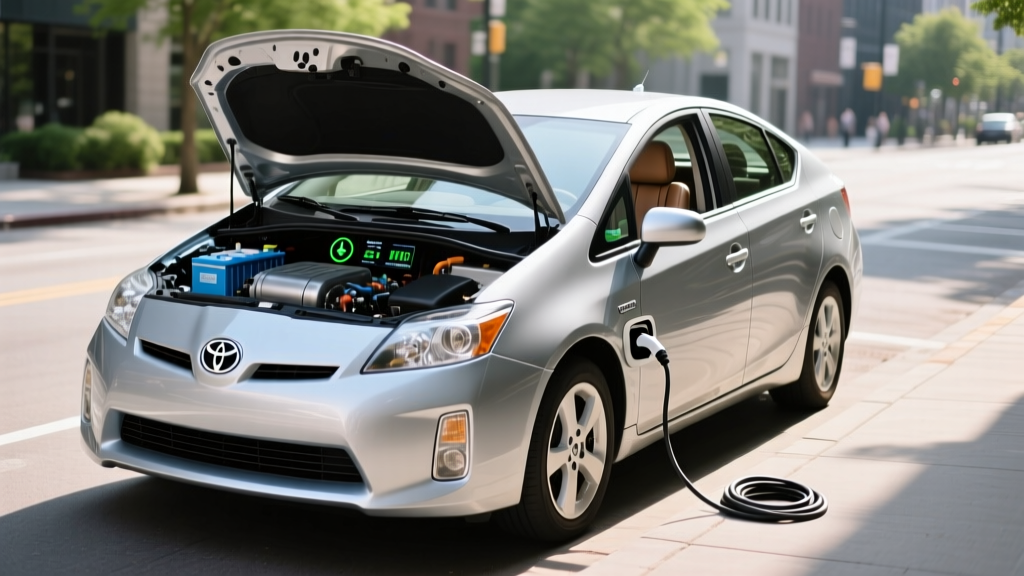
The 2011 Toyota Prius is a conventional hybrid electric vehicle (HEV), not a plug-in hybrid. This distinction matters because buyers sometimes confuse the standard Prius with the Prius Plug-in (introduced for the 2012 model year, later renamed Prius Prime).
| Feature | 2011 Prius (HEV) | Prius Prime (PHEV, current gen) |
|---|---|---|
| Plug-in charging | No — self-charging via engine + regen | Yes — Level 1/Level 2 AC |
| Electric-only range | ~1 mile at low speed | Up to 44 miles (2025 EPA) |
| Battery capacity | 1.3 kWh (NiMH) | 13.6 kWh (lithium-ion) |
| Federal tax credit (new) | None | Up to $7,500 (§30D, subject to eligibility) |
| Used price range (2026) | $5,000–$9,000 | $22,000–$32,000 |
The HEV architecture means you never plug in. The 1.3 kWh NiMH battery charges through regenerative braking and the gasoline engine, then deploys electric motor assist during acceleration and low-speed driving. It's a closed system — no charging cables, no home charger installation, no range anxiety about finding a plug.
Fuel Economy: EPA Ratings and Real-World MPG
| Driving Cycle | EPA Rating |
|---|---|
| City | 51 MPG |
| Highway | 48 MPG |
| Combined | 50 MPG |
Source: EPA / fueleconomy.gov
Real-World MPG: What Owners Actually Report
The 2011 Prius is one of those rare vehicles where real-world fuel economy frequently meets or exceeds the EPA sticker — especially in city driving where the hybrid system recaptures the most energy through regenerative braking. Data aggregated from owner fuel logs on Fuelly shows a lifetime average of approximately 46–48 MPG combined across thousands of fill-ups, with many drivers reporting 52–55 MPG in warm-weather city commuting.
Highway driving at sustained 75+ MPH drops efficiency to roughly 42–45 MPG because the electric motor provides less benefit at constant high speed and aerodynamic drag increases. Cold weather (below 35°F) reduces MPG by 5–10% as the engine runs longer to reach operating temperature and cabin heat demands fuel combustion.
Real-world MPG tip: The 2011 Prius has an "ECO" drive mode that softens throttle response and reduces A/C compressor load. Drivers who use ECO mode and practice anticipatory braking (maximizing regen) consistently report 2–4 MPG gains over normal driving.
Powertrain Specs: Engine, Motor, and Combined Output
| Gasoline engine | 1.8L 4-cyl Atkinson-cycle (2ZR-FXE) |
| Engine horsepower | 98 HP @ 5,200 RPM |
| Engine torque | 105 lb-ft @ 4,000 RPM |
| Electric motor | Permanent magnet synchronous (3JM) |
| Motor horsepower | 80 HP (60 kW) |
| Motor torque | 153 lb-ft |
| Net system horsepower | 134 HP |
| Transmission | eCVT (planetary gearset, no belts) |
| Drivetrain | Front-wheel drive |
| 0–60 MPH | ~9.8 seconds |
| Traction battery | 1.3 kWh NiMH (202V nominal) |
| Curb weight | ~3,042 lbs |
The third-generation Prius (2010–2015) upgraded from the prior 1.5L engine to a 1.8L, improving highway passing power and overall efficiency. The eCVT is not a traditional belt-driven CVT — it uses a planetary gearset that seamlessly blends engine and motor power with no belts or pulleys to wear out. This design is a significant reliability advantage.
Battery Longevity, Warranty, and Replacement Cost
The 2011 Prius uses a nickel-metal hydride (NiMH) traction battery rated at 1.3 kWh. Toyota's original hybrid battery warranty covered 8 years / 100,000 miles (extended to 10 years / 150,000 miles in California Air Resources Board states). That factory coverage has expired on all 2011 models by now.
How Long Do Prius NiMH Batteries Last?
Based on fleet data, owner surveys, and independent testing, the 2011 Prius NiMH battery typically delivers 12–15 years or 150,000–200,000 miles before significant capacity loss. "Significant" here means enough degradation to noticeably reduce fuel economy (typically 2–5 MPG drop) and electric-mode assist. Complete failure — where the car won't drive — is less common than gradual capacity fade.
Heat is the primary enemy of NiMH longevity. Prius owners in hot climates (Arizona, Texas, Southern California) report earlier battery degradation than those in moderate climates. The battery is located under the rear seat, where cabin temperature affects it directly.
Battery Replacement Cost (2026 Estimates)
| Option | Cost Range | Warranty | Notes |
|---|---|---|---|
| New OEM (Toyota dealer) | $2,500–$3,500 installed | 3 yr / 36,000 mi | Most reliable, highest cost |
| Refurbished / reconditioned | $1,000–$1,800 installed | 1–3 yr (varies) | Replaced weak modules; mixed longevity |
| Used (salvage yard) | $500–$900 + install | None / 30-day | Risky — unknown remaining life |
| Aftermarket new (e.g., Green Bean) | $1,500–$2,200 installed | Up to lifetime (some vendors) | Improved NiMH cells; popular option |
If you're evaluating a used 2011 Prius, ask the seller whether the hybrid battery has been replaced. A documented battery replacement within the last 2–3 years adds significant value and removes the biggest unknown in ownership cost.
Known Issues Beyond the Battery
The 2011 model year has two documented concerns worth checking:
- Head gasket failure: Some 2010–2015 Prius engines develop head gasket leaks around 120,000–180,000 miles, often preceded by coolant loss and EGR clogging. A coolant pressure test and EGR inspection are essential pre-purchase checks.
- Oil consumption: A subset of 2ZR-FXE engines consume oil at higher-than-normal rates. Check the dipstick and ask about oil change intervals — 5,000-mile or shorter intervals help prevent this.
Pricing and Tax Credit Eligibility in 2026
| Condition / Mileage | Approximate Price |
|---|---|
| Excellent (<100k mi, new battery) | $8,000–$9,500 |
| Good (100k–150k mi, original battery) | $6,000–$8,000 |
| Fair (150k+ mi, may need battery) | $4,500–$6,000 |
Does the 2011 Prius Qualify for Any Tax Credit?
No. The 2011 Prius does not qualify for the federal §30D clean vehicle tax credit. That credit applies only to new plug-in vehicles (BEVs and PHEVs) meeting current battery sourcing, MSRP caps, and buyer income limits as defined by the IRS. Conventional hybrids (HEVs) have never qualified for §30D.
Some states offer modest incentives for used hybrid purchases or for scrapping older vehicles in favor of cleaner ones, but these vary widely by jurisdiction. Check your state's environmental or DMV agency for current programs.
Who Should Buy the 2011 Prius (and Who Shouldn't)
Reasons to Buy
- 50 MPG combined — among the highest of any vehicle ever sold in the US
- Low used entry price ($5k–$9k) vs $28k+ for a new Prius
- Proven reliability with 200k+ mile examples common
- No plug-in required — ideal for apartment dwellers without charging access
- Low annual fuel cost: ~$900/year at 12,000 mi and $3.20/gal
- Hatchback cargo versatility (21.6 cu ft behind rear seats)
Reasons to Pass
- Hybrid battery replacement risk ($1,000–$3,500) if not already addressed
- Head gasket and oil consumption concerns at high mileage
- Slow acceleration (9.8s 0–60) — highway merging requires planning
- No modern ADAS (no automatic emergency braking, no lane-keeping assist)
- Dated infotainment — no Apple CarPlay, no Android Auto
- Safety ratings: Good in most IIHS tests, but no crash prevention tech
Hybrid vs PHEV vs EV — Which Fits You?
Choosing between a used HEV like the 2011 Prius, a newer PHEV, or a full battery electric vehicle (BEV) depends on your driving pattern, charging access, and budget:
- Choose the 2011 Prius (HEV) if: Your budget is under $10,000, you lack home charging access, your commute is 20–60 miles daily, and you want the lowest possible fuel cost without any plug-in logistics.
- Choose a PHEV (e.g., Prius Prime) if: You have home Level 2 charging, your daily commute is under 40 miles (coverable on electric-only), and you want zero-emission weekday driving with gas-engine flexibility for road trips.
- Choose a BEV (e.g., Chevy Bolt, Tesla Model 3) if: You have reliable home charging, want zero tailpipe emissions, are eligible for the $7,500 federal tax credit, and your typical trips fall within 200–300 miles.
2011 Prius Ownership Costs: 5-Year Estimate
| Category | Estimated Cost | Notes |
|---|---|---|
| Purchase price (avg) | $7,000 | Good condition, ~120k miles |
| Fuel (gasoline) | $4,500 | 50 MPG, $3.15/gal avg |
| Insurance | $4,200 | ~$70/mo, varies by state/driver |
| Maintenance | $2,800 | Oil, brakes, tires, fluids |
| Hybrid battery reserve | $1,500 | Budget for possible replacement |
| Registration / taxes | $750 | Varies by state |
| Total 5-year estimate | ~$20,750 | ~$4,150/year all-in |
For comparison, a similarly priced used gas-only compact sedan getting 30 MPG combined would cost approximately $7,500 in fuel over the same period — $3,000 more than the Prius. The fuel savings alone offset much of the potential battery replacement cost.
Frequently Asked Questions
How many MPG does the 2011 Toyota Prius hybrid get?
The EPA rates the 2011 Prius at 51 MPG city, 48 MPG highway, and 50 MPG combined. Real-world owner data clusters around 46–48 MPG combined, with city-dominant drivers often exceeding 52 MPG and highway-dominant drivers seeing 42–45 MPG.
Is the 2011 Prius a plug-in hybrid?
No. The 2011 Prius is a conventional hybrid (HEV). It cannot be plugged in and has no meaningful electric-only range. Toyota introduced the Prius Plug-in Hybrid for the 2012 model year, which later became the Prius Prime.
How much does it cost to replace the hybrid battery in a 2011 Prius?
Replacement costs range from $500 (used salvage battery, risky) to $3,500 (new OEM from a Toyota dealer). The most popular middle-ground option is an aftermarket new or refurbished battery at $1,000–$2,200 installed, often with a multi-year warranty.
How reliable is the 2011 Toyota Prius at high mileage?
The 2011 Prius powertrain is among the most reliable Toyota has built. The eCVT transmission has no belts to fail, and the Atkinson-cycle engine is under-stressed. Examples exceeding 200,000 miles are common. The main risks at high mileage are hybrid battery degradation, head gasket issues, and EGR system clogging — all addressable with proactive maintenance.
Does the 2011 Prius qualify for a federal tax credit?
No. The federal §30D clean vehicle credit applies only to new plug-in vehicles (BEVs and PHEVs). Conventional hybrids do not qualify. Some states may offer small incentives for used vehicle purchases or trade-ins — check your state's environmental agency.
What should I check before buying a used 2011 Prius?
Prioritize these inspections: (1) hybrid battery health check via an OBD2 scanner app like Dr. Prius or Hybrid Assistant, (2) coolant pressure test to rule out head gasket leaks, (3) EGR valve and cooler inspection, (4) oil consumption history, and (5) brake actuator function (the electro-hydraulic brake system is expensive to replace if faulty).
How does the 2011 Prius compare to a new 2025 Prius?
The current-generation (2023+) Prius produces 194 HP (vs 134 HP), achieves up to 57 MPG combined (vs 50 MPG), includes Toyota Safety Sense 3.0 with automatic emergency braking and lane-keeping, and offers modern infotainment with wireless CarPlay. However, a new Prius starts at $28,350 MSRP — roughly 3–5 times the cost of a used 2011 example. If budget is the primary constraint, the 2011 delivers 87% of the fuel economy at 20–30% of the price.