Quick Verdict: A Proven Hybrid Family Hauler, Now Deep in Used Territory
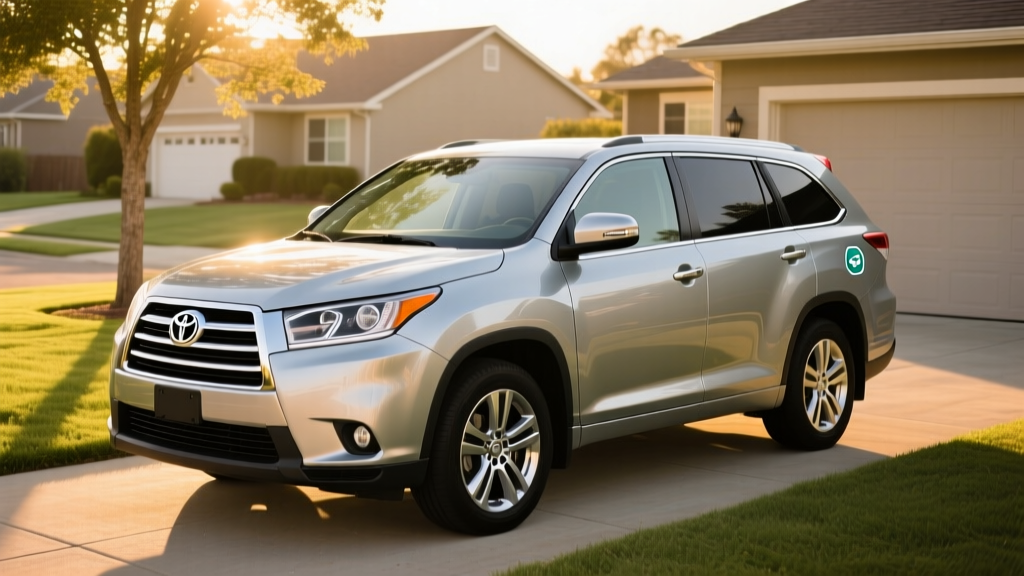
The 2011 Toyota Highlander Hybrid is a conventional hybrid electric vehicle (HEV) — meaning it charges its own battery through regenerative braking and the gasoline engine. You never plug it in. Now well over a decade old, this three-row SUV has settled into the used market as one of the most reliable hybrid crossovers from its era, with EPA-rated fuel economy that still impresses for a vehicle of its size.
If you're shopping for a 2011 Toyota Highlander Hybrid in 2026, you're likely weighing it against newer hybrids, plug-in hybrids, or full EVs. This guide covers exactly what you're getting: real-world MPG, the Hybrid Synergy Drive powertrain, battery longevity, replacement costs, and how it stacks up against modern alternatives.
| Specification | Value |
|---|---|
| Powertrain | 3.5L V6 + 2 electric motors (Hybrid Synergy Drive) |
| Combined Horsepower | 280 hp (net system) |
| Drivetrain | AWD-i (electric rear axle, no mechanical driveshaft) |
| EPA Fuel Economy | 28 city / 28 highway / 28 combined MPG |
| Battery Type | Nickel-Metal Hydride (NiMH), ~1.9 kWh (not plug-in) |
| Seating | 7 passengers (3 rows) |
| Cargo Volume | 10.3 cu ft (behind 3rd row) / 95.4 cu ft (max) |
| Towing Capacity | 3,500 lbs |
| 0-60 mph | ~7.8 seconds |
| Original MSRP (Base) | $38,590 (2011) |
| Typical Used Price (2026) | $8,000–$14,000 depending on mileage/condition |
Fuel Economy: EPA Numbers vs. Real-World MPG
The 2011 Highlander Hybrid's headline number is its 28 MPG combined EPA rating, split evenly at 28 city / 28 highway. For a 4,500-pound, seven-passenger AWD SUV, that figure was exceptional in 2011 and remains competitive against many non-hybrid midsize SUVs sold today.
Source: fueleconomy.gov — 2011 Toyota Highlander Hybrid
| Driving Scenario | Expected MPG |
|---|---|
| EPA City | 28 MPG |
| EPA Highway | 28 MPG |
| EPA Combined | 28 MPG |
| Real-World City (owner-reported) | 26–30 MPG |
| Real-World Highway (70+ mph) | 24–27 MPG |
| Real-World Combined (mixed driving) | 25–28 MPG |
| Cold Weather (below 32°F, short trips) | 22–25 MPG |
Why City and Highway MPG Are Identical
Unlike most gasoline vehicles that get significantly better highway MPG, hybrids often see equal or even better city numbers. The 2011 Highlander Hybrid's electric motors handle low-speed propulsion, regenerative braking recaptures energy in stop-and-go traffic, and the engine shuts off at stops. On the highway, the vehicle relies more heavily on the 3.5L V6, and aerodynamic drag reduces the hybrid system's advantage. Expect real-world highway driving at 75+ mph to drop to the mid-20s.
Real-World Factors That Affect Your MPG
- Cold weather: The engine runs more frequently to heat the cabin and warm the catalytic converter, dropping MPG by 10–15% in winter.
- Tire condition: Worn or non-LRR (low rolling resistance) replacement tires can reduce fuel economy by 1–3 MPG.
- Battery age: A degraded NiMH battery reduces electric-motor assist, forcing the gasoline engine to work harder. More on this below.
- Towing/roof cargo: Towing near the 3,500-lb limit or using a roof box will reduce MPG to the low 20s.
Hybrid vs. Plug-In Hybrid vs. Full EV: Where the 2011 Highlander Fits
The 2011 Highlander Hybrid is a conventional hybrid (HEV). It is not a plug-in hybrid (PHEV) and not a battery electric vehicle (BEV). Understanding the distinction is essential for buyers comparing options.
| Feature | HEV (This Vehicle) | PHEV (e.g., RAV4 Prime) | BEV (e.g., Tesla Model Y) |
|---|---|---|---|
| Plugs in? | No — self-charging | Yes — Level 1/2 | Yes — Level 1/2/DC |
| Electric-Only Range | ~1 mile at low speed | 25–42 miles typical | 250–350+ miles |
| Gasoline Engine | Yes (primary power) | Yes (backup + highway) | None |
| Battery Size | ~1.9 kWh NiMH | 13–18 kWh NMC | 60–100 kWh NMC/LFP |
| Fuel/Energy Cost | Gasoline only | Gasoline + electricity | Electricity only |
| Federal Tax Credit (New) | None | Up to $7,500 (§30D) | Up to $7,500 (§30D) |
| Used EV Credit (§25E) | Not eligible | Up to $4,000 | Up to $4,000 |
Who Should Choose This HEV Over a PHEV or EV?
The 2011 Highlander Hybrid makes sense if you:
- Cannot install a home charger (apartment, street parking, no garage)
- Want the simplicity of gas-station refueling with better fuel economy
- Need three rows and AWD at a used-market price under $15,000
- Drive mostly in suburban/city conditions where the hybrid system shines
- Want Toyota's proven hybrid reliability without EV charging logistics
Look at a PHEV or BEV instead if you have home charging access, want to minimize gasoline use, or are buying new and can take advantage of federal tax credits.
Powertrain: The Hybrid Synergy Drive System
The 2011 Highlander Hybrid uses Toyota's second-generation Hybrid Synergy Drive adapted for a larger SUV platform. The system pairs a 3.5-liter V6 engine (producing 245 hp on its own) with two electric motor-generators and a planetary gearset that serves as a continuously variable transmission (eCVT).
The net system output is 280 hp, delivered through Toyota's AWD-i system. Unlike mechanical AWD, there is no driveshaft to the rear wheels. Instead, a separate electric motor powers the rear axle when additional traction is needed. This means the rear wheels can propel the vehicle at low speeds on electric power alone, though only for very short distances.
How It Drives
The eCVT delivers smooth, linear acceleration without shift shock. The 0-60 mph time of roughly 7.8 seconds is adequate for merging and passing. The most noticeable characteristic is the engine drone under hard acceleration — the eCVT holds the engine at a fixed RPM while the vehicle speed catches up. Around town, the transition between electric and gasoline power is nearly seamless, and the cabin is quiet at low speeds.
Hybrid Battery: Lifespan, Degradation, and Replacement Cost
This is the single biggest concern for any used hybrid buyer. The 2011 Highlander Hybrid uses a nickel-metal hydride (NiMH) battery pack rated at approximately 1.9 kWh. Unlike the lithium-ion packs in modern EVs and PHEVs, NiMH batteries degrade more gradually but are not immune to age-related capacity loss.
Original Battery Warranty
When new, Toyota covered the hybrid battery for 8 years / 100,000 miles (10 years / 150,000 miles in California Air Resources Board states). For a 2011 model, this factory warranty has expired as of 2019–2021 depending on mileage.
Expected Battery Lifespan
Based on long-term owner data and fleet experience with Toyota's NiMH packs:
- Typical lifespan: 150,000–200,000 miles or 12–18 years before significant degradation
- Failure mode: Gradual capacity loss rather than sudden failure; the vehicle remains drivable but with reduced MPG and less electric-motor assist
- Common failure trigger: Individual cell imbalance within the pack, which can sometimes be addressed with cell-level reconditioning
Battery Replacement Costs in 2026
| Option | Cost Range | Notes |
|---|---|---|
| New OEM Toyota pack | $3,000–$4,500 (parts + labor) | Best longevity; available through Toyota dealers |
| Remanufactured pack | $1,500–$2,500 | Reconditioned cells with warranty (typically 1–3 years) |
| Used/salvage pack | $500–$1,200 | Risky — unknown remaining life; short-term fix |
| Cell-level reconditioning | $800–$1,500 | Replace weak cells only; requires specialized shop |
For a vehicle worth $8,000–$14,000, a full OEM battery replacement at $3,000+ represents a significant percentage of the vehicle's value. Factor this into your purchase decision — ask for a hybrid battery health check (many Toyota dealers can pull state-of-health data) before buying.
Pricing, Tax Credits, and Total Cost of Ownership
Used Market Pricing (2026)
The 2011 Toyota Highlander Hybrid trades in the used market at approximately:
- $8,000–$10,000: 150,000+ miles, average condition
- $10,000–$12,000: 100,000–150,000 miles, good condition
- $12,000–$14,000: Under 100,000 miles, excellent condition, documented maintenance
Tax Credit Eligibility
The 2011 Highlander Hybrid does not qualify for any current federal tax credit:
- §30D New Vehicle Credit: Not applicable — this is a used vehicle, and conventional HEVs were never eligible for the §30D credit regardless (the credit applies to PHEVs and BEVs with sufficient battery capacity).
- §25E Used EV Credit: This credit provides up to $4,000 for used PHEVs and BEVs purchased from a dealer. Conventional hybrids (HEVs) are not eligible under IRS §25E rules.
5-Year Ownership Cost Estimate
| Category | Estimated Cost |
|---|---|
| Purchase Price (average) | $11,000 |
| Fuel (28 MPG, $3.50/gal avg) | $7,500 |
| Insurance (national avg) | $6,000–$7,500 |
| Maintenance & Repairs | $3,000–$5,000 |
| Potential Battery Replacement | $0–$3,500 |
| Total (5 years) | $27,500–$34,500 |
Compared to a non-hybrid 2011 Highlander V6 AWD (rated at 19 MPG combined), the Hybrid saves roughly $2,400 in fuel over 5 years at 60,000 miles and $3.50/gallon. That savings can offset the potential battery replacement cost.
Reliability, Safety, and Common Issues
The 2011 Highlander Hybrid benefits from Toyota's reputation for hybrid powertrain durability. The Hybrid Synergy Drive system has proven to be one of the most reliable electrified powertrains ever mass-produced, with taxi fleets and high-mileage owners regularly exceeding 250,000 miles on the original components.
Common Issues to Watch
- Hybrid battery degradation: As discussed above, the NiMH pack will lose capacity over time. At 15+ years old, many examples have already had a replacement or reconditioning.
- Hybrid inverter coolant pump: Some owners report failure of the inverter coolant pump, which can lead to inverter overheating. Check for recall completion (Toyota issued a recall for this component).
- Brake actuator: The regenerative braking system uses an electric brake actuator that can fail on high-mileage examples. Symptoms include a firm brake pedal and warning lights. Replacement cost: $1,200–$1,800.
- Standard wear items: Suspension components, water pump, and ignition coils follow typical Toyota V6 maintenance intervals.
Safety Ratings
The 2011 Highlander earned strong safety scores from NHTSA and was an IIHS Top Safety Pick. Standard equipment includes stability control, antilock brakes, and a full complement of airbags. It does not have modern ADAS features like automatic emergency braking or lane-keeping assist — those became common in later model years.
Pros
- 28 MPG combined is excellent for a 3-row AWD SUV
- Proven Toyota hybrid reliability with extensive owner data
- 280 hp provides confident passing and merging power
- AWD-i electric rear axle needs no mechanical maintenance
- Strong resale value relative to non-hybrid competitors
- Lower used purchase price than any modern PHEV SUV
Cons
- No federal or state tax credit eligibility
- Hybrid battery replacement is a $2,000–$4,500 risk at this age
- No plug-in capability — gasoline is the only energy source
- Dated infotainment and no modern driver-assistance features
- eCVT engine drone under hard acceleration
- Cargo space behind 3rd row is tight (10.3 cu ft)
2011 Highlander Hybrid vs. Modern Alternatives
If you're considering the 2011 Highlander Hybrid, you may also be cross-shopping newer options. Here's how it compares to vehicles you might encounter in the same budget range or slightly higher:
| Vehicle | Combined MPG | Rows | Typical Used Price | Powertrain |
|---|---|---|---|---|
| 2011 Toyota Highlander Hybrid | 28 MPG | 3 | $8,000–$14,000 | HEV (V6) |
| 2016 Toyota Highlander Hybrid | 28 MPG | 3 | $18,000–$24,000 | HEV (V6) |
| 2021 Toyota Highlander Hybrid | 35 MPG | 3 | $32,000–$40,000 | HEV (4-cyl) |
| 2021 Toyota RAV4 Prime | 94 MPGe / 42 mi EV | 2 | $33,000–$40,000 | PHEV |
| 2018 Honda Pilot (non-hybrid) | 22 MPG | 3 | $18,000–$24,000 | Gas V6 |
The 2011 model's advantage is pure value: three rows, AWD, and 28 MPG for under $14,000. The trade-off is age, mileage, and the lack of modern safety tech and infotainment. If your budget allows $20,000+, a newer Highlander Hybrid or a RAV4 Prime PHEV (if two rows suffice) offers significantly more capability.
Frequently Asked Questions
How many MPG does the 2011 Toyota Highlander Hybrid get?
The EPA rates the 2011 Highlander Hybrid at 28 city / 28 highway / 28 combined MPG. In real-world driving, most owners report 25–28 MPG combined, with highway-only driving at higher speeds dropping to 24–27 MPG. Cold weather and short trips can reduce that to 22–25 MPG.
Does the 2011 Highlander Hybrid need to be plugged in?
No. This is a conventional hybrid (HEV), not a plug-in hybrid. The battery charges through regenerative braking and the gasoline engine. You fuel it exclusively at gas stations, just like a conventional vehicle.
Is the 2011 Highlander Hybrid reliable?
Yes, with caveats. Toyota's Hybrid Synergy Drive is one of the most proven electrified powertrains, and the mechanical components are durable. The primary risk at this age is hybrid battery degradation. Many examples have already had battery replacements or reconditioning. A pre-purchase hybrid health check is strongly recommended.
How much does it cost to replace the hybrid battery?
A new OEM Toyota battery pack costs $3,000–$4,500 installed. Remanufactured packs run $1,500–$2,500, and cell-level reconditioning can be done for $800–$1,500 at specialized shops. Given the vehicle's used value, many owners opt for remanufactured packs or reconditioning.
Does the 2011 Highlander Hybrid qualify for any tax credit?
No. The §30D new vehicle credit applies only to new PHEVs and BEVs, and the §25E used EV credit applies only to used PHEVs and BEVs. Conventional hybrids (HEVs) are not eligible for any current federal EV tax credit. Some states offer registration or HOV lane perks for hybrids, but check your state's current rules.
Can the 2011 Highlander Hybrid drive on electric power alone?
Only at very low speeds (under ~25 mph) for roughly one mile or less, and only when the battery has sufficient charge. This is not a meaningful electric-only driving range — the vehicle is designed to use the electric motor as an assist to the gasoline engine, not as a standalone power source.
Is the 2011 Highlander Hybrid a good used buy in 2026?
It can be, if you find a well-maintained example with documented hybrid battery health. At $8,000–$14,000, it offers three-row seating, AWD, and 28 MPG for less than half the price of a newer hybrid SUV. Budget $1,500–$3,000 in reserve for a potential battery replacement, and get a pre-purchase inspection from a Toyota dealer or hybrid specialist.
How does the 2011 Highlander Hybrid compare to the current Highlander Hybrid?
The current-generation Toyota Highlander Hybrid (2020+) uses a 2.5L four-cylinder hybrid system rated at 35–36 MPG combined — a significant improvement. It also offers modern safety features (Toyota Safety Sense 2.5+), updated infotainment, and a new-car warranty. The trade-off is price: a new 2026 Highlander Hybrid starts around $42,000, roughly three times the cost of a used 2011 model.